
Why make what nature already makes?
Total synthesis, making a natural product from simple starting materials, is one of the oldest branches of organic chemistry. Its purpose has changed with every generation.
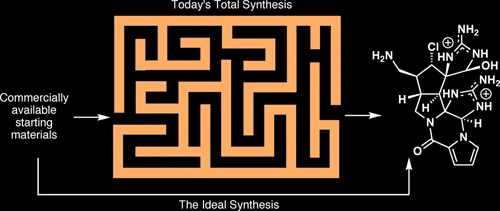
The lab’s 2021 Account, Ideality in Context: Motivations for Total Synthesis, traces that arc. The field began by debunking vitalism, the idea that living things could make forms of matter accessible only to them. It then became the way to prove structures and probe biosynthesis, then an art form, then a logical discipline with retrosynthetic analysis and even computer-aided design, until chemists showed it was feasible to make any natural product, however complex.
“Total synthesis is now focused on a pursuit for simplicity rather than a competition for maximal complexity.”
So what is left? The Account calls total synthesis “the ultimate proving ground for the invention and field-testing of new methods,” and that is how the lab uses it. A hard target exposes the gaps in chemistry’s toolbox, and filling those gaps produces reactions that everyone can use. Phil’s 2018 JACS editorial makes the broader case in its title: natural product total synthesis is “As Exciting as Ever and Here To Stay.”
Synthesis without protecting groups
Every synthetic chemist of the early 2000s learned the same reflex. If one part of a molecule might interfere with a reaction somewhere else, you cover it up: the protecting group goes on, the reaction runs, the protecting group comes off. The lab’s first decade began by refusing that reflex.
By 2004 the reflex had hardened into doctrine. Textbooks, the lab later noted, stated that avoiding protecting groups was impossible, and their use had “become routine even on molecules of low complexity.” Reinhard Hoffmann of Marburg, in a 2006 review devoted to the subject, wrote that “synthesis proposals by undergraduate and graduate students still bristle with protecting groups,” and captured the mood of the profession in a single sentence:
“The use of protecting groups has been so common in synthesis for over a century that chemists have come to accept them with the same fatalism as they accept ‘death and taxes’.”
The lab chose a different starting point. In 2003 it took on the hapalindole alkaloids, more than 60 terpene–indole hybrids made by cyanobacteria. Looking back in their 2010 perspective, Tanja Gaich and Phil Baran recalled that “a retrosynthesis was designed whose sole purpose was to avoid the most glaring of concession steps: protecting group manipulations.” The plan needed a way to join an indole directly to a ketone, with no mask on the indole’s N–H and no advance preparation of either partner. No such reaction existed, so the lab invented one: deprotonate both partners and let a copper(II) oxidant forge the bond. The 2004 JACS paper that introduced it described “a short, enantioselective, gram-scale and protecting group-free synthetic entry” to the family, starting from carvone and indole.
Then came the twist that would recur for twenty years. The new coupling depends on the indole’s free N–H. “We would not have discovered it had we resorted to protecting groups,” the lab wrote in Nature in 2007. Refusing the mask had not merely shortened a route. It had revealed chemistry that the mask would have hidden.
A year later the same coupling delivered the first total syntheses of welwitindolinone A and fischerindoles I and G, described in the 2005 JACS paper as “short, protecting-group-free syntheses.” Hoffmann featured the result in his review. He set the lab’s nine-step route to welwitindolinone A beside another synthesis of the same molecule that needed six protecting groups and 25 steps, and attributed the difference “mainly” to “the required protection and deprotection steps.” Of the lab’s routes he added that “one is tempted to assume that ‘protecting-group-free’ was a programmatic aspect in the design of these syntheses.” It was. His review closes by thanking “Prof. Ph. Baran (LaJolla)” for “stimulating exchanges of ideas,” a conversation that continued: within three years Hoffmann and Baran had co-written The Economies of Synthesis and Redox Economy in Organic Synthesis.
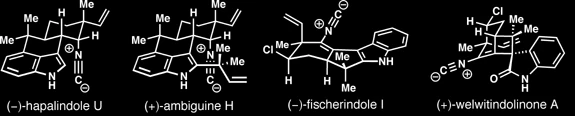
In March 2007 the program reached Nature under a title that read like a manifesto: Total synthesis of marine natural products without using protecting groups. Phil Baran, Thomas Maimone and Jeremy Richter reported enantioselective, preparative-scale syntheses of hapalindole U, ambiguine H, fischerindole I and welwitindolinone A, members of four families, in seven to ten steps from commercial materials. Molecules that had “previously required twenty or more steps to synthesize racemically in milligram amounts” could now be made as single enantiomers, in significant quantities, in ten steps or fewer. The cyanobacteria themselves had yielded only about 5 mg of each, in isolated yields of 0.007% to 0.02%.
The paper’s most memorable moment came at the end. Attaching one prenyl group to hapalindole U to reach ambiguine H failed in every direct and indirect form, because the molecule’s sensitive isonitrile and free indole sabotaged each attempt. Instead of masking them, the team let them react. A chlorination–prenylation cascade gave an unusual crystalline chloroimidate, and five hours under light unzipped it, “accomplishing all five necessary tasks in a single step” and completing the first total synthesis of any ambiguine. The verdict was blunt: had those groups been shielded with protecting groups, “such chemical reactivity would not have been apparent.”
⚗ For chemists
The 2007 playbook: eight guidelines
The Nature paper closed with the planning rules behind the work, noting that the principles had existed separately for years but that this series of syntheses applied them “as a whole”:
- Minimize redox reactions that do not form C–C bonds.
- Maximize the share of steps that form C–C bonds.
- Choose disconnections that maximize convergency.
- Let the oxidation level of intermediates rise steadily as the framework is assembled.
- Design cascade reactions for maximum structural change per step.
- Exploit the innate reactivity of functional groups to reduce, or even eliminate, protecting groups.
- Invest in new methodology that serves these aims and uncovers new reactivity.
- Borrow biosynthetic logic where it helps the rest.
Rule 4 became the lab’s idea of “redox economy,” made explicit in the 2008 full paper on the hapalindoles, fischerindoles and welwitindolinones. The welwitindolinone endgame also needed a new reaction, a fluorohydroxylation of indole with xenon difluoride and water, chosen because fluorine, harder than chlorine, would leave the delicate isonitrile alone.
In 2009 Ian Young and Phil Baran turned the program into an argument for the whole field. Protecting-group-free synthesis as an opportunity for invention began with arithmetic: each protection and deprotection “introduces at least two steps into a sequence, incurring costs from additional reagents and waste disposal, and generally leads to a reduced overall yield.” Then it reframed the problem. The obstacle was not the masks but the missing reactions that would make them unnecessary. Surveying total syntheses published after 2004 that had invented chemistry in order to leave protecting groups out, from Brian Stoltz’s dichroanone and Dirk Trauner’s bipinnatin J to Johann Mulzer’s platensimycin, it concluded that “the invention of chemoselective methodologies is crucial to the execution of ‘protecting-group-free’ synthesis.” The title did the rest: not a tax to be paid, but an opportunity.
The same conviction ran through the lab’s other early campaigns. Psychotrimine took four steps from a bromotryptamine, through a new indole–aniline coupling, with “functional group manipulations, protecting group chemistry, and unnecessary redox fluctuations” minimized. The axinellamines, massadines and palau’amine, crowded with nitrogen, were finished, as the 2010 perspective put it, with late-stage chemoselective oxidations on completely unprotected intermediates carrying no fewer than nine nitrogen atoms.
The lab has never claimed that every mask can come off. The 2007 paper named the limits itself: protecting groups offer “a certain level of security,” and polyketides, peptides, saccharides and nucleotides “will perhaps always require some level of protection.” Its self-audits have been just as candid. The 2010 perspective counted seven protecting-group manipulations in the lab’s own 16-step route to stephacidin A, and the 2021 Account conceded that recent routes “still illustrate how far we have to go when it comes to controlling chemoselectivity without resorting to protecting group chemistry.” Purity was never the point. The point was to treat every protecting group as a question: which reaction, if it existed, would make this one unnecessary?
“The deliberate exclusion of protecting groups from the overall synthetic design facilitated the development and discovery of new chemical reactions by harvesting the intrinsic reactivity within organic molecules.”
How protecting-group-free became normal
In 2004 a total synthesis without protecting groups was a curiosity. Today it is an expectation, and the phrase is part of the ordinary vocabulary of synthesis.
The clearest record is the phrase itself. OpenAlex, an open index of the scholarly literature, searches the full text of a large share of recent papers. Asked on 15 November 2026 which works contain “protecting-group-free” (with or without hyphens), it returned 2 papers from 2004, 19 from 2009, 86 from 2015, 149 from 2025 and 189 so far in 2026: 2,018 papers since 2000. These are lower bounds. The index sees the full text of only part of the chemical literature, and many syntheses that use no protecting groups never say so.
The rise of protecting-group-free synthesis, 2000–2026
2025 149 papers use “protecting-group-free”Phrase anywhere in the full text, title or abstract (OpenAlex)
2025 14 papers have “protecting-group-free” in the titlePhrase in the title only (OpenAlex)
2025 41 papers cite the founding textsCiting Hoffmann 2006, Baran et al. 2007 or Young & Baran 2009 (OpenAlex)
Show the numbers
| Year | Papers that use the phrase | Papers with it in the title | Papers citing the founding texts |
|---|---|---|---|
| 2000 | 2 | 0 | 0 |
| 2001 | 0 | 0 | 0 |
| 2002 | 0 | 0 | 0 |
| 2003 | 1 | 0 | 1 |
| 2004 | 2 | 0 | 1 |
| 2005 | 3 | 1 | 0 |
| 2006 | 10 | 7 | 0 |
| 2007 | 10 | 4 | 26 |
| 2008 | 17 | 3 | 40 |
| 2009 | 19 | 11 | 57 |
| 2010 | 55 | 26 | 81 |
| 2011 | 49 | 20 | 71 |
| 2012 | 55 | 22 | 99 |
| 2013 | 82 | 26 | 82 |
| 2014 | 73 | 28 | 76 |
| 2015 | 86 | 27 | 70 |
| 2016 | 122 | 26 | 70 |
| 2017 | 99 | 19 | 57 |
| 2018 | 114 | 26 | 74 |
| 2019 | 121 | 19 | 55 |
| 2020 | 139 | 13 | 49 |
| 2021 | 149 | 18 | 58 |
| 2022 | 149 | 11 | 43 |
| 2023 | 159 | 17 | 44 |
| 2024 | 164 | 11 | 41 |
| 2025 | 149 | 14 | 41 |
| 2026* | 189 | 16 | 27 |
| Total | 2,018 | 365 | 1,163 |
* 2026: partial year, counted on 15 November 2026.
fulltext.search and title.search for the phrase “protecting group free”, which also matches the hyphenated forms, grouped by publication year; citing works are those that cite at least one of Hoffmann 2006, Baran et al. 2007 or Young & Baran 2009. Coverage of full texts is incomplete, so the counts are lower bounds. Chart: Baran Lab website.The chart’s most telling detail is where the phrase now lives. Papers with “protecting-group-free” in the title peaked at 28 in 2014 and have run at 11 to 17 a year since 2022, while mentions in the body of papers have roughly doubled over the same period. When an idea is new, it goes in the title. When it becomes normal, it moves into the text, as one design choice among many.
The reviewers kept score. Hoffmann’s 2006 review called it “a positive surprise to see an increasing number of protecting-group-free syntheses being published.” Within eight years there were far too many for an essay. In 2014 Radomir Saičić of the University of Belgrade needed 36 pages of Tetrahedron to cover the protecting-group-free syntheses of natural products published since 2009. He counted 87 among some 3,200 syntheses in that period, judged that their impact “by far exceeds this 2.6% numeric share,” and called the minimization of protecting groups “already widely accepted as an important guiding principle of modern synthetic planning.” His list of design principles ends with an echo of the 2009 title: “the challenges of PGF synthesis are also opportunities for invention.” In 2019 Jing Xu’s group at the Southern University of Science and Technology devoted a Nature Reviews Chemistry review to protecting-group-free syntheses of terpenes and alkaloids from 2013 to 2017 alone.
What changed was the toolkit as much as the taste. Hoffmann had pointed out that transition-metal catalysis and radical reactions tolerate alcohols, amines and ketones that polar chemistry must mask. Saičić added late-stage installation of functional groups, biomimetic logic and new chemoselective reagents and catalysts. Those tools matured in the years that followed, and with them the burden of proof shifted. In a modern route, a protecting group is something its authors explain rather than assume, which is the question Hoffmann wanted on the agenda “when the planning process for a synthesis is started.”
Inside the lab the idea long ago stopped being a slogan and became a reflex. Radical cross-couplings of carboxylic acids join fragments that would need masks in polar chemistry. Zinc sulfinate reagents add alkyl groups to heterocycles in the presence of water and air, with no protecting groups (Nature 2012). In 2026, glycohydrazides made directly from unprotected native sugars opened a radical route to C-aryl glycosides such as the gliflozin diabetes drugs (Nature 2026), cutting into one of the exceptions the 2007 paper had expected to be permanent. Even bipinnatin J, which Trauner made without protecting groups in 2006 and Hoffmann held up as an example, returned to the lab as a 10-step, gram-scale target in 2025.
Twenty-two years after the first hapalindole paper, “protecting-group-free” is no longer a boast. It is a question every route is now expected to answer, and asking it is how many of the lab’s reactions came to exist.
Sugars, without the masks
Glycohydrazides made straight from unprotected sugars carry the protecting-group-free reflex into medicinal chemistry.
Measuring simplicity
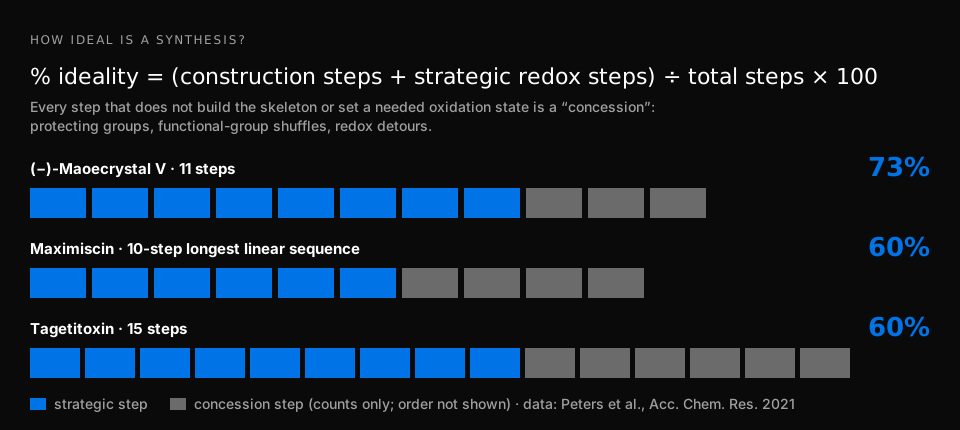
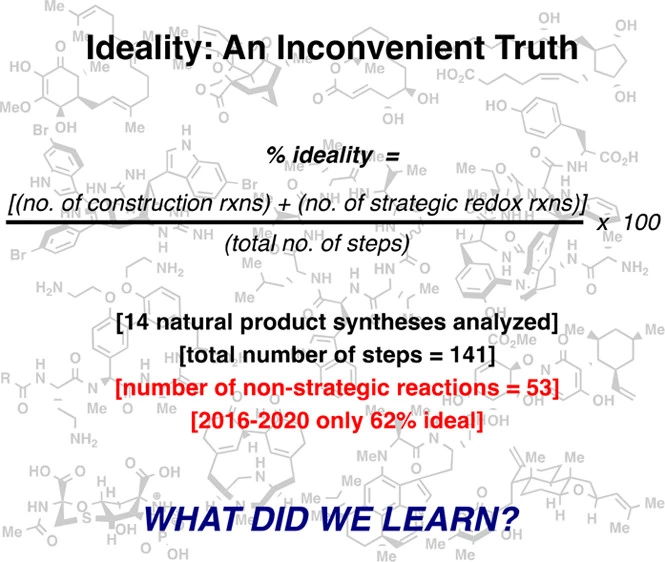
Protecting groups were the first concession step the lab set out to delete; in 2010 it generalized the idea. Tanja Gaich and Phil Baran proposed a simple measure in J. Org. Chem., “Aiming for the Ideal Synthesis.” Inspired by James Hendrickson’s work on efficiency, it says an ideal synthesis only makes the skeletal bonds of the molecule and sets its oxidation state, with no protecting groups, functional-group shuffles or redox detours. Those detours are called concession steps.
⚗ For chemists
The economies of synthesis
Ideality grew out of a series of 2009 essays: The Economies of Synthesis (atom, step and redox economy, Chem. Soc. Rev.), Protecting-Group-Free Synthesis as an Opportunity for Invention (Nature Chem.), Redox Economy in Organic Synthesis (Angew.) and Chemoselectivity: The Mother of Invention in Total Synthesis (Acc. Chem. Res.). Each one ties a type of concession step to the methods needed to delete it.
Build the skeleton, then oxidize
Terpenes, the largest family of natural products, are made in nature in two phases: enzymes first fold a simple hydrocarbon chain into a carbon skeleton, then other enzymes oxidize it, carbon by carbon. The lab’s two-phase synthesis copies that logic: build the hydrocarbon framework quickly, then install oxygen with selective C–H oxidations. That planning language — which C–H bond to oxidize, and in what order — is told in full in the C–H functionalization chapter. The account here stays with ideality, the proving-ground role of total synthesis, and the molecules that do not belong to those two-phase terpene campaigns.
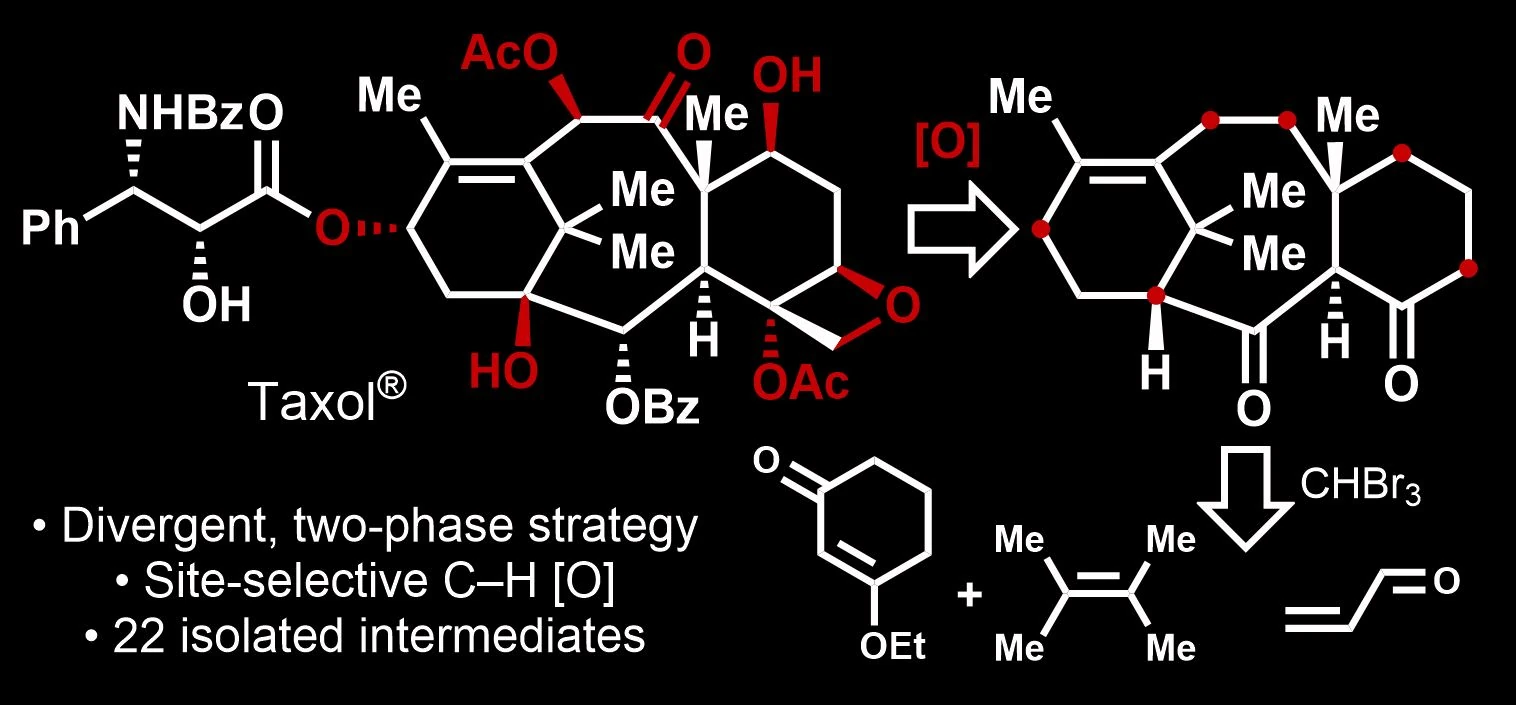
The flagship two-phase campaigns — the eudesmanes, a 14-step route to (+)-ingenol, a 19-step route to (+)-phorbol, and the two-phase synthesis of Taxol — are covered, with their oxidase-phase C–H oxidations, under C–H functionalization logic. The strategic claim that remains is: a natural product is still the place where a missing reaction is invented and tested, whether the missing reaction is a C–H oxidation or something else entirely.
The two-phase terpene campaigns
Ingenol, phorbol, Taxol and the earlier eudesmane work are covered in the C–H functionalization chapter, alongside the innate-versus-guided planning language, sulfinates, Gutekunst’s cyclobutane C–H arylations and maximiscin.
Palau’amine and the pyrrole–imidazole alkaloids
In 1993 a sponge from the waters of Palau gave chemists a molecule that would test them for seventeen years. The lab reached it the long way round: by making the simplest members of its family first, and climbing, one molecule at a time.
Robin Kinnel, Henning Gehrken and Paul Scheuer described palau’amine in 1993: a cytotoxic, immunosuppressive hexacyclic bisguanidine from the sponge Stylotella agminata. It belongs to the pyrrole–imidazole alkaloids, a large family of sponge metabolites built from one small brominated unit, oroidin. A 2009 review called the family a “nearly triple-digit membered community,” stretching “from simple, achiral oroidin to the breathtaking 12-ring stylissadines A and B, each possessing 16 stereocenters.” Palau’amine sits near the top of that scale, with two guanidines, a crowded cyclopentane and eight contiguous stereocenters, and its polarity made every intermediate hard to handle.
Many groups took it on. Larry Overman’s laboratory reported a tetracyclic core in 1997; Daniel Romo, Patrick Harran, Erick Carreira, Chuo Chen, Carl Lovely, James Gleason, David Gin, Kosuke Namba and Keiji Tanino, Ken Feldman and others followed with spirocyclic cores, model systems, cyclopentane fragments and cycloaddition strategies. A 2005 review by Delphine Jacquot and Thomas Lindel was titled Challenge Palau’amine: Current Standings. When the lab finished the molecule in 2010 it noted that palau’amine had eluded chemists “despite the dozens of Ph.D. theses and studies towards publications that have appeared since its isolation”; the full account a year later listed 28 of those theses, from 13 universities, written between 1999 and 2011.
“Palau’amine’s unprecedented hexacyclic ring system and its nasty physical properties had undermined total synthesis endeavors in leading laboratories worldwide.”
There was a further complication. For well over a decade the structure everyone was aiming at was wrong. The original assignment placed a cis-fused pair of five-membered rings at the molecule’s centre, the shape intuition expects. In 2007 four teams, working from new congeners, NMR, calculation and synthesis, showed that the fusion is trans: Achim Grube and Matthias Köck with tetrabromostyloguanidine, Ronald Quinn’s group with a revised structure of palau’amine, Shigeki Matsunaga’s group with carteramine A, and Overman’s with chemical evidence from a synthetic analogue. A strained trans-azabicyclo[3.3.0]octane, which the lab later called “unprecedented among natural products,” was now the target. That year Köck, Grube, Ian Seiple and Phil Baran surveyed the whole saga in The Pursuit of Palau’amine, and concluded that “those research groups that are targeting the axinellamines are now much closer to palau’amine.”
That sentence describes the lab’s own plan. Instead of attacking palau’amine directly, it had begun with sceptrin, a cyclobutane dimer of hymenidin, oroidin’s close relative, that, as the 2007 essay observed, had been “virtually ignored by chemists for more than two decades.” Sceptrin was chosen, the lab later wrote, “because of its presumed role as a biosynthetic precursor” to the rest of the family. The idea was to treat the metabolites the sponges leave behind as clues to how the harder ones are made, and to follow those clues upward.
“The mysteries of natural product biosynthesis can often be solved like jigsaw puzzles if enough ‘pieces’, or members of a related family, can be found.”
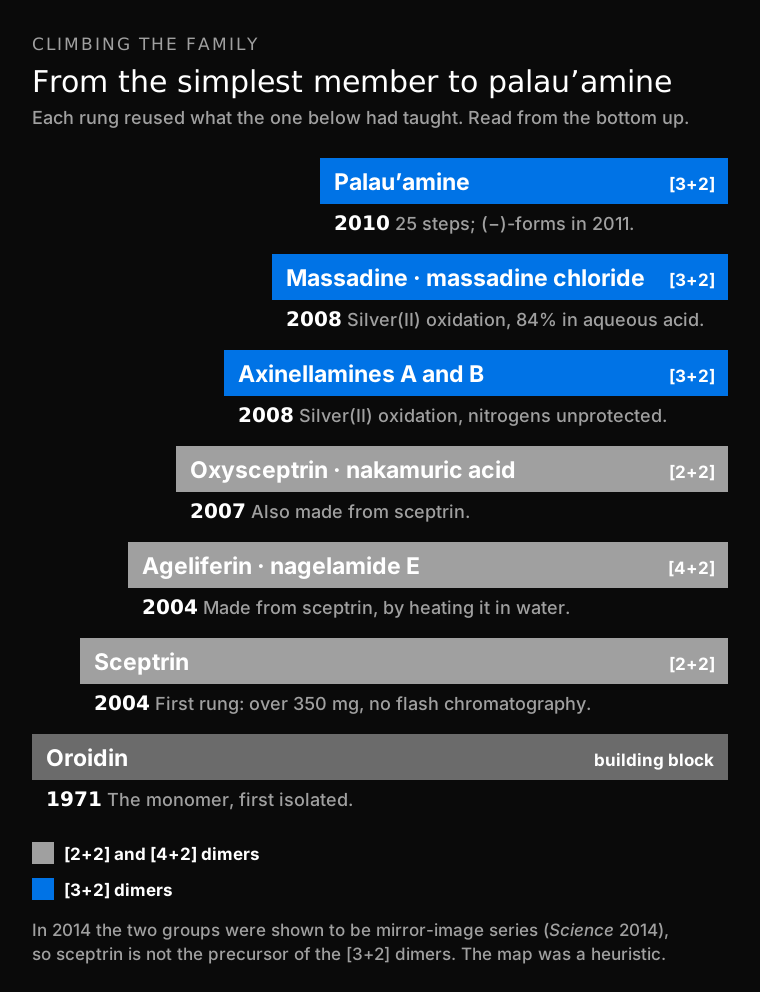
The first rung set the tone. The 2004 synthesis of sceptrin used the first oxaquadricyclane rearrangement in natural product synthesis and a new halogenation method, and made more than 350 mg “without HPLC or flash chromatography.” A few months later a second paper turned sceptrin itself into ageliferin and nagelamide E by heating it in water in a microwave reactor, which the lab later described as the first use of the vinylcyclobutane rearrangement in natural product synthesis. The 2007 full account added oxysceptrin, nakamuric acid, the axinellamine carbon skeleton and enantioselective routes, and named the habit that would carry the program: “the minimal use of protecting groups despite the presence of 10 nitrogen atoms.” Most of its reactions, it added, “needed to be performed in water.”
The middle rungs were the axinellamines and massadines, which share palau’amine’s densely substituted cyclopentane. The biosynthetic hypothesis predicted that an open-chain precursor would close on its own once oxidized, so the lab made one, 1,9-dideoxy-pre-axinellamine. It refused: every oxidant tried gave the same cyclopentene, which the full account called “a veritable dead end.” The lesson set the course for axinellamines A and B and massadine and massadine chloride in 2008. A hemiaminal carbon, C20, would have to be oxidized deliberately and late, on an intermediate bristling with unprotected nitrogen. Halogenating agents attacked nitrogen, ruthenium gave mixtures, hypervalent iodine did little and ferrate over-oxidized. What worked was silver(II) picolinate, a brick-red reagent studied in the late 1960s, used in aqueous trifluoroacetic acid, at room temperature, in an open flask. Optimized for massadine, the oxidation installed the hemiaminal in 84% yield. The lab’s 2009 Account credited “the ability to manipulate and chemoselectively react intermediates containing six or more unprotected nitrogen atoms” for both syntheses.
Palau’amine came next. In the 2010 synthesis, Seiple, Shun Su, Ian Young, Chad Lewis, Junichiro Yamaguchi and Baran carried the shared cyclopentane through to an unprotected aminoguanidine, then oxidized it with silver(II) picolinate in 64% yield. Rather than forge the strained trans ring fusion directly, they built a larger ring first: a nine-membered lactam they named “macro-palau’amine.” Heated in trifluoroacetic acid at 70 °C, it folded across itself in a transannular cyclization that set the last two stereocenters and the trans-5,5 ring system of the natural product. The route ran 25 steps, in 0.015% overall yield. The paper described the method plainly: a silver-mediated oxidation was invented, and “innate reactivity was embraced so as to minimize the use of redundant and orthogonal protecting group operations.” The 2011 full account made (−)-palau’amine, (−)-axinellamines and (−)-massadines enantioselectively, and recorded how close it had been: after more than 50 attempts to close the macrocycle, a manuscript describing “a macrocyclic isomer of the palau’amine core” was ready for submission when the key reaction worked.
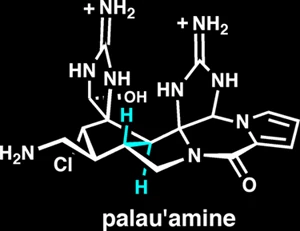
The program belongs in the story of synthesis without protecting groups, but in its own measured way. The cyclopentane core was still built with Boc, PMB and TIPS groups; the claim was always minimal, not zero. Where the masks came off was the endgame, where the most sensitive and most nitrogen-rich steps ran on free guanidines in water and acid. That is where the discoveries were. The full account put it directly: success “relied heavily on the innate reactivity present in each of the advanced intermediates, which would never have been unveiled had they been shielded with excessive protecting groups.” It is the same argument the lab later made for the field as a whole: take the mask off, and the molecule tells you what it wants.
The biosynthetic clues deserve an honest footnote. The 2007 paper had already hedged them: “even when these presumed ‘biosynthetic’ relationships do not reflect the true metabolic pathway followed in the source organism, they can provide a useful heuristic for synthetic analysis, as was the case with Woodward’s hypothesis for the biosynthesis of strychnine.” That caution proved wise. The 2011 full account had concluded that the absolute configurations of the whole family matched, “thus tying together the entire family of pyrrole-imidazole alkaloids in uniform handedness.” But the optical rotations of these salts change sign and size with the counterion, a quirk the lab itself had noticed in 2007. In 2014 Chuo Chen’s group, with Baran, made sceptrin and massadine enantioselectively and found in Science that “in contrast to previous reports, sceptrin, massadine, and ageliferin have mismatched chirality,” so massadine “cannot be an oxidative rearrangement product of sceptrin or ageliferin, as is commonly believed.” The [3+2] dimers, a group that includes the axinellamines, massadines and palau’amine, belong to one mirror-image series; the [2+2] and [4+2] dimers belong to the other. A comment and response followed on what to call this enantiodivergence. The map that guided the climb was not the sponge’s map, but it led to the summit.
The silver reagent had one more consequence, and it reached far beyond alkaloids. The lab’s 2012 Account on innate and guided C–H functionalization described the palau’amine endgame as “a uniquely chemoselective innate C–H functionalization protocol” whose “remarkable chemoselectivity” in the presence of about ten nitrogen atoms “inspired us to explore other silver-catalyzed reactions.” The first was a new look at the Minisci reaction, the classic addition of carbon radicals to electron-poor heterocycles. “Our recent studies involving chemoselective silver-mediated oxidation reactions on highly complex alkaloids such as palau’amine,” the 2010 JACS paper explains, “led us to reexamine this gap in the scope of the classic Minisci reaction.” Catalytic silver nitrate and persulfate turned arylboronic acids into aryl radicals that coupled with pyridines and other electron-poor heterocycles at room temperature: the borono-Minisci reaction.
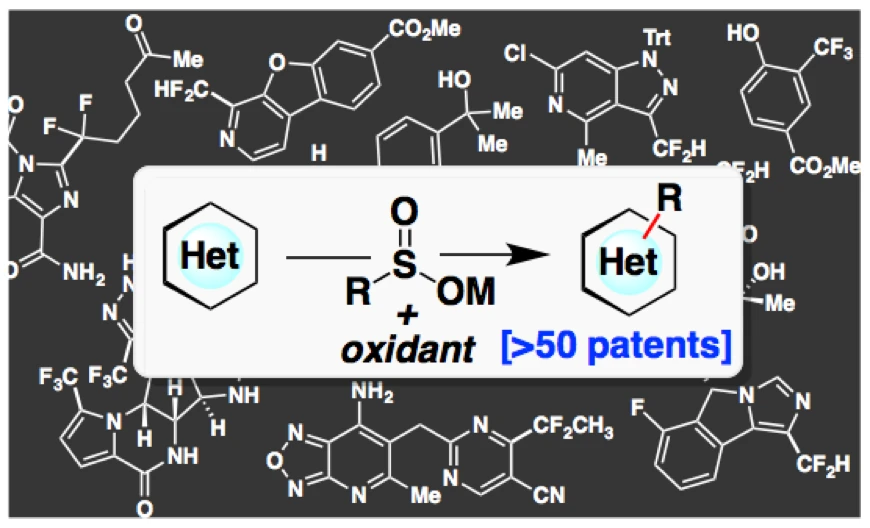
From there the line runs straight. Silver and persulfate arylated quinones in 2011; the Langlois reagent, a sodium sulfinate, trifluoromethylated heterocycles the same year; a zinc difluoromethanesulfinate followed in 2012; and in Nature 2012 a whole toolkit of zinc sulfinate salts added alkyl groups to drug-like heterocycles “without recourse to protecting group chemistry,” in water and air. None of it needed light or exotic catalysts. It was old radical chemistry, silver salts, persulfate and peroxides, made selective enough for complex molecules. That story continues in C–H functionalization, in the reagents and in radical retrosynthesis.
Palau’amine has since been made again. In 2015 Namba, Tanino and their colleagues reported a second total synthesis in Nature Communications, 45 steps by a different strategy that builds the trans-fused core in a single cascade, and confirmed the immunosuppressive activity of the synthetic material. Others extended the family: Chen’s group found a biomimetic route to the [4+2] and [3+2] cores and made the axinellamines asymmetrically; Harran’s group made ageliferin and halogen-deficient axinellamines; and in November 2026 Ullrich Jahn’s group reported a new route to massadine. The molecules also proved useful. Synthetic sceptrin slows the motility of cancer cells, palau’amine and its relatives inhibit the proteasome, and the axinellamines, first reported to be devoid of biological activity, turned out to be broad-spectrum antibacterial agents once the lab could make them in quantity.
“The continued pursuit of palau’amine and its relatives from isolation, biosynthetic, and synthetic angles holds promise for even more exciting discoveries, surprises, and inventions.”
Where the silver led
From a silver(II) oxidation on palau’amine to borono-Minisci arylation and the zinc sulfinate toolkit.
Sometimes the answer is “it was an impurity”
Making a natural product in quantity lets biologists test it properly, and the results are not always what the original reports promised. The lab made antroquinonol, then in clinical trials, in six steps and on gram scale, and found no appreciable cytotoxic activity; the Account concludes the early enthusiasm “might be due to an impurity in the natural product isolation process.” Maoecrystal V, made in 11 steps, told the same story. The araiosamines went the other way: once made, they showed interesting antibacterial activity despite original reports to the contrary.
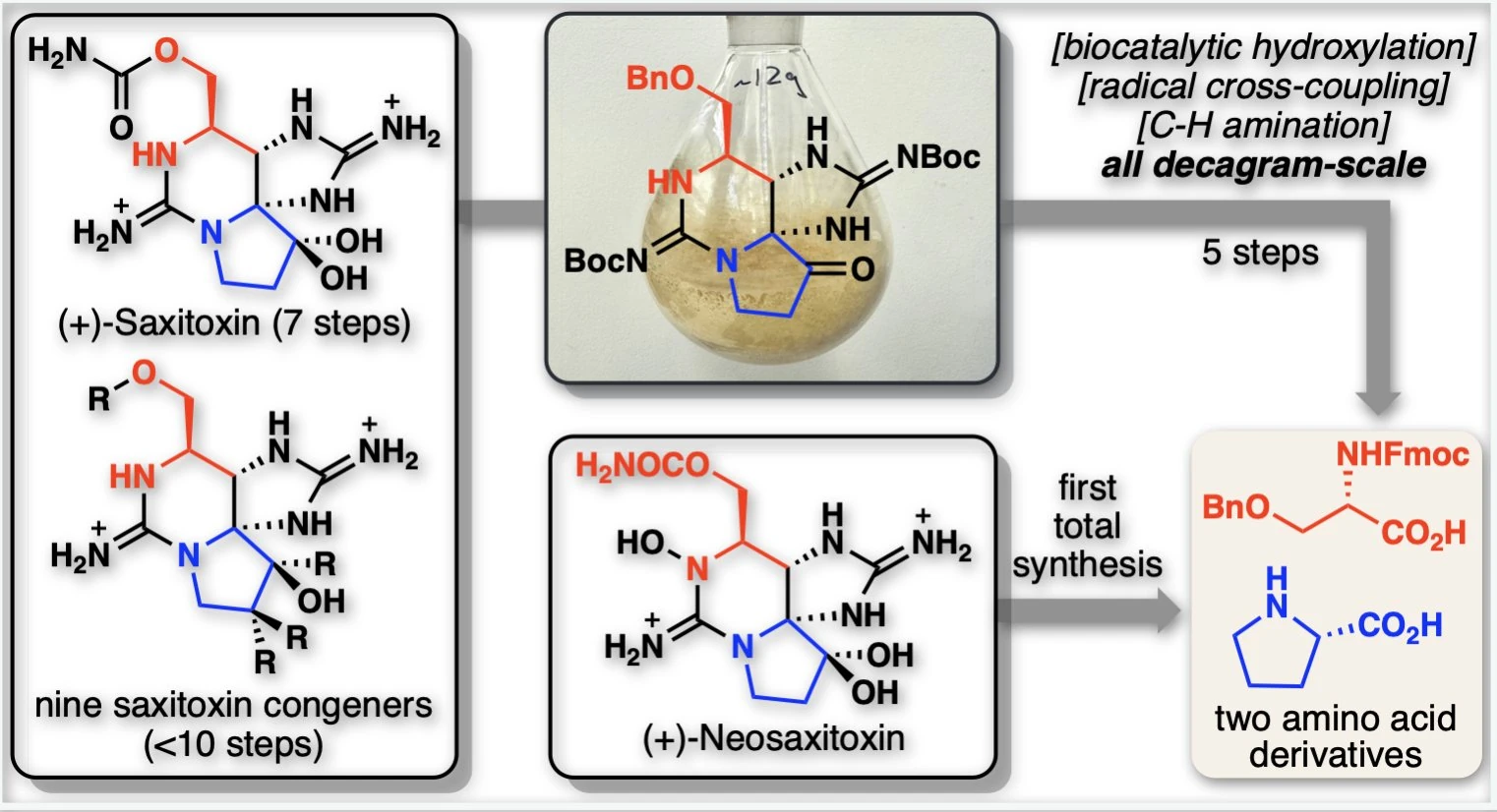
Other targets confirmed or explained their biology. The 2023 Nature paper on the portimines is titled “Synthesis of Portimines Reveals the Basis of Their Anti-Cancer Activity.” Saxitoxin, a potent neurotoxin, was made in seven steps, with nine related natural products in fewer than ten steps each and the first total synthesis of neosaxitoxin (Nature 2025).
“Over the decades to come, as the shortcomings delineated above drive solutions, the syntheses of this era will appear ancient.”
The natural products inside the methods papers
Count only the papers with a natural product in the title and you miss most of the molecules. The lab’s methods papers often end with a section of total syntheses, because the fastest way to show a reaction matters is to make real targets with it.
The pattern is the same each time. A new disconnection, usually a radical coupling of a carboxylic acid, removes the protecting groups, redox detours and functional-group shuffles that a polar route needs. The paper then takes molecules that others made the long way and makes them again, shorter. A few examples, each checked against the paper itself:
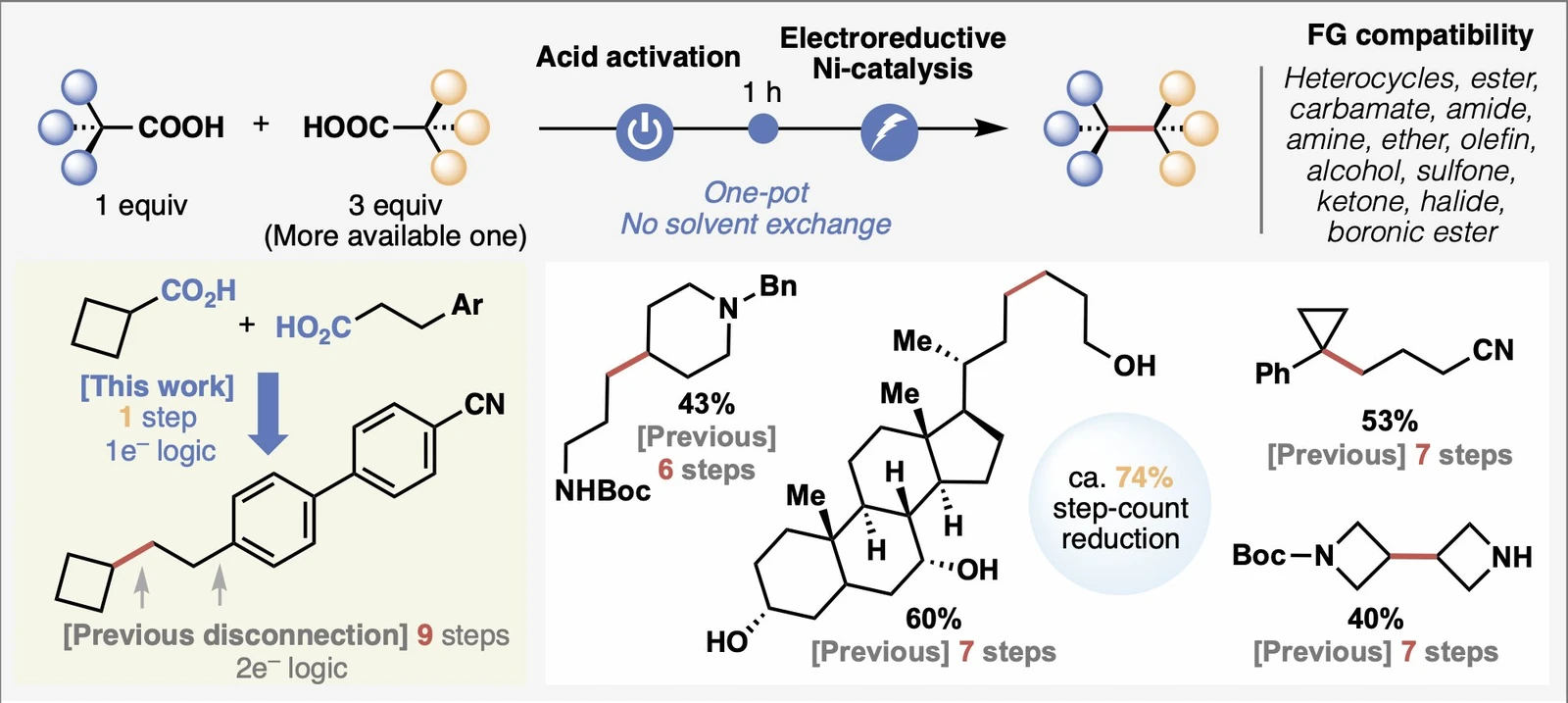
The doubly decarboxylative coupling paper makes the point most sharply. The Kolbe electrolysis, one of the oldest carbon–carbon bond-forming reactions, joins two carboxylic acids, but its harsh oxidative conditions had kept it out of mainstream synthesis. Run reductively, through redox-active esters and a nickel catalyst, it becomes a general way to stitch two acids together. Insect pheromones previously made in 11–12 steps were made in three from a commercial acid, and either mirror-image form could be chosen simply by changing the order of the two couplings. The 2023 sequel added silver-nanoparticle electrodes and control of stereochemistry, and assembled the natural product polyrhacitide A by iterative couplings.
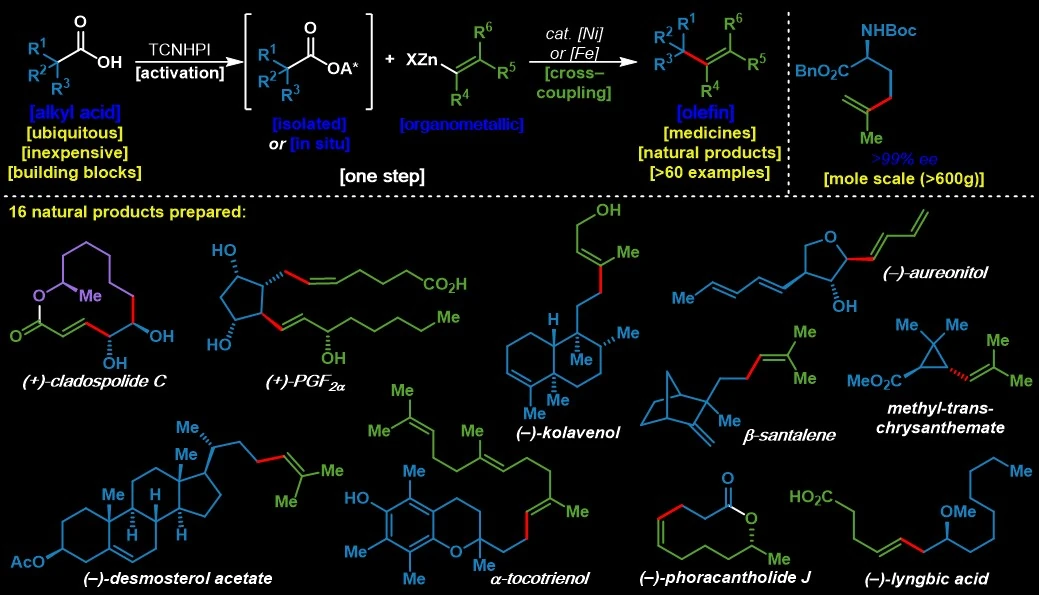
A few of the molecules
Over its history the lab has made hundreds of natural products. More than 60 are named in the titles of its papers; many more were made inside methods papers, as the proof that a new reaction simplifies real targets. A sample of the headline syntheses, each linked to its entry on the publications page:
SaxitoxinNature 2025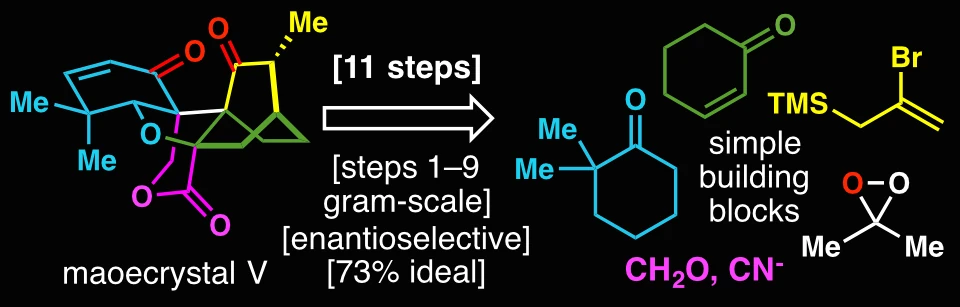 Maoecrystal VJ. Am. Chem. Soc. 2016Palau’amineAngew. Chem. Int. Ed. 2010
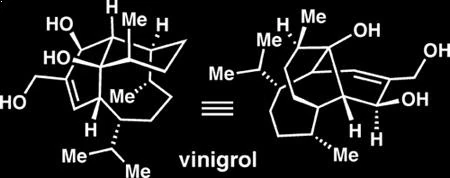 VinigrolJ. Am. Chem. Soc. 2009
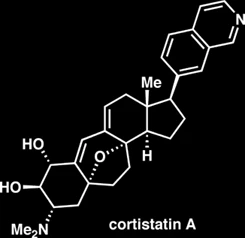 Cortistatin AJ. Am. Chem. Soc. 2008
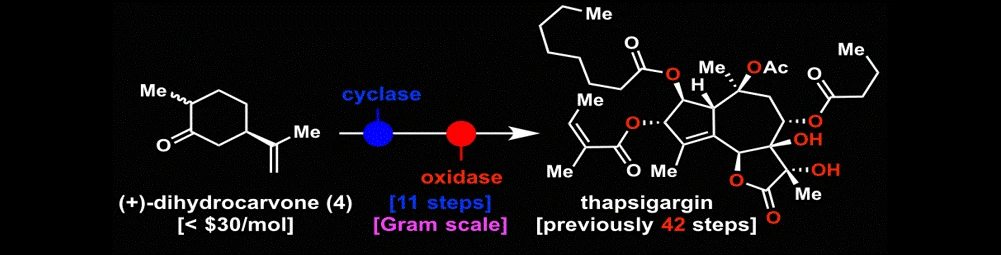 ThapsigarginACS Cent. Sci. 2017
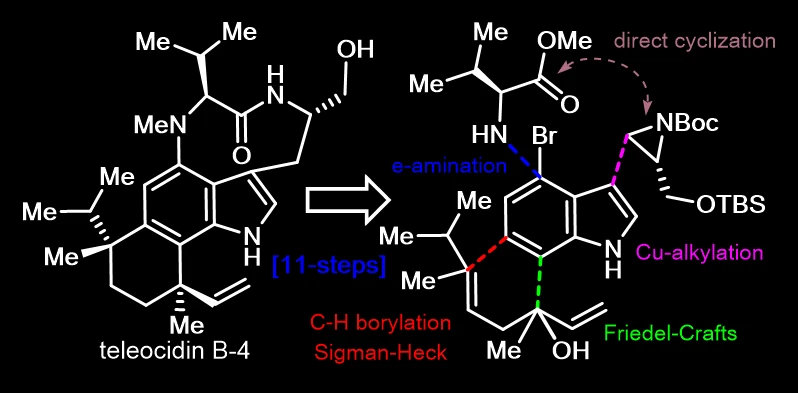 Teleocidins B-1–B-4J. Am. Chem. Soc. 2019
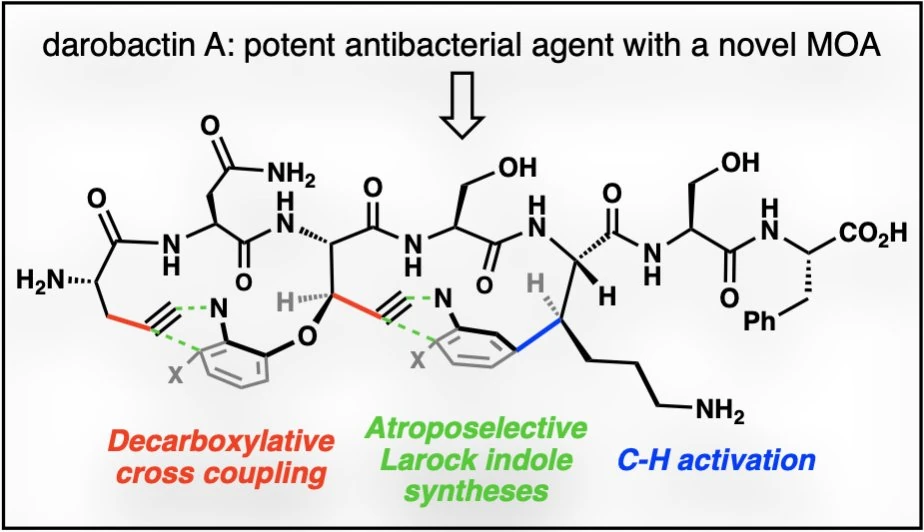 Darobactin AJ. Am. Chem. Soc. 2022
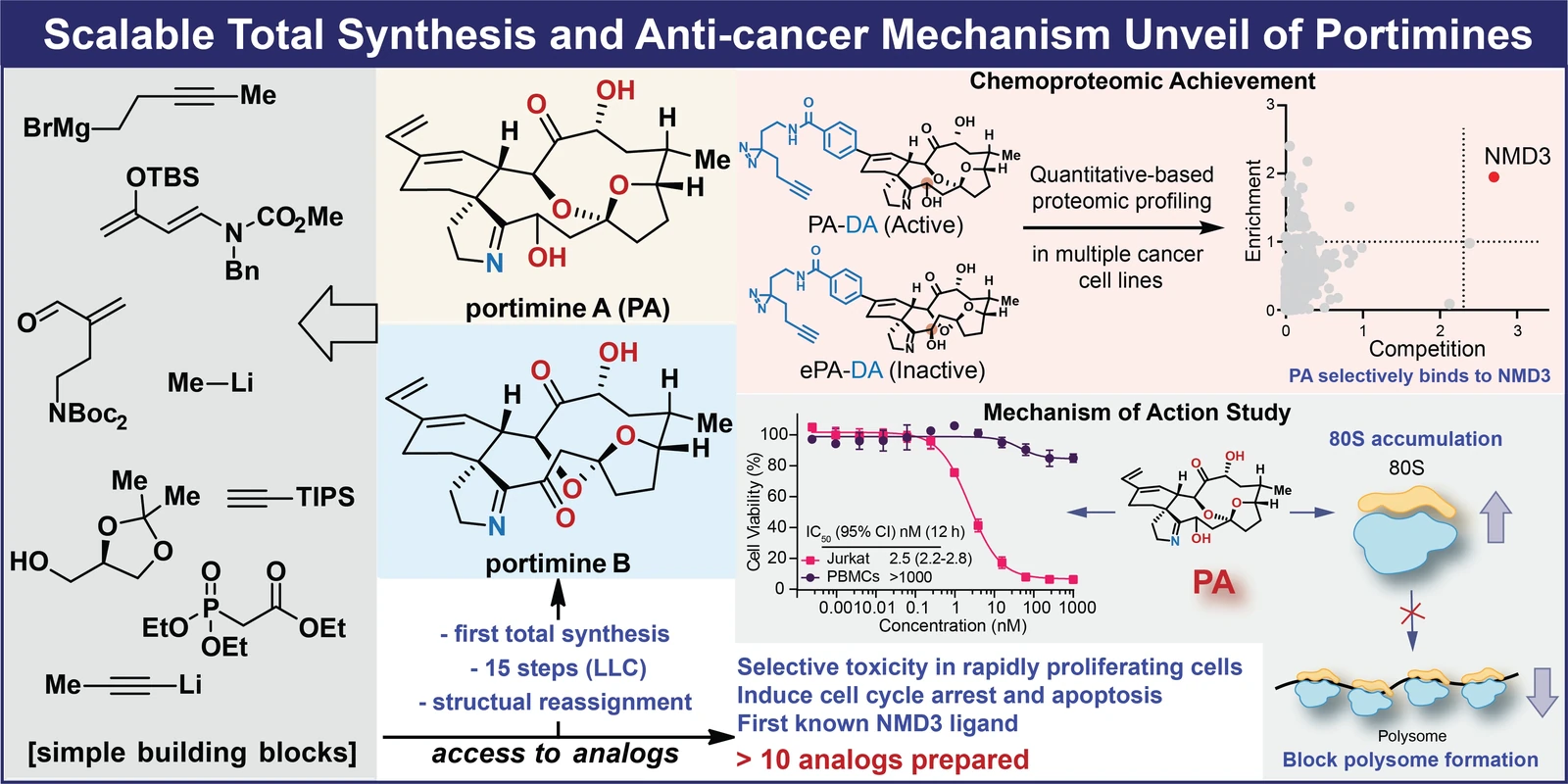 PortiminesNature 2023
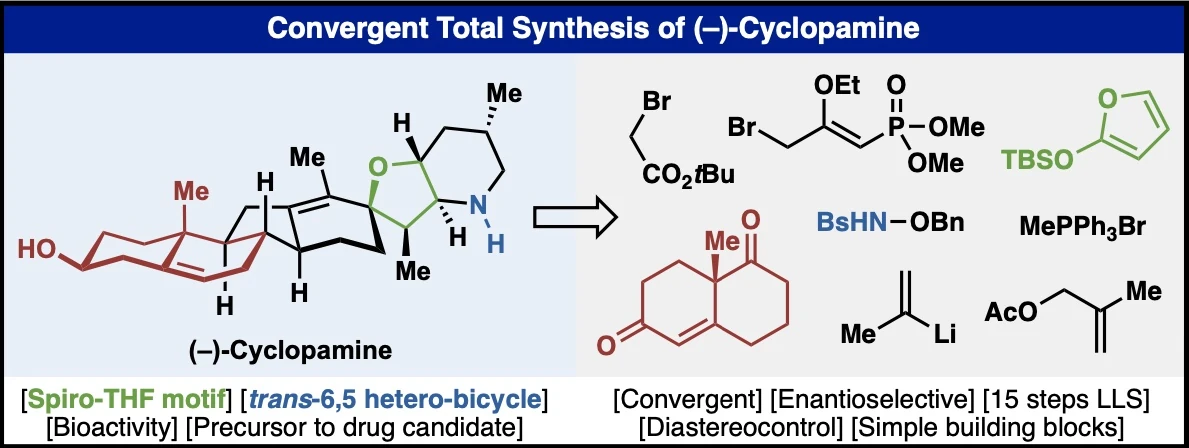 CyclopamineJ. Am. Chem. Soc. 2023
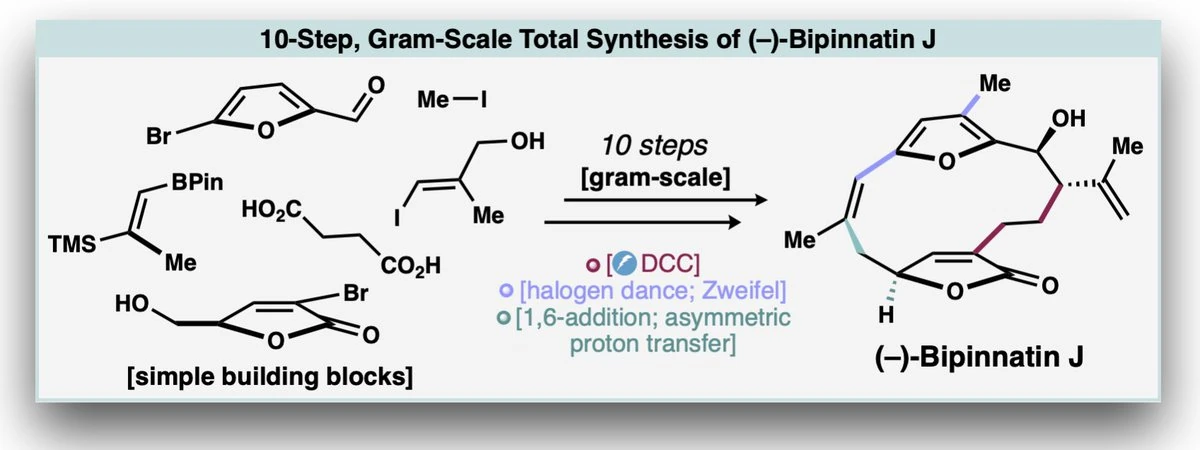 Bipinnatin JJ. Am. Chem. Soc. 2025
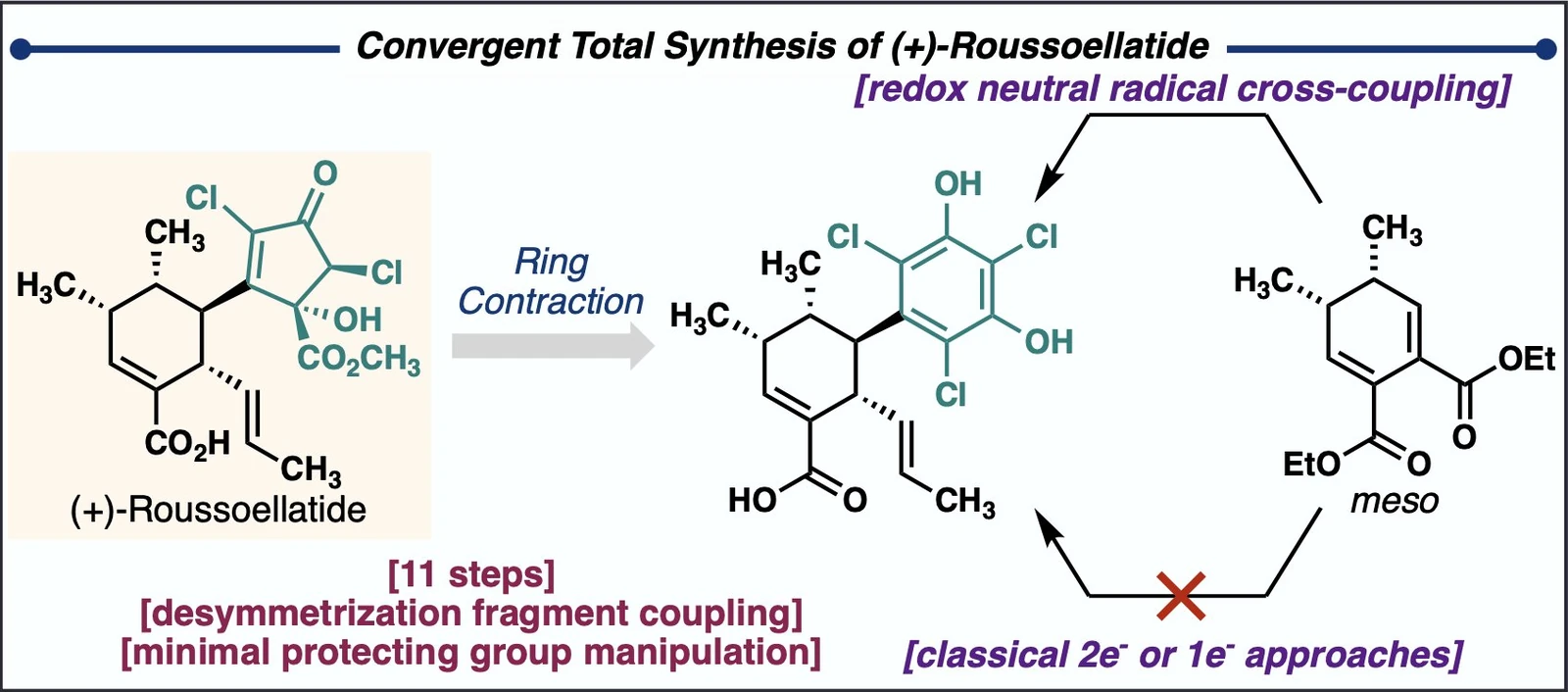 RoussoellatideChemRxiv 2026
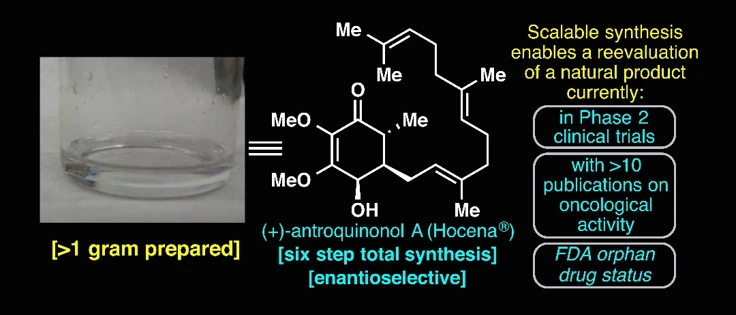 Antroquinonol AACS Cent. Sci. 2016
Radicals and electrons in the toolbox
The lab’s newest syntheses lean on its own methods. Radical retrosynthesis turns hard polar disconnections into simple couplings of carboxylic acids or sulfonyl hydrazides; electrochemistry has enabled 64 of the lab’s syntheses since 2014. Bipinnatin J was made in 10 steps on gram scale; roussoellatide in 11 steps was the first natural product made with sulfonyl hydrazide coupling; and in a 2024 Science paper biocatalytic C–H oxidation met radical cross-coupling to simplify complex piperidine synthesis.
Explore the methods behind these routes: radical retrosynthesis, cross-coupling, reductive olefin coupling, electrochemistry and reagents and C–H functionalization logic.
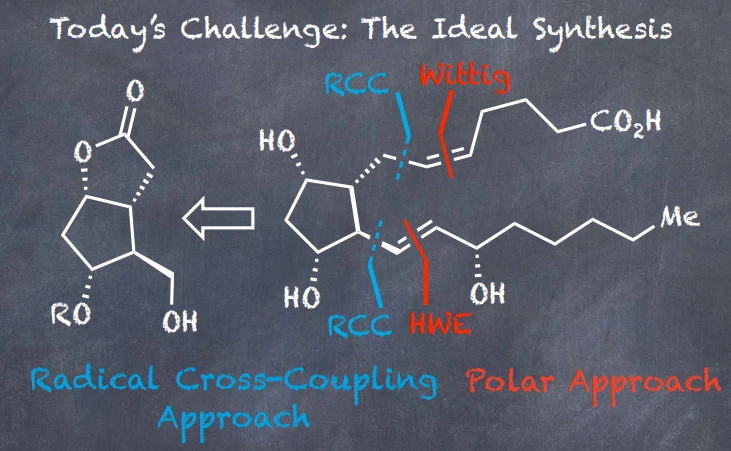 The logicThinking in radicals
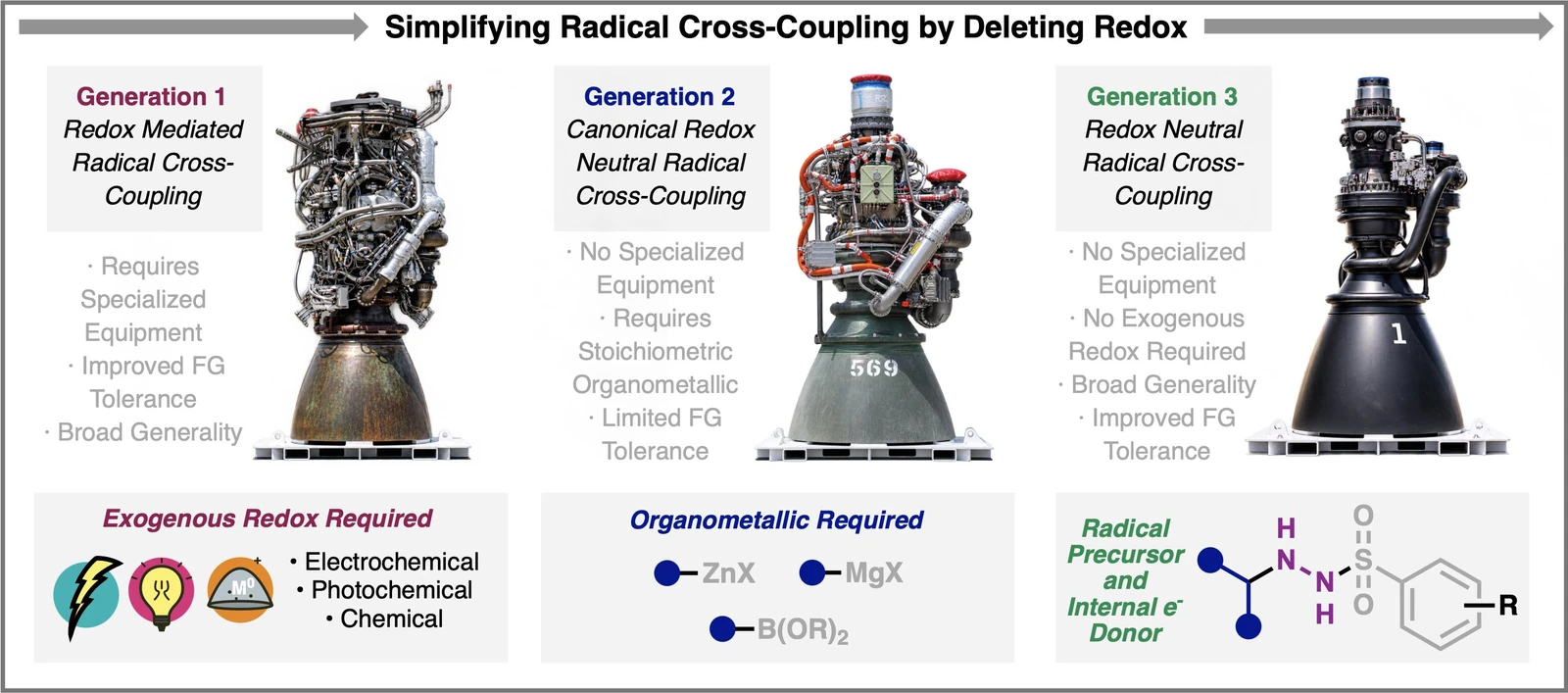 Cross-couplingDeleting redox
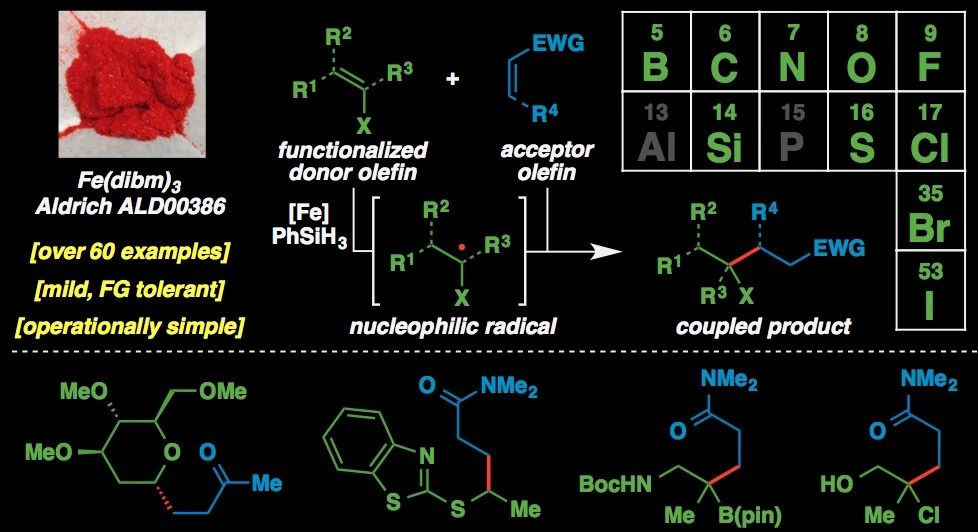 Olefins / MHATOlefins as radicals
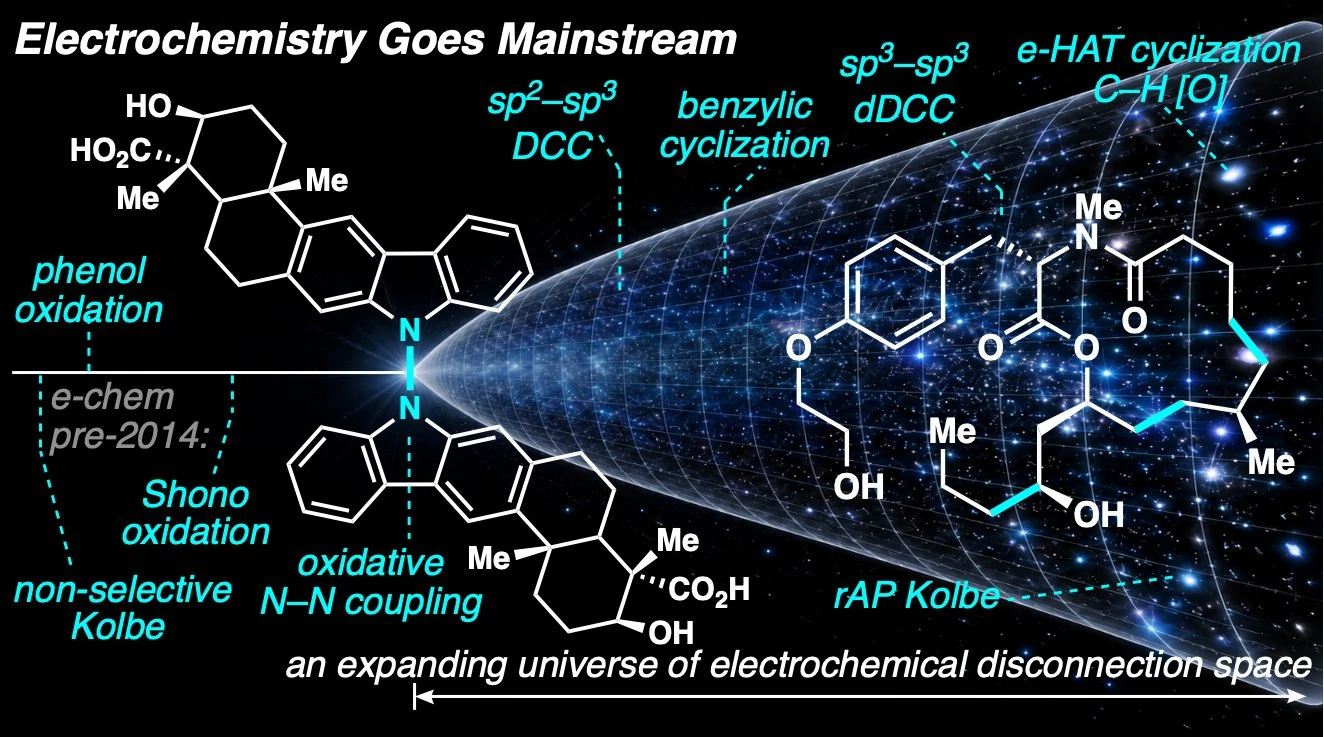 ElectrochemistryThe electron as a reagent
 ReagentsReagents in a bottle
 OligonucleotidesRewriting the backbone
 C–H functionalizationC–H logic