
A carboxylic acid becomes a coupling partner
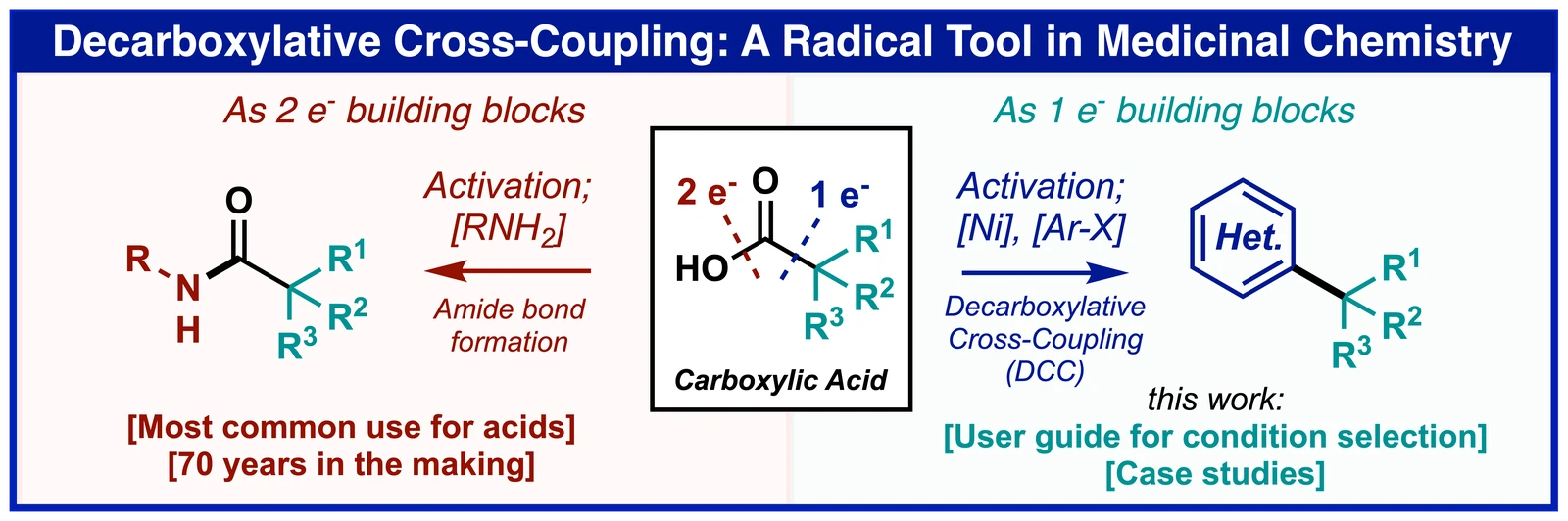
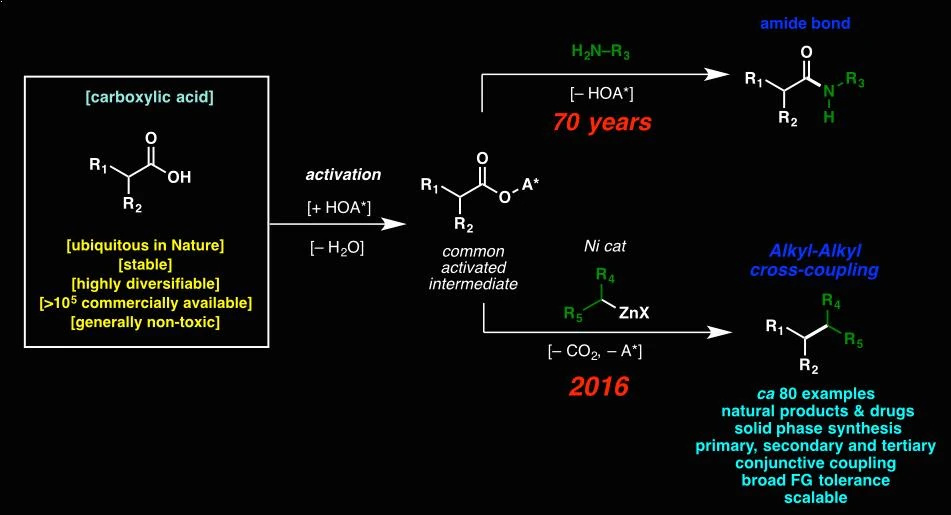
The most abundant handle in the chemist’s catalogue is the carboxylic acid. In 2016 the lab showed that it could be turned into a radical source with the same kind of activation chemists already use to make amide bonds.
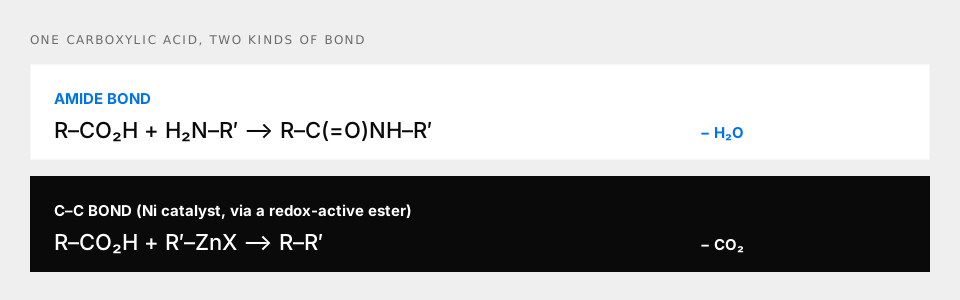
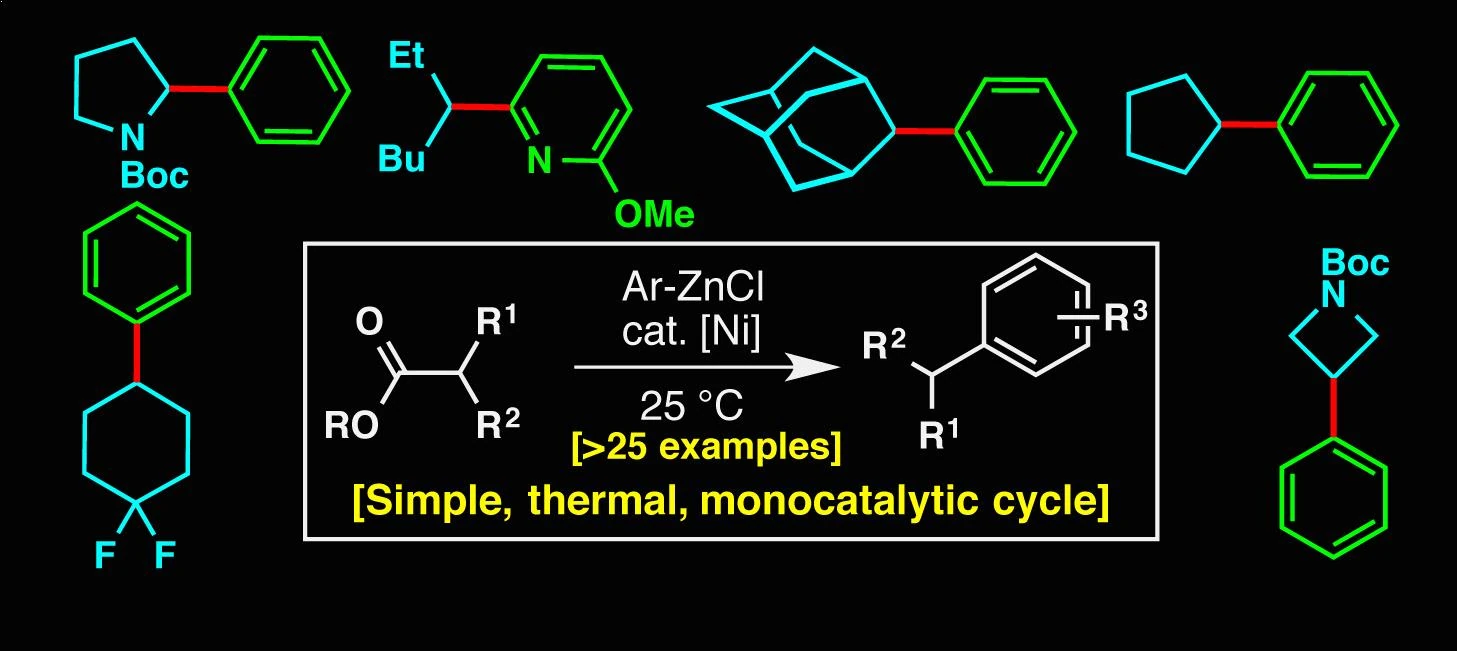
The trick was a redox-active ester (RAE): the acid is converted to an N-hydroxyphthalimide-type ester, a nickel catalyst passes it one electron, carbon dioxide is lost and an alkyl radical is released and coupled. In JACS 2016 the partner was an aryl zinc reagent and the catalyst was inexpensive NiCl₂·6H₂O. In Science the same year it became a general alkyl–alkyl coupling with more than 70 examples, which the authors framed by direct analogy to amide synthesis: one forms a bond with loss of water, the other with loss of CO₂.
The idea spread fast. Within a year the same activated acids were being converted into boronic acids (Science 2017), used to make boron-containing drugs such as Velcade and Ninlaro and a boronic acid version of vancomycin, and coupled to alkenes (Nature 2017). Iron catalysis (JACS 2016) and, later, electrochemistry joined nickel.
By 2022 there was enough to take stock. In an Innovations article for ACS Medicinal Chemistry Letters, written with Gabriele Laudadio, Max Palkowitz and Tamara El-Hayek Ewing (ACS Med. Chem. Lett. 2022), the lab described the carboxylic acid as the most versatile and ubiquitous diversity input in medicinal chemistry, the everyday partner of amide synthesis, and asked what happens when the same acid is sent down a one-electron path instead. Three distinct catalytic manifolds are available: a redox-active ester coupled with an organometallic nucleophile; a redox-active ester coupled with an aryl or vinyl halide, with a chemical, photochemical or electrochemical reductant supplying the electrons; or the free acid oxidized directly by an excited photocatalyst. Each has blind spots, so the article lays them side by side in a colour-coded functional-group “user guide” that a chemist can consult before choosing conditions.
The case studies are the persuasive part, each a well-trodden polar route set against its radical counterpart. A C-3-arylated N-Boc morpholine that took eight steps, with the arene fixed at the outset, becomes a single coupling of a commercially available acid-bearing heterocycle (JACS 2022). A twelve-step route to the antipsychotic asenapine, which calls for strong base, diazomethane and osmium, gives way to a cycloaddition followed by two consecutive decarboxylative couplings, eight steps in all (Nature 2018). Where a Suzuki coupling followed by hydrogenation often requires three separate uses of palladium, a single nickel catalyst forges the key bond at the correct oxidation state. And with doubly decarboxylative coupling (Nature 2022), an unnatural amino acid once made in eight steps, without forming a single C–C bond, is reached in one step from two commercially available acids as its methyl ester.
The article is also candid about the limits. Polar chemistry has had nearly a century of refinement and will likely always remain a powerful way to build carbon–carbon bonds; in surveys of the reactions most used in pharmaceutical chemistry, radical reactions are nowhere to be found, a legacy of the long-held view that radicals are hard to tame. Its closing thought is a hope rather than a claim:
“In reflecting on the cutting-edge nature of amide-bond formation in the 1950s and its status today as perhaps the most used reaction of our time, one wonders if radical cross-coupling methods in 2050 will be viewed as commonplace and, perhaps, even boring.”
That is the ambition in a sentence. The two-electron chemistry of a carboxylic acid, activate it and add an amine, is so routine that nobody thinks twice about it. The hope is that its one-electron chemistry, activate it and add a nickel catalyst, becomes just as unremarkable: a reaction a medicinal chemist reaches for without ceremony. Why the lab counts that as the highest compliment is the subject of “Boring reactions, on purpose” below.
⚗ For chemists
Why carboxylic acids?
Acids are cheap, stable, sold in enormous variety, and already present in amino acids, natural products and drug intermediates. Activating them as RAEs (NHPI or the tetrachloro TCNHPI esters) uses the same coupling agents as amide synthesis, and the ester can often be made in situ. As the 2022 ACS Med. Chem. Lett. article puts it, “operationally these reactions are akin to amide-bond formation.”
A name for an old ester
Some discoveries add a reaction to chemistry. Rarer ones add a word. In February 2016 a short communication gave a family of very ordinary esters a new name, and the name has been doing work ever since.
The esters were not new. Chemists had been making them for decades to build amide bonds: HOBt and HOAt esters were the workhorses of peptide coupling, and N-hydroxyphthalimide (NHPI) esters were cheap, crystalline and stable on the shelf. Radical chemists knew some of these molecules too. Derek Barton’s thiohydroxamate esters, introduced in 1983, released alkyl radicals when light or a radical chain broke them apart. In 1988 Okada, Okamoto and Oda showed that an NHPI ester could take an electron from a light-excited sensitizer, lose carbon dioxide and give a radical (J. Am. Chem. Soc. 1988; extended to Michael additions in 1991). For almost three decades that photoinduced electron transfer stayed a specialist’s tool, and nobody gave the class a name.
The name arrived by accident. The lab was trying to intercept a classic Barton decarboxylation with a nickel–aryl complex. Under visible light the coupled product formed in 51% yield. In the dark, at room temperature, it still formed in 54%. Light was not needed: the nickel complex itself was passing an electron to the ester. In J. Am. Chem. Soc. 2016, written with chemists at Bristol-Myers Squibb, Cornella, Edwards, Qin and colleagues followed that clue and drew a new boundary around a familiar set of molecules.
“For the purpose of this study, ‘redox-active’ esters are defined as those which can accept an electron (to form a radical anion …) and gracefully depart as a stable and unreactive anion.”
Then they tested the definition on the shelf of the peptide chemist. The Barton ester worked, but it was impractical and gave by-products. An acid chloride and a methyl ester gave nothing. The classic HOAt and HOBt esters gave good yields, a property the paper called “the underappreciated ability of such redox-active esters to readily accept an electron.” A pentafluorophenyl ester and an NHS ester failed. The best balance of reactivity, stability and price was the NHPI ester, made from a reagent costing about $19.50 a mole and coupled with NiCl₂·6H₂O at about $9.50 a mole. Activate the acid as you would for an amide, add nickel and an arylzinc reagent, and carbon dioxide leaves.
Within months the term was in the titles of three more of the lab’s papers. Science 2016 put it in its title, alkyl–alkyl coupling “enabled by redox-active esters,” and spelled out the family: HOAt, HOBt, NHPI and TCNHPI esters “are termed redox-active.” Angewandte 2016 coupled redox-active esters with boronic acids. J. Am. Chem. Soc. 2016 showed the first couplings of redox-active esters with iron, comparing it side by side with nickel across more than 40 examples, and noted that many amide-coupling esters “can function as ‘redox-active’ esters.” The circle closed with Barton’s own esters. The Ni-catalyzed Barton decarboxylation and Giese reactions opened with the lab’s realization, from work begun in 2015, “that Barton esters … are redox-active species which readily accept electrons from metal complexes through a purely thermal single electron transfer (SET) process.” The same property, it added, was shared by the activated esters of amide coupling, “collectively termed redox-active esters (RAEs).” Copper followed in ACS Catalysis 2018, turning carboxylic acids into boronic esters “via redox-active esters (RAEs).”
None of this happened in isolation. Across the field, chemists were going back to old radical and redox chemistry: Okada’s electron-transfer decarboxylation, Barton’s esters and Kochi’s studies of radical pathways in nickel and iron catalysis, all decades old. What the 2016 papers added was a way of thinking and a word to go with it. An activated ester was no longer just a way to make an amide. It was an alkyl halide surrogate that a metal could reduce by one electron, without light.
Did the word catch on? The literature answers.
“Redox-active ester” enters the literature, 2000–2026
2025 143 papers say “redox-active ester”Phrase anywhere in the full text, title or abstract; research articles and reviews (OpenAlex)
2025 49.5 per 100 papers on these estersOf papers that mention NHPI-type esters under any name, how many call them redox-active esters (OpenAlex)
2025 289 papers mention the esters“Redox-active ester”, “N-hydroxyphthalimide ester”, “NHPI/NHP ester” or “N-(acyloxy)phthalimide”, in any context (OpenAlex)
2025 74 papers say “redox-active ester”Independent check: the same phrase in Europe PMC full texts and abstracts
2025 14 papers cite the 2016 paperResearch articles and reviews citing Cornella, Edwards, Qin et al., J. Am. Chem. Soc. 2016 (OpenAlex)
Show the numbers
| Year | Papers that use the term | Share of NHPI-type ester papers | NHPI-type esters, any name | Second index: Europe PMC | Papers citing JACS 2016 |
|---|---|---|---|---|---|
| 2000 | 0 | 0 | 0 | 0 | 0 |
| 2001 | 0 | 0 | 0 | 0 | 0 |
| 2002 | 0 | 0 | 1 | 0 | 0 |
| 2003 | 0 | 0 | 0 | 0 | 0 |
| 2004 | 0 | 0 | 0 | 0 | 0 |
| 2005 | 0 | 0 | 0 | 0 | 0 |
| 2006 | 0 | 0 | 1 | 0 | 0 |
| 2007 | 0 | 0 | 0 | 0 | 0 |
| 2008 | 0 | 0 | 3 | 0 | 0 |
| 2009 | 0 | 0 | 3 | 0 | 0 |
| 2010 | 0 | 0 | 0 | 0 | 0 |
| 2011 | 0 | 0 | 0 | 0 | 0 |
| 2012 | 0 | 0 | 1 | 0 | 0 |
| 2013 | 0 | 0 | 1 | 0 | 0 |
| 2014 | 0 | 0 | 2 | 0 | 0 |
| 2015 | 0 | 0 | 4 | 0 | 0 |
| 2016 | 12 | 57.1 | 21 | 8 | 27 |
| 2017 | 10 | 29.4 | 34 | 15 | 42 |
| 2018 | 22 | 45.8 | 48 | 15 | 54 |
| 2019 | 46 | 50.5 | 91 | 39 | 52 |
| 2020 | 70 | 56.5 | 124 | 60 | 34 |
| 2021 | 88 | 54.7 | 161 | 58 | 37 |
| 2022 | 100 | 56.2 | 178 | 80 | 38 |
| 2023 | 142 | 55.3 | 257 | 70 | 23 |
| 2024 | 150 | 54.5 | 275 | 75 | 33 |
| 2025 | 143 | 49.5 | 289 | 74 | 14 |
| 2026* | 191 | 59.9 | 319 | 85 | 22 |
| Total | 974 | 569.4 | 1,813 | 579 | 376 |
* 2026: partial year, counted on 16 November 2026.
Before 2016 we found no paper that uses the phrase “redox-active ester” for this class of compounds. That holds in OpenAlex’s full-text index and in Europe PMC’s, two independent databases. Each index turned up a few pre-2016 hits, and on inspection every one was noise: an Elsevier record whose abstract field carries text from later papers, a vitamin E study about “non-redox active esters,” and two mis-indexed documents on road haulage and neuron models. From 2016 the curve rises almost every year: 12 papers in 2016, 70 in 2020, 143 in 2025 and 191 so far in 2026. That makes 974 in all, and these are full texts only, a fraction of the literature. About 97% of them have no author from this lab. Europe PMC, counted separately, shows the same shape: none before 2016, then 8, 60 and 74 a year.
The name did more than spread. It took over: since 2016, about half of all indexed papers that discuss NHPI-type esters, under any name, call them redox-active esters. And the chemistry itself grew. Indexed papers that mention these esters at all went from about one a year before 2016, in any context, to 289 in 2025. Counting a word measures vocabulary, not credit: the rise of these esters also owes much to photochemical and, later, electrochemical decarboxylation from many laboratories.
Redox-active sulfones
Carboxylic acids were not the only abundant handle that could be turned into a radical. In 2018 the lab showed that sulfones — specifically those bearing a 1-phenyl-1H-tetrazol-5-yl (PT) group — could play a similar role, in a modular nickel-catalyzed coupling built for the saturated, fluorinated fragments medicinal chemists want.
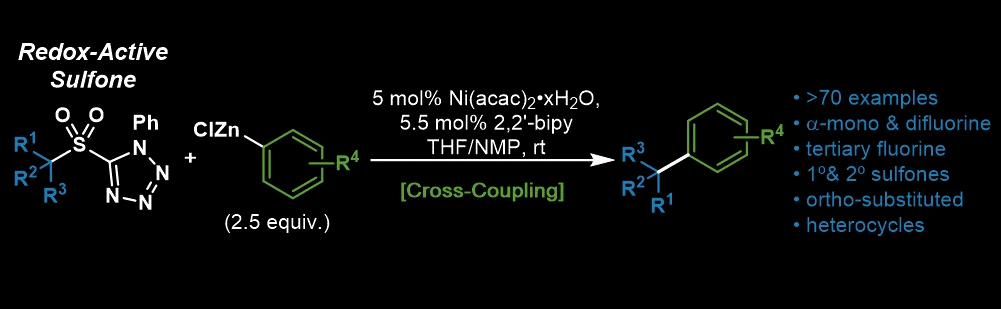
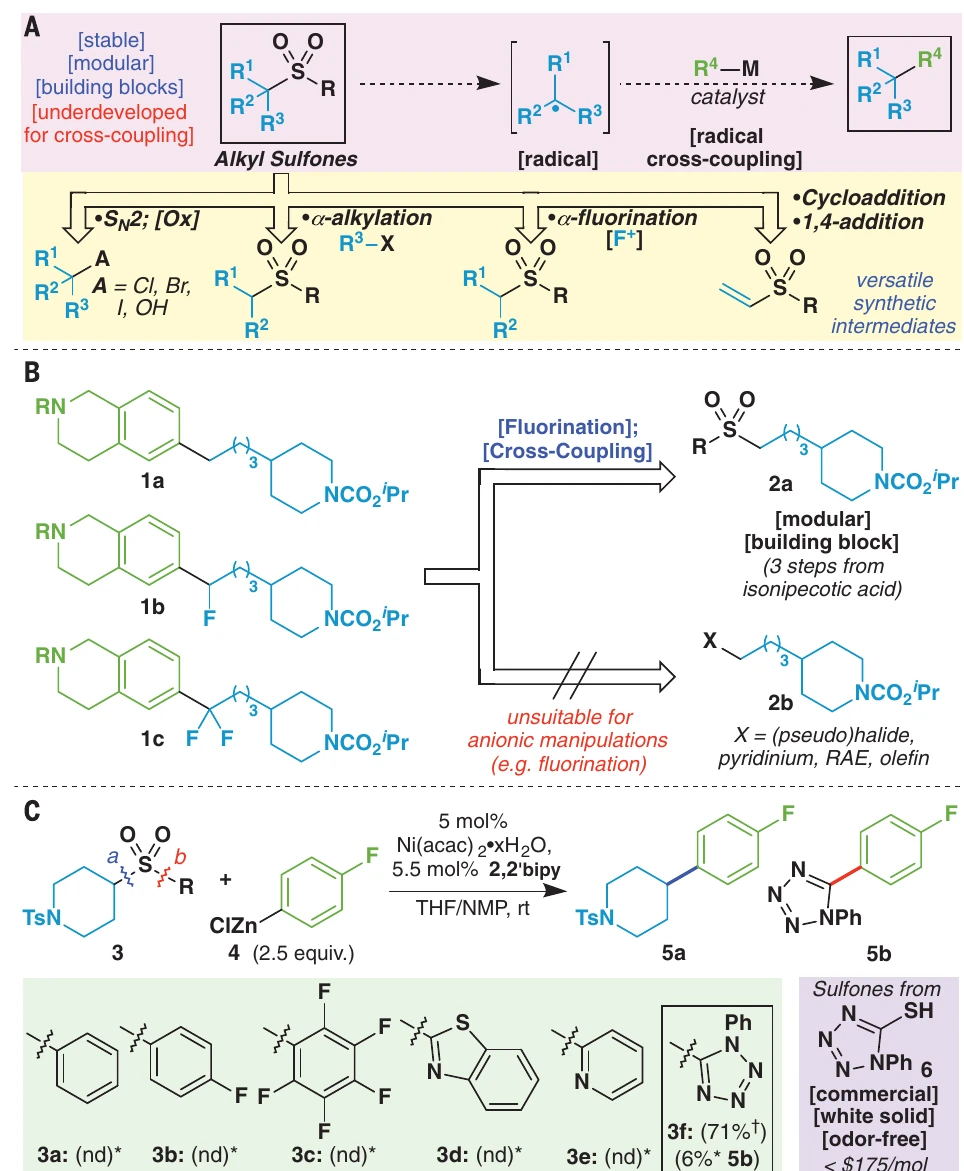
An earlier iron-catalyzed Kumada coupling of unactivated alkyl sulfones, from Denmark and coworkers, had already shown that the functional group could take part in a cross-coupling, but the scope was narrow. The 2018 paper notes that “an ongoing medicinal chemistry project at Pfizer could have used this reaction, but the limited scope prevented its wide adoption” beyond phenylmagnesium bromide. A search for a sulfone that would reduce under mild nickel conditions found that the readily available PT-sulfones were uniquely effective. Ordinary aryl sulfones gave no product; PT-sulfone 3f delivered the coupled piperidine in 71% isolated yield. Nickel was the effective catalyst; iron was not, under the conditions examined, and a bipyridine ligand was imperative.
PT-sulfones can be made from alcohols or alkyl halides by a Mitsunobu reaction or an SN2 displacement with an inexpensive, odor-free thiol, followed by a straightforward oxidation; the products are often crystalline. The paper lists three practical advantages of the handle: it tolerates anionic chemistry (α-alkylation and fluorination) before the coupling; when the sulfone is attached to an unsaturated system, it can take part in cycloadditions and Michael/Giese-type additions; and the compounds are stable and crystalline enough to be convenient reagents. That thinking inspired five reagents, two of them new chemical entities. In collaboration with Asymchem, four of those reagents were prepared on a large scale.
The optimized conditions were illustrated in the synthesis of more than 60 products. The parent PT-sulfone was coupled with 13 different organozinc reagents, and a broad range of primary, secondary and benzylic sulfones took part. Alkyl chlorides were tolerated despite their usual readiness to engage in single-electron chemistry under nickel, a useful orthogonality. A sulfone derived from the Roche ester was coupled with no erosion of enantiomeric excess. Fluoromethyl, difluoromethyl and difluoroethyl reagents extended the method to fluoroalkyl space; bathophenanthroline was the ligand for those couplings. A current limitation, the paper is careful to state, is that a trifluoromethyl group cannot be readily installed this way.
⚗ For chemists
A Pfizer collaboration, in brief
The work was supported by Pfizer and the National Institutes of Health (grant GM-118176), and the author list includes chemists at Pfizer’s La Jolla and Groton sites. The paper’s only claim about the earlier sulfone coupling and Pfizer is the modest one quoted above: a medicinal chemistry project could have used that reaction, but the limited scope stood in the way. The 2018 method was designed to remove that barrier.
Together with redox-active esters and, later, sulfonyl hydrazides, the PT-sulfones complete a set of simple, bench-stable radical precursors drawn from everyday functional groups.
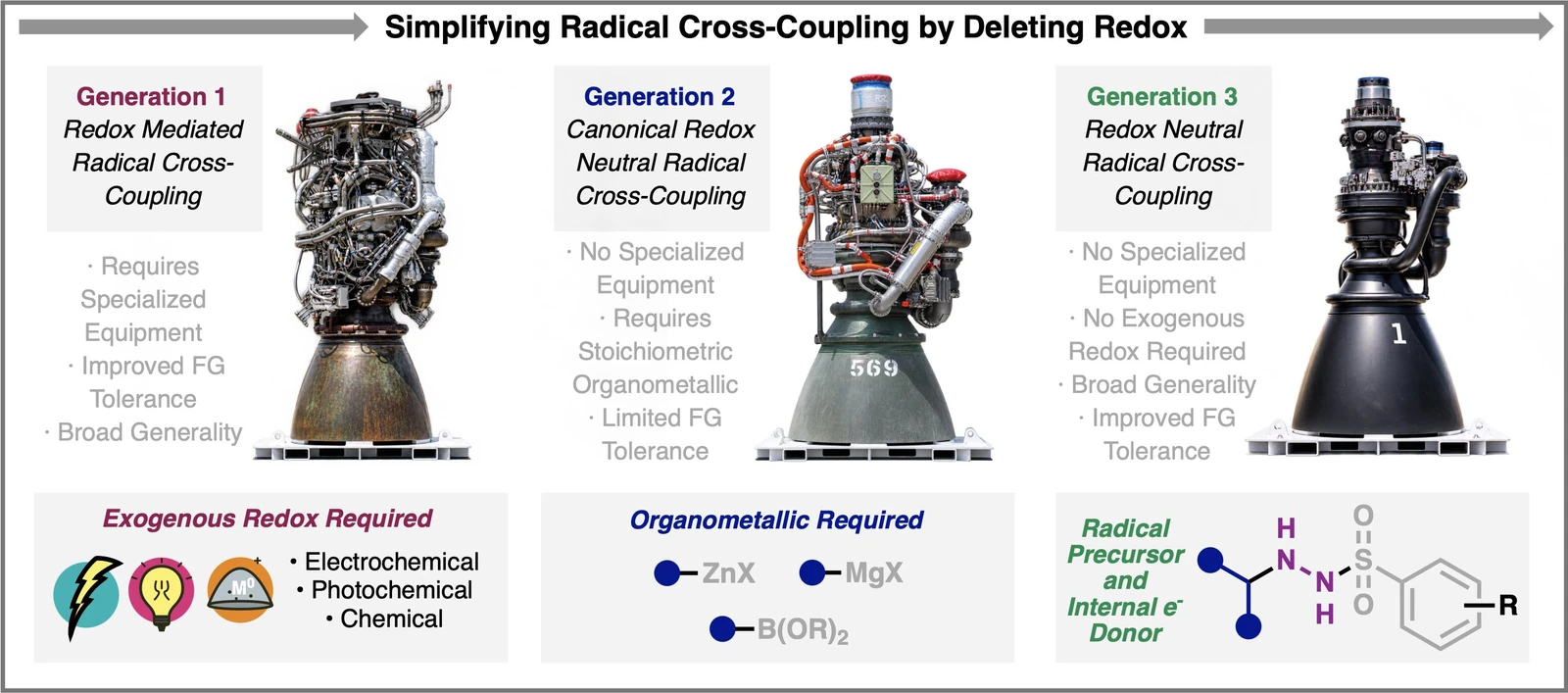
Deleting redox
Every radical cross-coupling so far had a hidden requirement: someone had to supply or remove an electron. In 2026 the lab put that history on a single map and showed a way off the edge of it.
The review Simplifying Radical Cross-Coupling by Deleting Redox (Neigenfind, Kawamata & Baran, ChemRxiv 2026) sorts eighty years of coupling chemistry by where the electrons come from. Classical polar couplings need no added redox but need an organometallic partner. Redox-mediated radical couplings, whether driven by a chemical reductant, by light or by electricity, tolerate far more functional groups but need that external redox source and often special equipment. “Canonical” redox-neutral radical couplings let an organozinc or organoboron partner pay the electron, which brings the organometallic back. As the review puts it, “the fundamental requirement for external redox remained.”
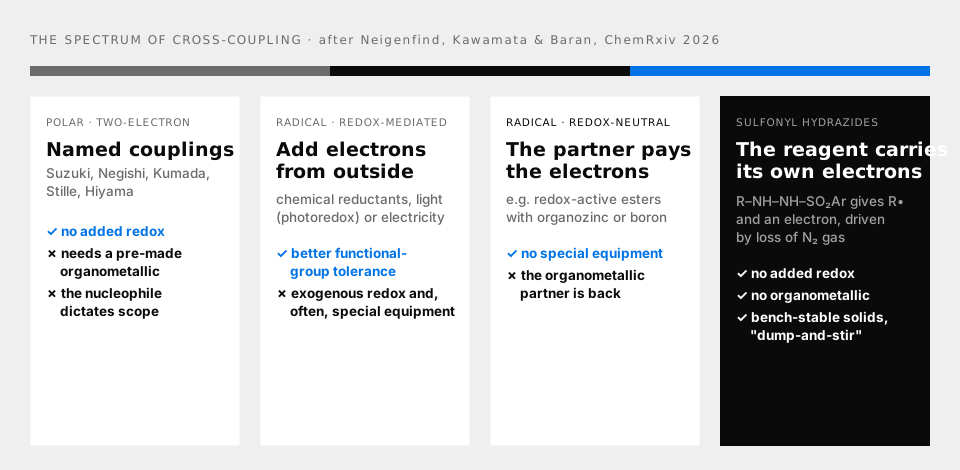
The way out is a sulfonyl hydrazide, a bench-stable, crystalline compound that can be prepared from ketones, aldehydes, amines, alcohols or alkyl halides. Under base it loses a sulfinate and then nitrogen gas, and in doing so delivers both an alkyl radical and the electron the nickel catalyst needs. The reagent is its own reductant. Reported in 2024 and fully elaborated in Science in 2025, the platform works with nickel, cobalt, iron and copper catalysts in what the authors call “dump-and-stir” reactions.
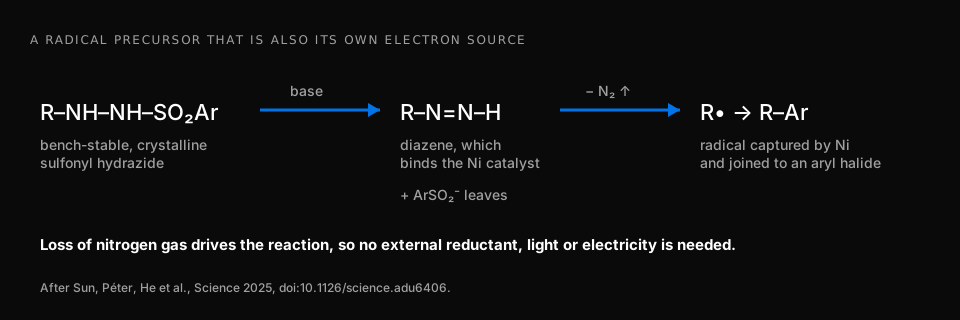
“The advantage of a dump-and-stir reaction is that when you scale it up, you don’t need specialized equipment.”
⚗ For chemists
Inside the mechanism
In the original Science study, a mild base liberates a diazene (R–N=N–H) from the sulfonyl hydrazide. The diazene associates to a high-spin Ni(II) complex in a Z configuration; after a nearly thermoneutral deprotonation, extrusion of N₂ has only a modest barrier (ΔG‡ ≈ 5 kcal mol⁻¹) and gives the alkyl radical and Ni(I). Oxidative addition of the aryl halide and radical capture follow. Later kinetic and computational work, summarised in the review, describes these as “nested rather than sequential” cycles. Because the departing sulfinate controls the rate of α-elimination, changing its aryl substituents tunes radical release about 100-fold (k = 0.03 min⁻¹ for p-OMe to 3.5 min⁻¹ for 3,5-diF at 330 K): a “traceless kinetics directing group.”
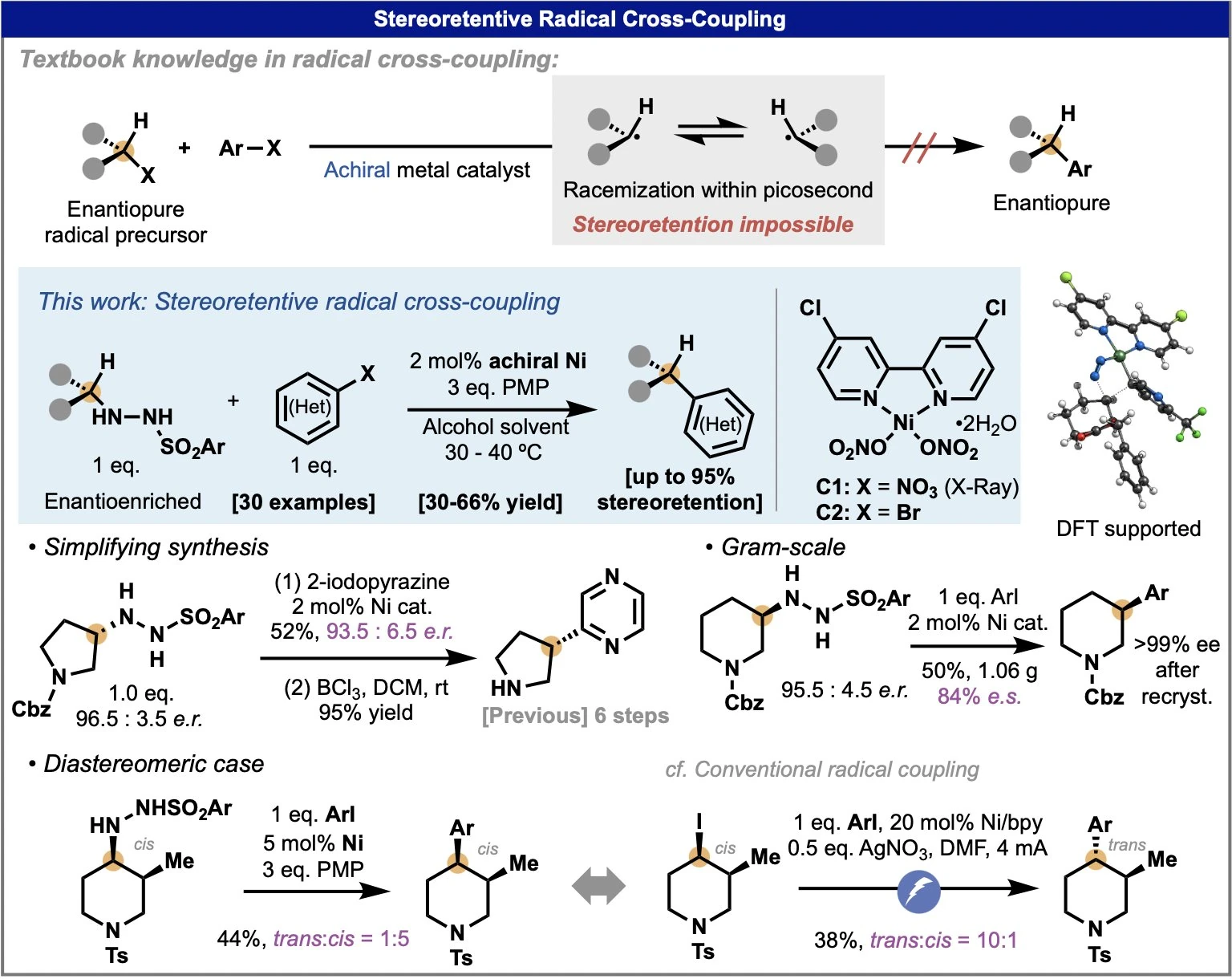
The most surprising result came next. Free radicals lose their 3D shape in picoseconds, so a coupling that keeps a stereocentre intact was, in the words of the lab’s 2025 preprint, “generally believed to be impossible.” In Nature in 2025 the lab reported the first stereoretentive radical cross-couplings: an enantioenriched sulfonyl hydrazide and an achiral nickel catalyst give products with enantiospecificity averaging 86–91% and up to 95%. A 2026 Science paper extended the idea to alkyl–alkyl bonds after screening roughly 1,000 conditions, reaching 80–96% e.s. The full story is told in Thinking in radicals.
Sugars, without the protecting groups
Gliflozins such as dapagliflozin and empagliflozin are diabetes drugs with a sugar joined to an aromatic ring through a carbon–carbon bond, a C-glycoside. The figure below, from the lab’s 2026 Nature paper, puts their market sizes at about US$8 billion and US$13 billion. The usual route protects the sugar, adds an organometallic at very low temperature, and then reduces and deprotects.
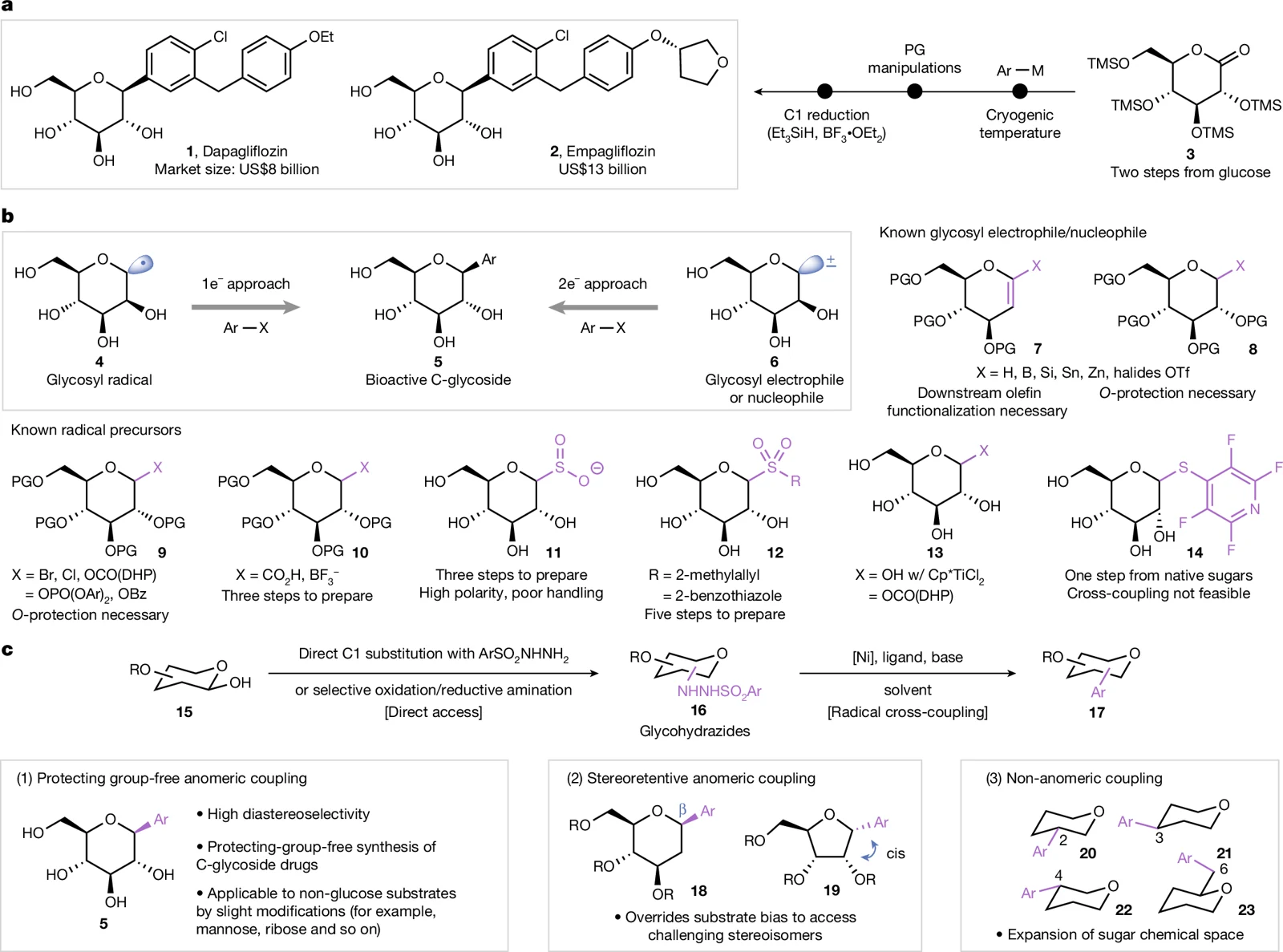
Native, unprotected sugars condense directly with an aryl sulfonyl hydrazine to give glycohydrazides, on decagram scale. With nickel, these couple to aryl halides, and the review reports that nearly all FDA-approved gliflozins can be made in a single cross-coupling step, replacing routes of 4 to 19 steps.
Boring reactions, on purpose
The test of a method in this lab is whether someone else uses it. Many of the papers above were written with medicinal and process chemists at Pfizer, Bristol Myers Squibb and other companies as co-authors; the 2025 Science paper on sulfonyl hydrazides is one. Industry points the lab at problems that matter, such as the C(sp³)-rich, three-dimensional fragments drug hunters want but cannot easily make.
Decarboxylative coupling also helped build a company. Vividion Therapeutics began at Scripps Research in 2014 as a collaboration between Phil Baran, Ben Cravatt and Jin-Quan Yu, its three co-founders. The company pairs the Cravatt lab’s chemoproteomic profiling, which maps where small molecules bind across thousands of proteins, with a custom library of covalent compounds that, in the words of its 2021 registration statement, is “uniquely enabled by advanced chemistry developed by Drs. Baran and Yu.” According to Phil Baran, decarboxylative cross-coupling was one of the main methods used to build that chemistry when Vividion was starting out. The collaboration continues: a 2026 preprint with Vividion scientists uses decarboxylative cross-coupling and sulfonyl hydrazides to make every possible regio- and stereoisomer of a set of piperidine and pyrrolidine probes for chemoproteomic screening.
On 5 August 2021, Bayer announced that it would acquire Vividion for US$1.5 billion upfront and up to $500 million in success-based milestone payments. The deal closed on 19 August 2021, and Vividion continues to operate as an independent subsidiary.
Bayer announcement, 5 August 2021
“Bayer strengthens drug discovery platform through acquisition of Vividion Therapeutics.”
“Our lab aims to invent boring reactions. The boring reactions are the best.”
Try the reagents
Sulfonyl hydrazides, sulfinates and redox-active esters are sold by several suppliers. The reagents deep dive lists them.
Toward a radical Suzuki
The 2026 review ends with a to-do list: carbon–nitrogen, carbon–oxygen and carbon–fluorine bonds; tertiary and acyl sulfonyl hydrazides; kilogram-scale preparation. Its ambition is a coupling with “operational ease akin to the venerable Suzuki coupling,” but for the saturated, three-dimensional carbon frameworks that the Suzuki reaction handles poorly.
“They would establish a new bond-forming logic in which radical generation is intrinsic to the reagent itself.”
The planning logic behind these couplings, and the map from using redox to deleting it, is told in radical retrosynthesis: the logic. A parallel line uses olefins as radical donors: reductive olefin cross-coupling. Electrochemistry is the other half of this story: many radical couplings are driven by electrons from an electrode. Continue with Electrochemistry, made practical, or see the methods at work in total synthesis.
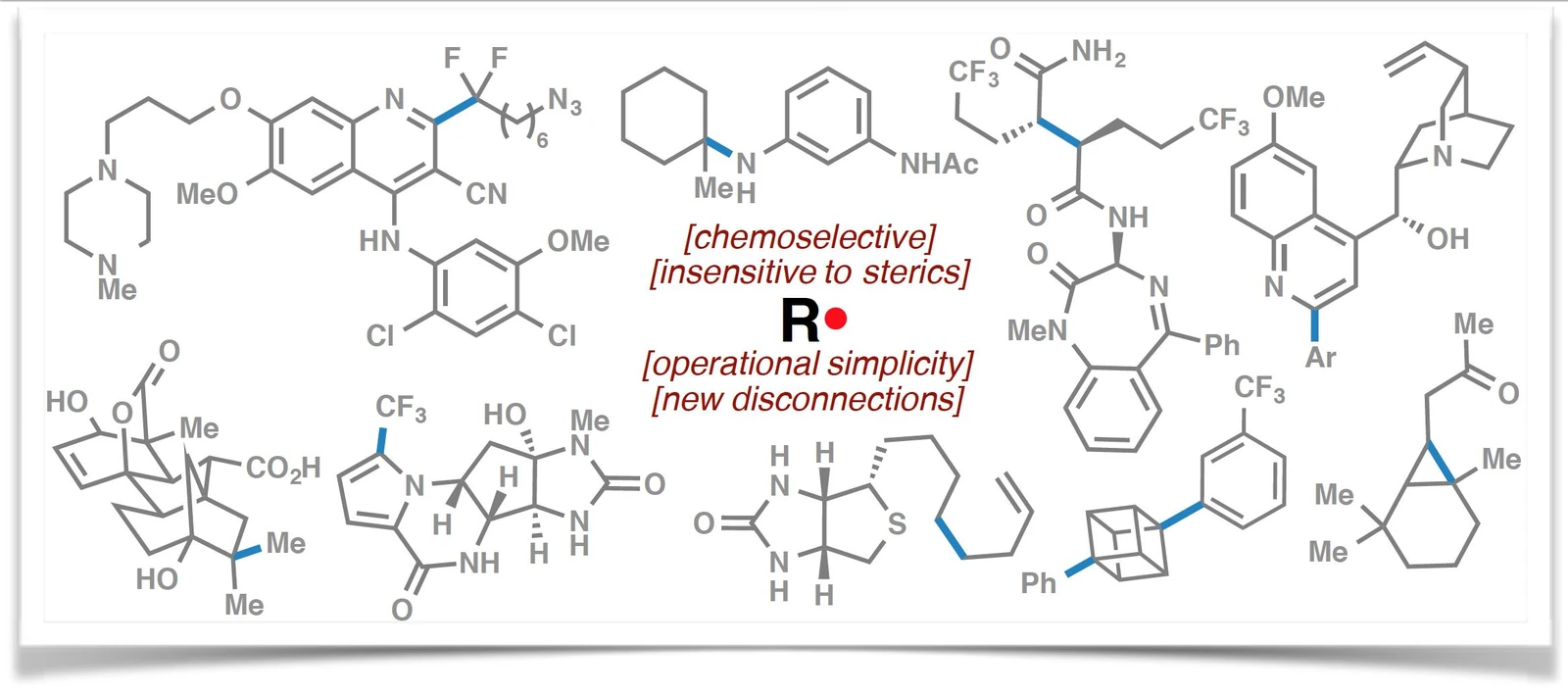
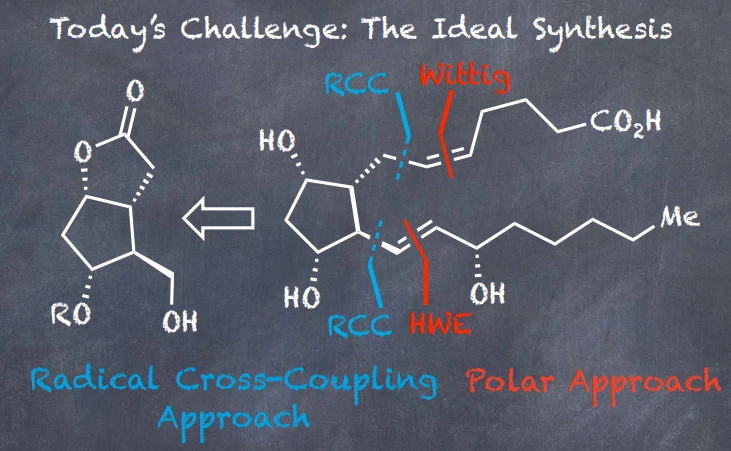 The logicThinking in radicals
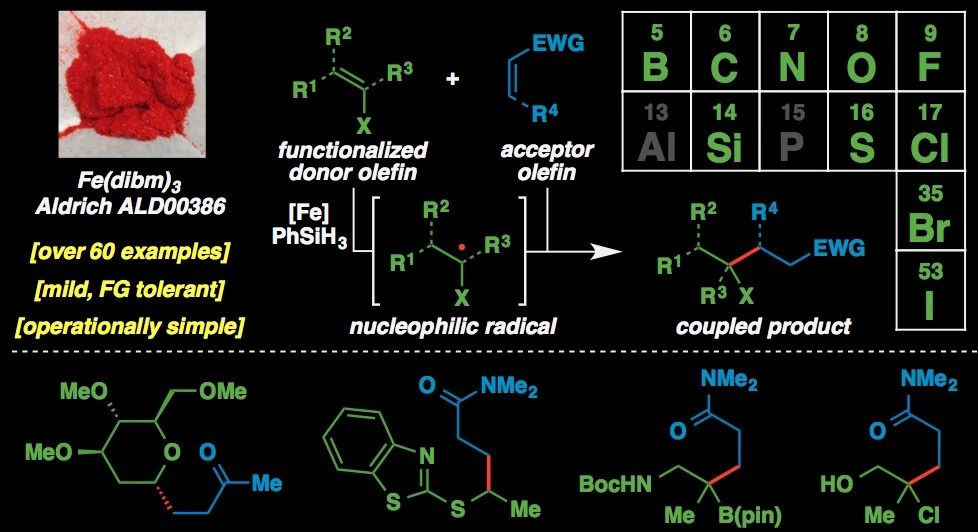 Olefins / MHATOlefins as radicals
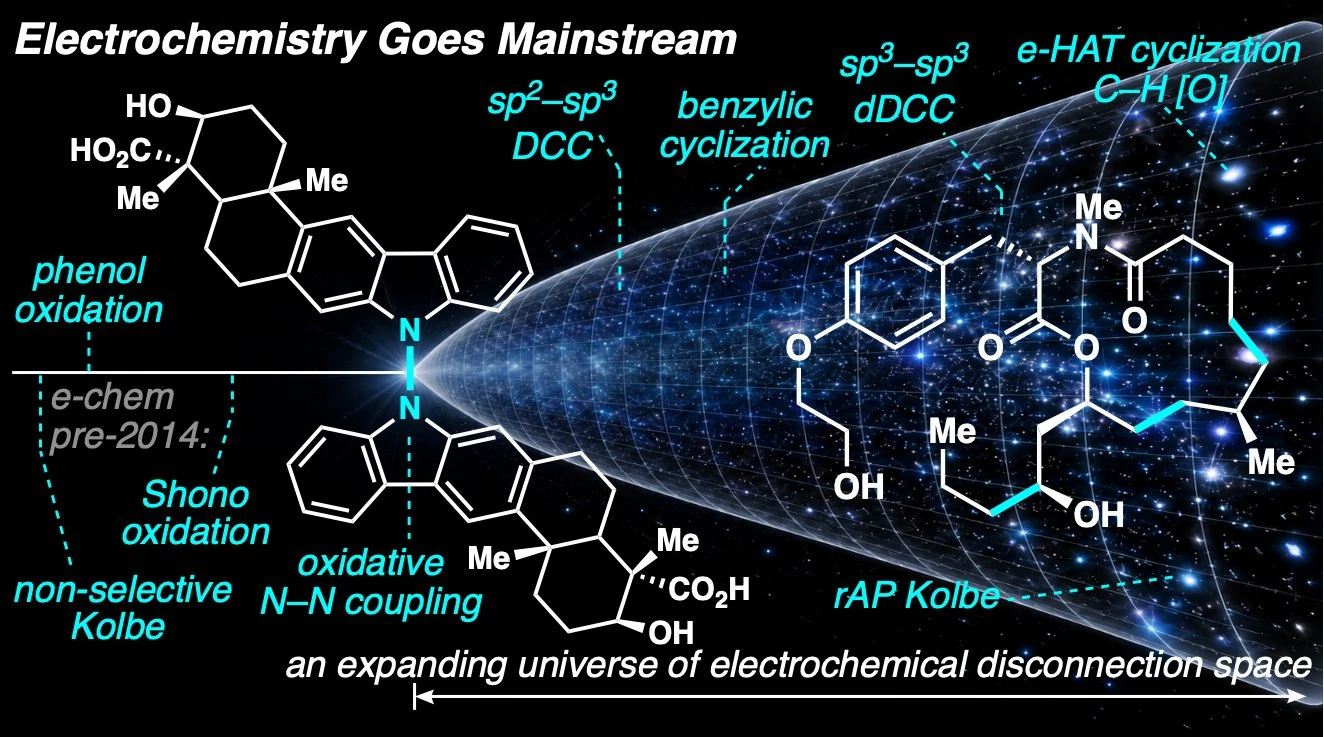 ElectrochemistryThe electron as a reagent
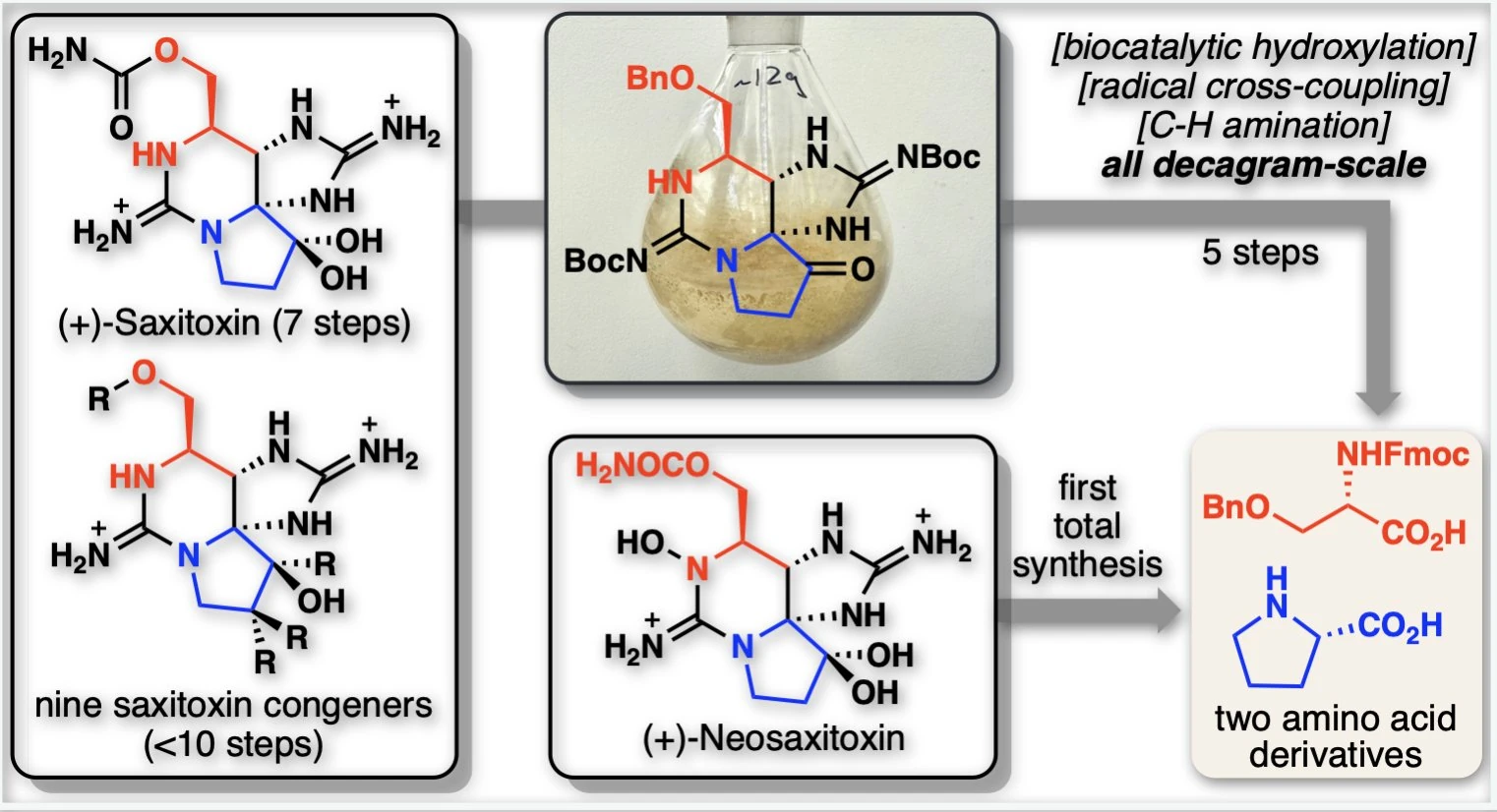 Total synthesisProving ground
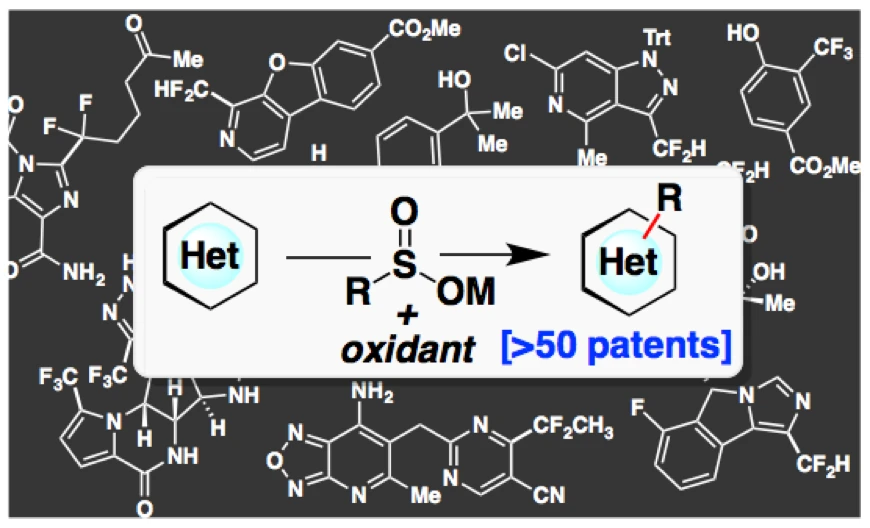 ReagentsReagents in a bottle
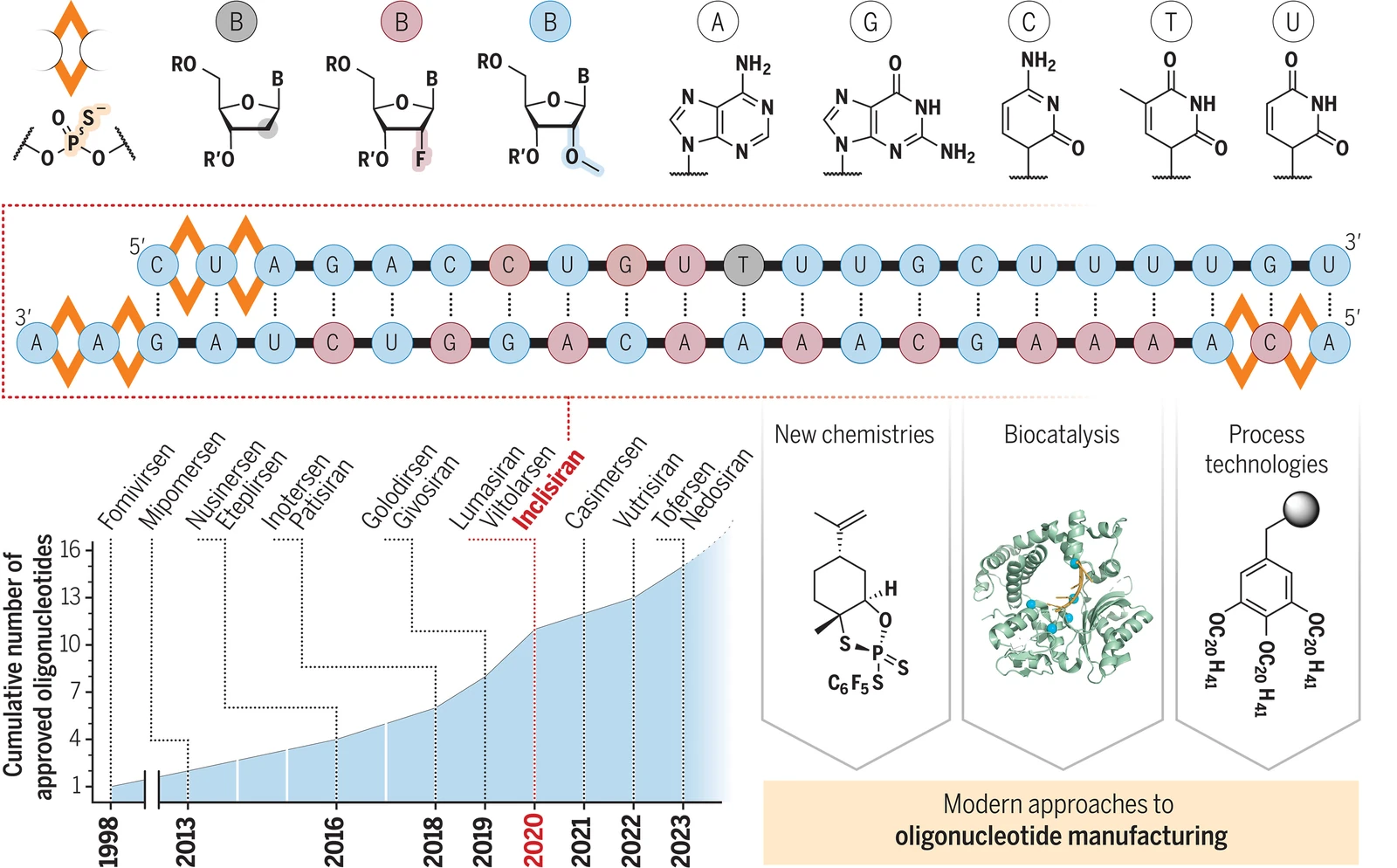 OligonucleotidesRewriting the backbone
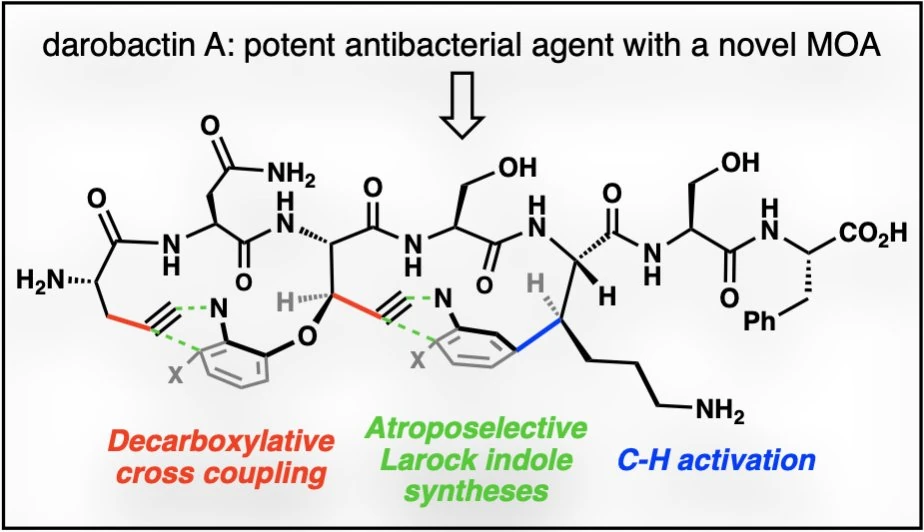 PeptidesRewriting the peptide
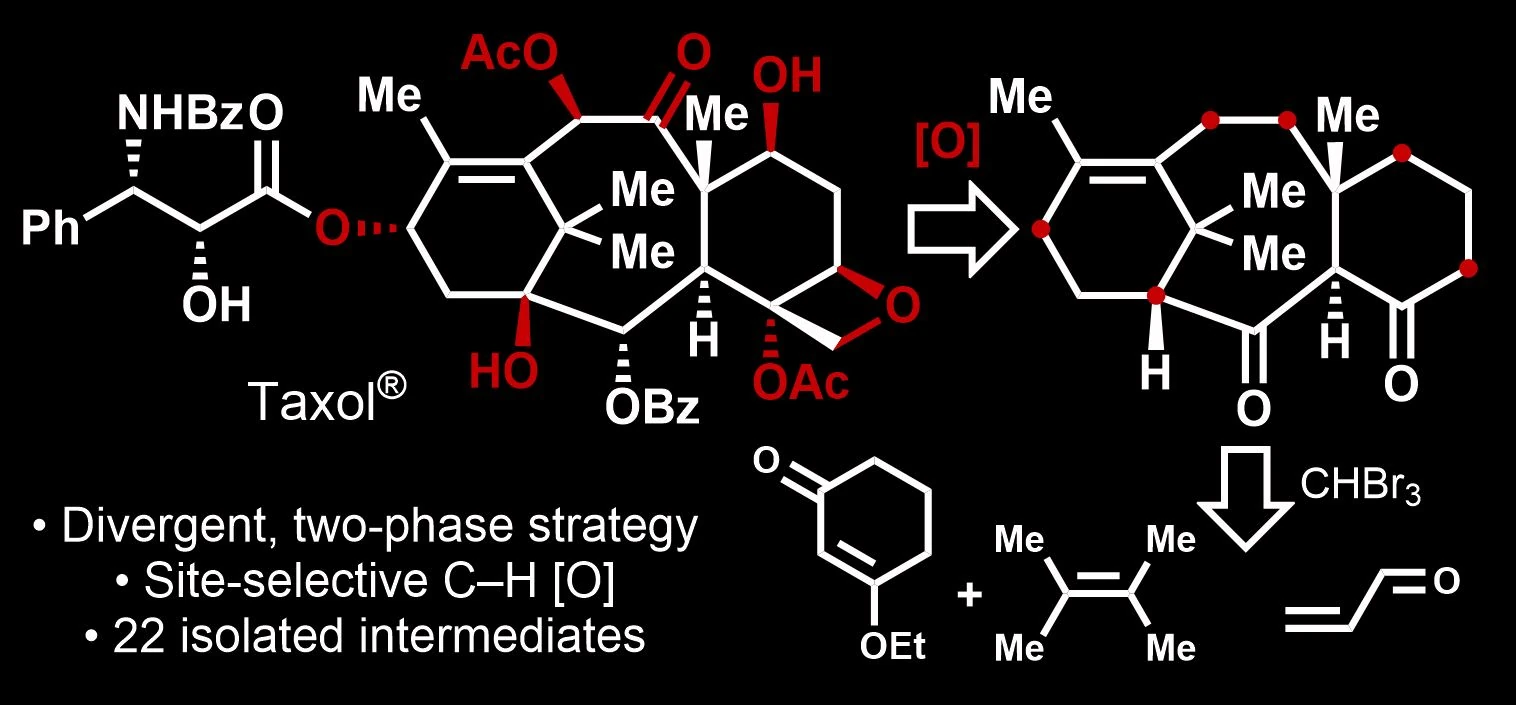 C–H functionalizationC–H logic