
The last step is the hardest
Medicinal chemists spend their days making small changes to promising molecules: a methyl here, a fluorine-bearing group there, a small ring swapped for another. Each change can alter how a drug is absorbed, how long it lasts and what it hits.
The trouble is that the molecules most useful in medicinal chemistry — nitrogen-rich heterocycles — “are often the least compliant with two-electron functionalization methods.” The lab’s 2019 Journal of Medicinal Chemistry miniperspective puts the test that every new reaction faces in a single question: “Does it work on an unsubstituted pyridine?” The usual workaround is to rebuild the molecule from scratch with the new group already in place, which is slow.
The cost can be startling. The lab’s 2012 Nature paper notes that one simple difluoromethylated pyridine was commercially available at $3,500 per gram. The same paper named the paradox: the very properties that make heterocycles so desirable biologically “render them challenging substrates for direct chemical functionalization,” from poor solubility to poisoning of catalysts.
Zinc sulfinates: radicals in a jar
The path to those reagents began in total synthesis. Work on pyrrole-imidazole alkaloids, including palau’amine, produced a radical-based oxidant that could install a key C–O bond in water. At the same time, conversations with pharmaceutical companies raised a parallel question: might similarly curious radical reactions also work under the nitrogen-rich constraints of modern medicine? The late Francesco Minisci had already shown that radicals have a “unique affinity” for charged heterocycles. After first expanding his reaction to arylboronic acids, the lab turned to a functional group whose radical decomposition pathway had been described, and then largely set aside.
In the 1990s, Bernard Langlois showed that sodium trifluoromethanesulfinate (Na-TFMS), a copper(II) salt and tert-butyl hydroperoxide (TBHP) could trifluoromethylate phenols and anilines. The chemistry “went largely unnoticed at the time, likely due to Langlois’ claim that the chemistry was limited to electron-rich arenes.” The 2019 review notes that, prior to 2012, his sulfinate reagent was “entirely absent from the patent literature.” The lab found that a simple oxidant could engage a wide range of electron-rich and electron-deficient heterocycles, “presumably due to the relatively low homolytic barrier of the sulfinate C–S bond.”
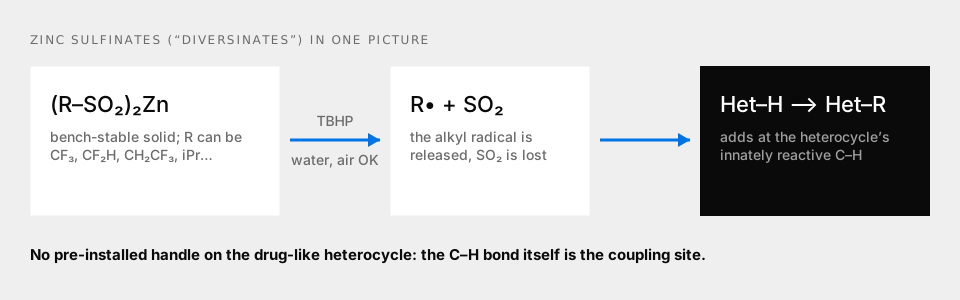
In 2011 (PNAS) a bench-stable trifluoromethyl radical source added CF3 groups directly to heterocycles at room temperature, on unprotected molecules, at their “innately reactive positions.” A zinc reagent for CF2H, Zn(SO2CF2H)2 or DFMS, followed in 2012 (JACS). Later that year, in Nature, the idea became a toolkit: zinc sulfinate salts that transfer alkyl radicals to heterocycles “in the presence of water and air,” with no protecting groups and even in tandem in one pot. Four of them were already sold by Sigma-Aldrich; a 2013 Nature Protocols paper explained how to make and purify the rest.
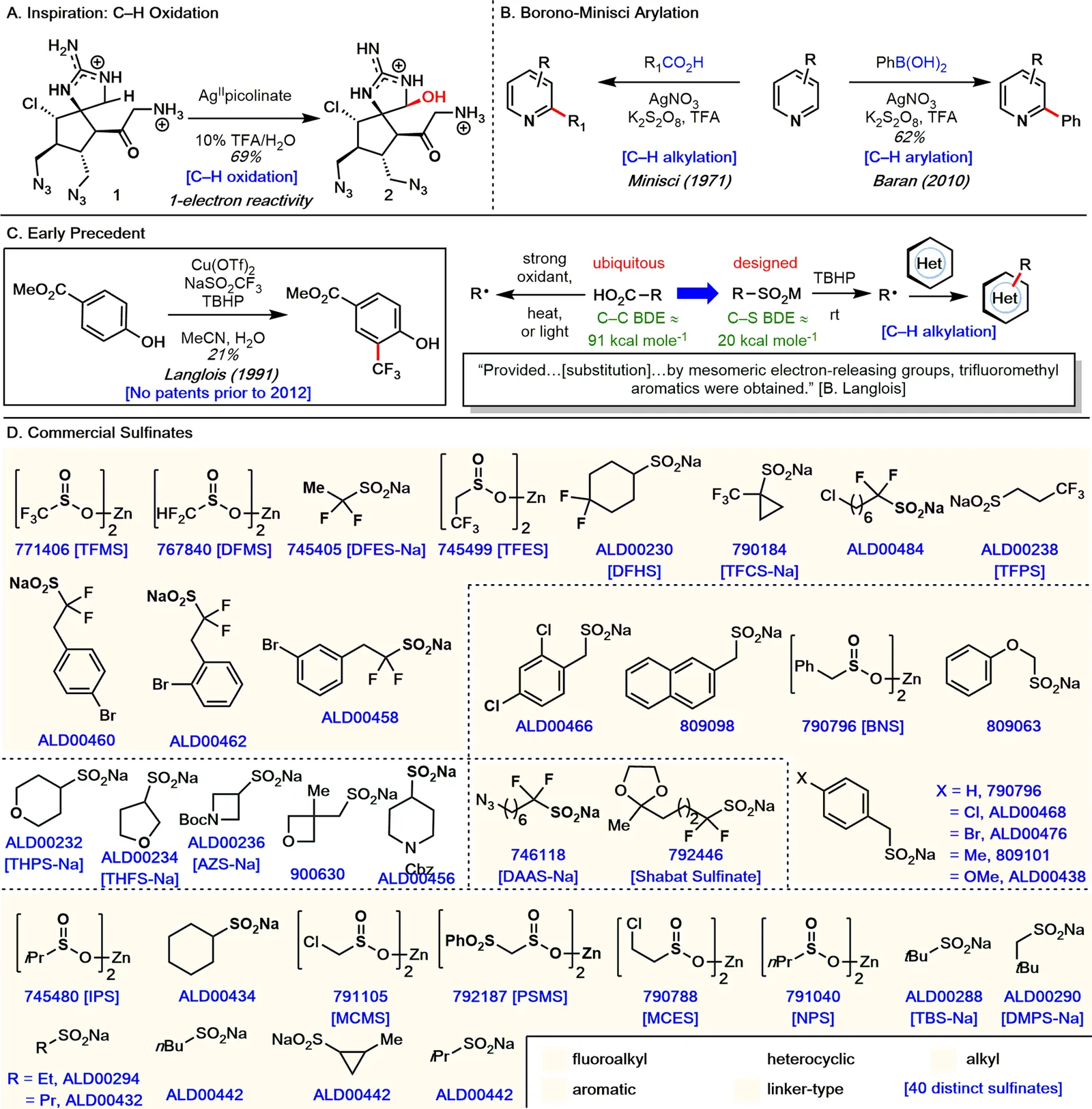
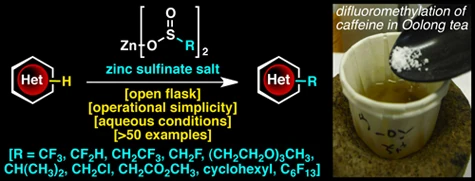
In commercial partnership with MilliporeSigma, the lab went on to develop 40 sulfinates for early- and late-stage arene modification: fluoroalkyl, alkyl, heterocyclic, aromatic and linker-type reagents, “each of which has seen near-immediate adoption by the medicinal chemistry community.” The experimental protocol is deliberately unfussy. The review emphasizes that the setup “requires no rigor” about an open flask, solvent purification (provided radical inhibitors are absent) or purity of starting materials — one-pot sequences are well tolerated. The procedure calls only for the substrate, oxidant (typically TBHP), solvent and the sulfinate; a Brønsted or Lewis acid can be added to improve yields or influence selectivity, but is not required.
Adoption showed up in the order book. By 2016, the lab’s JACS Perspective on radicals recorded, demand for DFMS had prompted large-scale production in 1 kg bottles, the reagents were sold in more than 27 countries, and roughly 80% of purchases were made by pharmaceutical companies. The same Perspective notes that sulfinate C–H functionalization works in unforgiving media, including cell lysate, oolong tea and a lactamase buffer, a robustness it likens to a “click” reaction.
“Sulfinates (now marketed as Diversinates) have seen alacritous adoption by the medicinal chemistry community, as evidenced by the recent outpour of both patent and primary reports.”
Reading the regioselectivity
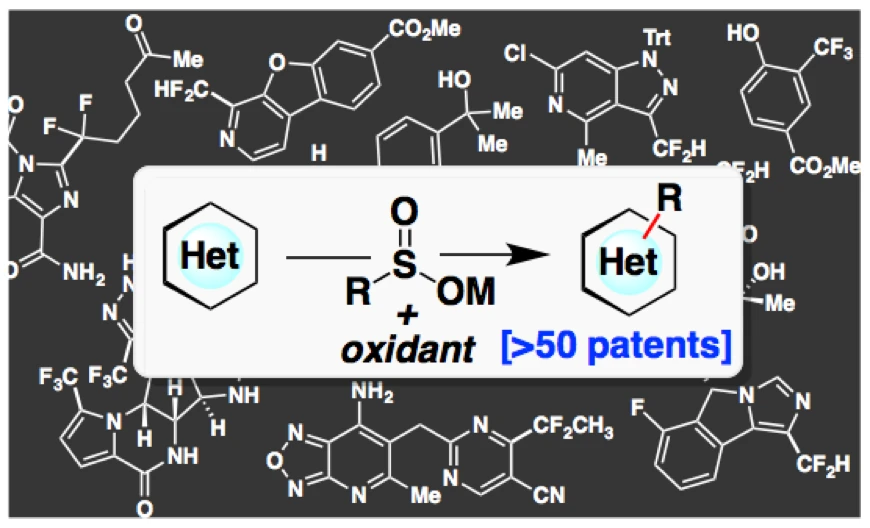
The 2019 review gathered more than 50 examples from industry and academia over the previous five years, “with an eye toward the identification of robust and predictable trends in reactivity.” Though “occasionally capricious,” the behavior of nitrogenous heterocycles with radical intermediates is “not without guiding principles.”
Adding an oxidant to a sulfinate salt generates a carbon-centred radical. Whether that radical is nucleophilic (alkyl, aryl, CF2H) or electrophilic (for example CF3), and whether the reaction is run acidic or neutral, decides where it adds. For nucleophilic radicals, an electron-poor heterocycle under acidic conditions is functionalized next to the nitrogen (C2); in a neutral medium the selectivity flips toward a radical conjugate addition (C3). Electron-donating substituents can hamper, or even preclude, reaction with nucleophilic radicals. Electrophilic radicals show the same preference on electron-deficient heteroarenes regardless of pH, though the effect is less pronounced. The true divergence appears when an electrophilic radical meets a heteroarene that bears a donor group: then the regioselectivity typical of electrophilic aromatic substitution takes over.
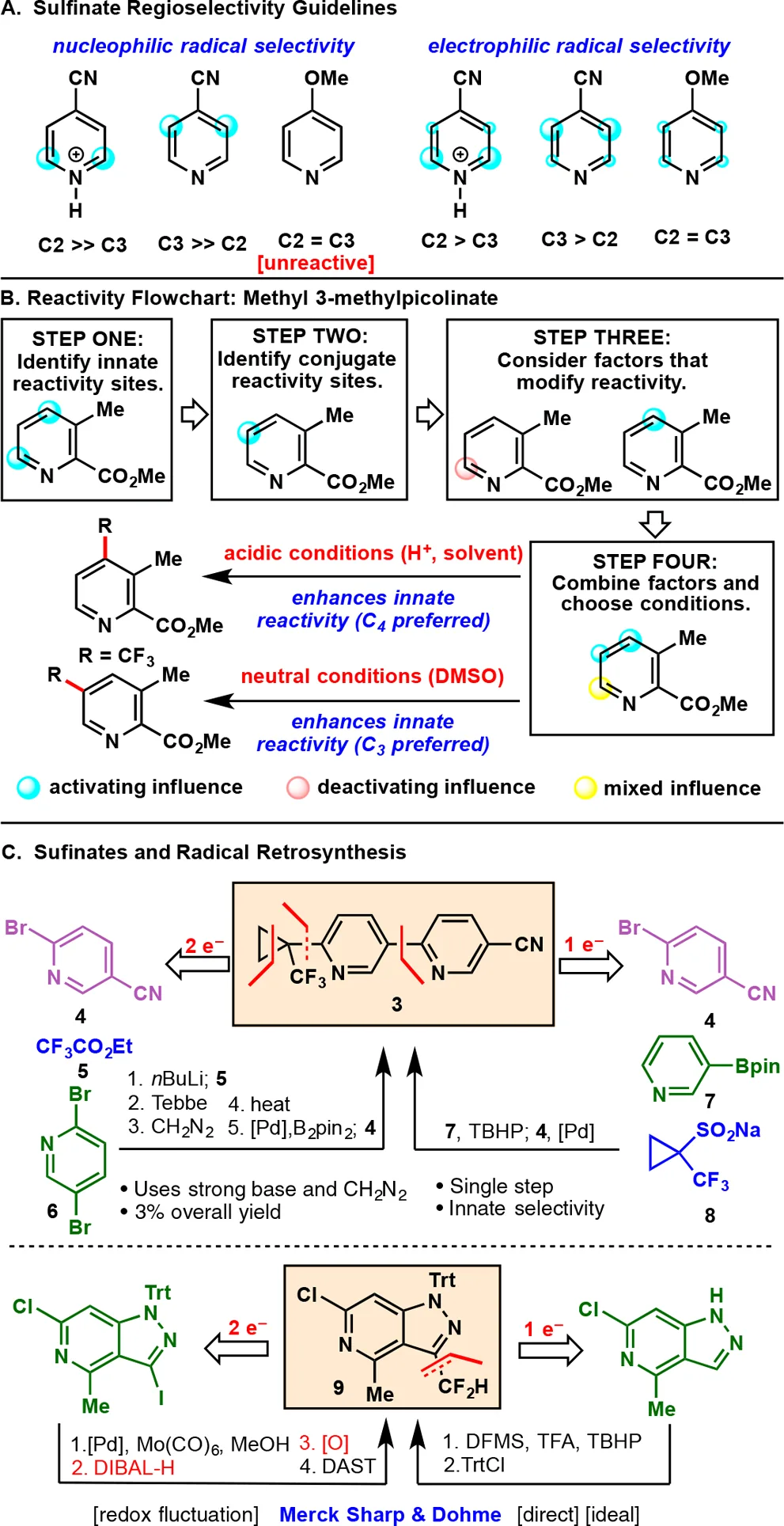
Those rules turn into shorter routes. The existing polar synthesis of bipyridine 3 installed a trifluoromethylcyclopropyl group over several steps from a dibromopyridine, then a borylation and a cross-coupling, and finished in 3% yield after multiple chromatographies. Treating a pyridine boronic ester with sulfinate 8 enabled a one-pot trifluoromethylcyclopropanation / Suzuki–Miyaura sequence and gave the same target after a single purification. Shortly afterwards, Merck disclosed two routes to a difluoromethylated pyrazolopyridine; the more expeditious one used DFMS, while the polar alternative required a number of non-strategic redox manipulations.
⚗ For chemists
Predicting the site, and using mixed products
Because sulfinate-derived radicals add at the innately reactive positions of the heterocycle, selectivity can often be predicted from the substrate rather than enforced with directing groups. The review highlights a practical shortcut used on a Gilead intermediate: basic 13C NMR predictions in ChemDraw flag the most electron-rich (furthest upfield) site, which is where an electrophilic trifluoromethyl radical prefers to add. Imperfect selectivity is not always a failure. In one Actelion example, a cyanopyridine was difluoromethylated at both the expected C2 position and C4; both products proved useful for structure–activity work. The radical’s character can also be chosen on purpose. In a Kyungpook National University study of ERRγ inverse agonists, otherwise identical conditions sent an electrophilic CF3 radical from TFMS onto an electron-rich phenol, while a nucleophilic isopropyl radical from sodium isopropylsulfinate (IPS) added exclusively at C2 of the embedded pyridine.
An afternoon, not a total synthesis
In medicinal chemistry the typical sulfinate reaction is either early-stage — decorating a building block that then fans out into a library — or late-stage, on an advanced intermediate. The review’s ten early-stage patent examples are not esoteric models. A difluoromethylated pyridine made this way was the primary building block of 40 analogues. The same difluoromethylation was used by H. Lundbeck A/S to reach a precursor that supported three medicinal leads. Without this innate C–H functionalization, the review notes, a “total synthesis” of each analogue would have been required, and “in the midst of a discovery campaign, it is entirely possible that they would not have been pursued at all.”
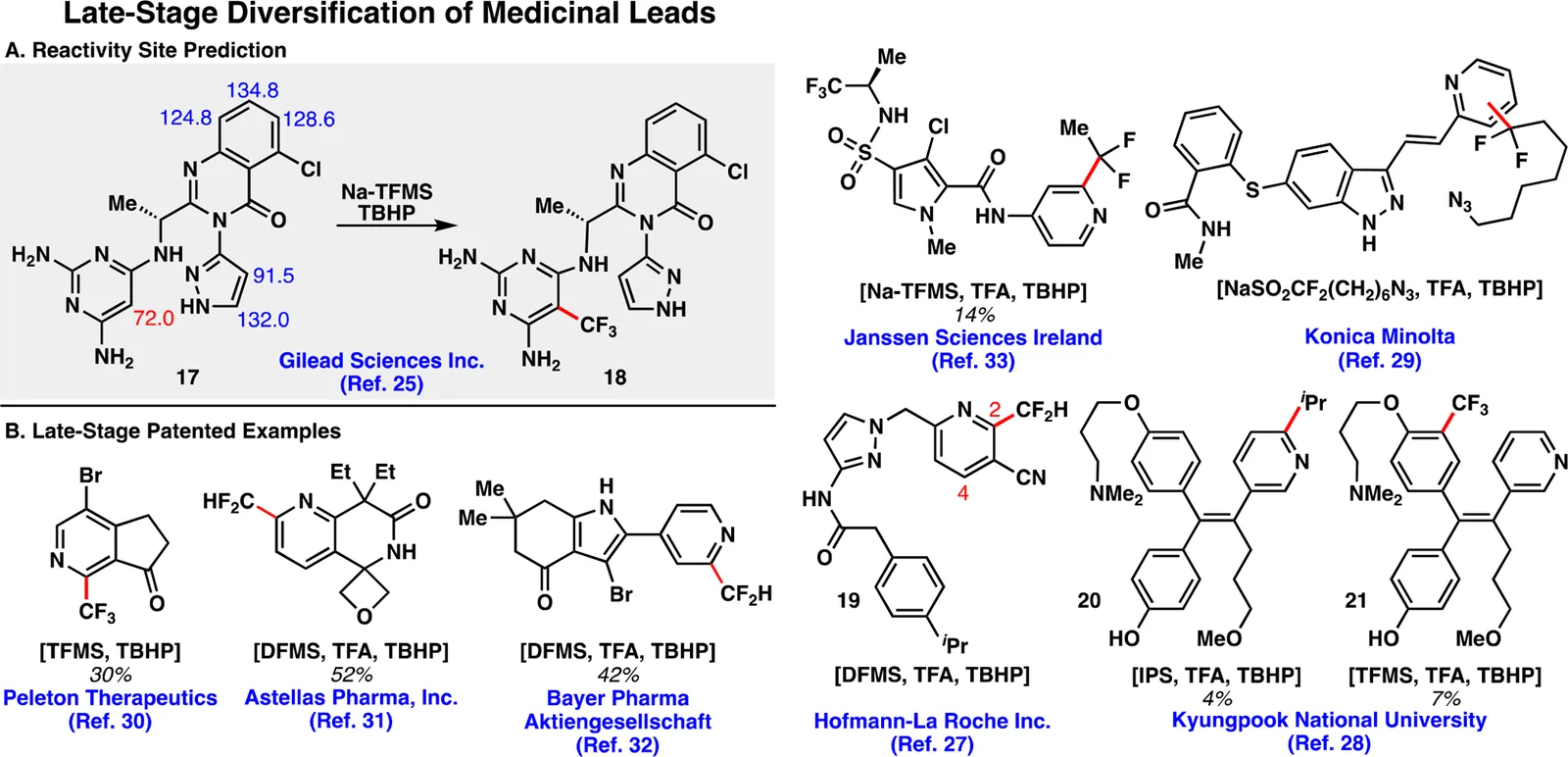
Pyridine is only a fraction of drug-lead space. Pyrazoles, pyrroles and bicyclic heteroarenes also undergo predictable early- or late-stage (fluoro)alkylation. Alternative polar routes, the review argues, would almost certainly be long enough to discourage immediate pursuit. The reactions remain remarkably selective even on sterically encumbered leads from Ono Pharmaceutical and the Shanghai Institute of Materia Medica. Yields are often modest and unoptimized; the value on display is “rapid, predictable expansion of developing pharmaceutical libraries.” Sulfinates have also been used as conjugation handles — for example an appended azido group, in work from Konica Minolta — for chemical biology.
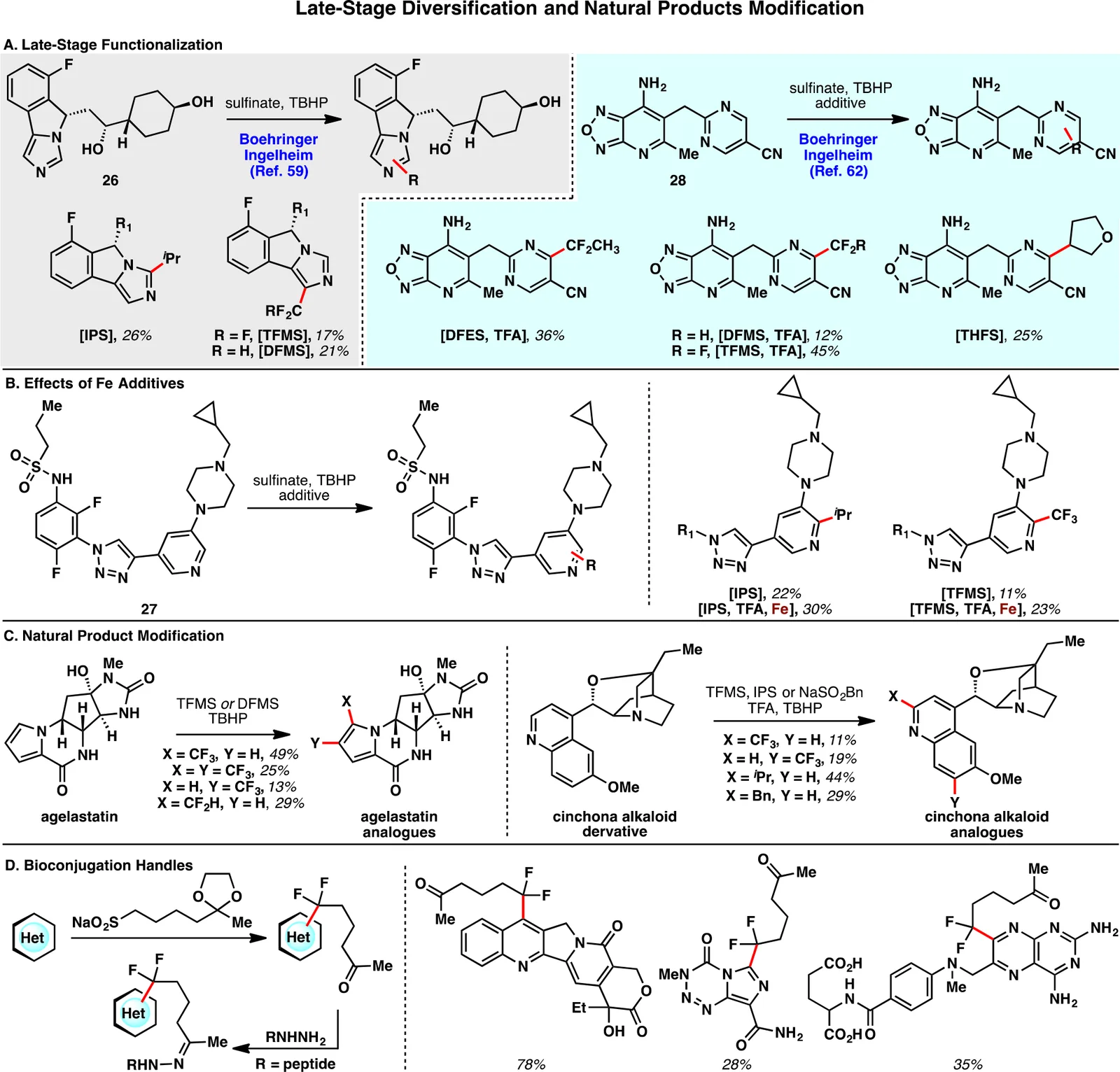
Boehringer Ingelheim reported the productive coupling of four distinct sulfinates to a single pyrimidine, each preferring the most electrophilic position. In a systematic study of late-stage selectivity on drug candidates, Kuttruff and co-workers found that Fe(III) salts, usually Fe(acac)3, can improve yields. Academic groups used the same reagents on natural products: the Waldmann laboratory prepared cinchona alkaloid (quinine) analogues and found that three of them showed enhanced selectivity in autophagy inhibition; the Molinski group made agelastatin analogues and noted the value of the mild TBHP conditions compared with photoinduced electron-transfer initiation. Shabat and co-workers exploited a masked methyl ketone sulfinate for heterocyclic tagging and peptide bioconjugation. Electrochemical and photochemical initiation can also be useful in specific cases.
“Sulfinates offer medicinal chemists an opportunistic retrosynthetic approach; disconnection priority can be placed on the parent scaffold, while peripheral substituents are duly treated as an afterthought rather than a primary consideration.”
Inspired by natural products, built for med chem
Several of the lab’s reagents were spin-offs of total synthesis. Palau’chlor (CBMG, 2014), a guanidine-based chlorinating reagent, was “inspired by a key chlorospirocyclization en route to pyrrole imidazole alkaloids,” the family that includes palau’amine. Chlorinated heteroarenes matter twice over: the chlorine tunes a molecule’s electronics and is a handle for later cross-coupling.
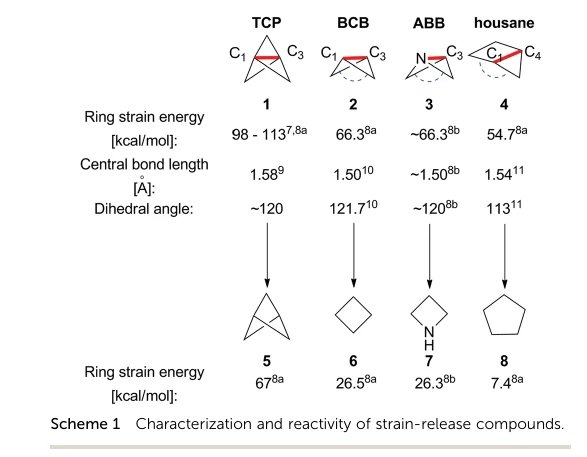
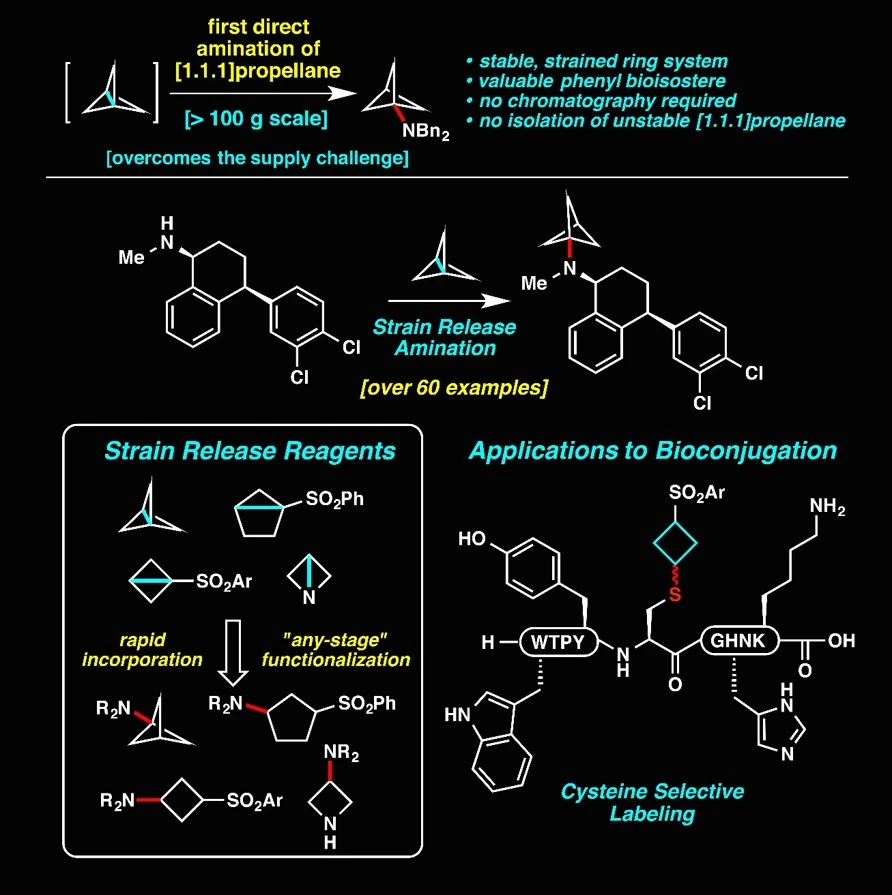
Strain-release amination answered a request from industry. Small strained rings such as bicyclo[1.1.1]pentanes, azetidines and cyclobutanes are prized by medicinal chemists as bioisosteres, but they were hard to attach. The 2016 Science paper describes how difficulties in making bicyclo[1.1.1]pentan-1-amine at Pfizer had led to the abandonment of a lead oncology candidate. The answer was to let amines react directly with the most strained C–C bond of [1.1.1]propellane, which stores roughly 60 kcal/mol, using “turbo amides.” The full study that followed in 2017 extended the idea to other heteroatoms and introduced a stereospecific strain-release cyclopentylation. That work helped set this area of chemistry in motion. In the years since, hundreds of papers have taken up strain-release functionalization of small rings: bicyclobutanes, [1.1.1]propellane and the bicyclo[1.1.1]pentanes (BCPs) derived from it, azabicyclobutanes and others. A 2020 review by Turkowska, Durka and Gryko, writing in Chemical Communications, put the 2016 work in those terms: “the real renaissance of strain-release driven transformations was launched by Baran and co-workers,” who, the authors note, also described the rings as “spring-loaded” molecules. The history, and the numbers, are in the next chapter, From curiosity to reagent.
In 2024 a Nature Chemistry paper added N–X anomeric amides as electrophilic halogenation reagents.
From curiosity to reagent
For more than three decades after it was first made, [1.1.1]propellane was studied far more than it was used. It tested theories of chemical bonding and served as a starting point for molecular rods, and physical organic chemists knew it far better than medicinal chemists did. In 2016 the lab, working with Pfizer, turned it from a curiosity into a reagent.
The chemistry began at Yale. Kenneth B. Wiberg, a physical organic chemist who spent much of his career on strained hydrocarbons, prepared the first bicyclo[1.1.0]butane in 1959 (J. Am. Chem. Soc. 1959) and bicyclo[1.1.1]pentane in 1964 (Tetrahedron Lett. 1964). [1.1.1]Propellane goes one step further: its two bridgehead carbons are joined directly, and every other bond at each of them points to the same side. Most chemists assumed it was too strained to exist. Wiberg’s calculations found no easy path by which it would fall apart, and in 1982 he and Frederick Walker made it (J. Am. Chem. Soc. 1982). Three years later Günter Szeimies and co-workers reported a new route to the parent hydrocarbon (J. Am. Chem. Soc. 1985), and modified versions of that route remain the most common way to make it. The central bond proved reactive. Radicals added across it (Tetrahedron Lett. 1986; J. Am. Chem. Soc. 1990). So did tert-butyllithium, which Ernest Della and colleagues found would generate propellane from a bromobicyclopentane and then add to it (Tetrahedron Lett. 1990). Piotr Kaszynski and Josef Michl used repeated additions to build rigid oligomers they called [n]staffanes, “a molecular-size ‘Tinkertoy’ construction set for nanotechnology” (J. Am. Chem. Soc. 1988). They later collected two decades of this work in Chemical Reviews (2000). Wiberg died in May 2026, at the age of 98.
For most of that time the literature was about bonding, spectra and materials. Before 2012, only 41% of the papers we could find that mention bicyclopentanes or [1.1.1]propellane are classified as organic chemistry. The rest belong mostly to physics, spectroscopy, and inorganic and theoretical chemistry. The lab’s 2017 account said the same of strained hydrocarbons in general. This science, it noted, “has largely been buried in the realm of physical organic chemistry literature” (J. Am. Chem. Soc. 2017). Two reviews use the same word for the period. A 2017 survey of propellanes is titled “From a Chemical Curiosity to ‘Explosive’ Materials” (Angew. Chem. Int. Ed. 2017), and a 2022 review of bicyclobutanes is subtitled “from curiosities to versatile reagents” (Chem. Sci. 2022).
Medicinal chemists noticed early, but only now and then. In 1993 Michael Barbachyn and colleagues reported a quinolone antibacterial carrying a bicyclo[1.1.1]pent-1-yl group (Bioorg. Med. Chem. Lett. 1993). In 1996 Roberto Pellicciari’s group made a bicyclopentane analogue of (S)-4-carboxyphenylglycine, a new kind of antagonist for group I metabotropic glutamate receptors (J. Med. Chem. 1996). A 2023 review notes that this result was “largely overlooked outside of this field for over a decade” (Shire & Anderson, JACS Au 2023). Drug discovery took notice in 2012. Antonia Stepan and colleagues at Pfizer replaced the central fluorophenyl ring of the γ-secretase inhibitor avagacestat (BMS-708,163) with a bicyclo[1.1.1]pentane (J. Med. Chem. 2012). The analogue was as potent as the original, more soluble and more permeable, and reached about four times the exposure in mice. In the same review’s words, “It was not until 2012 that interest in this field was truly kindled.”
Wanting the ring was easier than making it. The building block medicinal chemists most wanted, bicyclo[1.1.1]pentan-1-amine, had been made by several multistep routes, through bridgehead acids, azides, stannanes or hydrazines. Pfizer’s best route was a hydrohydrazination of propellane (Bunker et al., Org. Lett. 2011). The company’s process chemists still judged it unscalable: the propellane had to be distilled, the key step gave large exotherms, and the later intermediates were high-energy hydrazine derivatives. The 2016 Science paper records what this cost: difficulties in preparing the amine “led to the abandonment of a lead oncology clinical candidate.”
Pfizer brought the problem to the lab. The lab’s idea was to let an amine break propellane’s central bond, which stores roughly 60 kcal/mol, directly. There was little precedent. Organolithium reagents were known to add across the bond. Amines and amine surrogates added to another strained hydrocarbon, 1,3-dehydroadamantane, but only when they carried an acidic N–H (Tetrahedron Lett. 1983). In Szeimies’ laboratory, attempts to add magnesium amides to propellane had failed. A lithium amide gave about 20% of the product. The breakthrough came from Paul Knochel’s “turbo Grignard” (Angew. Chem. Int. Ed. 2004). Dibenzylamine treated with i-PrMgCl·LiCl became a “turbo amide,” which opened propellane in 73% yield. With phenyllithium used to make the propellane, the sequence ran at 60% on more than 100 g, and an outside vendor then scaled it up.
Gianatassio, Lopchuk and colleagues, with co-authors at Pfizer, called the general idea strain-release amination, and the reagents “strain release reagents.” Twenty-nine amines were “propellerized” directly, and six commercial drugs gained the ring in a single late-stage step. An azabicyclobutane did the same for azetidines, with 18 amines, and arylsulfonyl bicyclobutanes did it for cyclobutanes, with 16. Yehiel Gaoni had added benzylamine to such sulfones using the amine as the solvent at 140 °C (Tetrahedron Lett. 1988). The redesigned reagents worked under mild conditions and needed only a limiting amount of amine. One of them labelled the cysteine of a peptide completely selectively, in 91% isolated yield. A maleimide, the usual reagent for the job, gave multiple adducts with a cysteine-free peptide within an hour. The full account in 2017 added alcohols, thiols and acids, as well as a stereospecific “cyclopentylation.” It also records where the work came from: “the story of strain-release functionalization began in our lab when Pfizer approached us.”
The ring also turned up in the lab’s decarboxylative cross-coupling papers. In that chemistry a carboxylic acid is activated as a redox-active ester and becomes a carbon radical, and bridgehead acids are among the hardest substrates. In the 2016 iron-catalyzed coupling with arylzinc reagents, methyl 3-phenylbicyclo[1.1.1]pentane-1-carboxylate formed in 35% yield, against less than 2% under nickel catalysis. The authors noted that bicyclo[1.1.1] and cubane frameworks “have been outside of the realm of C–C coupling, even with alkyl halide starting materials” (J. Am. Chem. Soc. 2016). A 2018 nickel-promoted radical addition to a chiral sulfinimine gave a protected bicyclopentyl amino acid in 54% yield (Angew. Chem. Int. Ed. 2018). The same paper made a 3-fluorobicyclopentyl amino acid, Fmoc-protected, in 23% overall yield from bicyclo[1.1.1]pentane-1,3-dicarboxylic acid; the previous route had taken nine steps and given 2%. The 2021 platform for 1,2-difunctionalized bicyclopentanes depended on the same chemistry. A bridge-substituted acid was converted to its redox-active ester and borylated under the lab’s copper-catalyzed conditions, and decarboxylative cross-coupling was “essential to generating the aryl–BCP linkage” in the bioisosteres that followed (PNAS 2021). In the 2022 silver–nickel electrocatalytic arylation, a bicyclopentyl ester coupled with an iodoimidazole in 32% yield, or 16% from the bromide. Four benchmark methods tested alongside it gave none, or traces (J. Am. Chem. Soc. 2022).
How much did all this matter? The publication record gives a partial answer.
Bicyclopentanes, from curiosity to reagent, 1980–2026
2025 160 papers mention bicyclo[1.1.1]pentanes or [1.1.1]propellaneFull text, title or abstract; research articles and reviews (OpenAlex)
2025 134 BCP papers in organic chemistryThe same papers, limited to OpenAlex’s Organic Chemistry subfield: synthesis rather than spectra, physics or theory
2025 124 papers pair “strain-release” with these rings“Strain-release” or “strain release” with propellane, bicyclobutane, azabicyclobutane or bicyclo[1.1.1]pentane (OpenAlex)
2025 30 per 100 BCP papers cite a lab paper that makes BCPsCites strain-release amination (2016, 2017), the 2016, 2018 or 2022 decarboxylative couplings, or the 2021 or 2025 PNAS papers (OpenAlex, from 2016)
2025 93 papers cite strain-release aminationResearch articles and reviews citing Gianatassio, Lopchuk et al., Science 2016 (OpenAlex)
2025 74 papers cite the Pfizer BCP paperFor comparison: articles and reviews citing Stepan et al., J. Med. Chem. 2012 (OpenAlex)
2025 111 papers mention BCPs or [1.1.1]propellaneIndependent check: the same names in Europe PMC full texts and abstracts (sparse before 2000)
Show the numbers
| Year | Papers on BCPs and propellane | In organic chemistry | …that say “strain-release” | Share citing the lab | Citations: Science 2016 | Citations: Pfizer 2012 | Second index: Europe PMC |
|---|---|---|---|---|---|---|---|
| 1980 | 0 | 0 | 0 | 0 | 0 | 0 | 0 |
| 1981 | 2 | 1 | 1 | 0 | 0 | 0 | 0 |
| 1982 | 3 | 1 | 0 | 0 | 0 | 0 | 0 |
| 1983 | 1 | 0 | 0 | 0 | 0 | 0 | 0 |
| 1984 | 8 | 1 | 0 | 0 | 0 | 0 | 0 |
| 1985 | 7 | 2 | 0 | 0 | 0 | 0 | 0 |
| 1986 | 7 | 3 | 0 | 0 | 0 | 0 | 0 |
| 1987 | 5 | 3 | 0 | 0 | 0 | 0 | 0 |
| 1988 | 12 | 7 | 0 | 0 | 0 | 0 | 0 |
| 1989 | 10 | 6 | 0 | 0 | 0 | 0 | 0 |
| 1990 | 21 | 11 | 0 | 0 | 0 | 0 | 0 |
| 1991 | 20 | 9 | 0 | 0 | 0 | 0 | 1 |
| 1992 | 17 | 7 | 0 | 0 | 0 | 0 | 0 |
| 1993 | 11 | 3 | 0 | 0 | 0 | 0 | 0 |
| 1994 | 16 | 5 | 0 | 0 | 0 | 0 | 0 |
| 1995 | 13 | 7 | 0 | 0 | 0 | 0 | 1 |
| 1996 | 5 | 3 | 1 | 0 | 0 | 0 | 2 |
| 1997 | 9 | 5 | 0 | 0 | 0 | 0 | 1 |
| 1998 | 11 | 4 | 0 | 0 | 0 | 0 | 1 |
| 1999 | 4 | 3 | 0 | 0 | 0 | 0 | 1 |
| 2000 | 11 | 3 | 0 | 0 | 0 | 0 | 3 |
| 2001 | 15 | 7 | 0 | 0 | 0 | 0 | 4 |
| 2002 | 4 | 4 | 0 | 0 | 0 | 0 | 3 |
| 2003 | 9 | 1 | 0 | 0 | 0 | 0 | 0 |
| 2004 | 11 | 7 | 0 | 0 | 0 | 0 | 2 |
| 2005 | 8 | 3 | 0 | 0 | 0 | 0 | 3 |
| 2006 | 4 | 2 | 0 | 0 | 0 | 0 | 2 |
| 2007 | 6 | 1 | 0 | 0 | 0 | 0 | 6 |
| 2008 | 4 | 0 | 0 | 0 | 0 | 0 | 1 |
| 2009 | 6 | 0 | 0 | 0 | 0 | 0 | 8 |
| 2010 | 15 | 5 | 0 | 0 | 0 | 0 | 4 |
| 2011 | 10 | 2 | 0 | 0 | 0 | 0 | 4 |
| 2012 | 12 | 3 | 0 | 0 | 0 | 3 | 3 |
| 2013 | 8 | 3 | 0 | 0 | 0 | 2 | 1 |
| 2014 | 14 | 3 | 0 | 0 | 0 | 5 | 7 |
| 2015 | 11 | 3 | 0 | 0 | 0 | 8 | 7 |
| 2016 | 11 | 6 | 2 | 18.2 | 13 | 12 | 7 |
| 2017 | 16 | 8 | 2 | 43.8 | 18 | 10 | 10 |
| 2018 | 16 | 7 | 3 | 31.2 | 21 | 13 | 13 |
| 2019 | 29 | 19 | 11 | 51.7 | 34 | 18 | 20 |
| 2020 | 43 | 30 | 11 | 46.5 | 41 | 37 | 30 |
| 2021 | 68 | 46 | 19 | 29.4 | 34 | 25 | 44 |
| 2022 | 63 | 44 | 31 | 28.6 | 40 | 29 | 47 |
| 2023 | 142 | 104 | 50 | 31.7 | 61 | 43 | 73 |
| 2024 | 151 | 115 | 85 | 25.8 | 81 | 66 | 83 |
| 2025 | 160 | 134 | 124 | 30 | 93 | 74 | 111 |
| 2026* | 193 | 149 | 153 | 22.8 | 89 | 71 | 110 |
| Total | 1,222 | 790 | 493 | 359.7 | 525 | 416 | 613 |
* 2026: partial year, counted on 16 November 2026.
The curve has three phases. Wiberg’s era shows as a small rise around 1990, about twenty papers a year. A long plateau follows: about nine papers a year from 2000 to 2015, only three of them in organic chemistry. Then the count climbs, from 11 papers in 2016 to 29 in 2019, 68 in 2021 and 160 in 2025, with 193 already counted in 2026. Over the same period the index’s organic chemistry full texts only doubled. Our count for 2012–2022 is consistent with the 2023 review’s estimate of “over 250 papers involving BCPs in the primary chemical literature.” Almost none of the growth is the lab’s own: 888 of the 892 papers since 2016 have no author from the group. The phrase has a clear starting point. In Europe PMC, no paper before the January 2016 Science paper pairs “strain-release” with propellane, bicyclobutane or bicyclopentane. Physical organic chemists had used the words to analyze reaction rates, as in a 1996 paper titled “Strain release is not enough,” but not as the name of a synthetic method. Since 2016, OpenAlex counts nearly 500 papers that pair them.
The chart cannot settle everything. The Pfizer paper and the Science paper are four years apart, and the steepest rise begins around 2019, after both. A single bend fitted to the whole curve falls at 2016, but for organic chemistry papers alone it fits about as well at 2012. Citations divide in a similar way. Since 2016, about one in five bicyclopentane papers cites the two strain-release papers. Counting the lab’s decarboxylative-coupling and 1,2-bicyclopentane papers as well, 263 of 892 (29%) cite at least one lab paper that makes a bicyclopentane. Pfizer’s 2012 paper is cited by 255 (29%). Most, 59%, cite neither. The Science paper has been cited more often than the Pfizer paper in every year since 2016. The fairest summary is that Pfizer showed why chemists should want the ring, and strain-release amination gave them the first general way to install it, along with a name for the idea.
Other groups soon extended the chemistry. Paul Knochel’s group, with Novartis, made bicyclopentane mimics of internal alkynes and para-disubstituted benzenes from propellane (2017), and Masanobu Uchiyama’s group reported a radical multicomponent carboamination (2017). Edward Anderson’s group, with Pfizer’s Stepan, used a classical triethylborane-initiated radical addition to make highly functionalized 1-halo-3-substituted bicyclopentanes (2018). Patrick Walsh’s group added 2-azaallyl anions to make bicyclopentyl benzylamines (2018), and James Gleason’s group developed an aminoalkylation that gives 3-alkylbicyclopentan-1-amines directly (2019). Varinder Aggarwal’s group used 1,2-metallate rearrangements of boronate complexes (2020), and David MacMillan’s group reported a copper-mediated synthesis of drug-like bicyclopentanes (2020). Daniele Leonori’s group titled its nitrogen-radical method a “divergent strain-release amino-functionalization” of propellane (2020). Reviews have since recorded where the idea came from. Writing in Chemical Science, chemists at Janssen and two universities called 2016 “a watershed moment for reinvigorating interest in BCBs,” when “Baran and co-workers investigated the reaction of BCBs with amide nucleophiles” (Kelly et al., 2022). A 2023 review in Communications Chemistry describes the addition of amines to arylsulfonyl bicyclobutanes as “pioneered by Baran and co-workers” (Golfmann & Walker, 2023). The 2023 JACS Au review credits the lab’s phenyllithium protocol with improving “the yield, scalability, and purity” of propellane, and its turbo-amide method with “rendering the exploration of N-substituted BCPs in drug discovery far easier.” The 2020 Chemical Communications review quoted in the previous chapter goes furthest, crediting the lab with launching “the real renaissance of strain-release driven transformations” (Turkowska, Durka & Gryko, 2020).
The lab has returned to these rings several times. In 2021, again with Pfizer, it made 1,2-difunctionalized bicyclopentanes as long-sought mimics of ortho- and meta-substituted benzenes (PNAS 2021). A 2024 review calls this “the first investigation of 1,2-BCPs as an isosteric replacement for ortho-benzene” (Diepers & Walker, 2024). In 2025, with Benjamin Cravatt’s group, the lab used strain-release functionalization of 1-azabicyclobutanes to build enantiocontrolled azetidine libraries for chemical proteomics (J. Am. Chem. Soc. 2025). With Lara Malins, Pavel Mykhailiuk and their groups, it showed that dibromocarbene addition to bicyclobutanes gives substituted bicyclopentanes without using propellane at all (PNAS 2025). And a Ni-electrocatalytic method now assembles 1,1-diaryl cyclobutanes, azetidines and oxetanes from three components (Nature Chemistry 2026).
Sulfonyl hydrazides, now from a catalogue
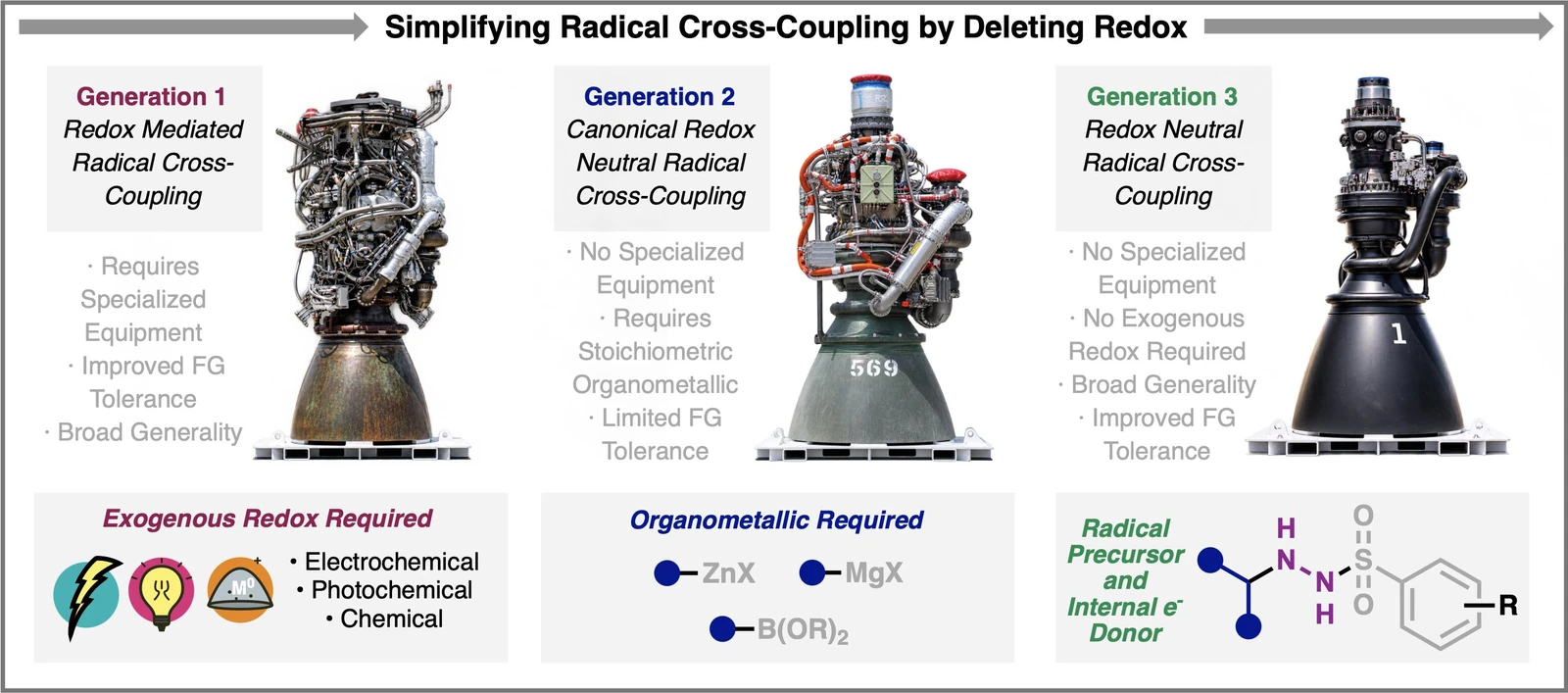
The newest reagents are also the simplest to use. Sulfonyl hydrazides are “stable and usually crystalline substances” that release an alkyl radical and an electron at the same time, so a coupling needs no external reductant, light or electricity.
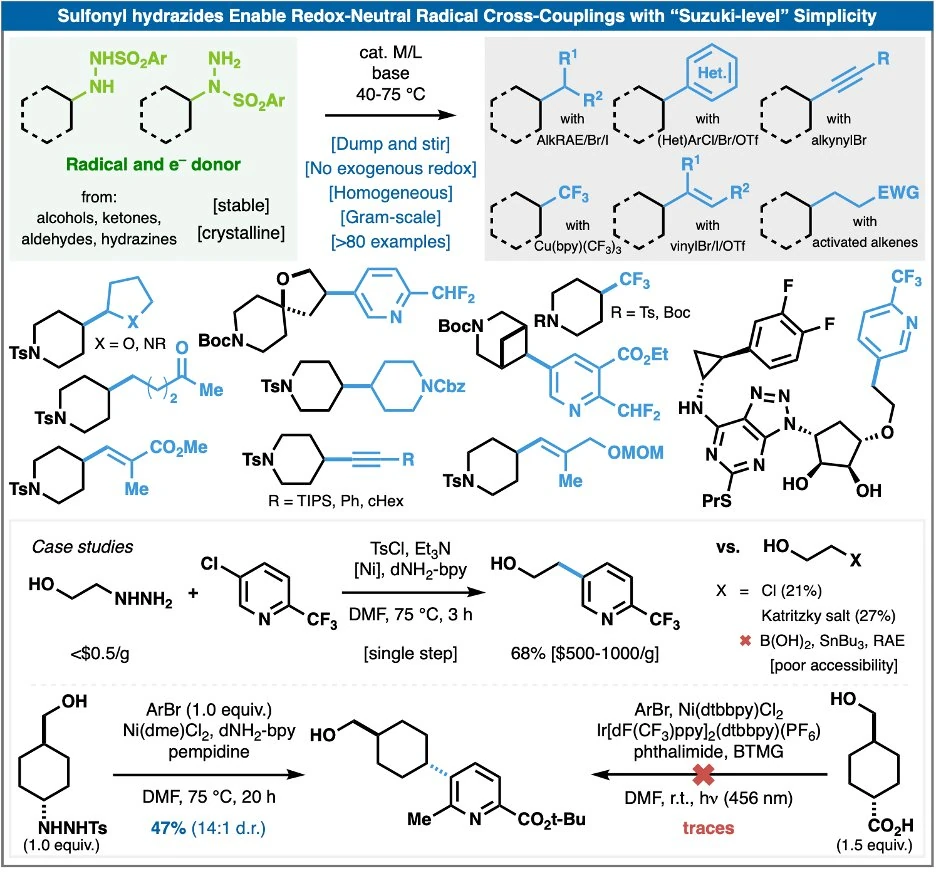
The 2025 Science paper calls the reactions “homogeneous, water tolerant, dump-and-stir.” A follow-up in Angewandte built a toolbox of 14 fragments that medicinal chemists reach for most, from methyl and CD3 to cyclopropyl, oxetane, azetidine and bicyclopentyl, across more than 60 heteroaryl halides; the 2026 review notes that many of them are now commercially available.
Suppliers list sulfonyl hydrazides, alkyl sulfinates and TCNHPI redox-active esters for radical cross-coupling. Knight Chemicals sells a starter kit, KITT 1.0, with nine sulfonyl hydrazides (1 g each), ligands and a nickel precatalyst, and publishes a user guide. Links are listed for convenience; check each supplier for current availability.
Beyond carbon–carbon
The hydrazide idea, losing N2 to make a radical, keeps finding new uses. In 2026 the lab reported a highly chemoselective route from alkyl hydrazines to alkyl–sulfur compounds (Nature Chemistry) and a nickel-catalysed, directed C(sp2)–H alkylation with alkyl sulfonyl hydrazides at low temperature (Nature Synthesis). The review on deleting redox lists C–N, C–O and C–F bonds and kilogram-scale reagent preparation as next goals.
The full story of radical cross-coupling
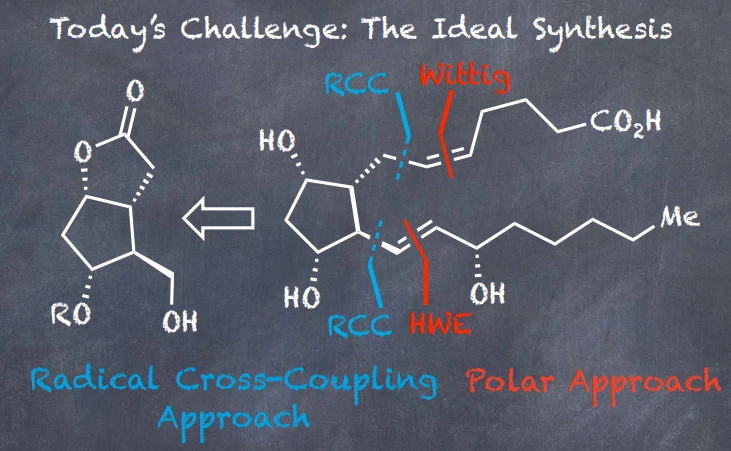
How these reagents fit into eighty years of cross-coupling, from polar bonds to deleting redox. See also the planning logic and reductive olefin coupling.
 The logicThinking in radicals
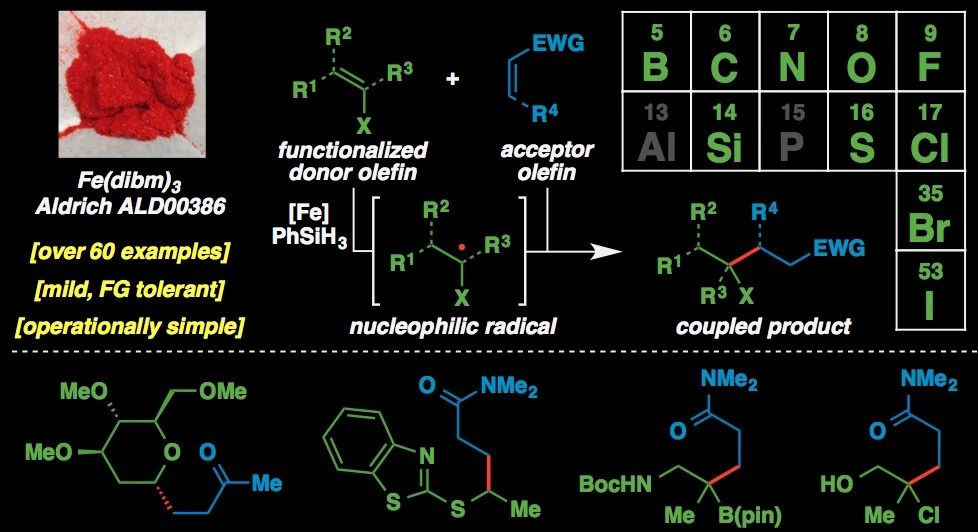 Olefins / MHATOlefins as radicals
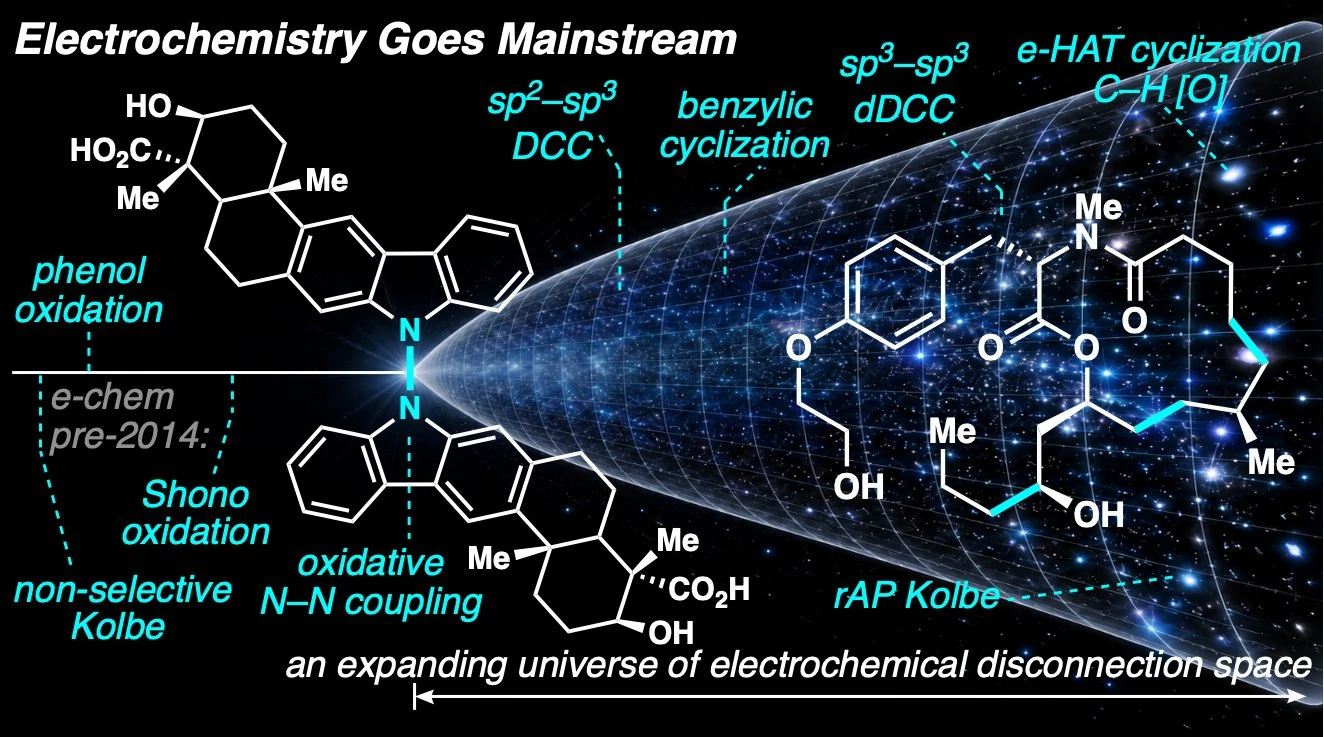 ElectrochemistryThe electron as a reagent
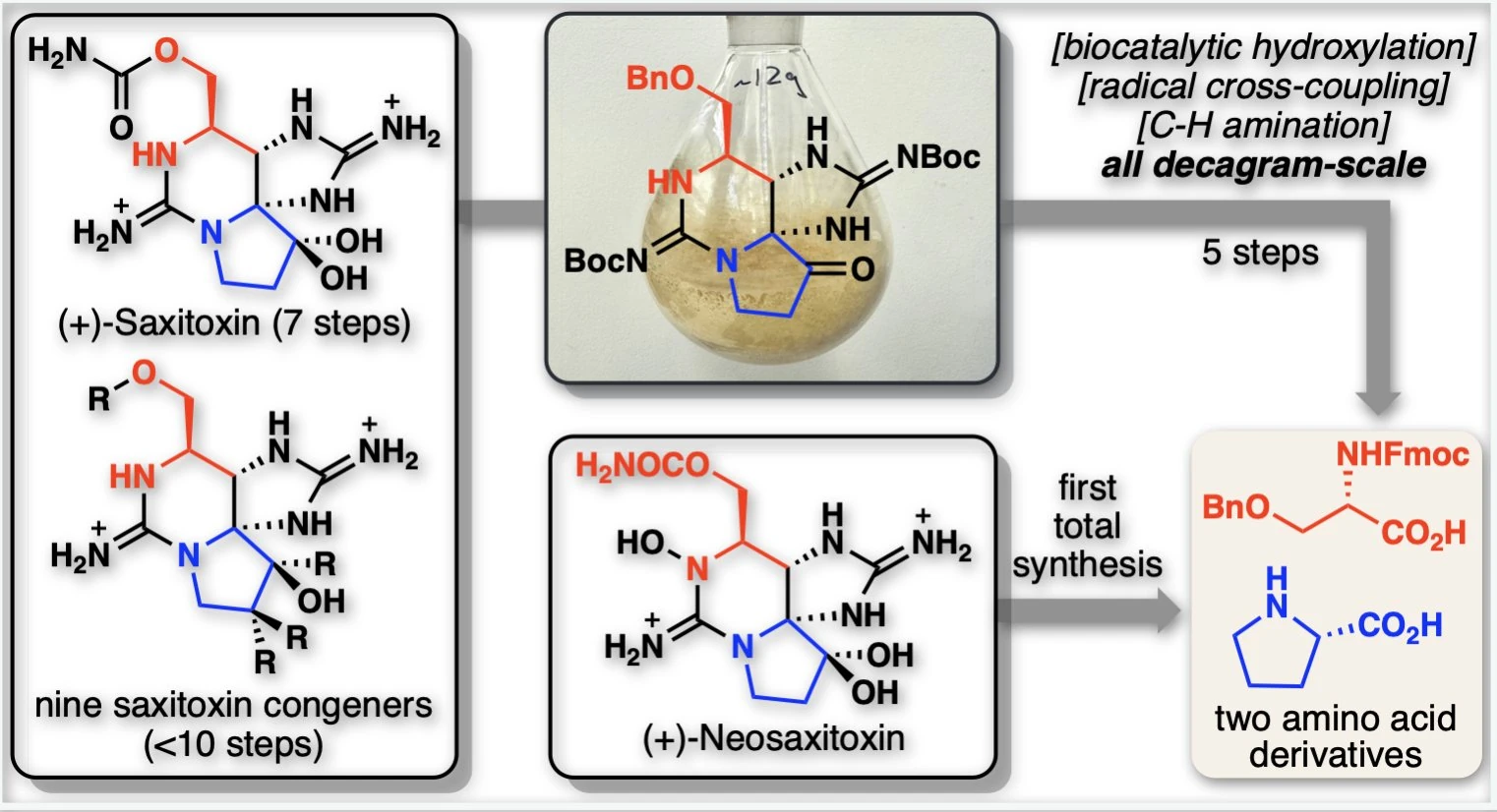 Total synthesisProving ground
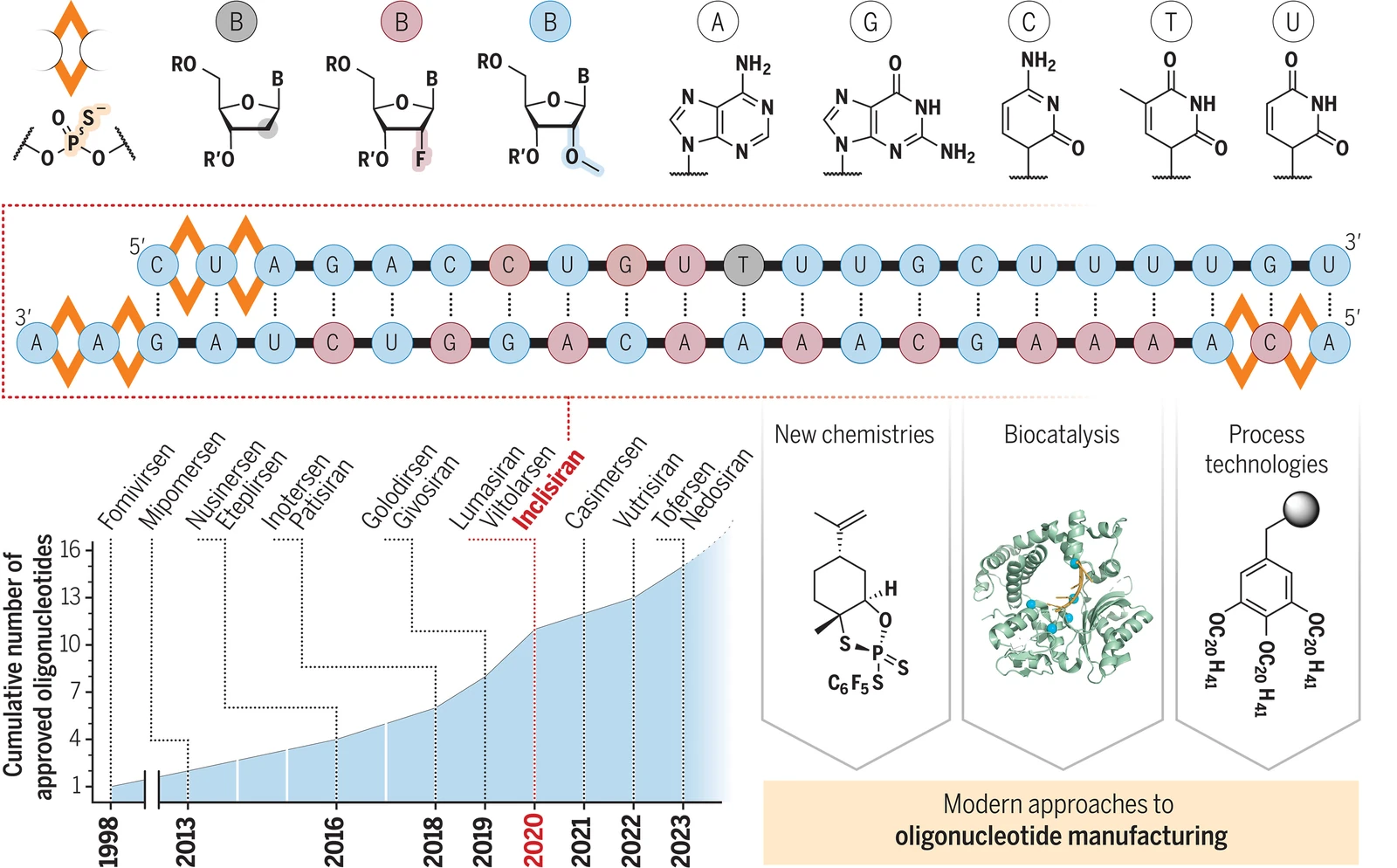 OligonucleotidesRewriting the backbone
 PeptidesRewriting the peptide
 C–H functionalizationC–H logic