
Why a peptide fights back
A peptide is a short protein: a chain of amino acids strung together by amide bonds. Biology uses them as hormones, signals and weapons, and drug hunters love them because they can grip a target with the precision of a key in a lock. The trouble begins the moment a chemist wants to change one.
Every amino acid carries a side chain, and those side chains bristle with the very groups — acids, amines, alcohols, thiols — that most reactions are designed to attack. Reach in to modify one residue and you risk touching a dozen others, or scrambling the delicate three-dimensional shape that makes the peptide work. Worse, each building block is chiral: a tiny nudge can flip a carbon from its natural left-handed form to the mirror-image right, a silent error called epimerisation that can quietly destroy a drug’s activity.
For decades the honest answer was to avoid the problem. If you wanted a peptide with an unusual residue, you made that exotic amino acid from scratch, in its own multi-step synthesis, before you ever began stitching the chain together. The lab asked a different question: what if the twenty ordinary amino acids nature already provides could be edited in place — late in a synthesis, on an intact peptide, without protecting everything else first?
Turning an acid into a handle
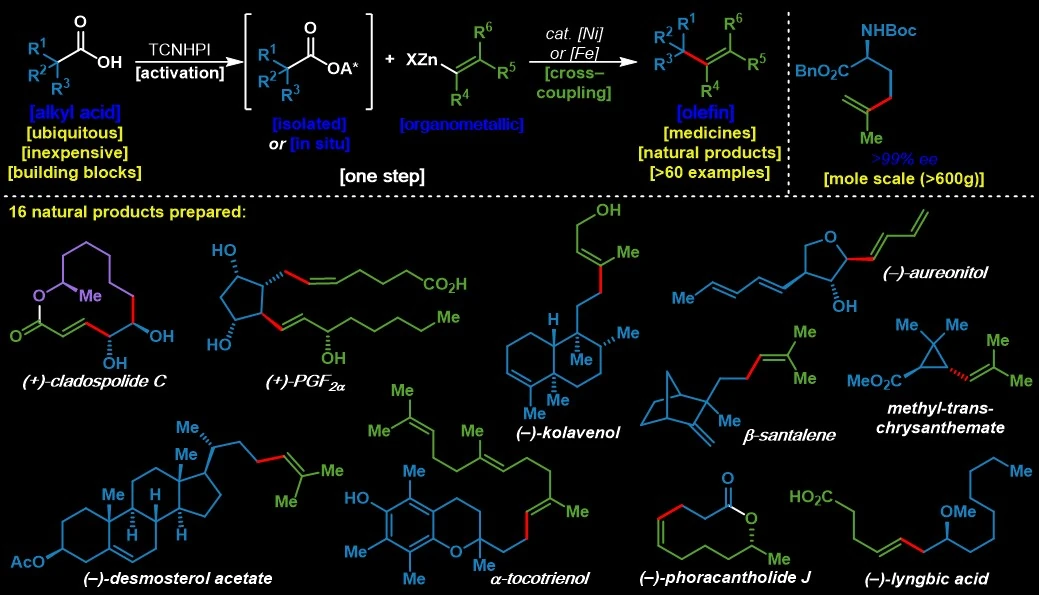
The lab’s way in was a reaction it had been perfecting on simpler molecules: decarboxylative cross-coupling. Take an ordinary carboxylic acid, dress it as a so-called redox-active ester, and a metal catalyst will knock out the carbon dioxide and leave behind a carbon radical — a reactive fragment that can be welded to a new partner. The acid, in other words, becomes a socket into which almost anything can be plugged.
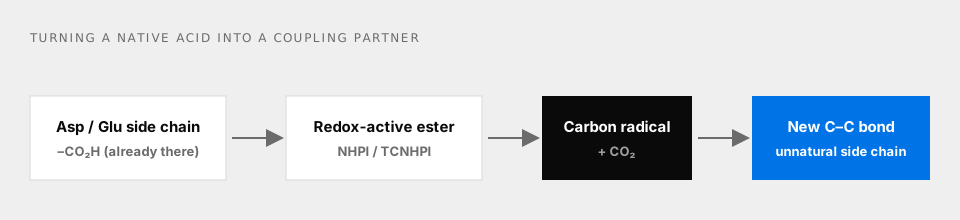
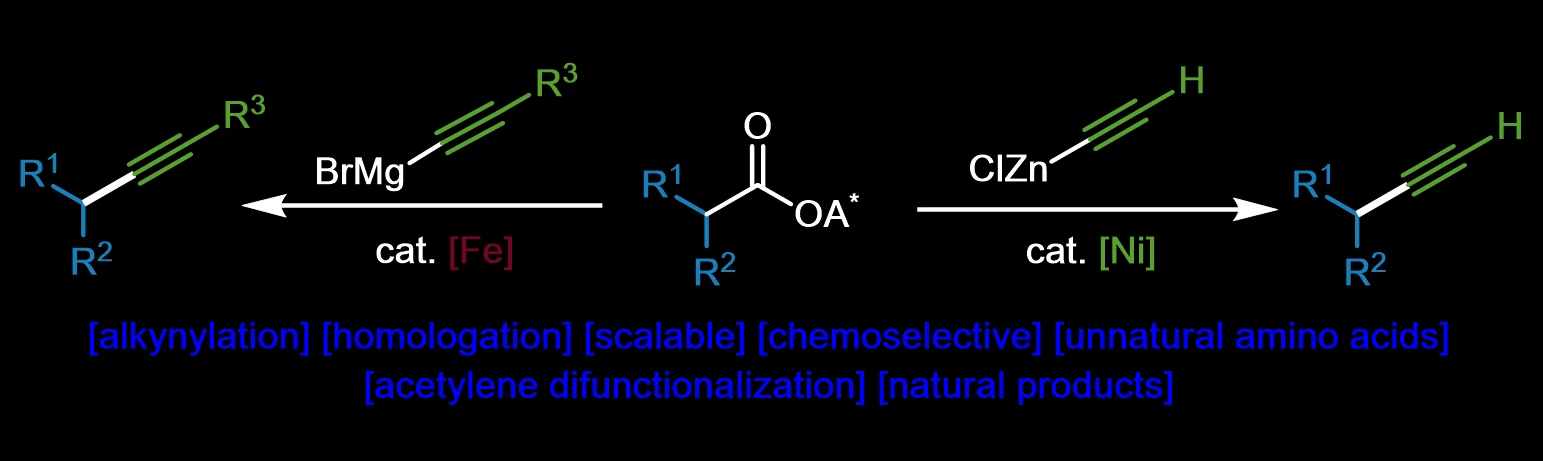
The crucial move was to point this chemistry at the acidic residues of a peptide. Aspartate and glutamate already carry a spare acid on their side chains, so no new functionality has to be installed — the handle is native. In a 2016 study the lab showed that these side-chain acids could be coupled to alkyl fragments while the peptide sat on its synthesis resin, activating aspartate and glutamate at will (Science 2016). An iron-catalysed variant extended the same logic (JACS 2016), and a nickel-catalysed version added aryl groups to the growing toolkit (JACS 2016).
Much of the peptide work was driven by Lara Malins during her time as a postdoc in the lab, now a group leader at the Australian National University. With her as a lead author the team reported decarboxylative alkynylation, clipping a rigid alkyne onto a glutamate side chain in a single step to make an unnatural amino acid, even on a tetrapeptide (Angew. Chem. 2017). A companion Nature paper pushed to alkenylation, decorating peptides of fifty-eight and fifty-nine unprotected residues without detectable epimerisation — a scale that startled even the authors (Nature 2017).
Radicals can also be made to bite their own tail. In a nickel-catalysed intramolecular version of the classic Giese reaction, a radical born on one residue adds across an acceptor elsewhere in the same chain, stitching the peptide into a ring — a chemical staple built from the peptide’s own atoms (Angew. Chem. 2017). To make the activation step itself practical the lab introduced CITU, a single reagent that both forms the redox-active ester and drives the coupling, works with low epimerisation and has been run on kilogram scale (Org. Lett. 2017). A detailed users’ guide collected the dos and don’ts of modifying specific residues for anyone wanting to try it (Biochemistry 2017).
⚗ For chemists
Why the acid, and not the amine?
Peptide side chains offer several possible handles, but the carboxylic acid is special for three reasons. It is abundant — aspartate and glutamate are among the most common residues. It is orthogonal — redox-active esters form and react under mild, near-neutral conditions that leave amides, alcohols and most other groups untouched. And it is traceless at the stereocentre: because the new bond forms at the side-chain carbon rather than the α-carbon, the amino acid’s handedness is preserved, which is why even fifty-residue peptides survive without epimerising.
An unnatural amino acid factory
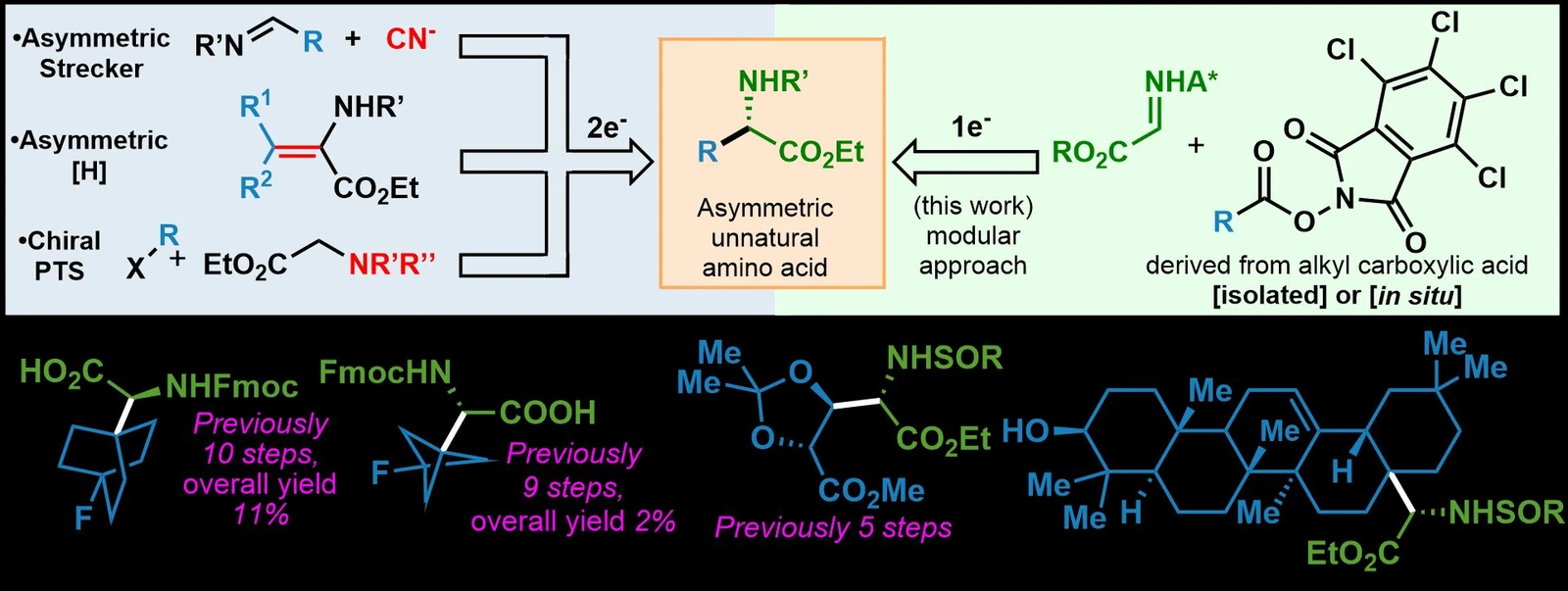
The same radical chemistry runs equally well in reverse: instead of editing a peptide, use it to manufacture the exotic building blocks themselves. Working with chemists at Pfizer and Bristol-Myers Squibb, the lab showed that a cheap, chiral acceptor could capture a radical made from almost any carboxylic acid, spitting out a new unnatural amino acid in one radical cross-coupling — a general route from feedstock chemicals to designer residues (Angew. Chem. 2018).
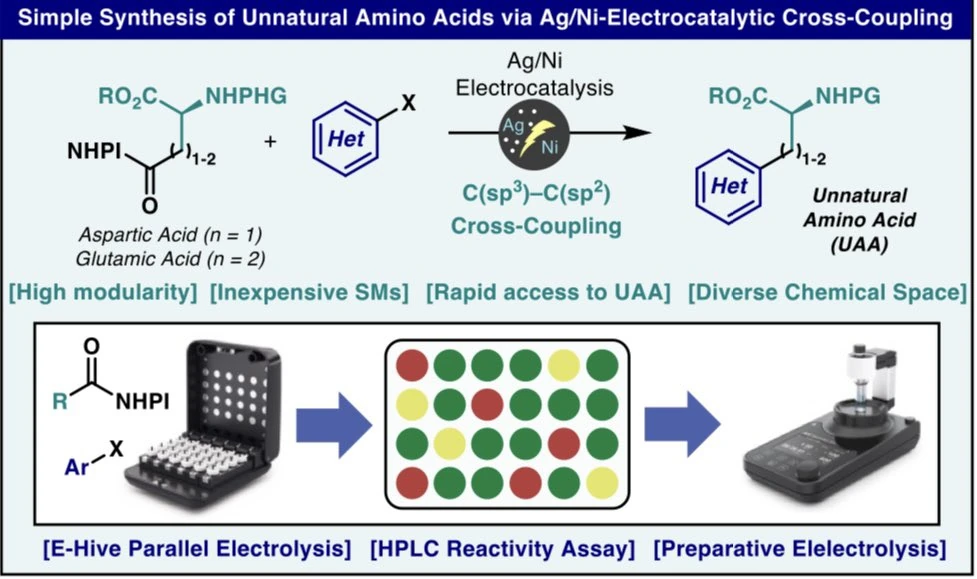
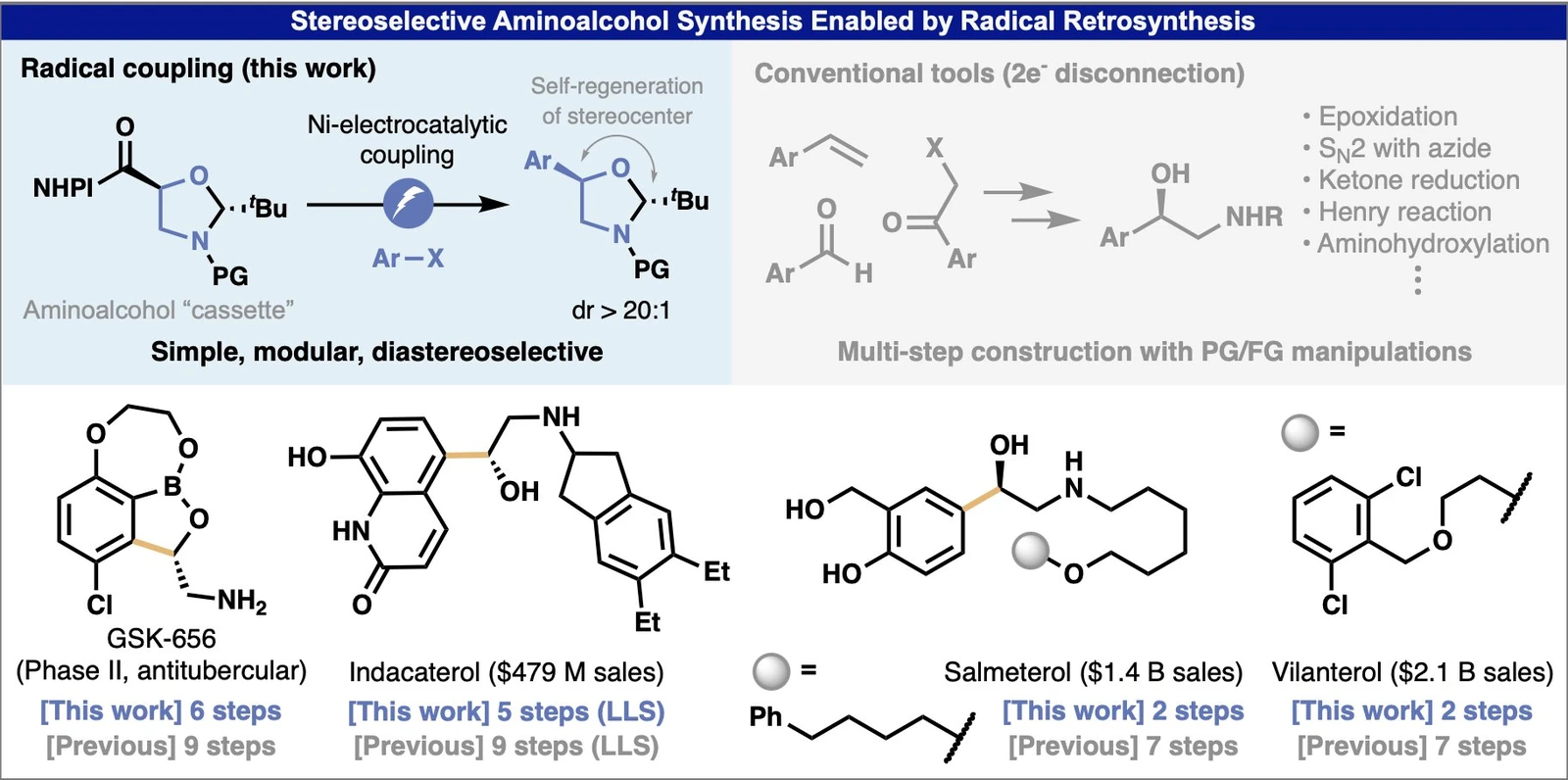
Electrochemistry made the process cleaner still. With collaborators at Biogen, the lab arylated aspartate and glutamate using a paired nickel/silver electrocatalytic reaction run in a benchtop ‘e-Hive’ cell, turning the acidic residues into twenty-seven different unnatural amino acids without stoichiometric metal reductants (Org. Lett. 2024). A related nickel-electrocatalytic decarboxylative arylation reached non-canonical amino alcohols — including a cassette used to assemble the antibiotic GSK-656 — and was published openly (JACS 2024), with a stereoselective extension in Nature Chemistry (Nat. Chem. 2025).
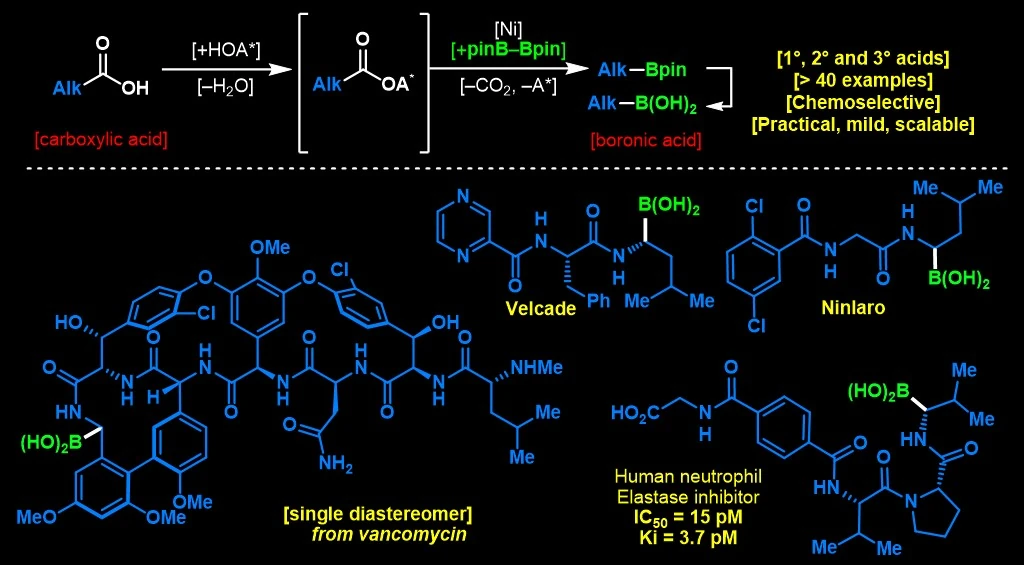
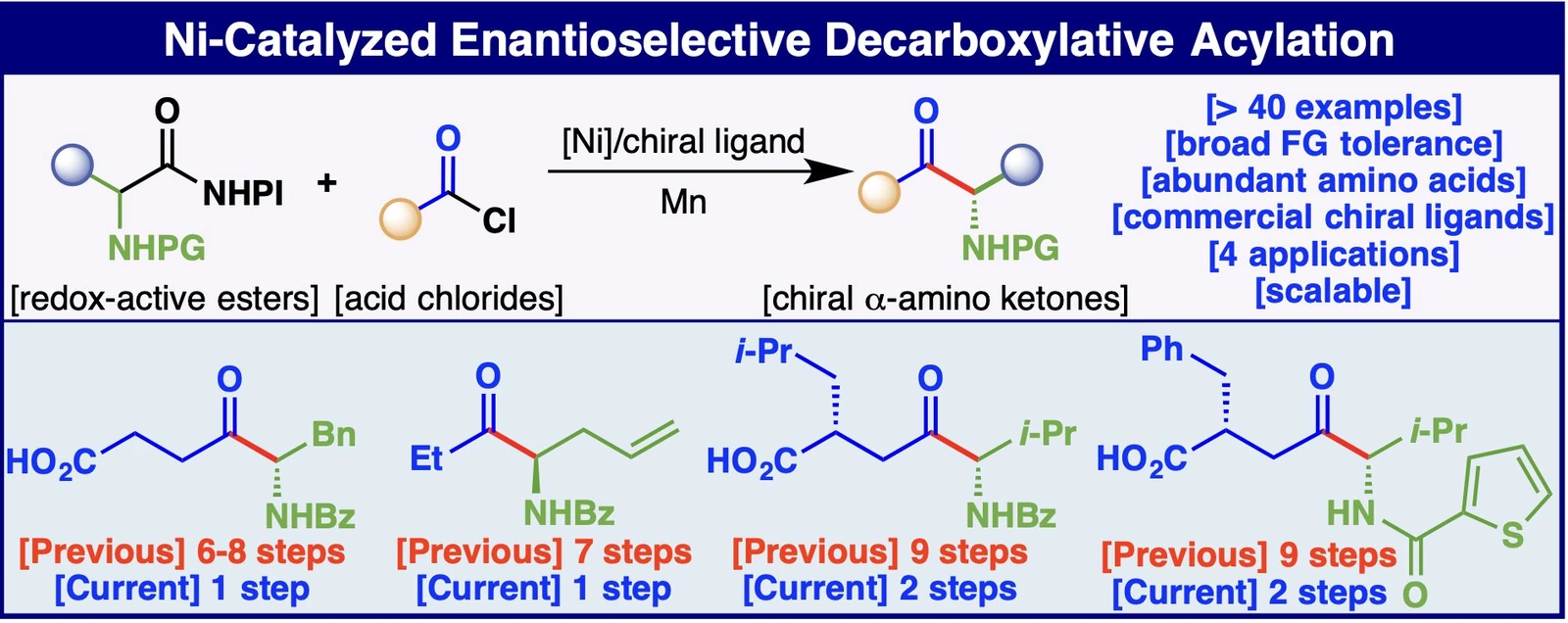
Other couplings fill out the catalogue. Decarboxylative borylation converts an amino acid into an α-amino boronic acid — the pharmacophore of blockbuster drugs such as bortezomib (Velcade) — directly from the parent residue (Science 2017). And α-amino ketones, awkward to make by classical means, fall out of a radical coupling reported openly in 2023 (Angew. Chem. 2023). Taken together these reactions turn the twenty natural amino acids into raw material for a near-limitless library.
Closing rings, hanging tags
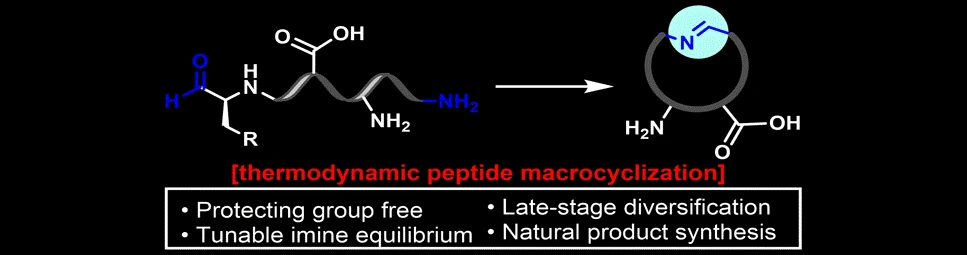
Many of nature’s most potent peptides are not straight chains but rings. Inspired by how non-ribosomal peptides close themselves through imine bonds, the lab — again with Malins leading and with Bristol-Myers Squibb — developed a macrocyclisation that forms a ring under thermodynamic control, then locks it shut by Strecker or reductive amination. The method reached natural-product scaffolds including scytonemide A, koranimine, lugdunin and sanguinamide A (JACS 2017).
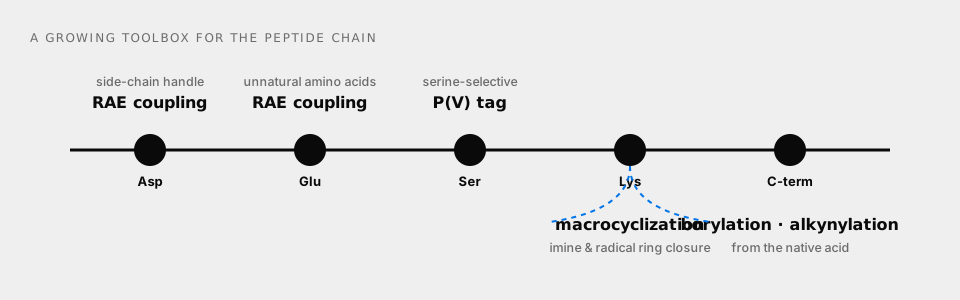
Tagging is the mirror image of editing: not changing the peptide’s skeleton but hanging something new off it — a dye, a drug payload, a probe. An early entry used sulfinate salts to attach groups directly to native peptides and antibodies, a route relevant to antibody–drug conjugates (JACS 2013). Later the lab’s P(V) chemistry delivered a serine-selective handle, letting a single alcohol residue be labelled in intact peptides such as vancomycin and in the protein ubiquitin (JACS 2020).
Peptides with a twist
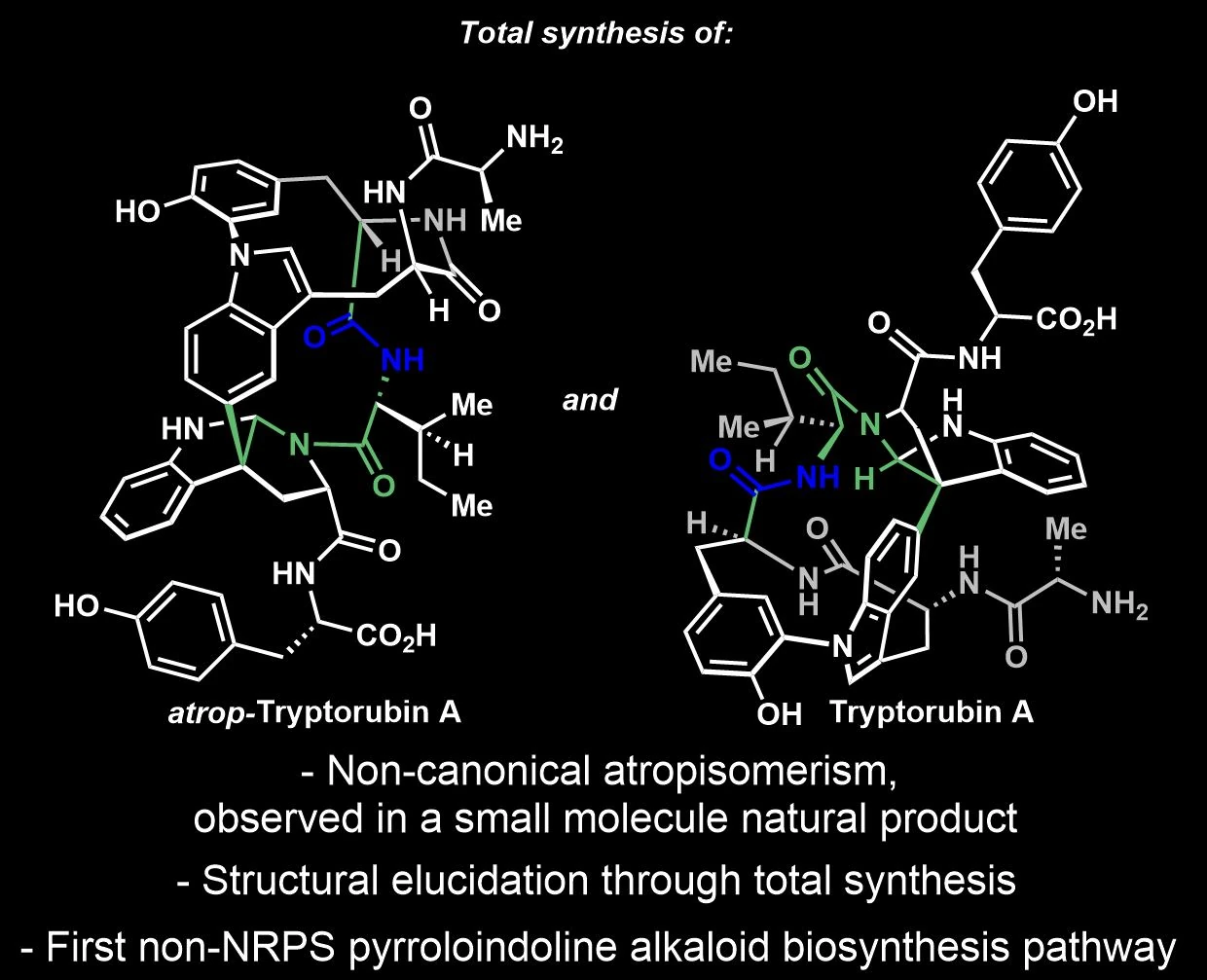
Some peptidic natural products are strange enough to force new chemistry into being. Tryptorubin A, a small peptide-derived alkaloid, was found to lock into a fixed three-dimensional shape through an unusual kind of atropisomerism — a twist frozen not around a single bond but through a cage of linked rings. The isolation and the recognition of this ‘atypical’ chirality came from the Clardy group; the lab’s total synthesis settled the structure and its handedness (Science 2020).
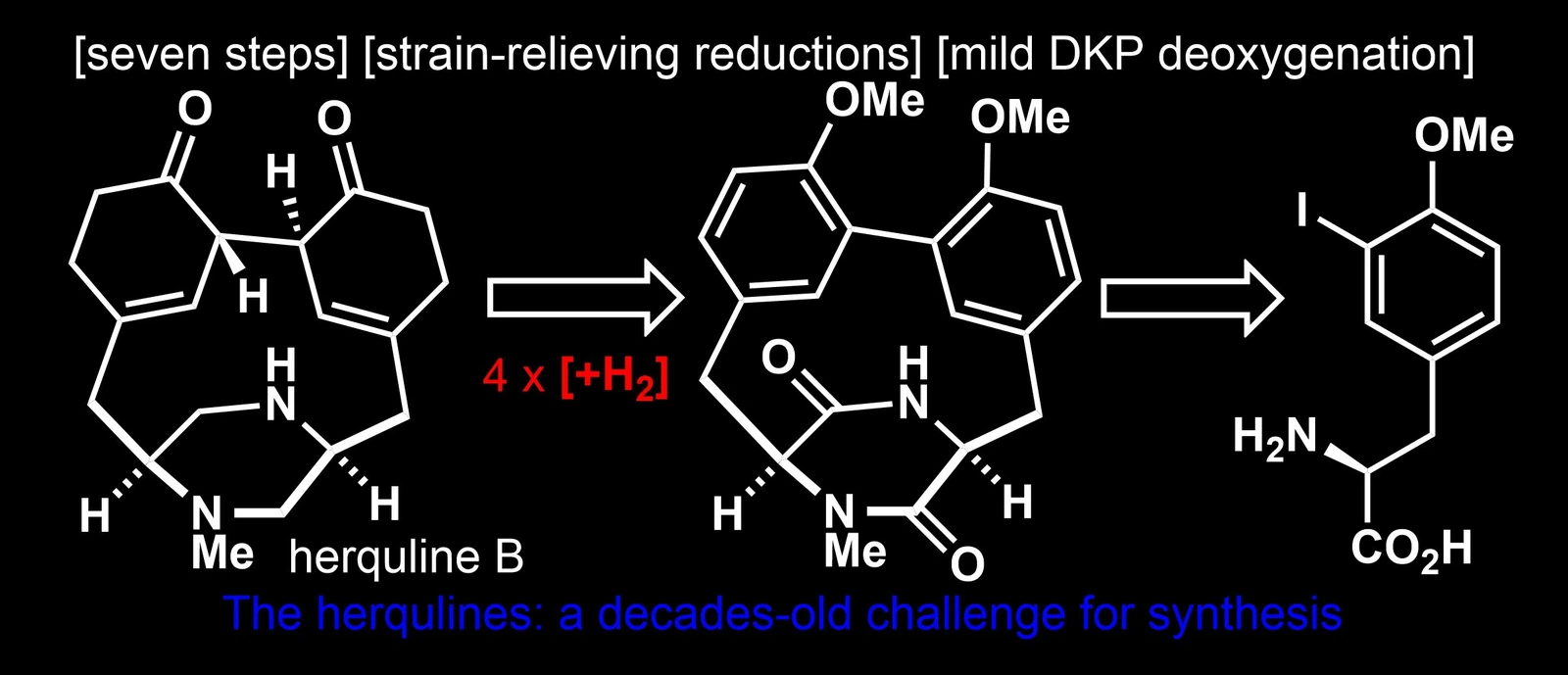
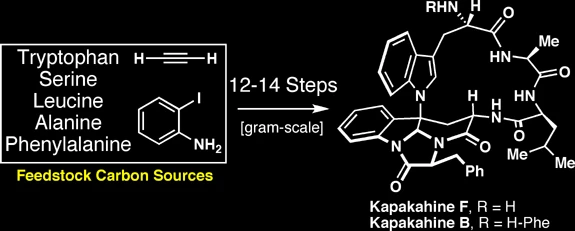
Herqulines are tyrosine-derived natural products wound into a strained cyclophane, first isolated by Ōmura and co-workers in the late 1970s. The lab’s synthesis of herqulines B and C had to tame that strain, and in doing so mapped out chemistry that ordinary models said should not work (JACS 2018). Further back, the marine peptide alkaloids kapakahines B and F — isolated by Scheuer’s group and of interest for their anti-leukemia activity — yielded to a synthesis built around a difficult oxidative carbon–nitrogen bond (JACS 2009).
Antibiotics from soil and gut
The payoff of a decade of peptide chemistry arrived as medicine. Two of the most promising new leads against drug-resistant Gram-negative bacteria are peptides that plug the same bacterial machine — and the lab learned to build both from scratch.
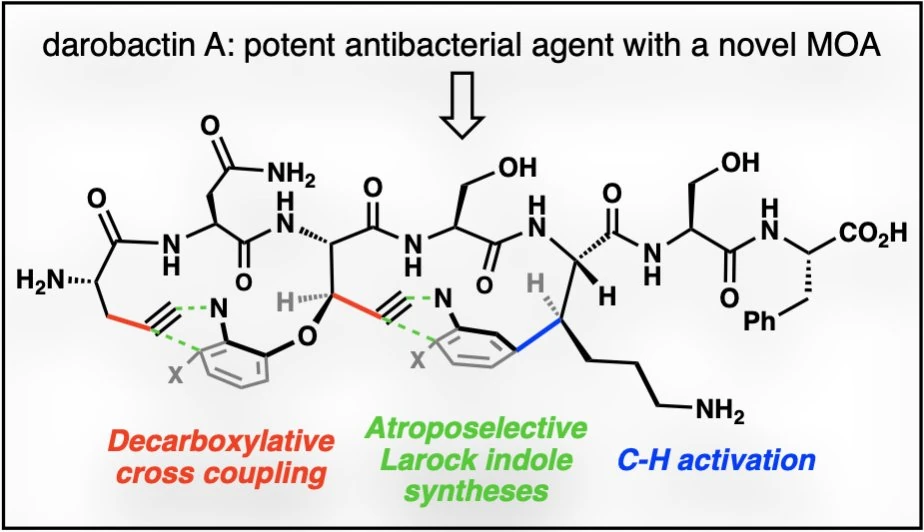
Darobactin A was discovered in 2019 by Kim Lewis’s group at Northeastern, produced by Photorhabdus, a bacterium living in the gut of soil nematodes; it kills Gram-negative pathogens by jamming BamA, the machine that inserts proteins into their outer membrane. Its strained, doubly bridged structure resisted synthesis until the lab’s atroposelective total synthesis, which leaned on unnatural amino acids from decarboxylative coupling and on careful macrocyclisations to set the molecule’s built-in twist (JACS 2022).
Dynobactin A, reported in 2022 by the Lewis and Hiller teams from Photorhabdus australis, hits the same BamA target through a completely different, two-ringed structure. The lab’s sixteen-step total synthesis used an aziridine ring-opening to install the molecule’s β-aryl amino acids and confirmed the assigned structure (JACS 2024) — giving chemists, for the first time, a way to make analogues at will.
The arylomycins, a separate class of antibiotics that block bacterial signal peptidase, were isolated and advanced by workers at Genentech and elsewhere. The lab’s contribution was a late-stage carbon–hydrogen functionalisation route that opened quick access to the family and its analogues (JACS 2018), the kind of flexible synthesis that medicinal chemists need to turn a natural lead into a drug.
The thread that ties it together
Every one of these antibiotics is a peptide bristling with unnatural amino acids and strained rings — exactly the features the lab’s radical and electrochemical methods were built to install. The tools and the targets grew up together.
Treating a peptide like any molecule
The through-line of this work is a change in attitude. A peptide need not be a fragile object assembled once and left alone; it can be a substrate like any other, edited late, diversified quickly and closed into rings on demand. The acidic residues nature already supplies become universal handles; electrochemistry strips away stoichiometric waste; and the unnatural amino acids that once took weeks to make now fall out of a single coupling.
Where it goes next is toward scale and toward targets. Reagents such as CITU show the chemistry can leave the flask for the kilogram, and the antibiotic syntheses show it can reach molecules that matter. Much remains open — broader residue scope, finer stereocontrol, and the long task of turning a beautiful synthesis into an approved drug — but the premise has been proven: an ordinary peptide is now something a chemist can rebuild at will.
 The logicThinking in radicals
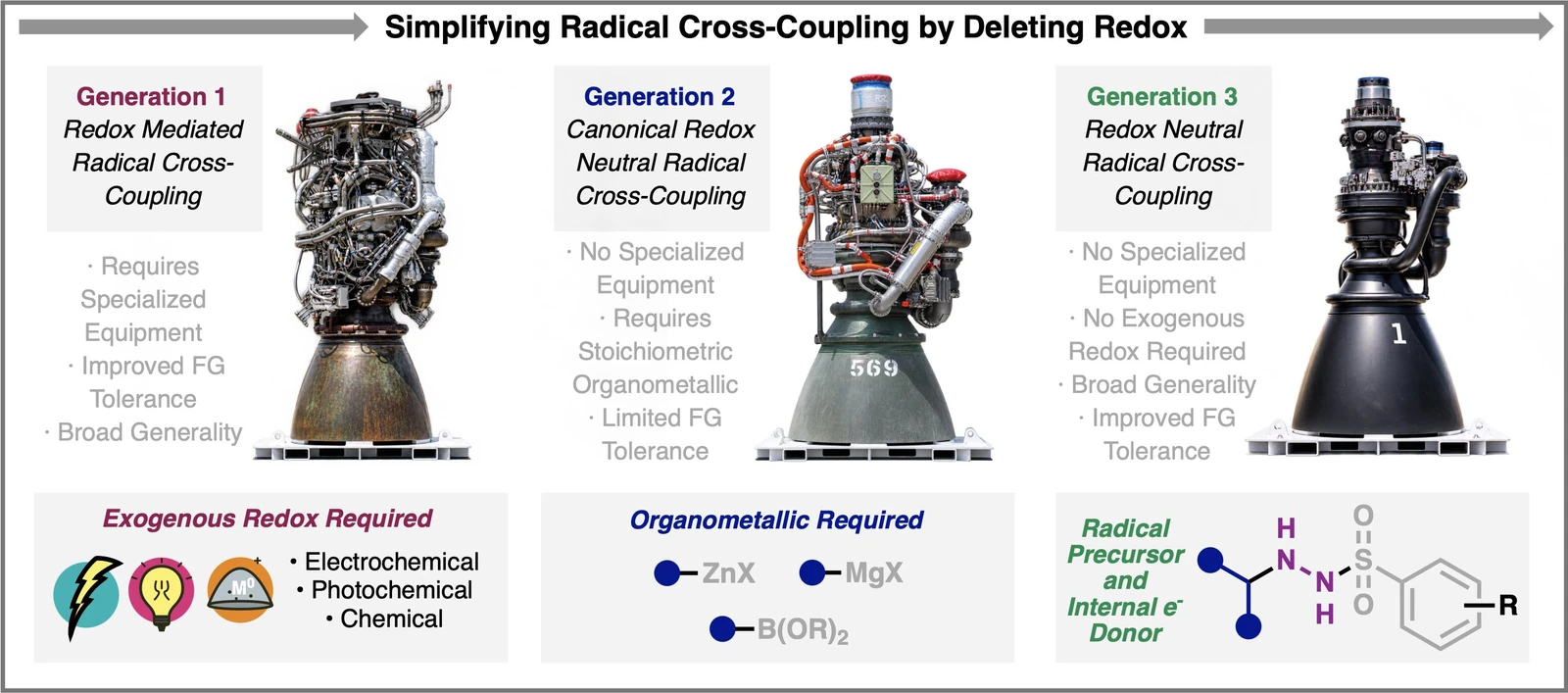 Cross-couplingDeleting redox
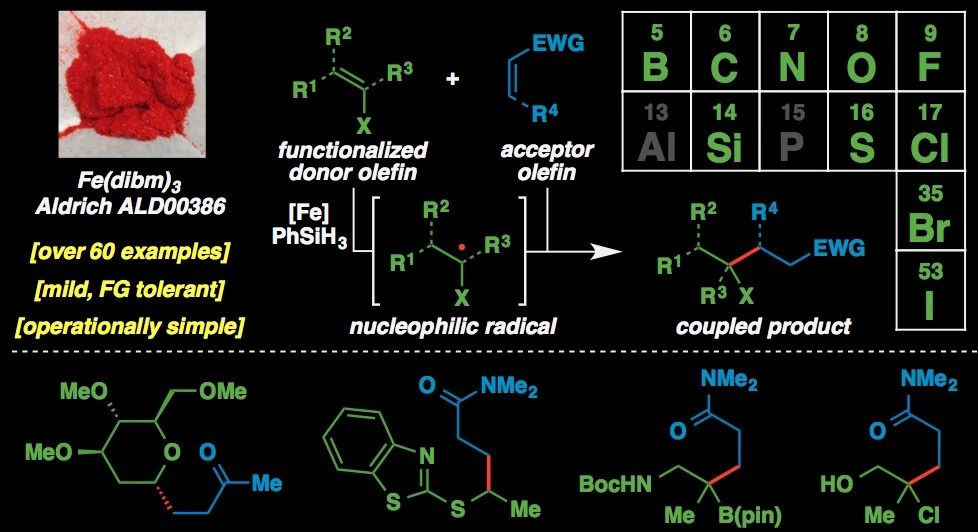 Olefins / MHATOlefins as radicals
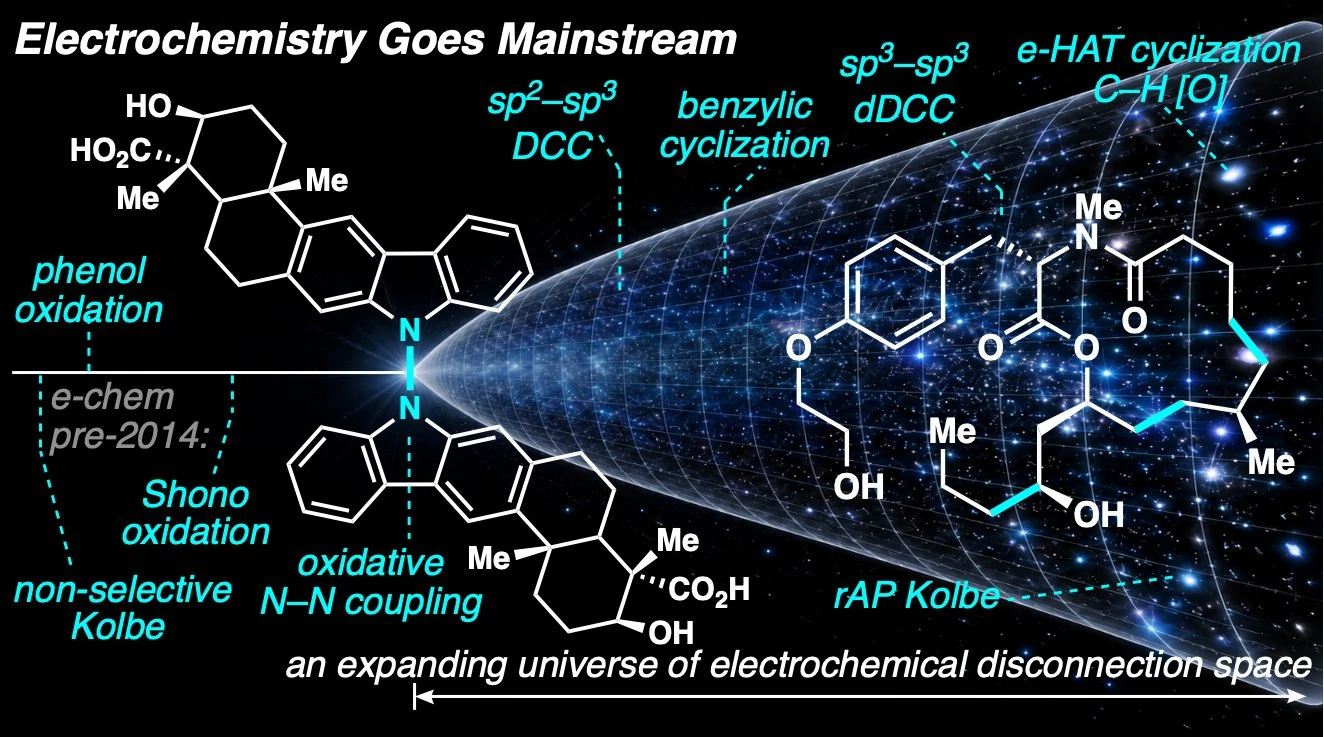 ElectrochemistryThe electron as a reagent
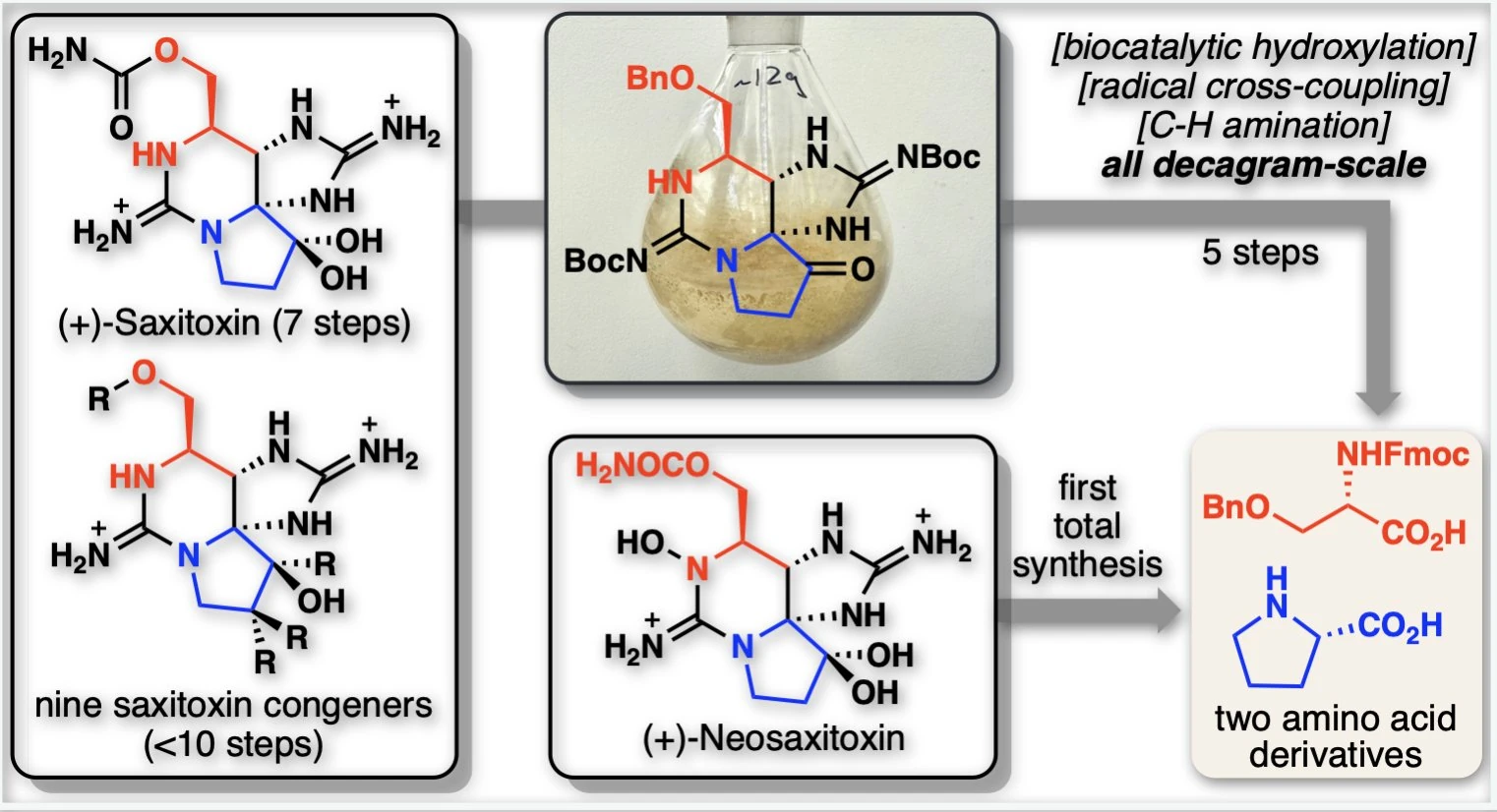 Total synthesisProving ground
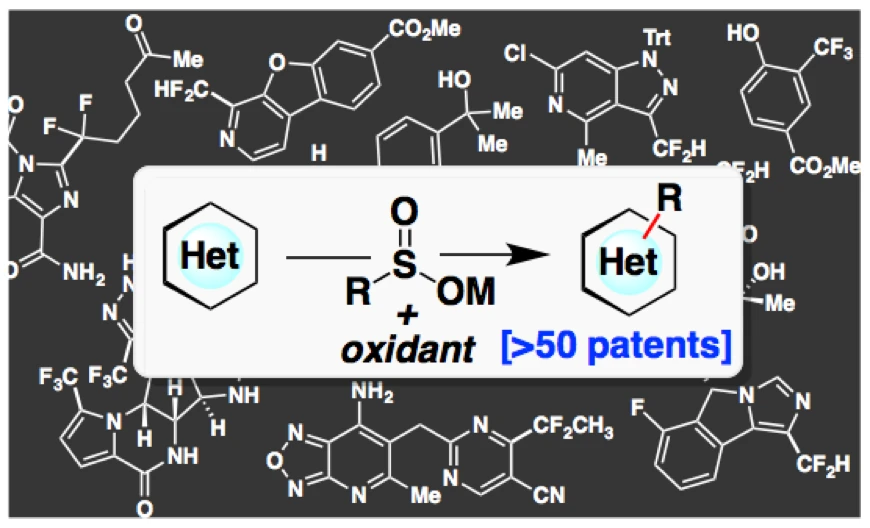 ReagentsReagents in a bottle
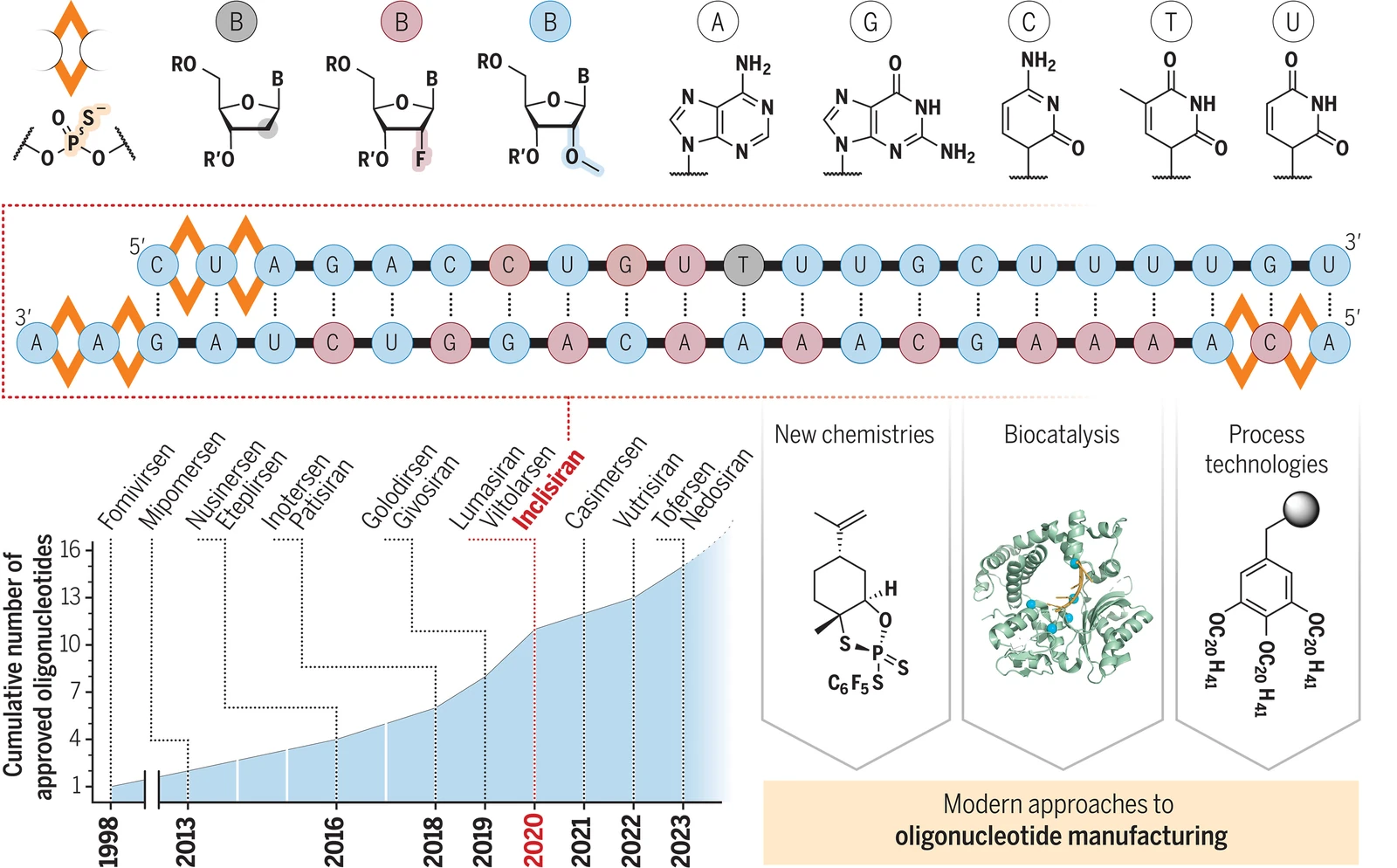 OligonucleotidesRewriting the backbone
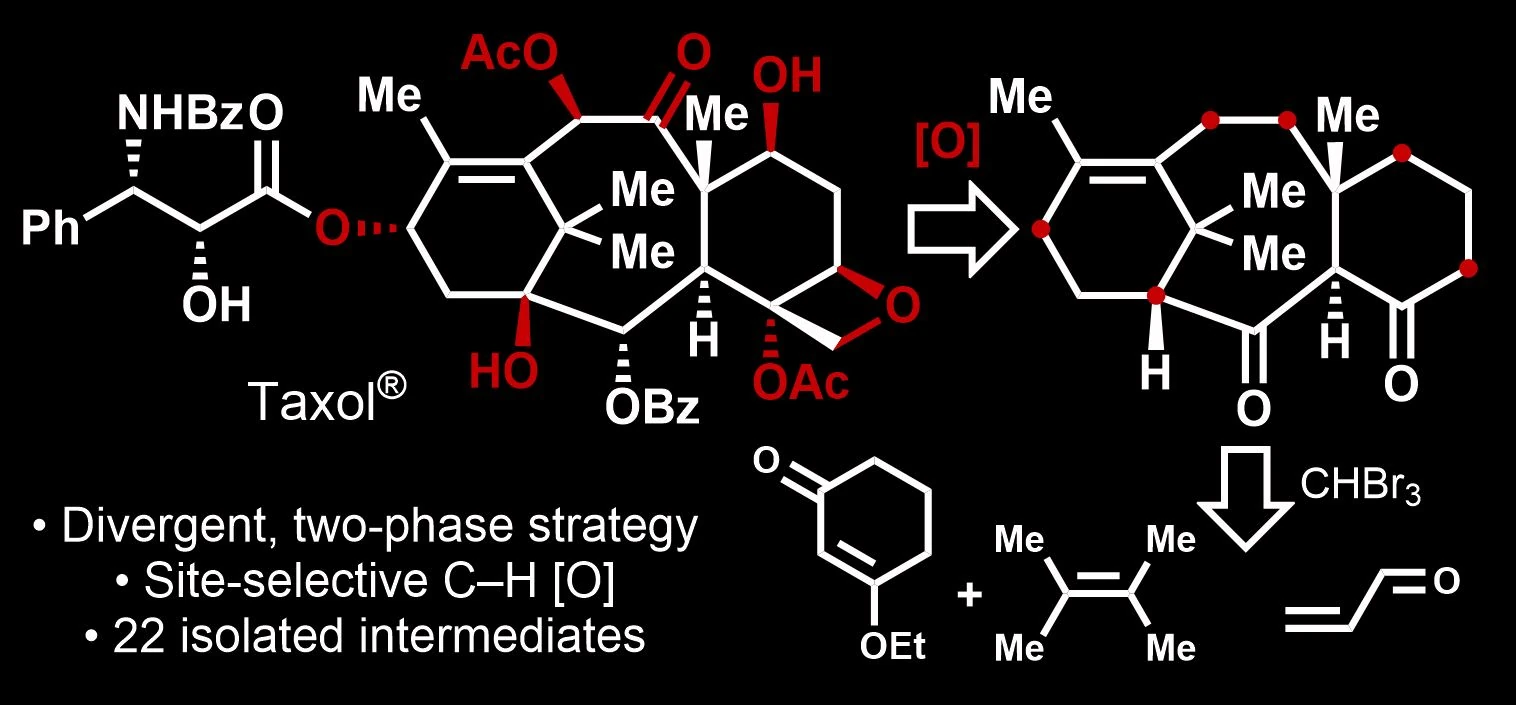 C–H functionalizationC–H logic