
Opposites attract, and that’s the trouble
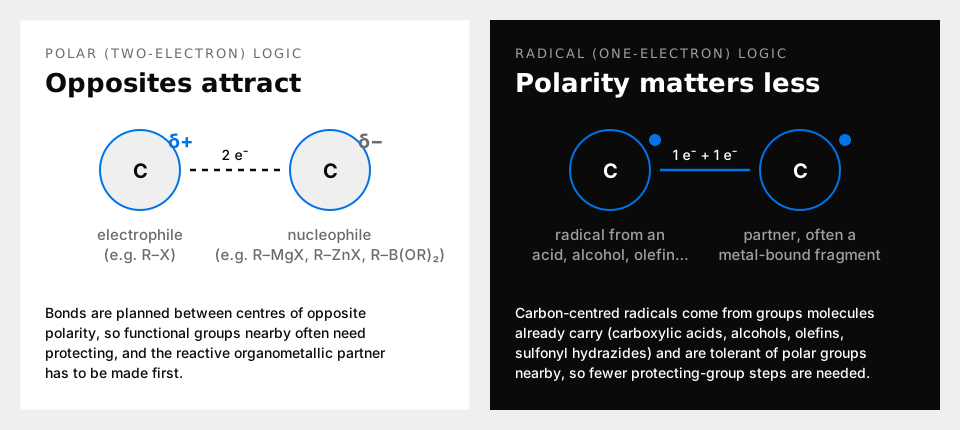
Ask an organic chemist to plan the synthesis of a molecule and they will, almost by reflex, cut it into a positive half and a negative half. It is how the subject is taught, and it works: the reactions that build most medicines are polar, two-electron reactions.
“Polar disconnections are intuitive and underlie much of retrosynthetic logic. Undergraduates exposed to multistep synthesis are often taught to assemble organic molecules through the combination of positively and negatively charged synthons because, after all, opposites attract.”
The workhorses are the cross-coupling reactions with famous names: Suzuki, Negishi, Kumada, Stille, Hiyama. The lab’s 2026 review calls cross-coupling “arguably the most consequential carbon–carbon bond-forming methodology of all time if measured by the society-changing products it enables.” But every one of those classics needs a pre-made organometallic partner, a carbon bonded to boron, zinc, magnesium or tin, and that partner decides what can be made.
Polar logic has a hidden cost. A carbon made strongly positive or strongly negative will react with any other polar group nearby, so those groups have to be masked with protecting groups and unmasked later, or the oxidation state has to be shuffled up and down to set the stage. Each of those detours is a step that builds nothing.
Two nucleophiles, one bond
The logic did not begin with a review. It began with a synthesis of the hapalindole alkaloids, and with a simple observation: two nucleophiles can be oxidized into radicals that couple with each other.
In 2004 the lab reported a direct coupling of indoles with carbonyl compounds that opened a short, enantioselective, gram-scale route into the hapalindole and fischerindole families. The new carbon–carbon bond was made by oxidizing two nucleophiles — an enolate and an indole — so that the resulting radicals could find one another: an oxidative enolate/indole heterocoupling. That is a cross-nucleophile coupling, and it is already a one-electron way of thinking about a bond.
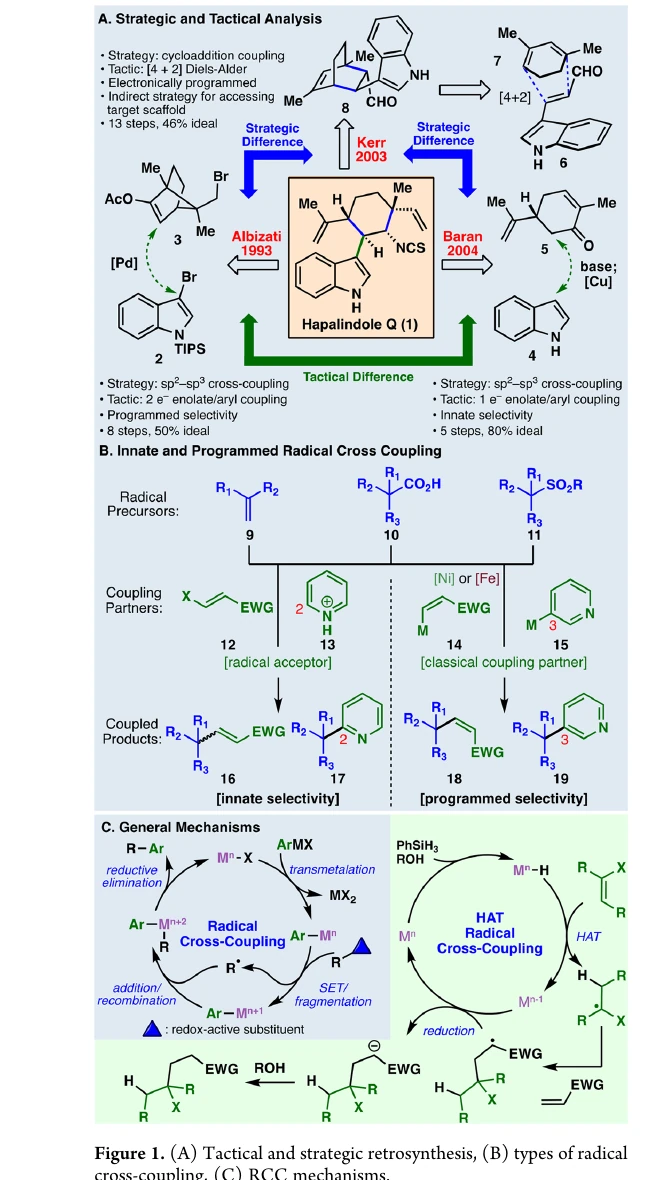
The 2018 Account returns to that origin with a precise comparison. In 1993 Albizati had already forged the same carbon–carbon bond of hapalindole Q, by a two-electron enolate/aryl coupling of a 3-bromoindole with a vinyl acetate — “certainly bold for its era,” the Account says, but one that required prefunctionalization or protection of both partners. The 2004 route used the native reactivity of indole and (R)-(−)-carvone instead: the two nucleophiles were deprotonated and oxidized with a copper(II) salt, and the resulting radicals coupled. Strategically the two syntheses cut the same bond; tactically the one-electron path avoided the concession steps. The Account counts the 2004 route as five steps and 80% ideal, against Albizati’s eight steps and 50% ideal. A later Diels–Alder approach, shown as Kerr 2003 in the same figure, was strategically different and came in at 13 steps and 46% ideal. “The advantages of a one-electron disconnection,” the Account concludes, “manifested in the form of increased ideality and diminished step count.”
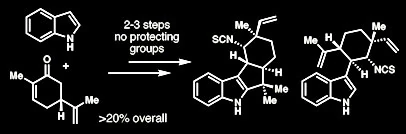
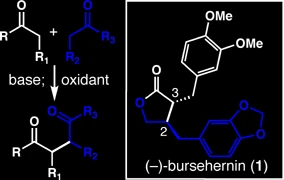
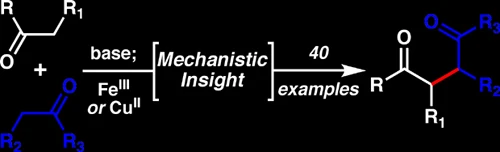
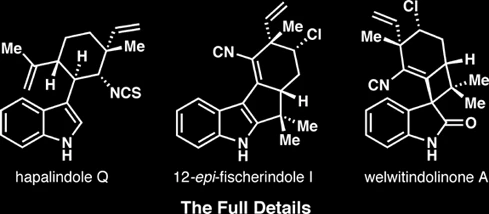
The same idea was developed as a general method — intermolecular oxidative enolate heterocoupling in 2006, with a full study of scope and mechanism in 2008 — and it carried the family of structures that first suggested it. Welwitindolinone A and fischerindoles I and G were made enantioselectively in 2005; an enantiospecific campaign in 2008 reached the hapalindoles, fischerindoles and welwitindolinones by a redox-economic route; a later scalable synthesis delivered (−)-hapalindole U and (+)-ambiguine H.
⚗ For chemists
Why this coupling mattered
Classic polar logic would have asked one of those two nucleophiles to become an electrophile first, often at the cost of extra redox steps or protecting groups. Oxidizing both, and letting the radicals couple, is a different cut: the bond is made between two fragments that start with the same polarity. That is the seed of radical retrosynthesis, even if the name came later.
A short history, and a translational case
“Radical chemistry has always taken a backseat to ionic chemistry.”
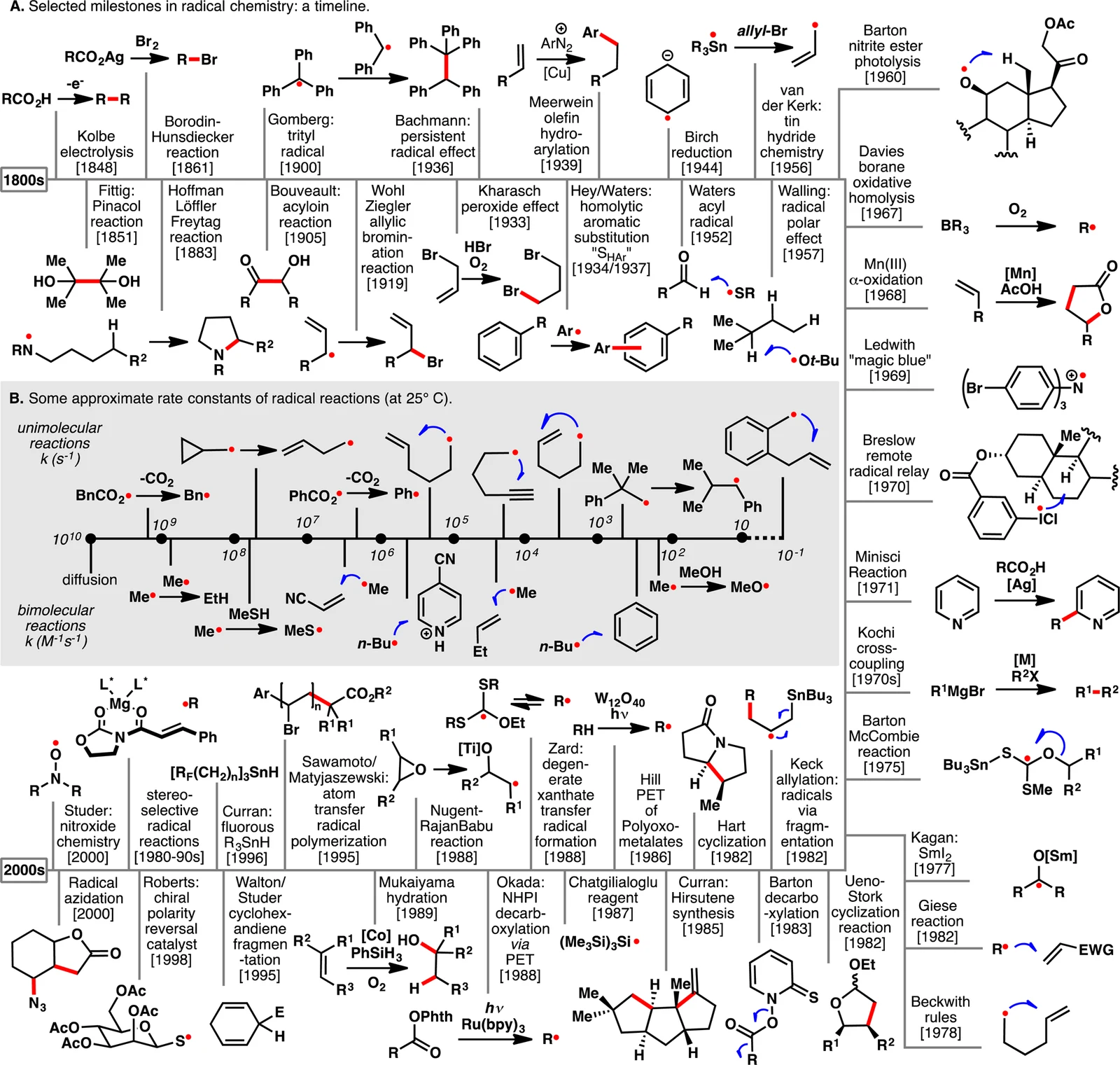
In 2016, about a decade into the lab’s radical chemistry, Ming Yan, Julian Lo, Jacob Edwards and Phil Baran wrote a JACS Perspective that asked two questions: why intermediates with such a long record of useful chemistry still sit at the margins of the curriculum, and what they offer the people who make medicines.
Its first point is that useful radical reactions came before anyone understood them. Kolbe’s electrolytic decarboxylation (1848), the Borodin–Hunsdiecker reaction (1861) and the Hofmann–Löffler–Freytag C–H functionalization (1883) all predate Moses Gomberg’s 1900 discovery of the trityl radical, a carbon with only three bonds. Morris Kharasch’s peroxide effect (1933) showed that radicals could reverse the selectivity of an addition to an olefin, and in the 1940s he proposed alkyl radicals in cobalt-mediated couplings of Grignard reagents. Bachmann’s 1936 proposal of what became the persistent radical effect laid a foundation for designing radical reactions rationally. Barton’s nitrite photolysis then solved a real supply problem, aldosterone acetate, and Breslow’s remote functionalization, Minisci’s heterocycle alkylation (1971) and Kochi’s radical cross-coupling in the 1970s followed. Kinetic studies by Walling, Beckwith, Ingold and others showed how selective radicals can be, and in the 1980s Giese, Curran, Keck, Zard and many more turned that understanding into reliable synthetic methods.
Even so, the Perspective notes, introductory courses put the aldol reaction, Grignard additions and the Diels–Alder reaction first and say little about radicals. It attributes that “discrimination” to a historically accepted notion that radicals are “chaotic, uncontrollable, and mysteriously baffling.”
“In our view, the properties of radicals and the reactions they enable can have a profound impact in drug discovery, agrochemicals, material science, and fine-chemical manufacturing. In other words, radicals have a unique “translational” potential.”
The case rests on three properties. Radicals are generally inert to amines, alcohols and other reactive groups, so reactions can often be run on complex substrates, in water and in open flasks. They offer the most direct route to umpolung, reversing the usual polarity of a carbon. And because their transition states come early and they lack the aggregation that encumbers many polar reagents, they are largely indifferent to steric crowding. Each property answers a need in discovery and process chemistry: modifying a densely functionalized lead late in a route without protecting groups, running a reaction that a medicinal chemist can set up without special precautions, and building congested, quaternary carbons that polar chemistry struggles to reach. Industry has a long history here: the Perspective recalls that Barton’s decarboxylation and Barton–McCombie deoxygenation came out of a consulting visit to Schering-Plough.
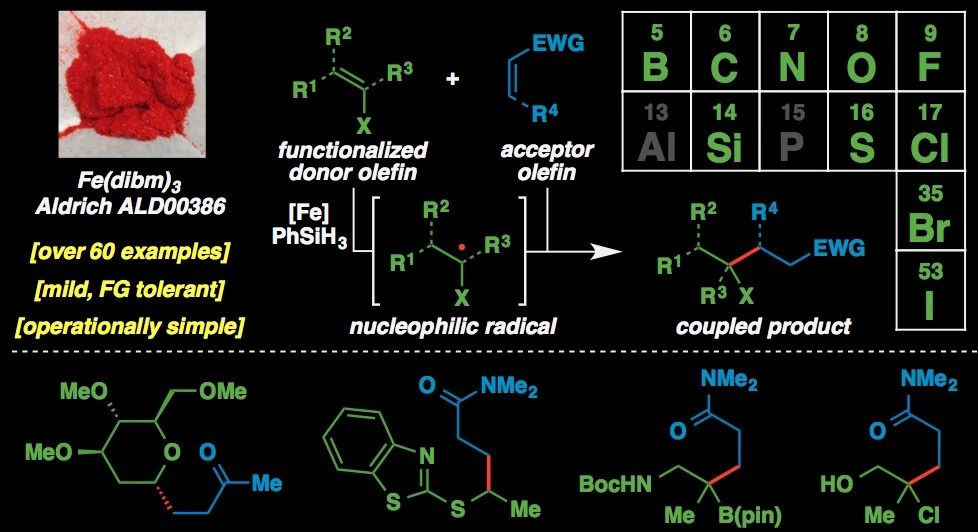
The lab’s own examples, the Perspective says, were born of necessity, because simplifying a natural product synthesis often meant inventing a radical reaction. Oxidative enolate coupling came from the hapalindoles, as described above, and was later used at Bristol-Myers Squibb to make the anticancer candidate BMS-906024. A silver-mediated C–H oxidation in the axinellamine synthesis led to the Minisci reaction and to borono-Minisci arylation, run in water and open to air, which arylates the quinoline of quinine alongside a free alcohol, an olefin and a basic amine. The search for a trifluoromethyl version led to innate C–H trifluoromethylation with Langlois’s sulfinate and then to the zinc sulfinate toolkit, now sold as Diversinates. Iron-catalysed olefin chemistry that began with the ent-kauranes became a reductive olefin coupling, functionalized olefin cross-coupling, hydromethylation and hydroamination with nitroarenes, the last used at Bristol-Myers Squibb and Kemxtree. Redox-active esters (JACS 2016, Science 2016) let ordinary carboxylic acids stand in for alkyl halides, set up without a glovebox and with an ease the paper compares to amide bond formation.
The Perspective closes by pointing to shortened timelines, rising regulatory hurdles and shrinking intellectual-property space, and argues that because radicals thrive on molecular complexity, their use in modern chemistry “is no longer optional—it is essential.” It also named frontiers it expected next: asymmetric cross-couplings of unstabilized radicals, regiocontrolled Minisci-type reactions and programmed cross-couplings of olefin-derived radicals. Several of those themes return in the cross-coupling and reductive olefin cross-coupling deep dives.
Radical retrosynthesis
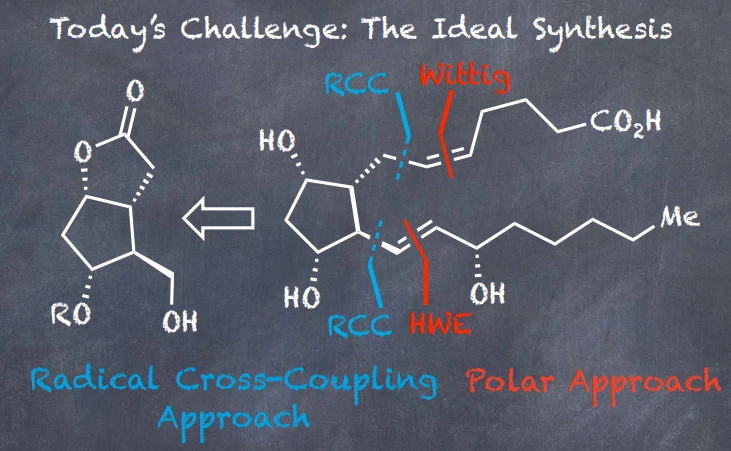
What changed was a way of planning. The Account opens with E. J. Corey’s statement, in The Logic of Chemical Synthesis, that the key to retrosynthetic analysis is a “wise choice of appropriate simplifying transforms.” Through the lab’s lens of ideality, that choice is a practical one: if functional-group interconversions, protecting groups and wasted redox steps can be avoided, the route gets shorter, and new methods often have to be invented to make the shorter route possible. In Radical Retrosynthesis (2018), the lab argued that one-electron disconnections should be considered alongside polar ones from the very first sketch of a route. They distinguished innate radical couplings, which follow a substrate’s natural preferences, from programmed ones, in which a metal catalyst, usually nickel or iron, catches the radical and delivers it to a chosen partner — a classification drawn, by analogy, from innate and guided C–H functionalization, and illustrated in Figure 1 of the Account. Their case studies made the point that one-electron disconnections, “while not considered to be intuitive,” can make routes shorter, with fewer protecting groups and fewer wasted redox steps.
⚗ For chemists
Ideality as the yardstick
The Account frames the goal with the lab’s ideality metric: % ideality = [(construction reactions) + (strategic redox reactions)] / (total steps) × 100, and opens with E. J. Corey’s advice that retrosynthesis turns on a “wise choice of appropriate simplifying transforms.” Radical disconnections earn their place when they remove concession steps: protecting-group shuffles, functional-group interconversions and non-strategic redox changes. See the total synthesis deep dive for how the metric is used.
From using redox to deleting it
Once one-electron disconnections belong in the first sketch of a route, the practical question is how to pay for the electrons. A 2026 ChemRxiv review put that history on a single map.
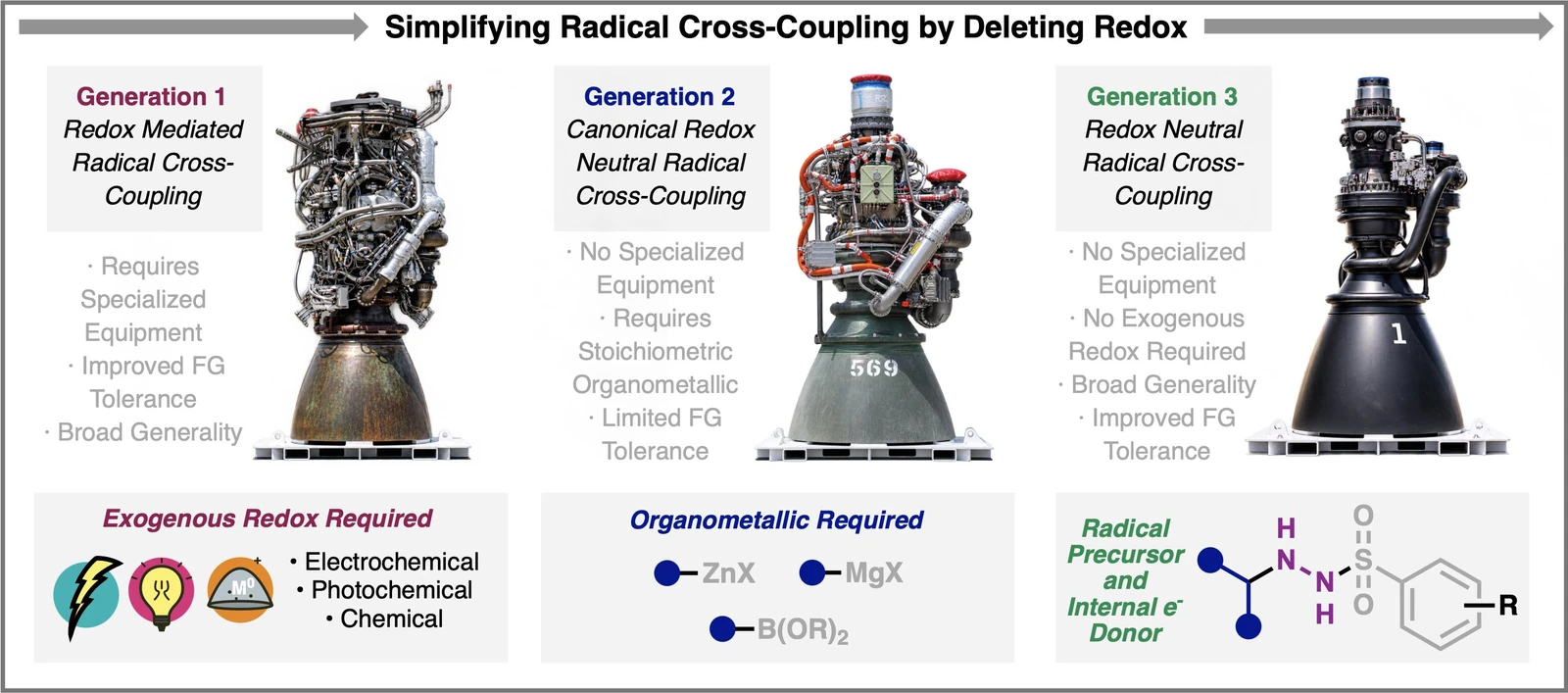
The review, Simplifying Radical Cross-Coupling by Deleting Redox (Neigenfind, Kawamata & Baran), sorts eighty years of coupling chemistry by where the electrons come from. Classical polar couplings need no added redox but need an organometallic partner. Redox-mediated radical couplings — driven by a chemical reductant, by light or by electricity — tolerate far more functional groups but need that external redox source. “Canonical” redox-neutral radical couplings let an organozinc or organoboron partner pay the electron, which brings the organometallic back. As the review puts it, “the fundamental requirement for external redox remained.”
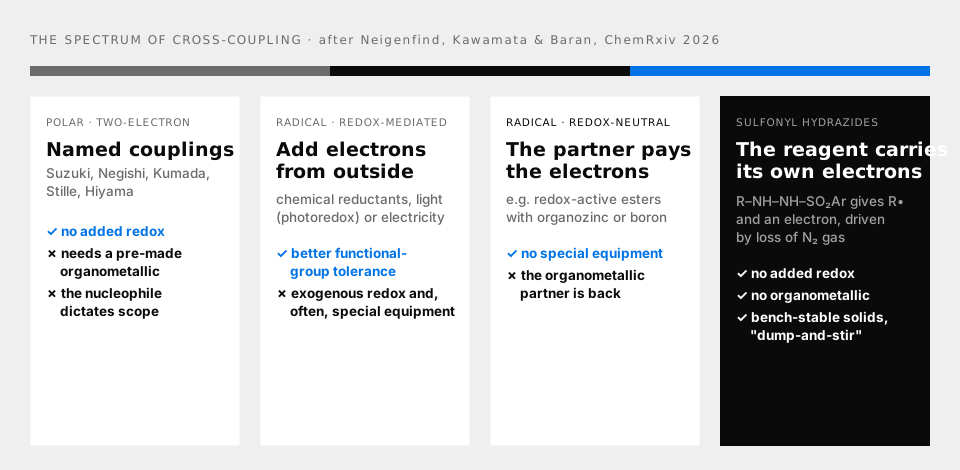
“They would establish a new bond-forming logic in which radical generation is intrinsic to the reagent itself.”
How that map is put to work is the subject of the other two deep dives: the couplings themselves — redox-active esters, redox-active sulfones and sulfonyl hydrazides — and a parallel line in which olefins donate radicals under iron-based reductive conditions. Continue with radical retrosynthesis: cross-coupling or reductive olefin cross-coupling.
A radical that remembers
Every chemist learns early that a carbon radical forgets. The instant it forms, a stereocentre that may have cost real effort to build is lost: the radical flattens and flips faster than the molecule can turn around, and whatever it bonds to next inherits a coin toss. Decades of physical organic chemistry said so, and radical cross-coupling obeyed.
The numbers are unforgiving. Racemization of a free alkyl radical has been measured on the picosecond timescale, the timescale of molecular rotation, while even quick capture of a radical by a nickel–bipyridine complex runs at a bimolecular rate constant of about 10⁷ M⁻¹ s⁻¹, far too slow to win that race. The lab had watched the race lost in its own flasks. An enantiopure redox-active ester coupled under iron catalysis (JACS 2016) gave a racemic product, and in a 2018 Nature study a defined stereocentre was simply reprogrammed by the coupling. So chemists did the only thing that seemed possible: they let the stereocentre be destroyed and rebuilt it with a chiral catalyst.
That strategy, enantioconvergent coupling, works, but each version is bespoke: specially designed and optimized ligands for each reaction and substrate type, often with a stabilized radical as well. The Nature paper draws the contrast with asymmetric hydrogenation, where a relatively small set of chiral ligands can reduce almost every type of olefin. Olefins are structurally simple; alkyl radicals fill a far larger three-dimensional space. As the lab put it when the work first appeared, sp³ radicals “are infinite in terms of shape and character.” When the lab announced the result on X, the graphic at the top of the post summed up the old view under the heading “Textbook knowledge in radical cross-coupling”: racemization within a picosecond, stereoretention impossible. The first figure of the 2025 preprint put it just as plainly: enantiospecific radical cross-coupling was “widely viewed as impossible based on first principles.”
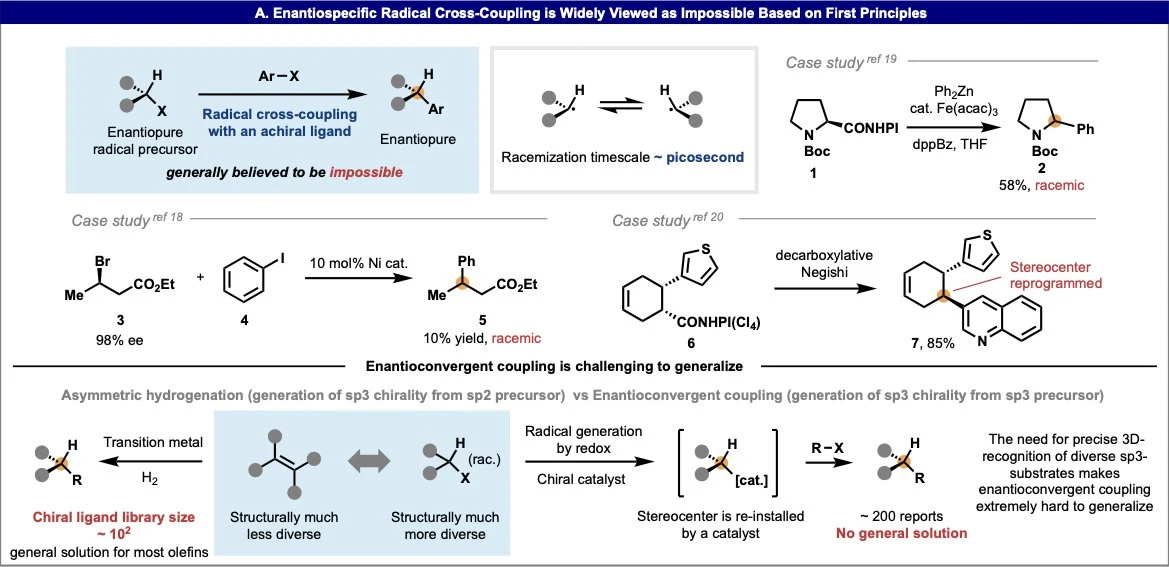
“Until now, enantiospecific radical cross-coupling was deemed impossible due to rapid racemization, but today that changes with readily available sulfonylhydrazides and a simple Ni-catalyst.”
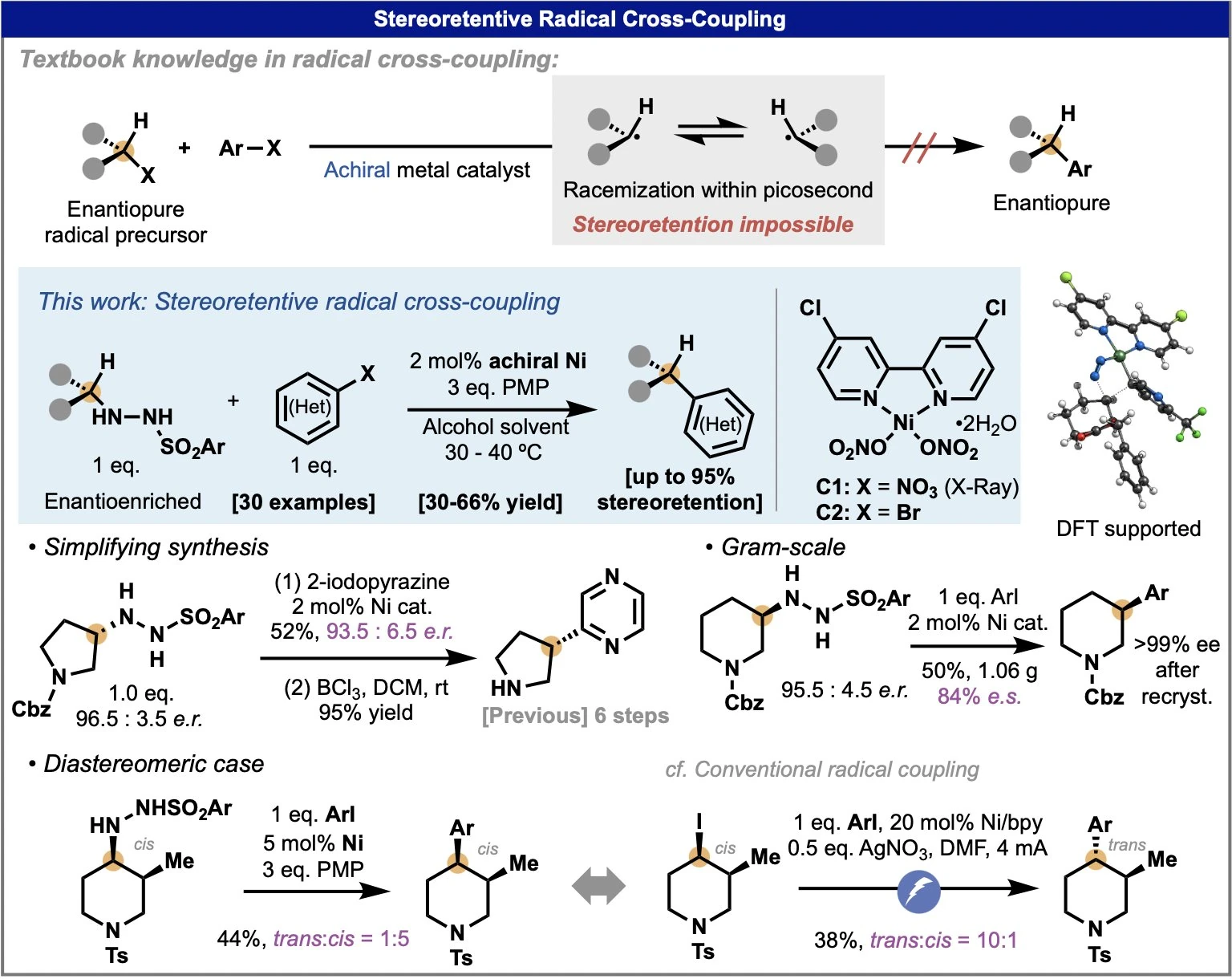
The way through came from an old experiment and a new reagent. In 1982 Peter Schultz, working with Peter Dervan for his PhD and later the leader of Scripps Research, had shown that enantiopure 1,1-diazenes can lose nitrogen and recombine within their solvent cage with their stereochemistry intact. The lab’s sulfonyl hydrazides already pass through a diazene on their way to a radical. So the question became: what if that diazene were bound to the nickel itself, so that the radical was born beside the metal that would bond it, and bonded before it had time to forget?
It worked. After more than 500 experiments, an enantioenriched sulfonyl hydrazide, an aryl halide and 2–5 mol% of an inexpensive, achiral nickel–bipyridine catalyst, with a hindered amine base in an alcohol solvent at 30–40 °C, gave the first stereoretentive radical cross-couplings, reported in Nature in 2025. The first hit carried over 39% of the starting chirality; optimized conditions kept 89–92% on the model piperidine, and 30 examples averaged 86% or 91% enantiospecificity under the two conditions, up to 95%. There is no chiral ligand and no external reductant. The chirality travels in the reagent, and the reagent is made from what the lab calls the most readily available chiral substances of all, alcohols and amines, turning cheap C–O and C–N stereocentres into valuable C–C ones.
The targets were chosen with drug hunters in mind. 3-(Hetero)arylpiperidines appear in more than 35,000 known molecules and were usually made in four steps: a vinyl triflate, a Suzuki coupling, a hydrogenation and then a chiral separation. A chiral pyrrolidine whose earlier route took six steps, a 3% overall yield and a 1:1 mixture of diastereomers was now made by one direct coupling in 52% yield, then deprotected at 93.5:6.5 e.r. And because the configuration is carried rather than reset, a cis-substituted ring, which ordinary radical coupling funnels to the more stable trans isomer, can be made on purpose. On gram scale the coupling gave 50% yield and 84% e.s., and a single recrystallization lifted the product to better than 99.9:0.1 e.r.
Joining a chiral radical to a flat aromatic ring was the first barrier. The harder one was to join two radicals, both saturated, both transient, and still keep the stereocentre. Radical–radical couplings tend toward statistical mixtures of homodimers and cross-products, and C(sp³)–C(sp³) cross-coupling also fights β-hydride elimination. In Science in 2026, with a Pfizer co-author, the lab paired the chiral sulfonyl hydrazide with an achiral alkyl halide, which a nickel(I) species turns into a second radical by halogen-atom transfer. The two events had to be kinetically matched, and the nickel needed a tridentate ligand to hold the chiral alkyl long enough to meet its partner. About 1,000 conditions were screened by high-throughput experimentation, and the first hit had kept only 38% of the chirality. The final reaction gives enantiospecificities of 80 to 96% and yields up to 90%, averaging 61% yield and 87% e.s. across piperidines and pyrrolidines, with free amines, aryl bromides, olefins, azetidines and oxetanes left untouched.
The applications read like a before-and-after. A brominated piperidine used en route to neuropeptide Y Y1 receptor antagonists, previously made in seven steps with a chiral resolution, came from a single coupling with commercial 1-bromo-3-iodopropane, 60% yield and 95% e.s. The natural product (S,S)-stenusine, whose most efficient earlier route took six steps and eight days of reaction time for an auxiliary installation and a 150-bar hydrogenation, was reached by one coupling followed by a one-pot deprotection and reductive amination. Where a conventional electrochemical coupling gave a 1:1.2 cis:trans mixture in low yield, the stereoretentive version delivered 3.6:1 in favour of cis.
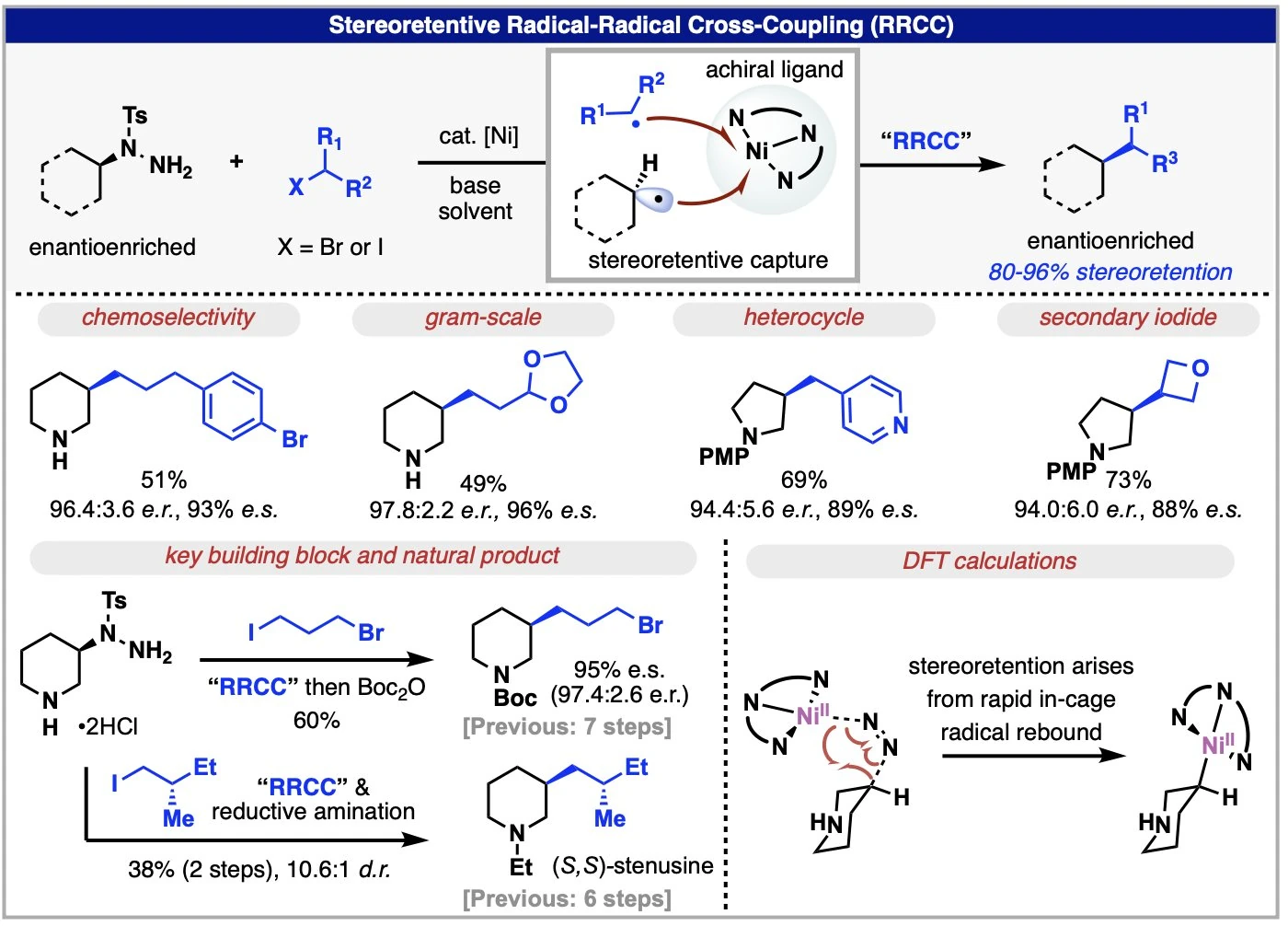
Both papers point to the same mechanism. The diazene binds nickel, nitrogen leaves, and the radical is born so close to the metal that it rebounds before it can invert. In the Nature study, a 5-hexenyl radical clock that cyclizes readily under the older, free-radical conditions (1.75:1 cyclized to linear) stayed mostly linear under the stereoretentive ones (0.28:1), and the ratio did not change with nickel loading: the signature of a caged, inner-sphere event. The loss of N₂, which the lab called “the greatest driving force in organic chemistry,” pays for it. In the alkyl–alkyl case it releases nearly 30 kcal mol⁻¹ before the carbon–carbon bond has even formed.
⚗ For chemists
Inside the cage
Arylation (Nature 2025). DFT places a Z-bound diazene and the aryl group on the same Ni(II) centre. Homolysis of the C–N bond (TS1a, ΔG‡ = 13.6 kcal mol⁻¹) leads, without a stable intermediate, to rebound of the alkyl fragment onto the aryl carbon (TS1b); forming the C(sp²)–C(sp³) bond is downhill by 33.7 kcal mol⁻¹. In the precursor the stereogenic C–H sits beneath nickel (Ni–H ≈ 2.47 Å), an agostic-type contact that may keep the fragment in the inner sphere. The free-radical path, capture at k ≈ 10⁷ M⁻¹ s⁻¹ followed by reductive elimination, can only give racemate. Electron-poor (hetero)aryl partners raise both yield and e.r. Carveol can often be swapped for achiral cyclohexanol, which points to solvent viscosity rather than solvent chirality. Limits: yields near 50%, and benzylic radicals racemize too fast (7% e.s.).
Alkyl–alkyl (Science 2026). Cyclopropylmethyl clocks on each partner show that both carbons pass through radicals. When the clock sits on the hydrazide, a little unrearranged product still forms (1:8 against the ring-opened one), although that rearrangement takes only nanoseconds (k = 2 × 10⁸ s⁻¹, t½ = 3.5 ns at 45 °C), so capture at nickel happens on a picosecond-to-nanosecond timescale. A slower 6-exo clock gave only the direct product. DFT finds barrierless rebound when the Ni–C distance is under about 3 Å, giving a stereoretentive Ni(II)–alkyl. Ni(I) then abstracts iodine from the alkyl halide, and the free radical is captured to give Ni(III), which reductively eliminates in a closed Ni(I)/Ni(III) cycle. The bidentate ligand used for arylation favours Ni(II)–aryl complexes; the tridentate bpp-type ligand stabilizes the Ni(II)–alkyl intermediate.
“This work opens the door to a distinct way of approaching the retrosynthetic analysis of complex stereopure organic molecules.”
That is why the breakthrough belongs in this story. Radical retrosynthesis asked chemists to draw one-electron disconnections alongside polar ones; stereoretention removes the asterisk that came with them. A stereocentre built cheaply as an alcohol or an amine can now be carried across a radical bond rather than surrendered to it. The idea has already reached sugars: in the lab’s 2026 Nature paper on glycohydrazides, configurationally enriched hydrazides override the inherent stereochemical biases of radical C-glycosylation. For the couplings themselves, continue with radical retrosynthesis: cross-coupling.
 Olefins / MHATOlefins as radicals
 ElectrochemistryThe electron as a reagent
 Total synthesisProving ground
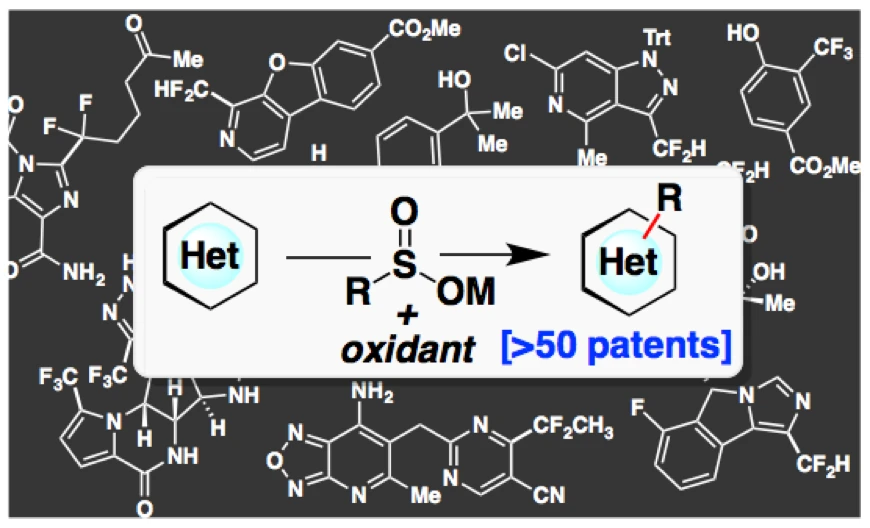 ReagentsReagents in a bottle
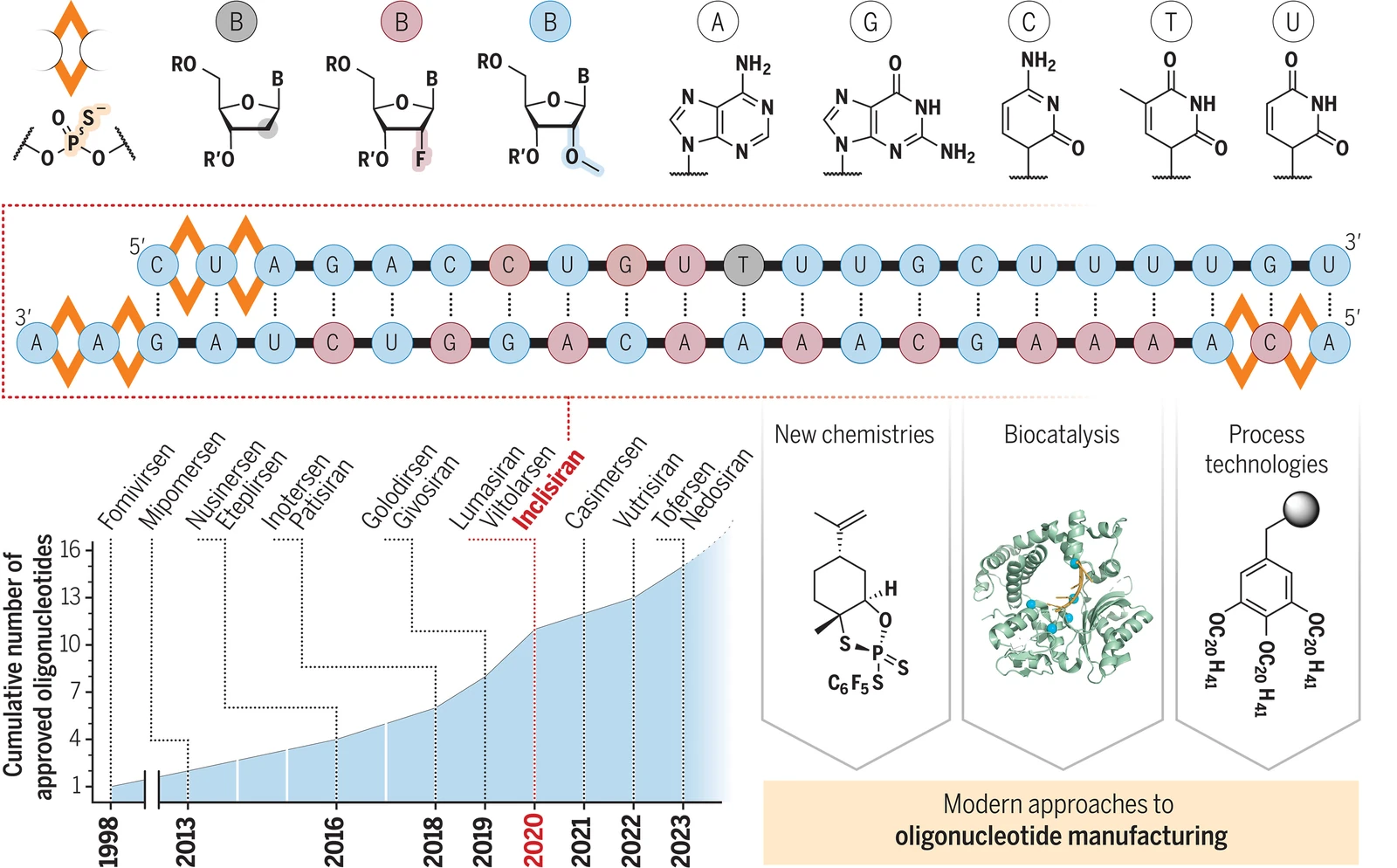 OligonucleotidesRewriting the backbone
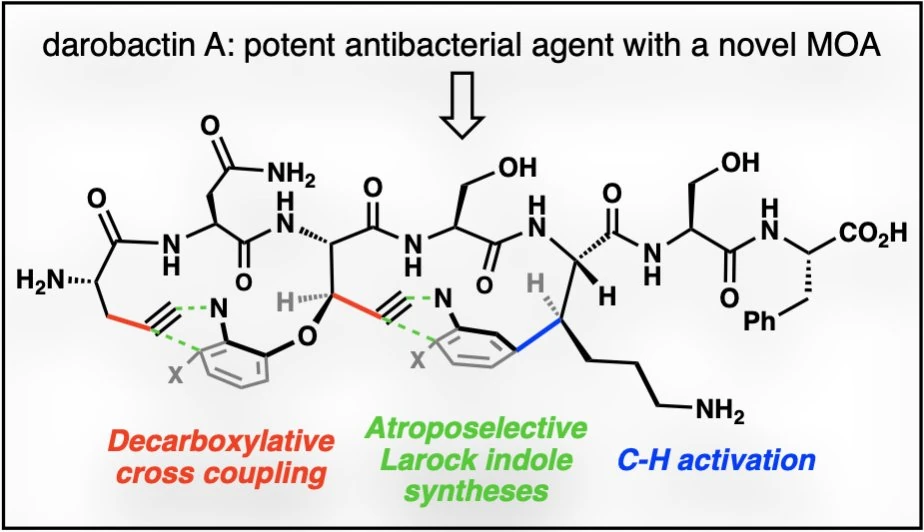 PeptidesRewriting the peptide
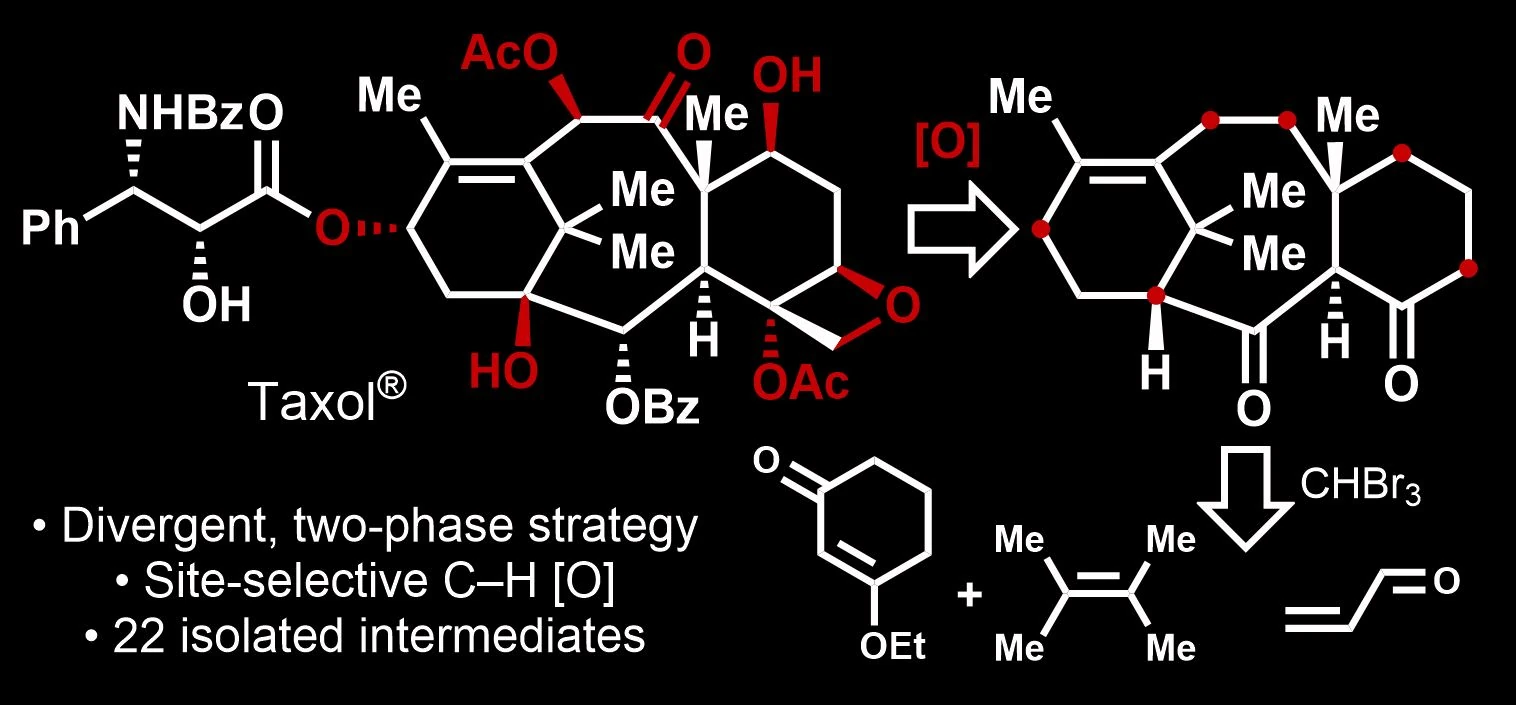 C–H functionalizationC–H logic