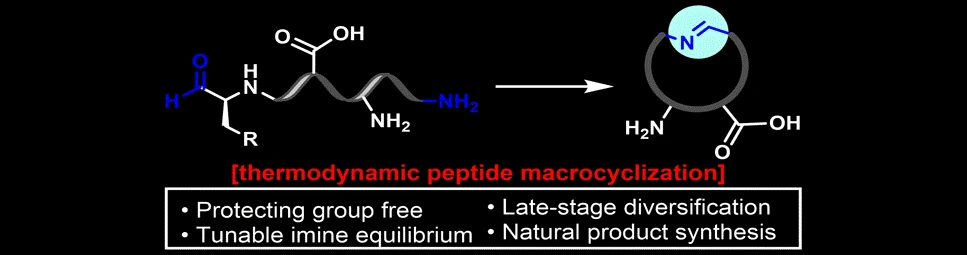
Problems that matter

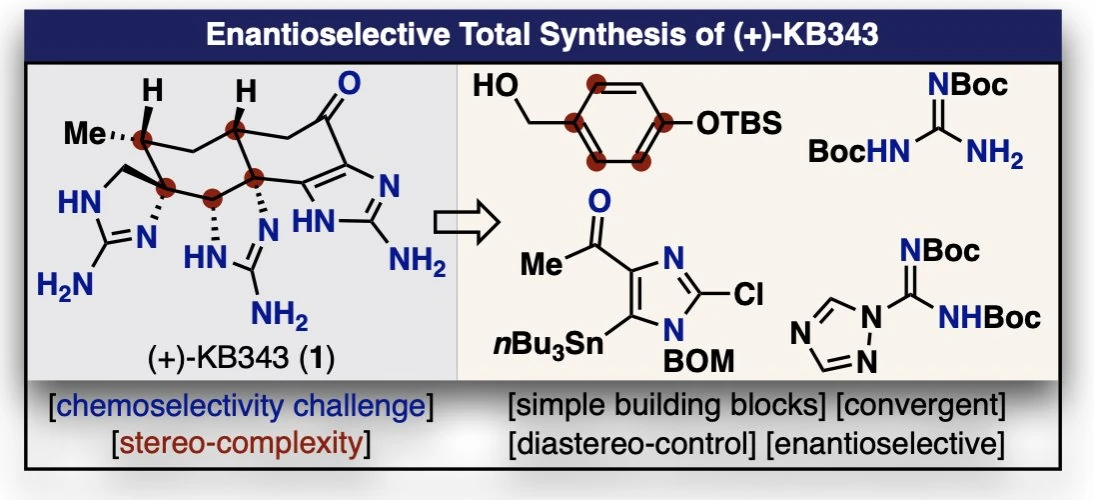
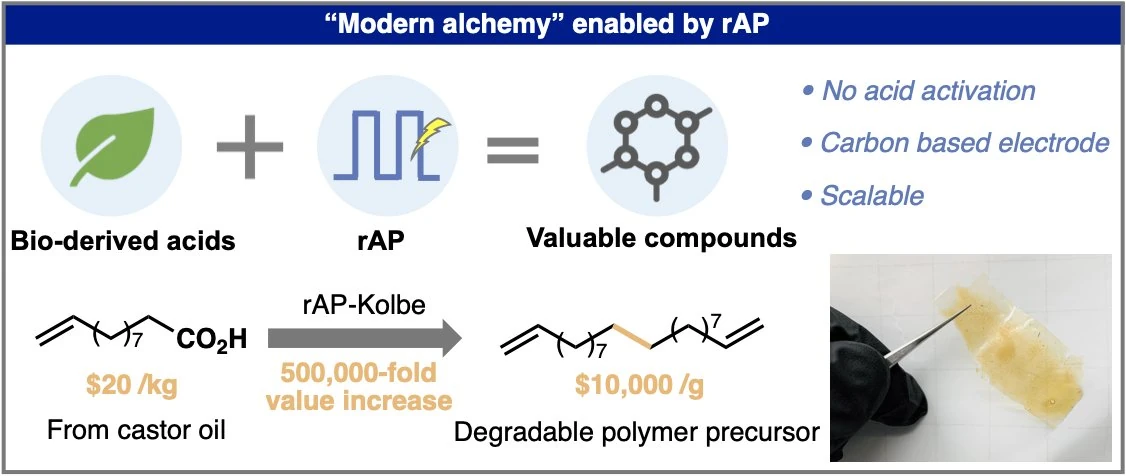
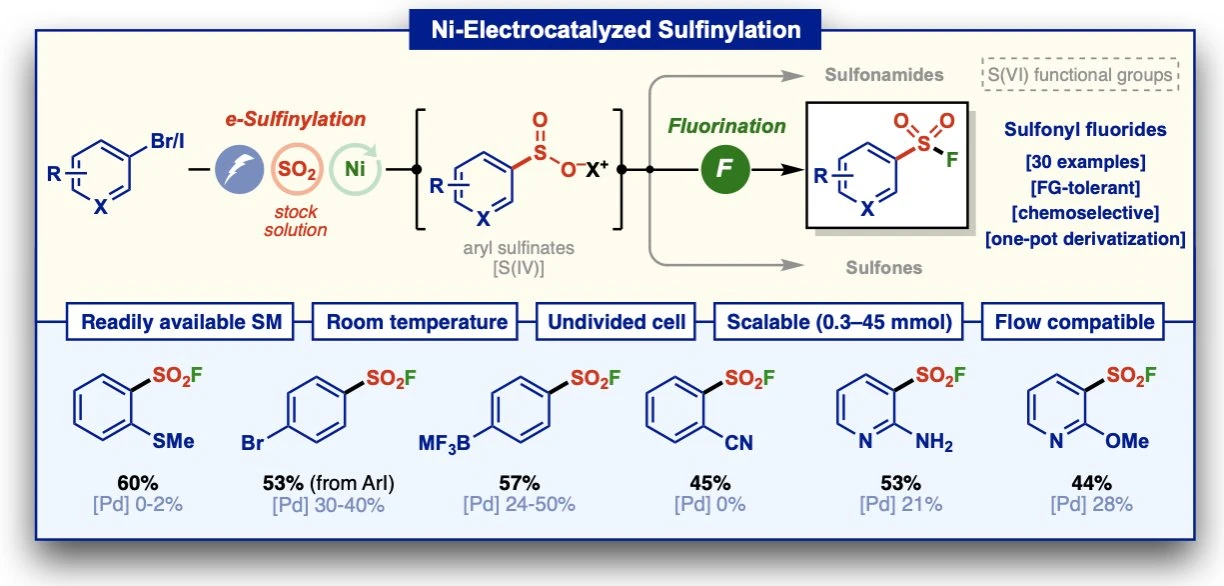
Some of our most important chemistry began as someone else’s problem. Since 2009, chemists from 26 companies have brought their hardest questions to La Jolla, put their names beside ours on 110 papers, and taught a generation of our students what chemistry is for.

26 companies have co-authored papers with the Baran lab Baran Lab Bristol Myers Squibb: 52 papers, 2013–present Bristol Myers Squibb Pfizer: 30 papers, 2012–present Pfizer Asymchem: 14 papers, 2016–2022 Asymchem LEO Pharma: 13 papers, 2013–2024 LEO Pharma AbbVie: 8 papers, 2022–present AbbVie Enamine: 8 papers, 2019–present Enamine Biogen: 7 papers, 2022–present Minakem: 5 papers, 2020–2022 Chemveda Life Sciences: 3 papers, 2020–present Eisai: 3 papers, 2013–2019 Elsie Biotechnologies: 3 papers, 2021–2025 Syngenta: 3 papers, 2021–2024 Kemxtree: 2 papers, 2015 Merck & Co.: 2 papers, 2023–2025 Vividion Therapeutics: 2 papers, 2025–present Debut Biotechnology: 1 paper, 2025 Eli Lilly and Company: 1 paper, 2023 Genentech: 1 paper, 2009 HitGen: 1 paper, 2020 Hongene Biotech: 1 paper, 2025 IKA: 1 paper, 2021 InduPro Therapeutics: 1 paper, 2023 KULR Technology: 1 paper, 2025 RQx Pharmaceuticals: 1 paper, 2014 Socrates Biosciences: 1 paper, 2025 The Medicines Company: 1 paper, 2018
110papers and preprints with industry co-authors
26partner companies
259industrial co-authors
42%of all our publications
01 Prologue

Someone else’s problem

Every chemist knows the feeling. A molecule that should be easy is not. A reaction that works on a gram fails on a kilogram. A drug candidate is too insoluble, too unstable, too quickly destroyed by the liver. In a university, such problems can wait. In a company, they cannot. Somewhere a patient is waiting too.

For most of the twentieth century, the two worlds kept a polite distance. Companies wrote large, unrestricted checks to universities in exchange for first access to whatever came out the other end: blanket agreements and first-rights deals. It was generous, and it was blunt. Academic and industrial interests were not always aligned, and as the economics of drug discovery tightened, those grants grew harder to justify and rarer to find.

What replaced them was smaller, sharper and, in our experience, far better. In 2015, Quentin Michaudel, Yoshihiro Ishihara and Phil Baran set down what the lab had learned in an Accounts of Chemical Research article with a deliberately biological title: Academia–Industry Symbiosis in Organic Chemistry. A company brings a precise, urgent problem that it has neither the time nor the mandate to solve from first principles. An academic lab brings the freedom to do exactly that. Each partner keeps the other alive.

“In our view, forging a partnership with industry can be a golden opportunity for both parties and can represent a true symbiosis.”

By the time that Account was written, more than a dozen projects had grown out of such partnerships. A decade later the number is 110. Roughly 42% of everything this laboratory has published carries the name of at least one industrial scientist.

02 Genentech · LEO Pharma

A leap of faith

The first partnership began with a creature from the sea and a question nobody could answer.

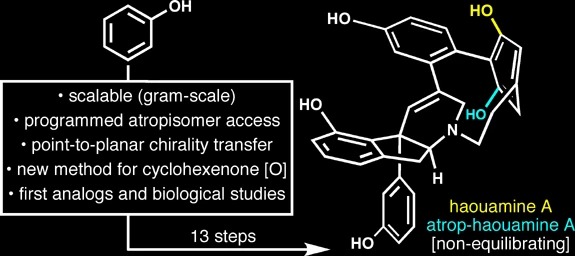
Haouamine A, a contorted heptacyclic alkaloid from a marine tunicate, showed tantalizing signs of activity against cancer cells. But the animal yields only traces, far too little for the careful biology a company like Genentech needs. The lab had already made haouamine once; that route, built to prove a point, could not make much of it. Prompted by Rami Hannoush at Genentech, the group went back to the drawing board. A third-generation route made more than 15 grams of a key intermediate and closed with a chirality-transfer endgame, delivering haouamine A and its atropisomer in quantity. With material in hand, Genentech showed that both forms are active against PC3 prostate cancer cells and that the strained cyclophane ring is essential. The work appeared in JACS in 2009, the lab’s first paper with an industrial co-author. An academic ambition, a scalable synthesis of a ferociously complex molecule, had become an industrial purpose.

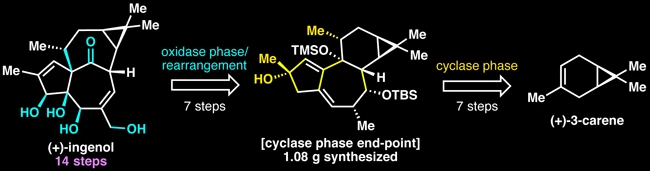
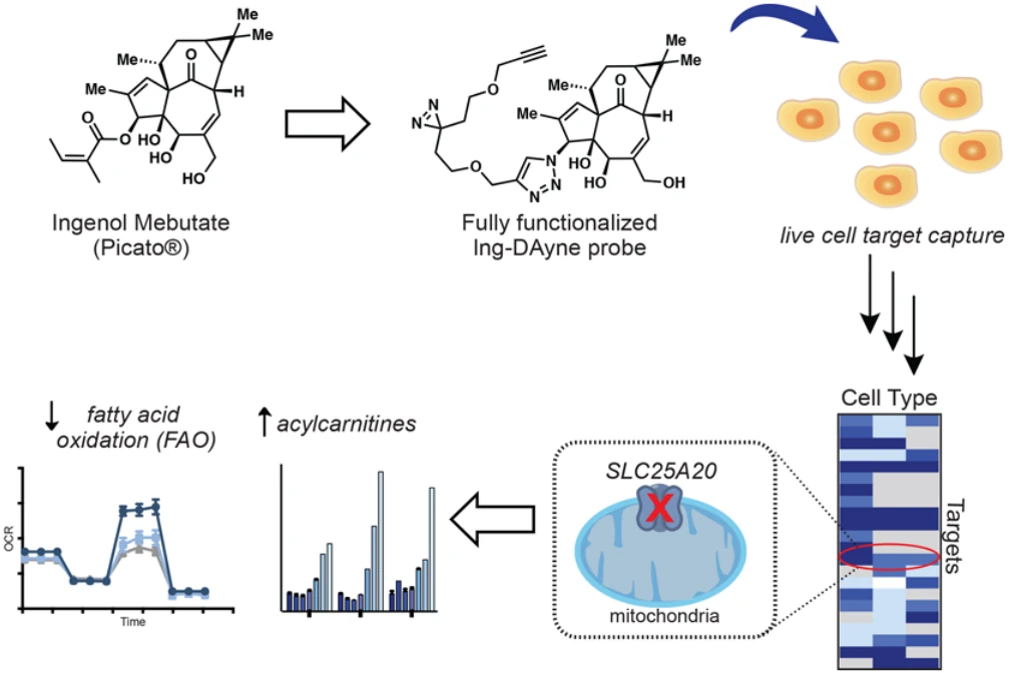
Two years later came a bolder bet. LEO Pharma, a Danish company devoted to skin disease, had only ever worked with contract research organizations. In 2011 it chose instead to partner with an academic group, with no guarantee that the group could deliver. The target was ingenol, the core of LEO’s drug Picato, a molecule whose strained in,out ring system had defeated every attempt at a short synthesis; the existing routes ran to more than 35 steps.

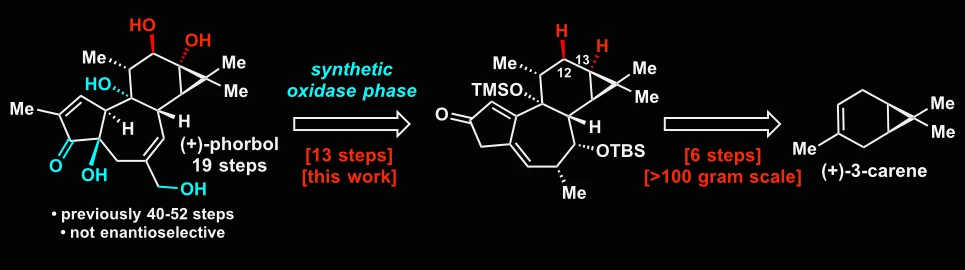
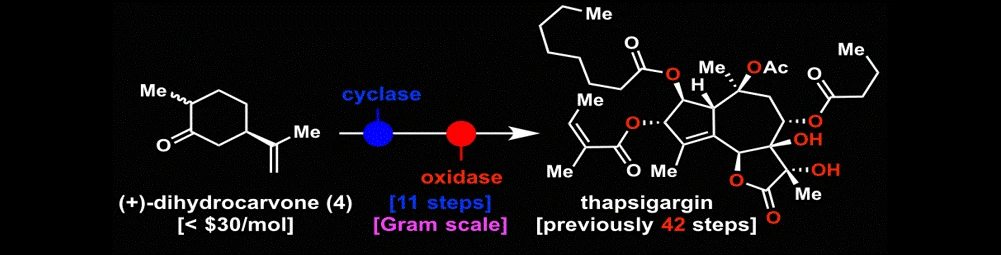
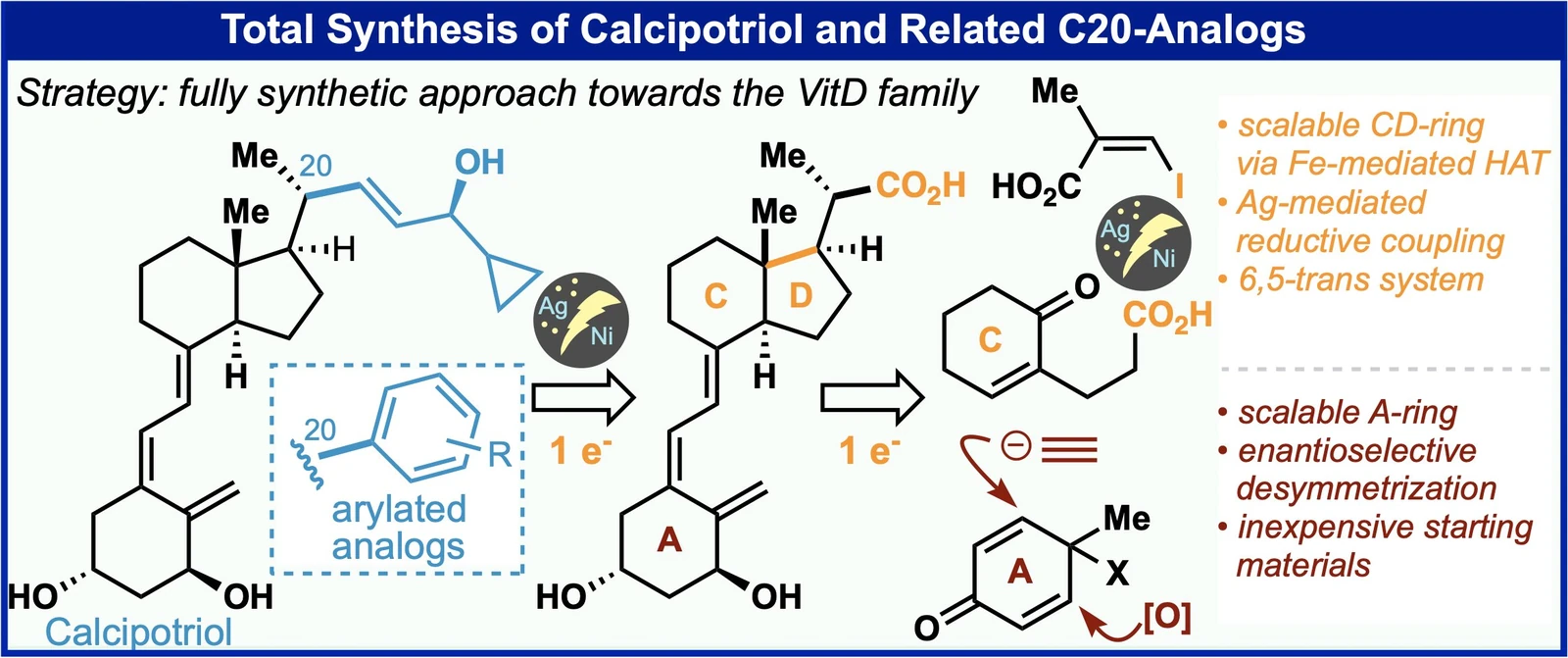
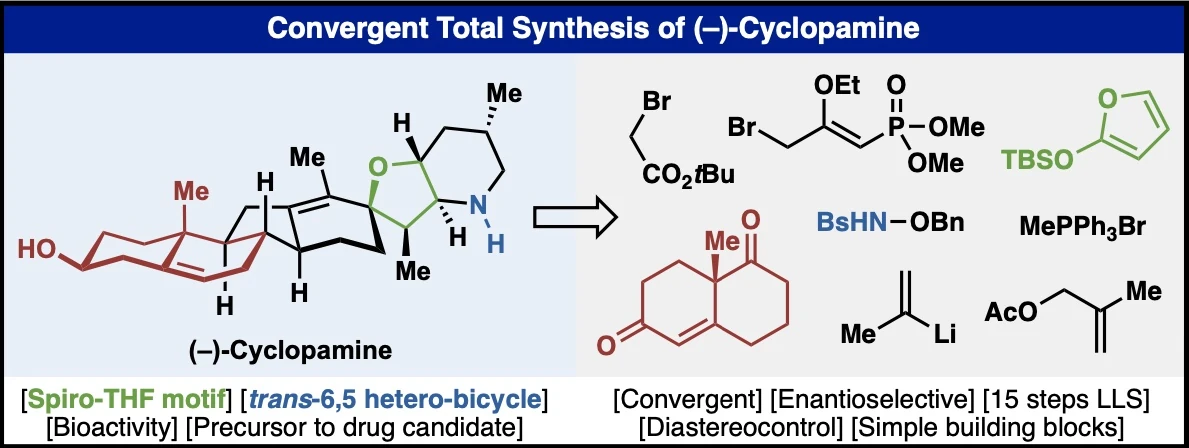
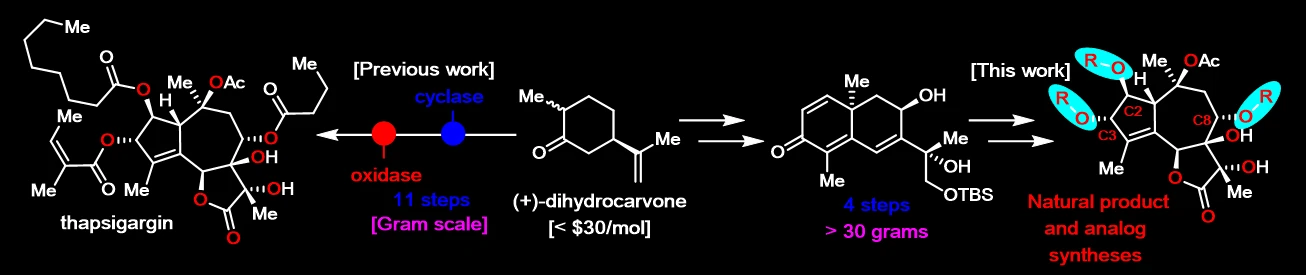
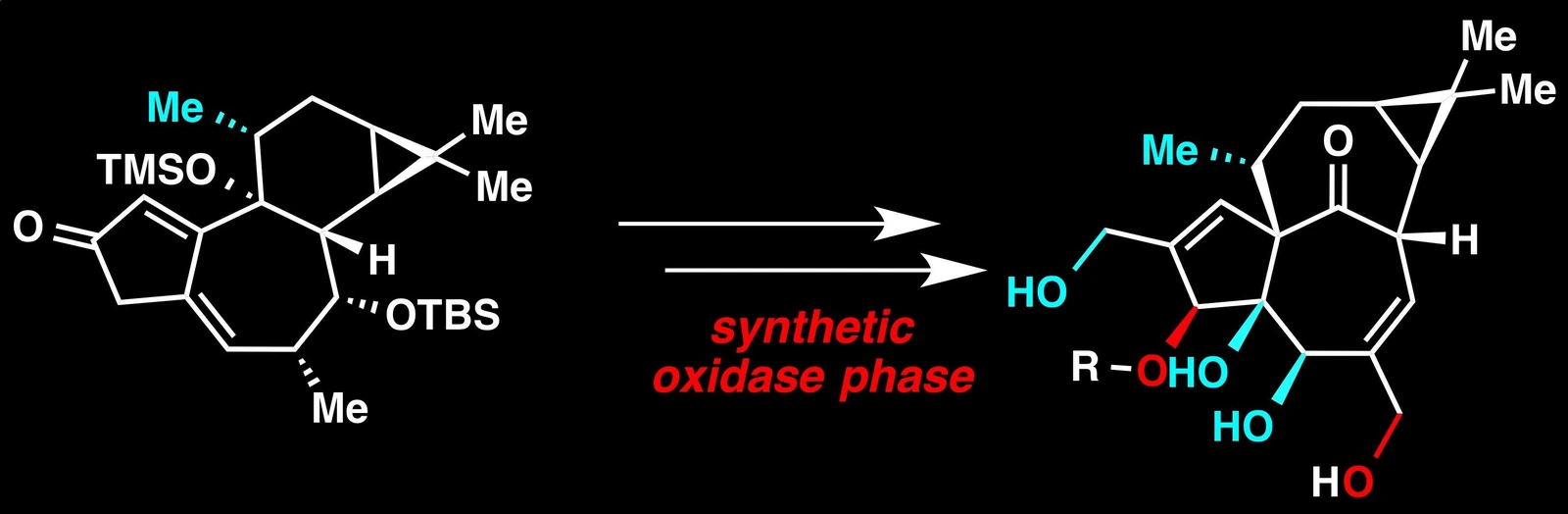
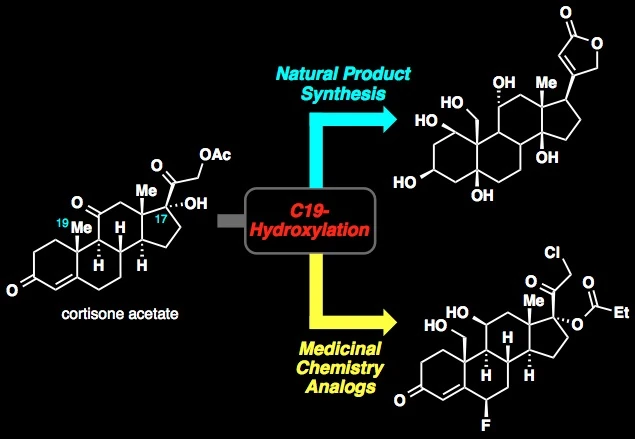
Two-phase terpene logic, building the carbon skeleton first and then installing oxidation the way nature does, delivered ingenol in 14 steps from (+)-3-carene. Through biweekly teleconferences and a constant stream of email, Jakob Felding’s team at LEO guided which analogs would matter and helped steer the chemistry. The leap of faith became a lasting relationship: ouabagenin and hydroxylated corticosteroids, a 19-step synthesis of phorbol, scalable thapsigargin, chemical proteomics that identified a target of the ingenol drug class, a convergent synthesis of the psoriasis drug calcipotriol and a convergent total synthesis of cyclopamine.
03 Bristol Myers Squibb

Patience and optimism

In 2012, Scripps and Bristol Myers Squibb entered a long-term, multi-laboratory partnership. Because both medicinal chemists and process chemists came to the table, the problems ranged from the first milligram of a lead compound to the last kilogram of a drug candidate.

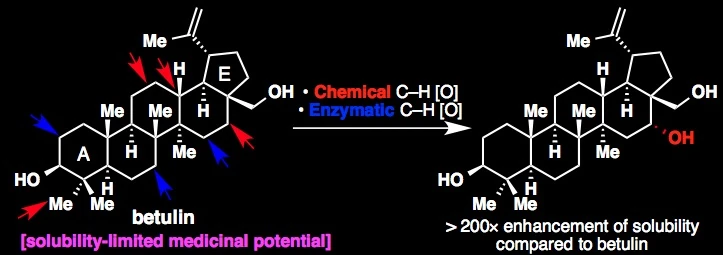
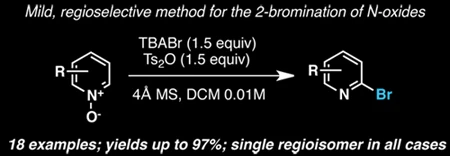
The first joint project took two famous triterpenes, betulin and betulinic acid, with promising anti-HIV, anti-inflammatory and anticancer activity and almost no solubility in water. Combining chemical and enzymatic C–H oxidation, the lab made eight oxidized derivatives; BMS measured them and found dramatic gains in solubility. Alicia Regueiro-Ren orchestrated the exchange of data and molecules across several BMS groups. With BMS process chemists Martin Eastgate and Ke Chen, the lab then built on an in-house BMS observation to create a mild, regioselective bromination of fused pyridine N-oxides; by 2015 BMS was using it to make kilogram quantities of a drug candidate.

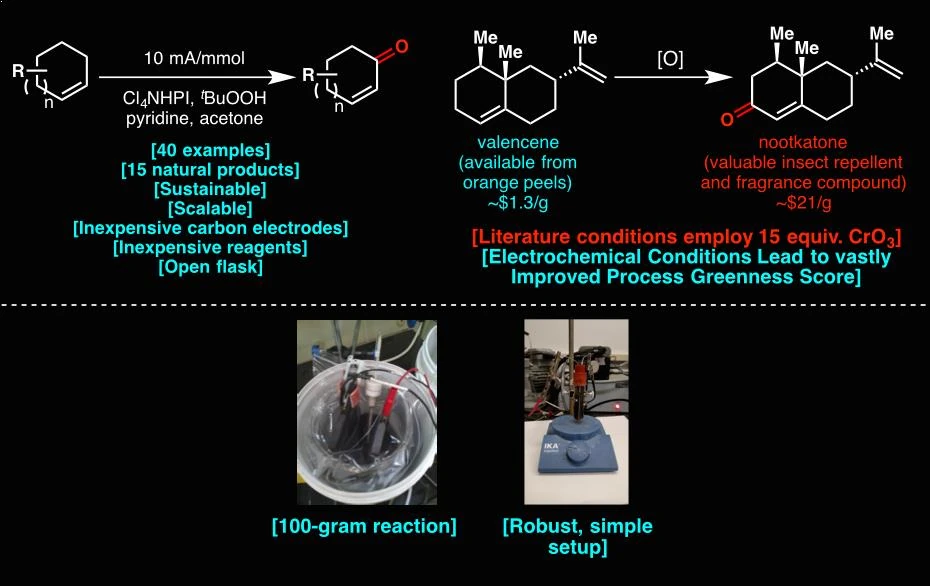
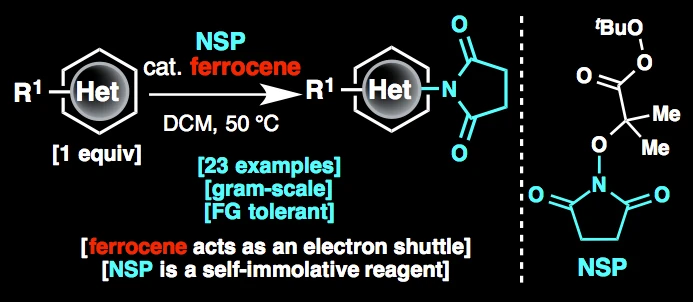
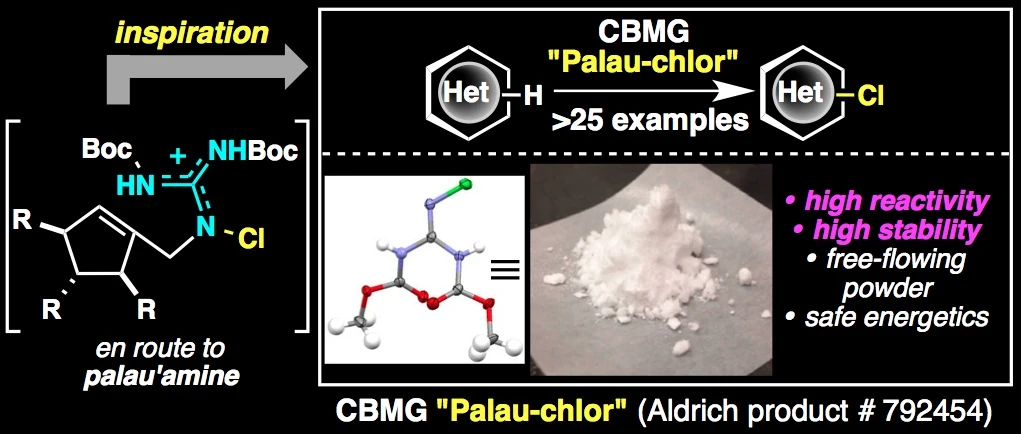
Not every project ran smoothly. A radical C–H imidation of arenes took a year and a half, and on many occasions came close to being abandoned. The Account credits its survival to one person: “it was the patience and optimism from our BMS colleague that paved the way to fruition.” That colleague, Martin Eastgate, has since co-authored more than twenty papers with the lab. The same years produced Palau’chlor, a guanidine-based chlorinating reagent named for the natural product palau’amine, whose stability and large-scale safety were assessed with the help of BMS process chemistry.

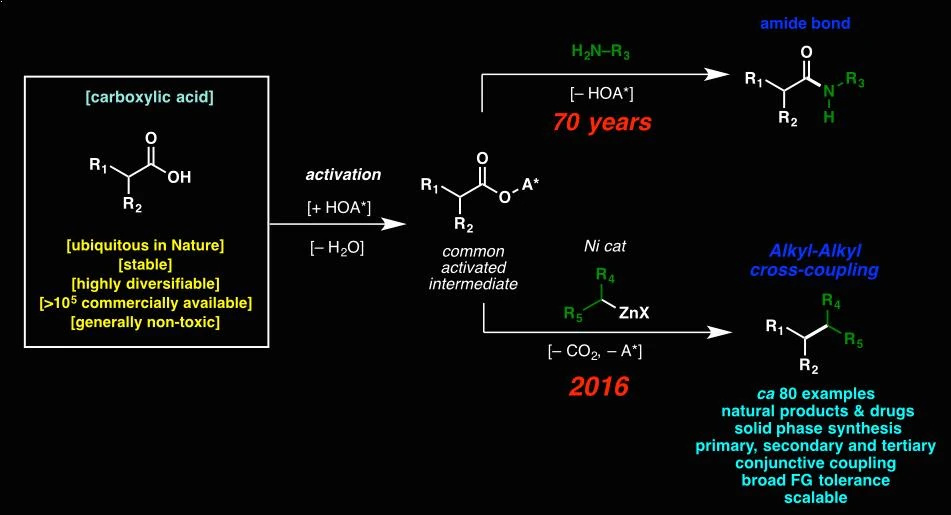
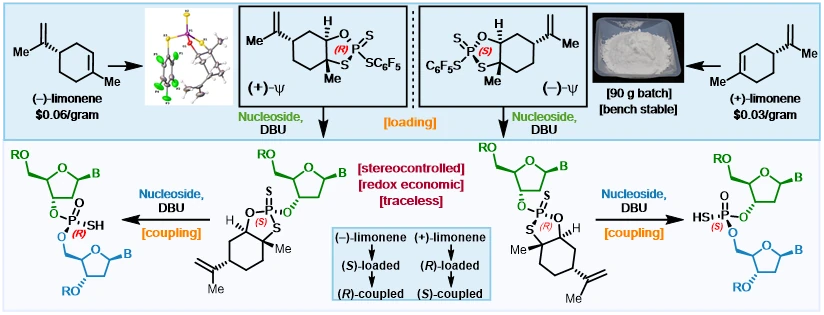
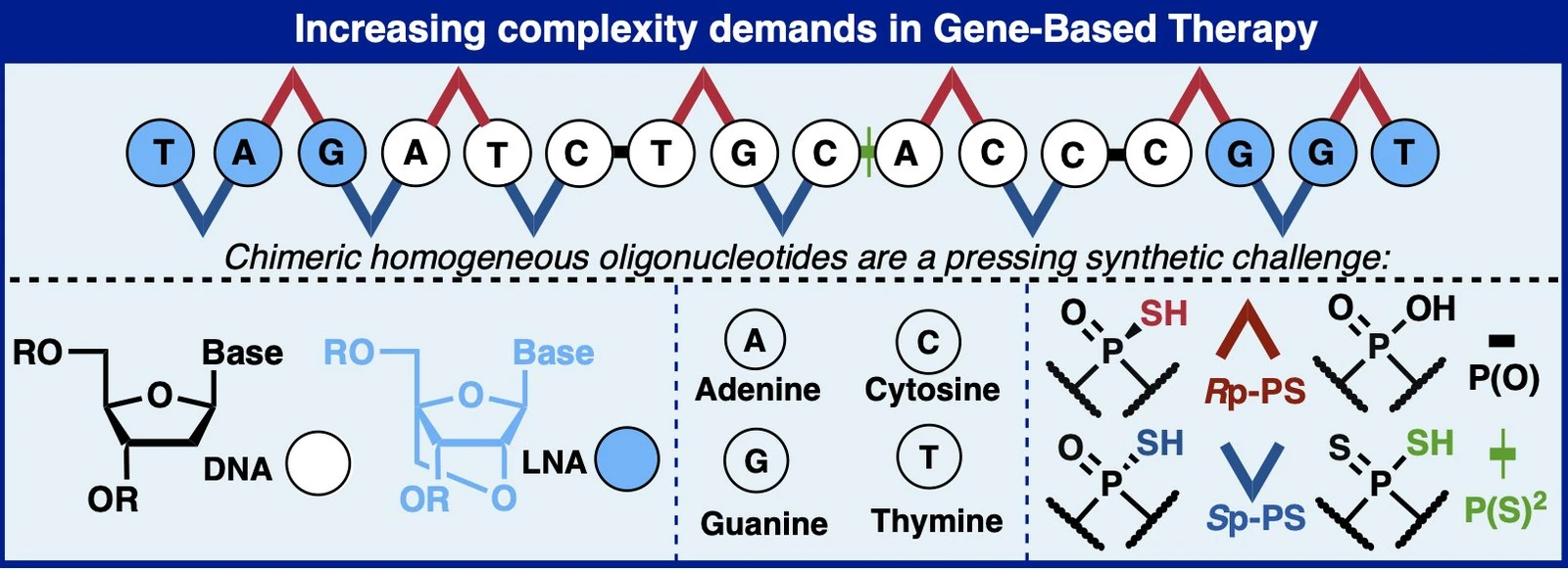
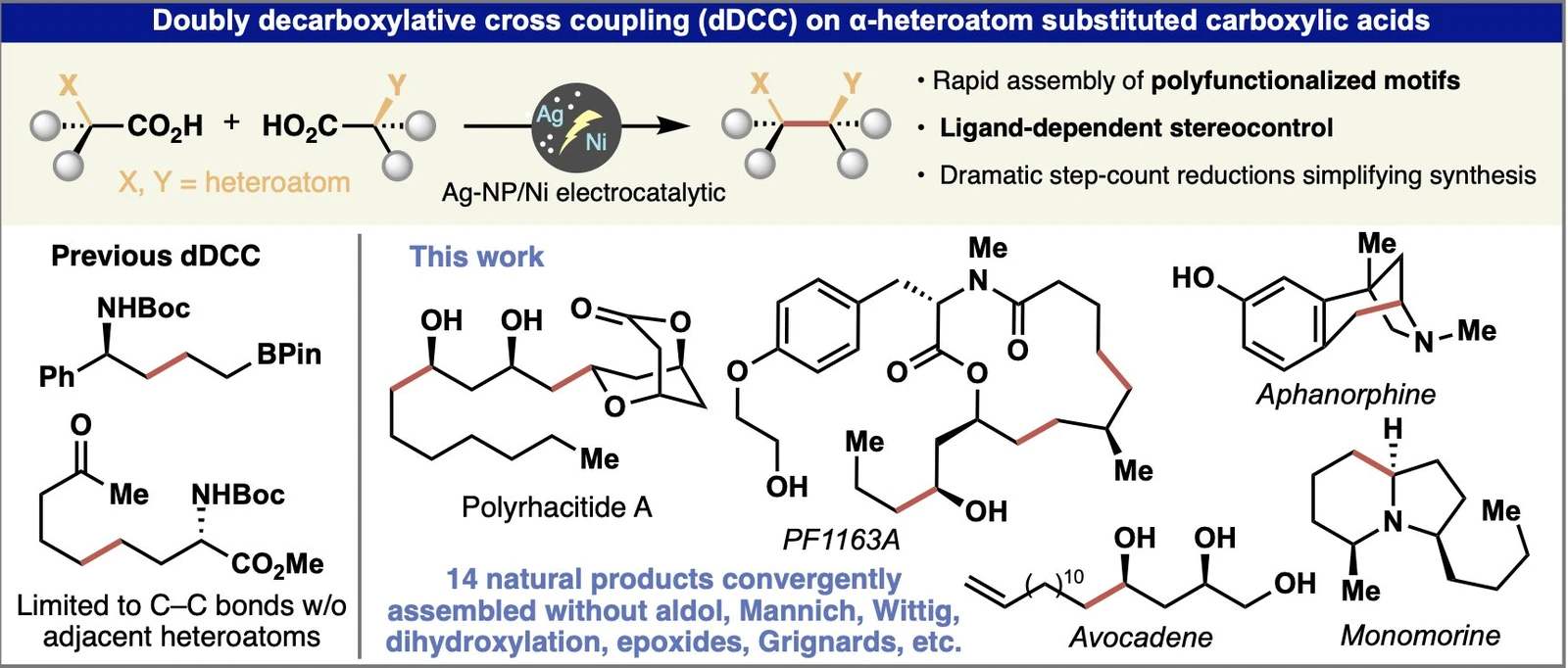
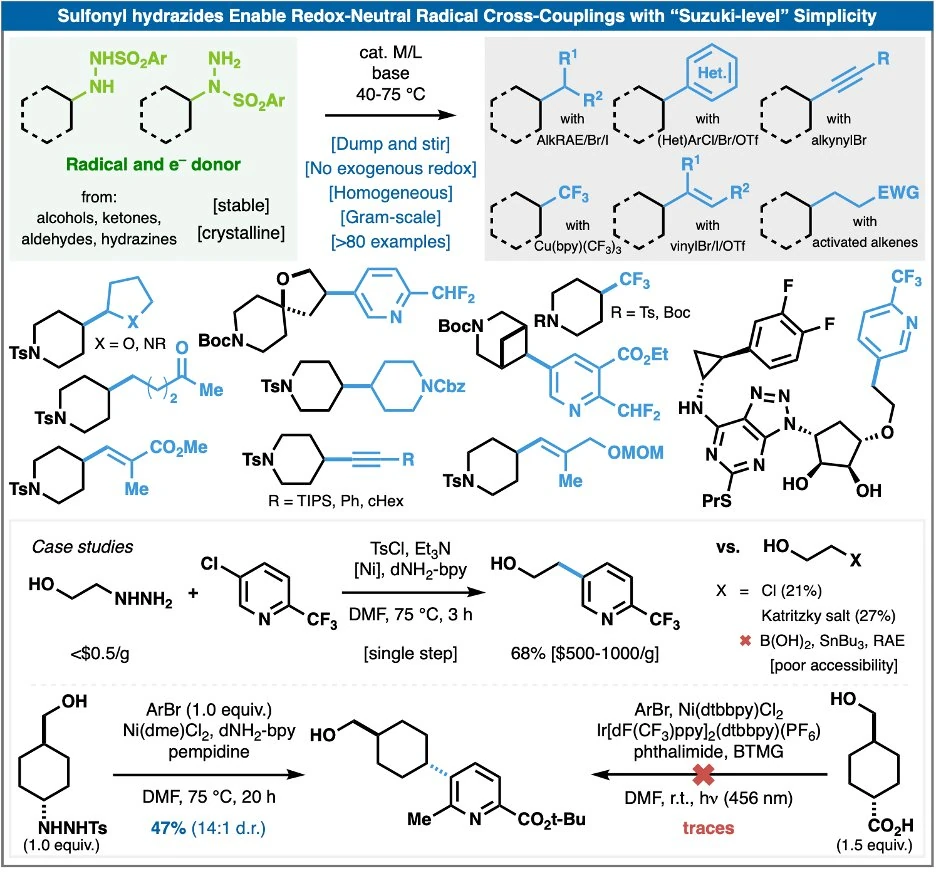
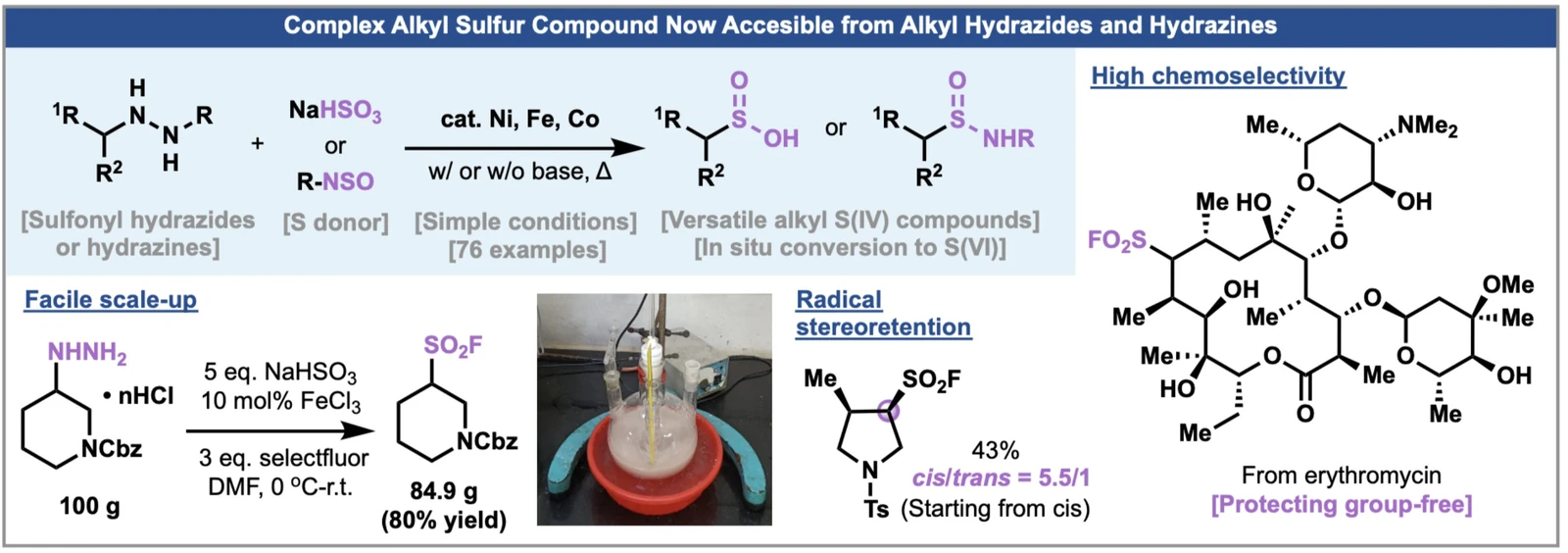
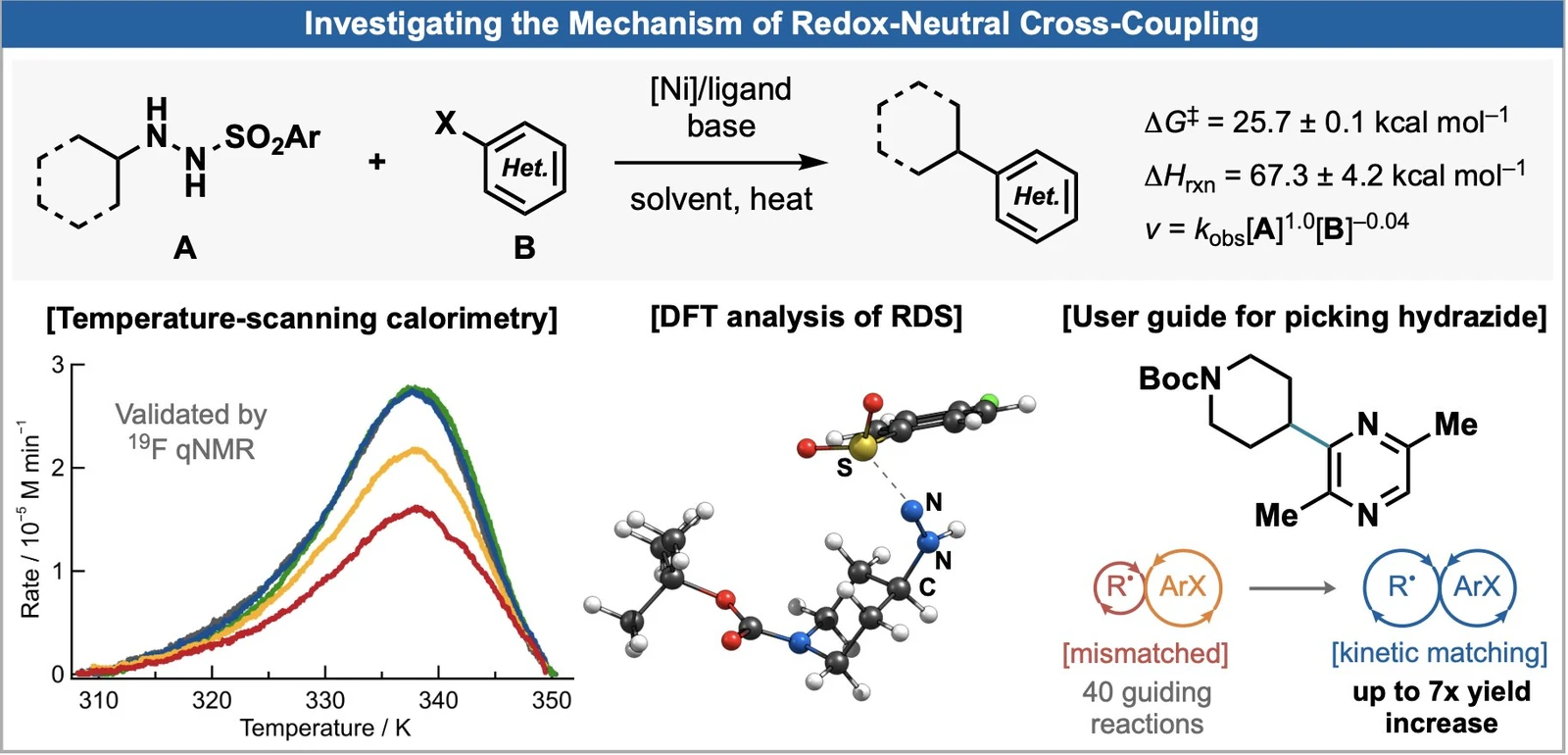
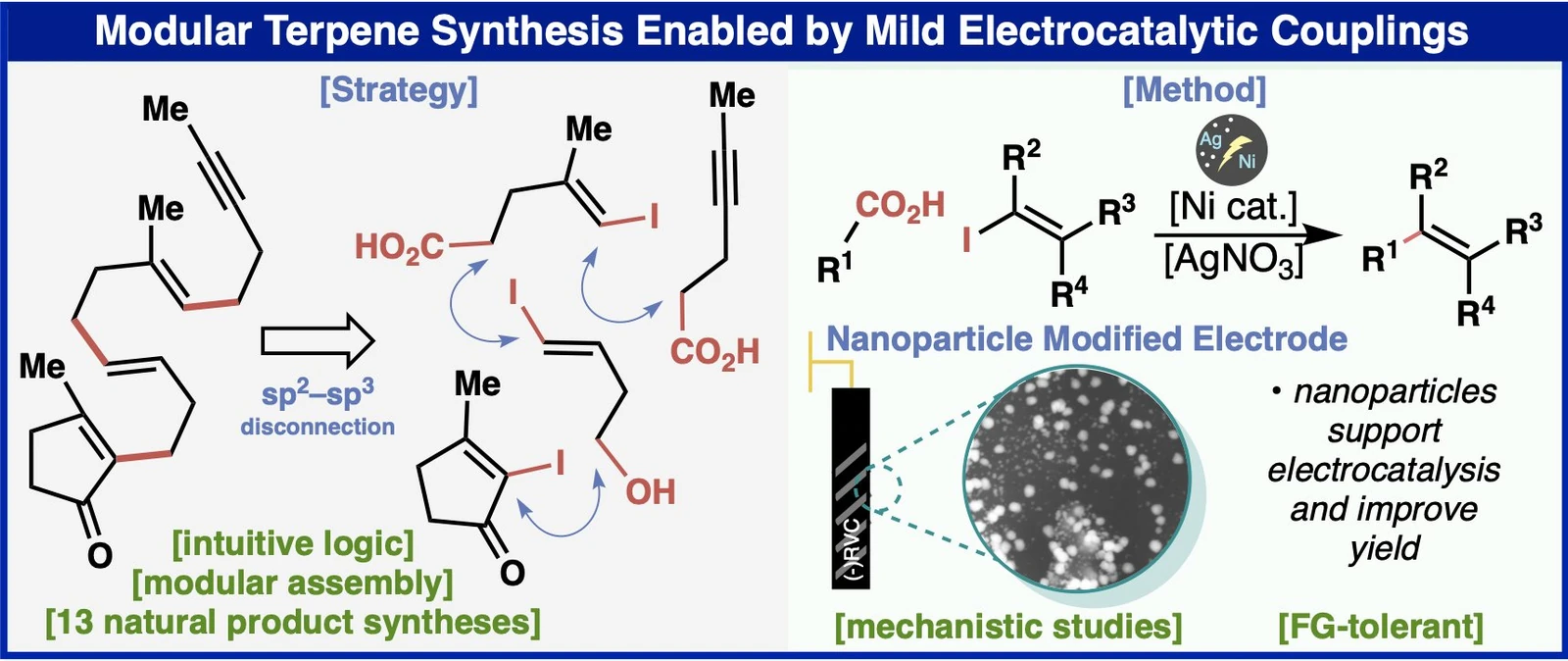
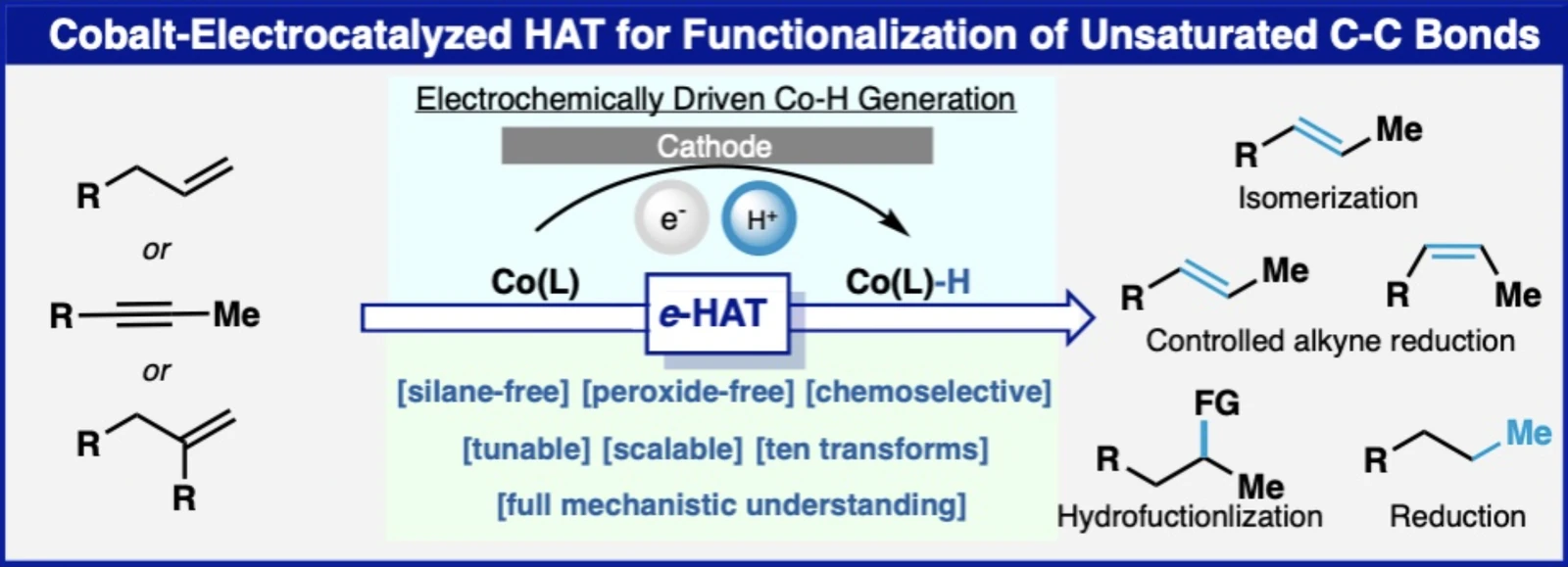
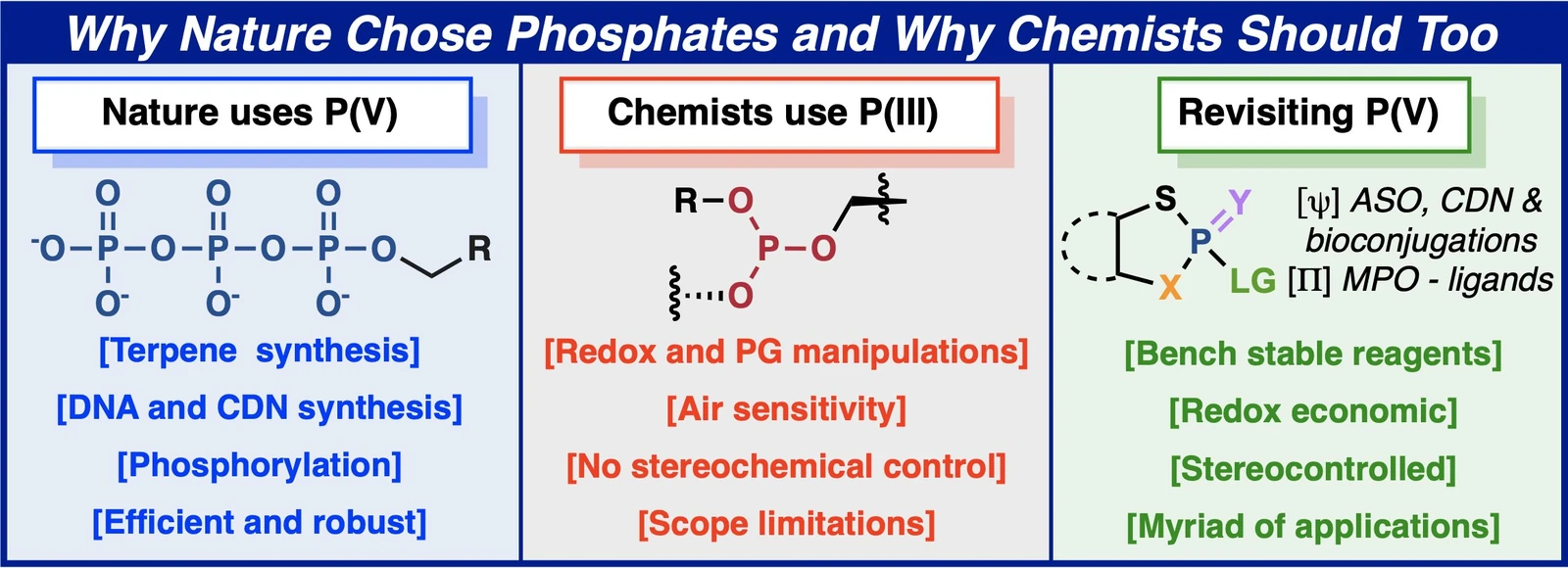
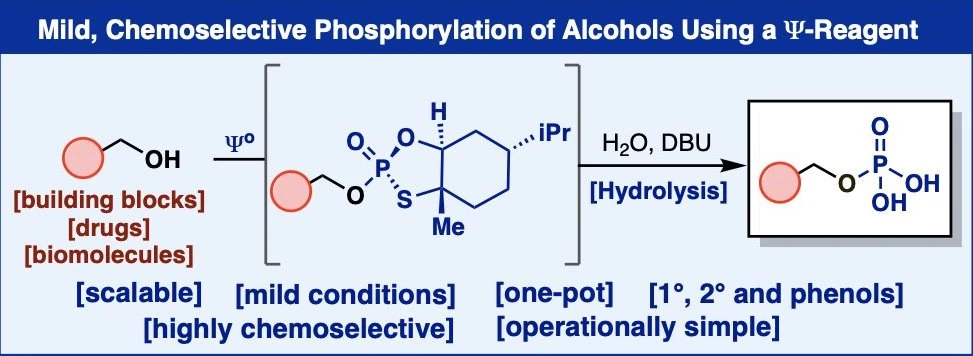
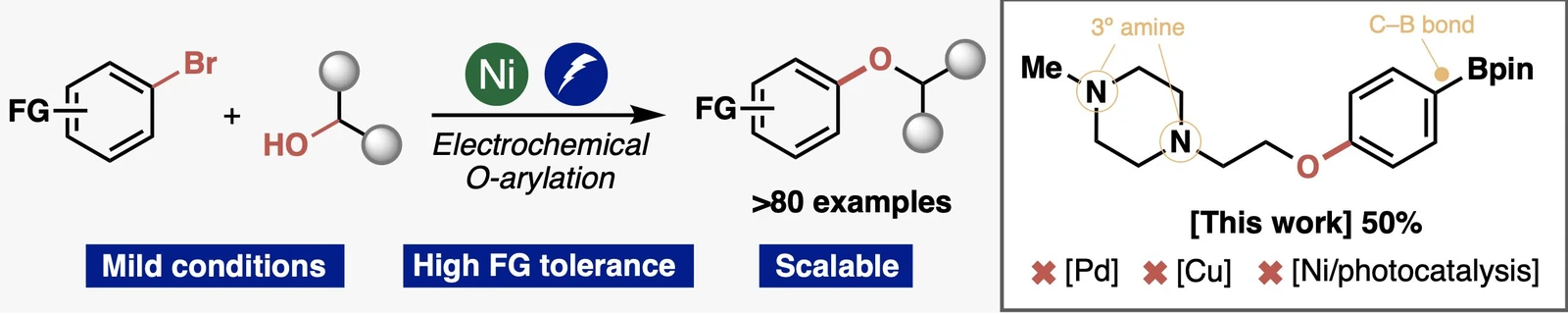
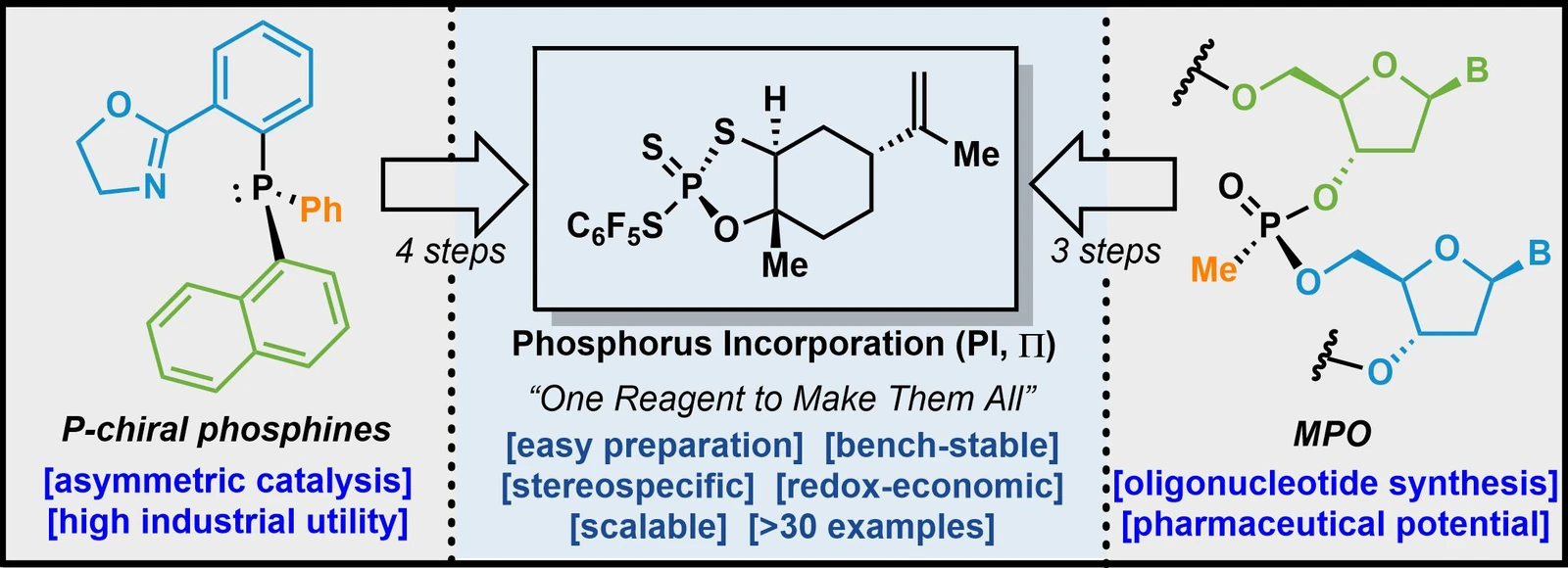
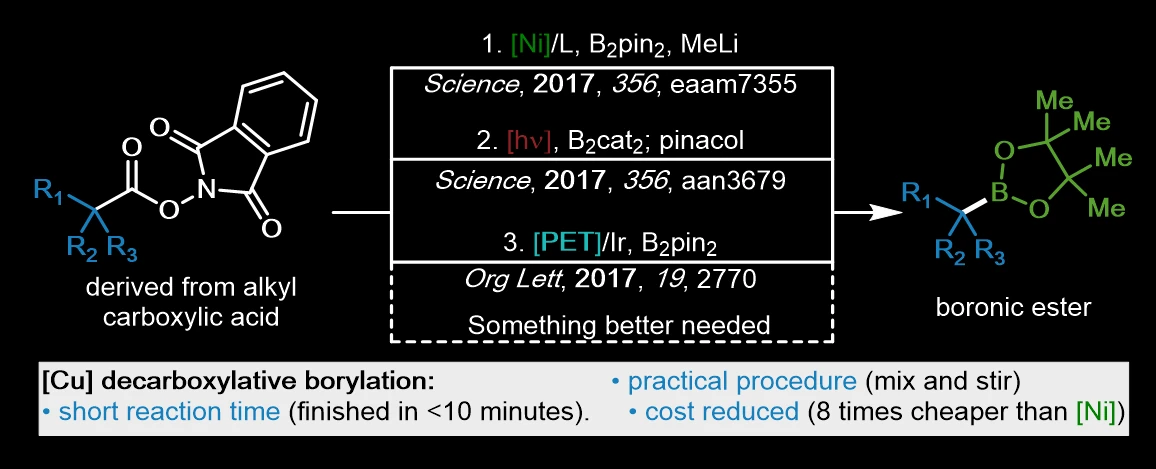
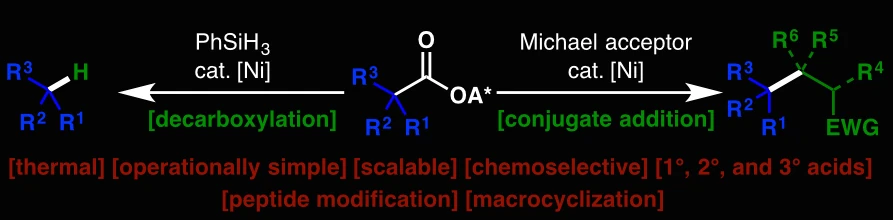
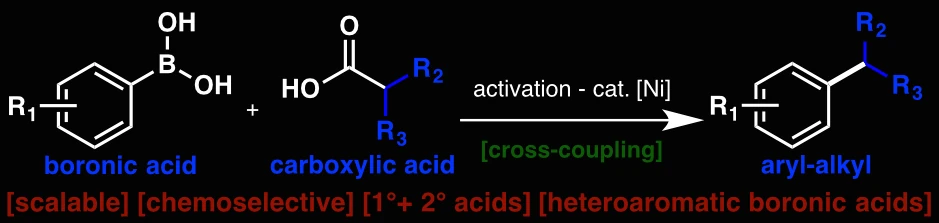
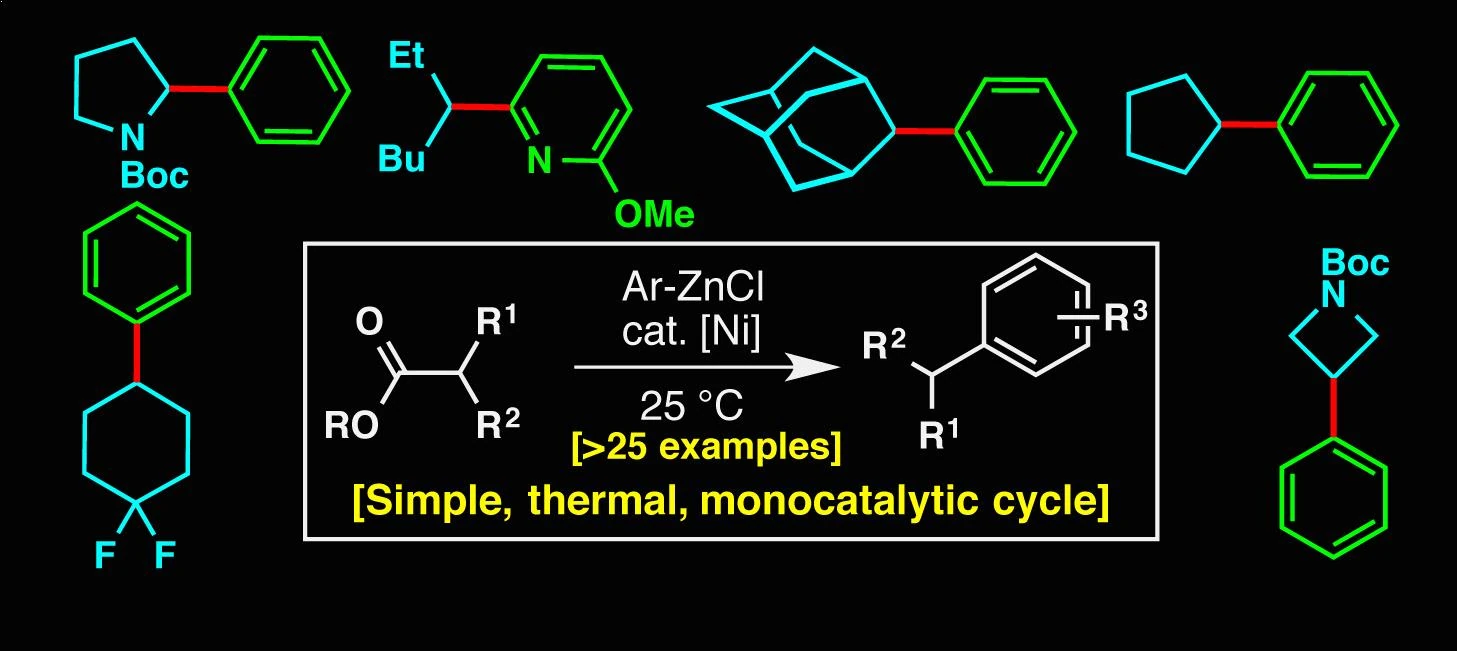
What followed is one of the most productive academic–industrial relationships in modern synthesis: scalable, sustainable electrochemical allylic C–H oxidation, redox-active esters for alkyl–alkyl cross-coupling, decarboxylative alkenylation, P(V) reagents for chiral phosphorothioates and a P(V) platform for oligonucleotide synthesis, complex-molecule synthesis by electrocatalytic decarboxylative cross-coupling, and sulfonyl hydrazides as a general platform for radical cross-coupling. Medicinal chemists, process chemists, radiochemists and discovery scientists from BMS have co-authored 52 papers with the lab, more than any other company.
04 Pfizer

Every few weeks, in person

Pfizer’s story traces the shift the Account describes. From 2007 to 2011, Scripps and Pfizer ran a five-year, first-rights research collaboration. When it ended, Pfizer chose something more intimate: focused partnerships with individual laboratories, including ours.

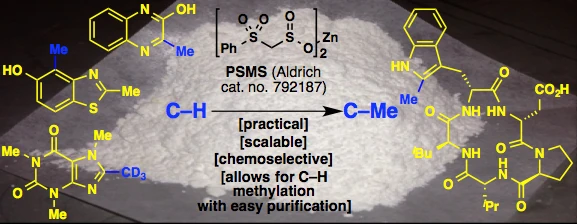
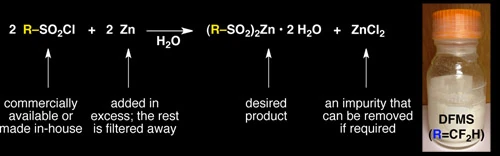
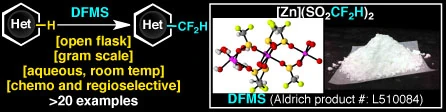
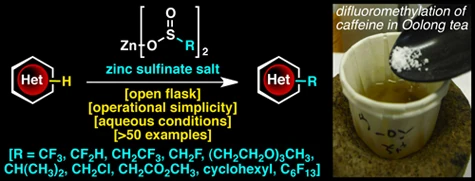
The new arrangement was simple. The lab gained access to compounds from confidential Pfizer projects for internal scientific use; Pfizer scientists saw unpublished results and could put them to work at once. It began with a new reagent for direct difluoromethylation. The lab had set out to make a sodium salt and could not; what crystallized instead, zinc difluoromethanesulfinate (DFMS), turned out to be better. Michael Collins of Pfizer has been at the lab’s side ever since, bringing “the valuable perspective of a practicing medicinal chemist.” Pfizer’s La Jolla site sits close to Scripps, both figuratively and geographically, and the two groups met in person every few weeks to trade ideas and molecules.

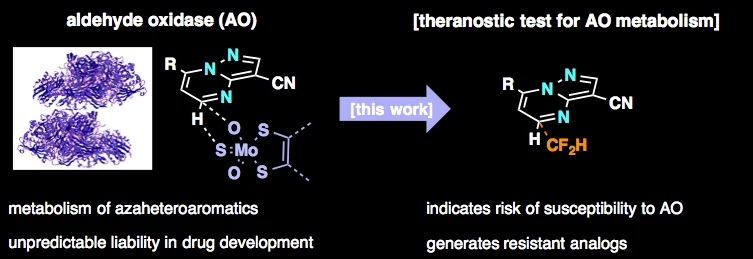
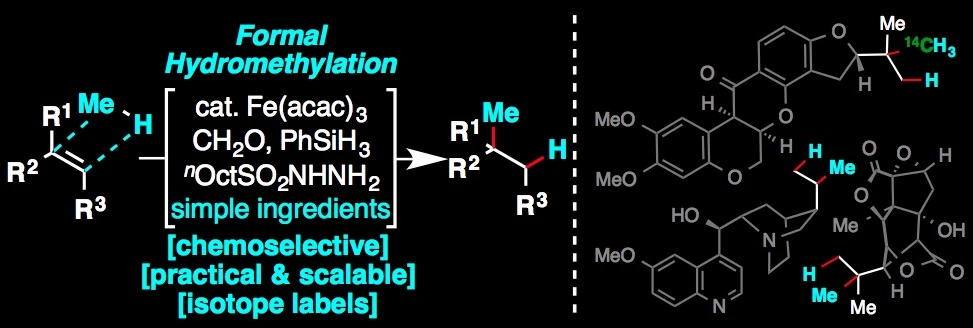
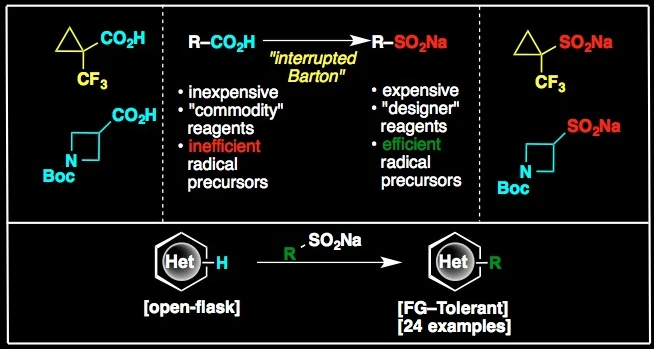
The sulfinates became a general toolkit for innate C–H functionalization of heterocycles (with a protocol for making them). When a 2013 review issued a call for new C–H methylation reactions, Collins, Aaron Burns and Martha Ornelas at Pfizer answered it with the lab, inventing a two-step heteroarene methylation designed so that the product is easy to purify. When another paper made the case for trifluoromethylcyclopropyl groups as metabolically stable stand-ins for tert-butyl, a sulfinate that installs them followed. And when Pfizer needed a quick way to predict which heteroarenes the enzyme aldehyde oxidase would attack, DFMS became a simple litmus test: react at room temperature, look for a peak 50 mass units heavier, and you know where the liver will strike.

“Our industrial partners can often identify “real-world” problems better than we can, owing to their years of experience in multidisciplinary research targeting diseases.”

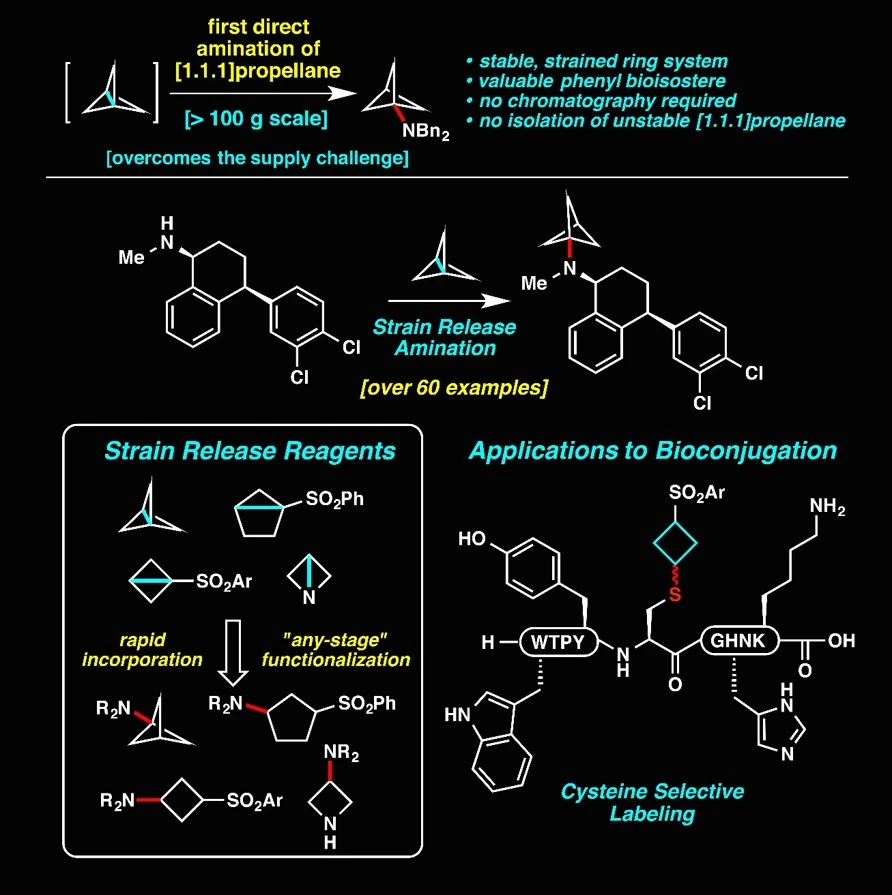
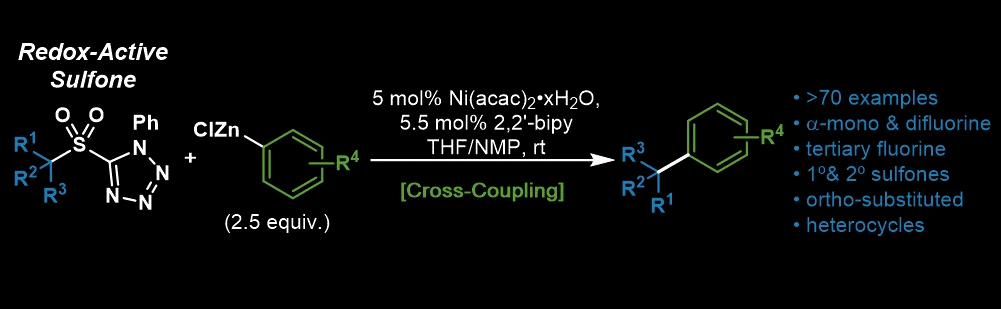
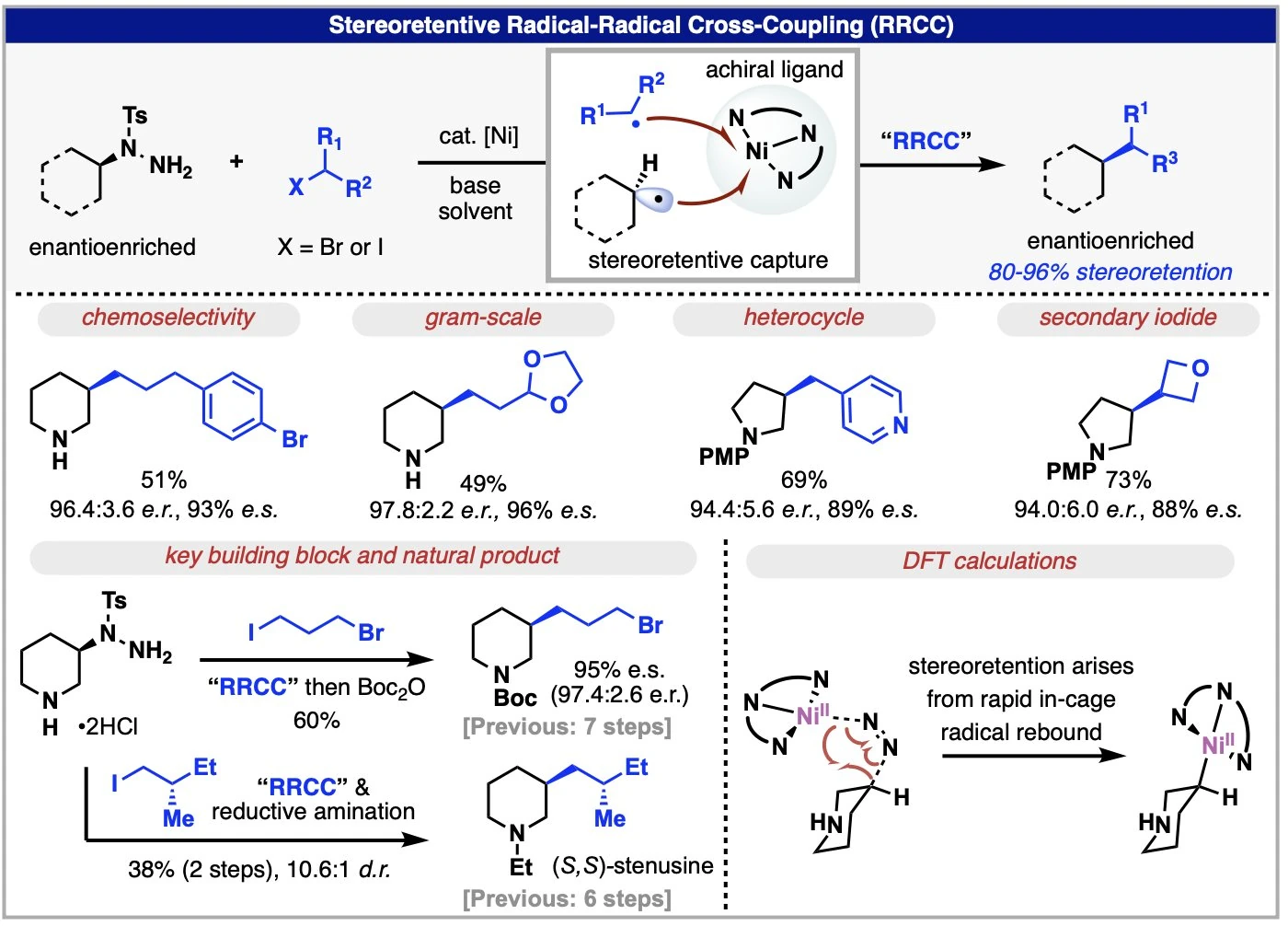
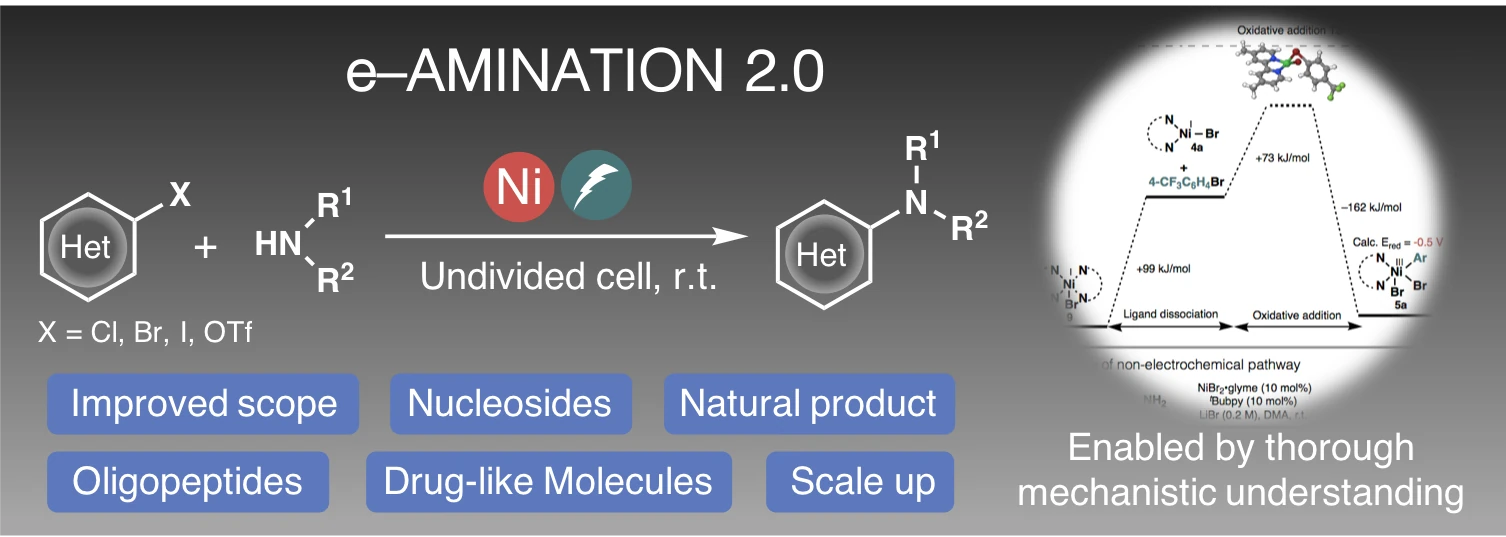
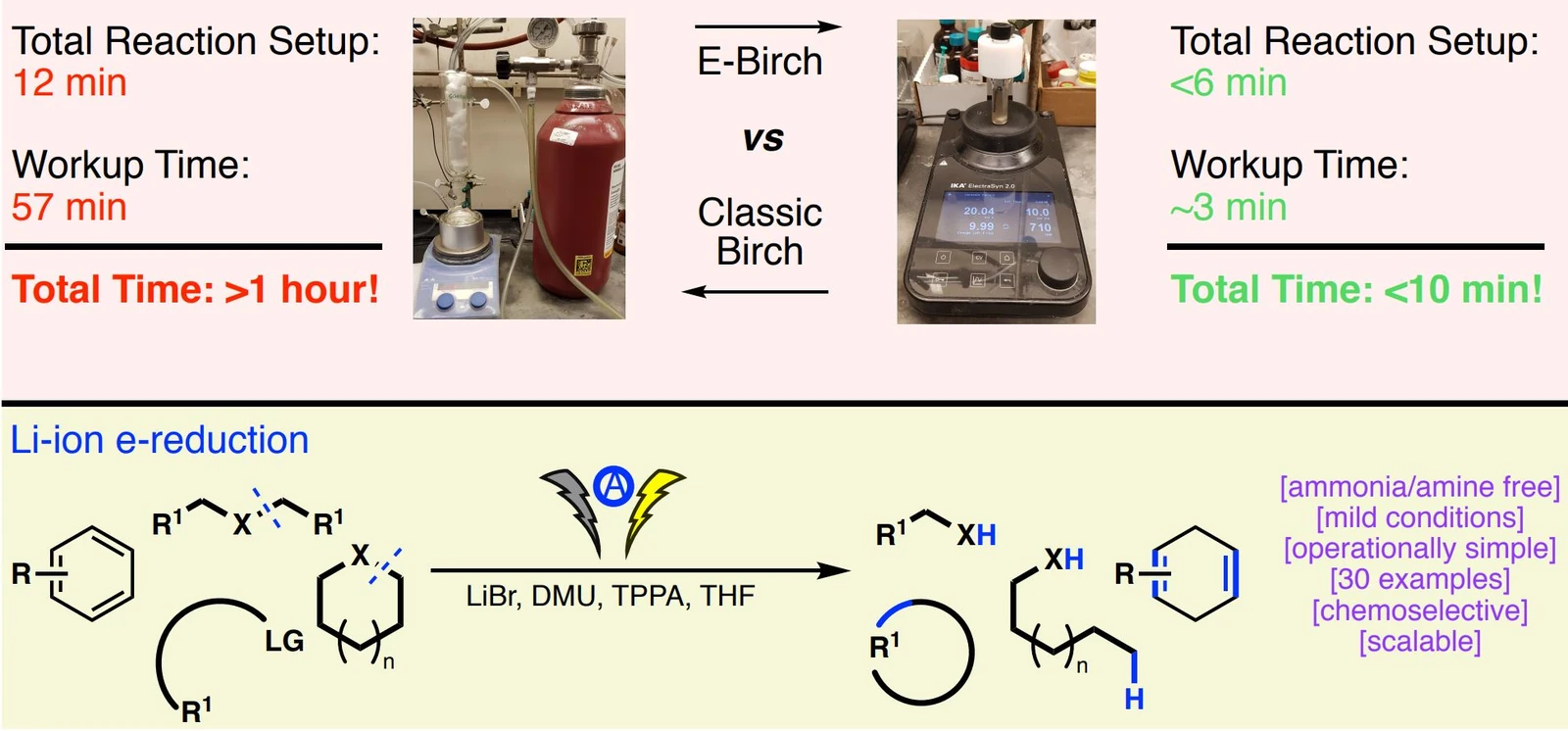
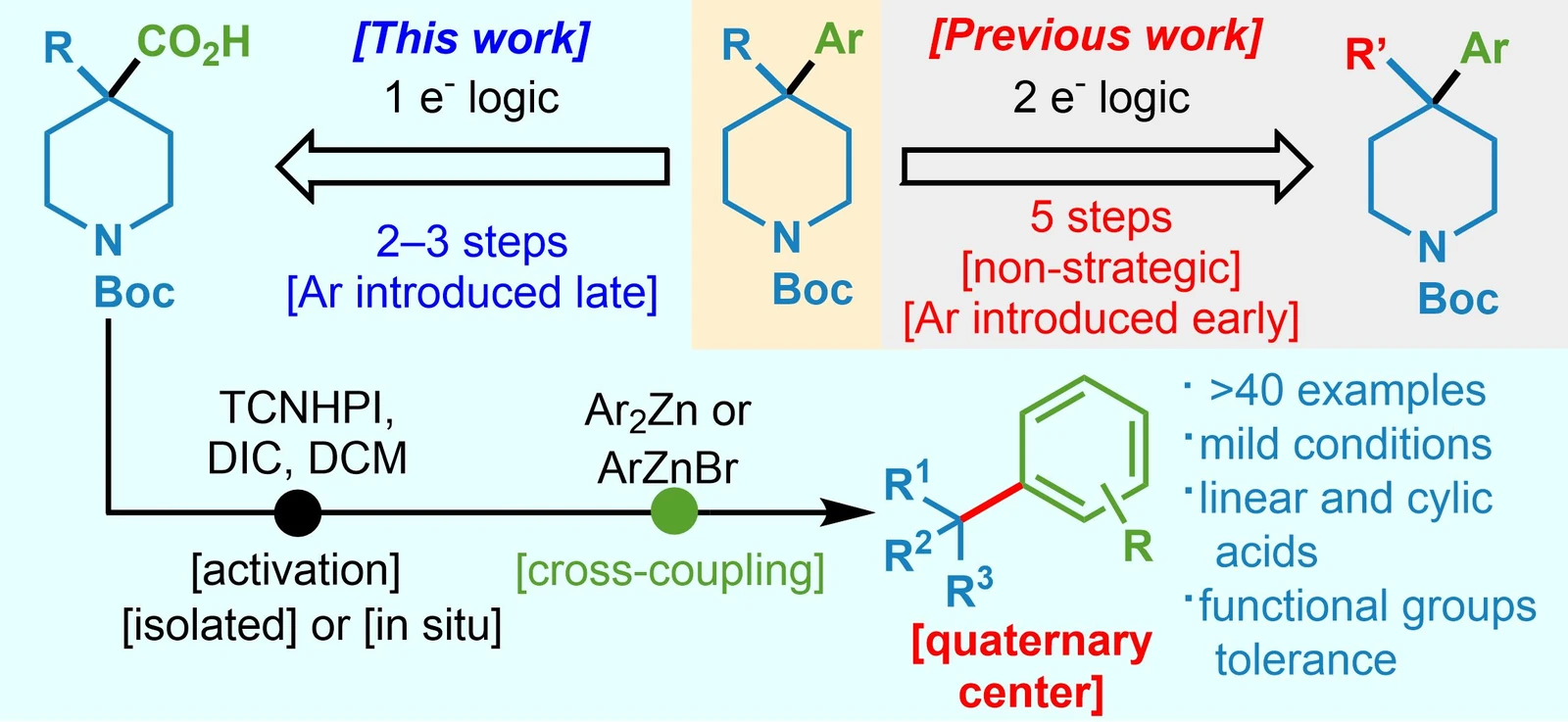
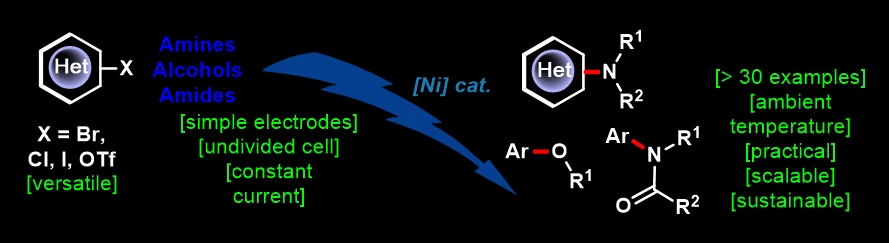
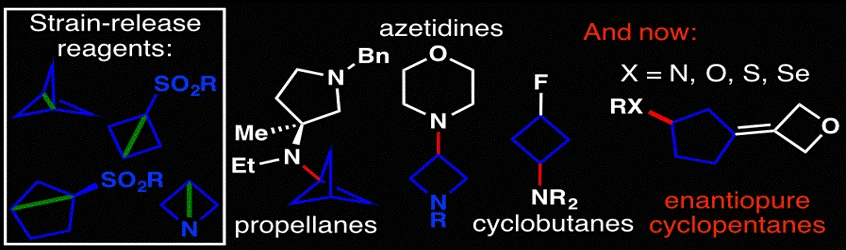
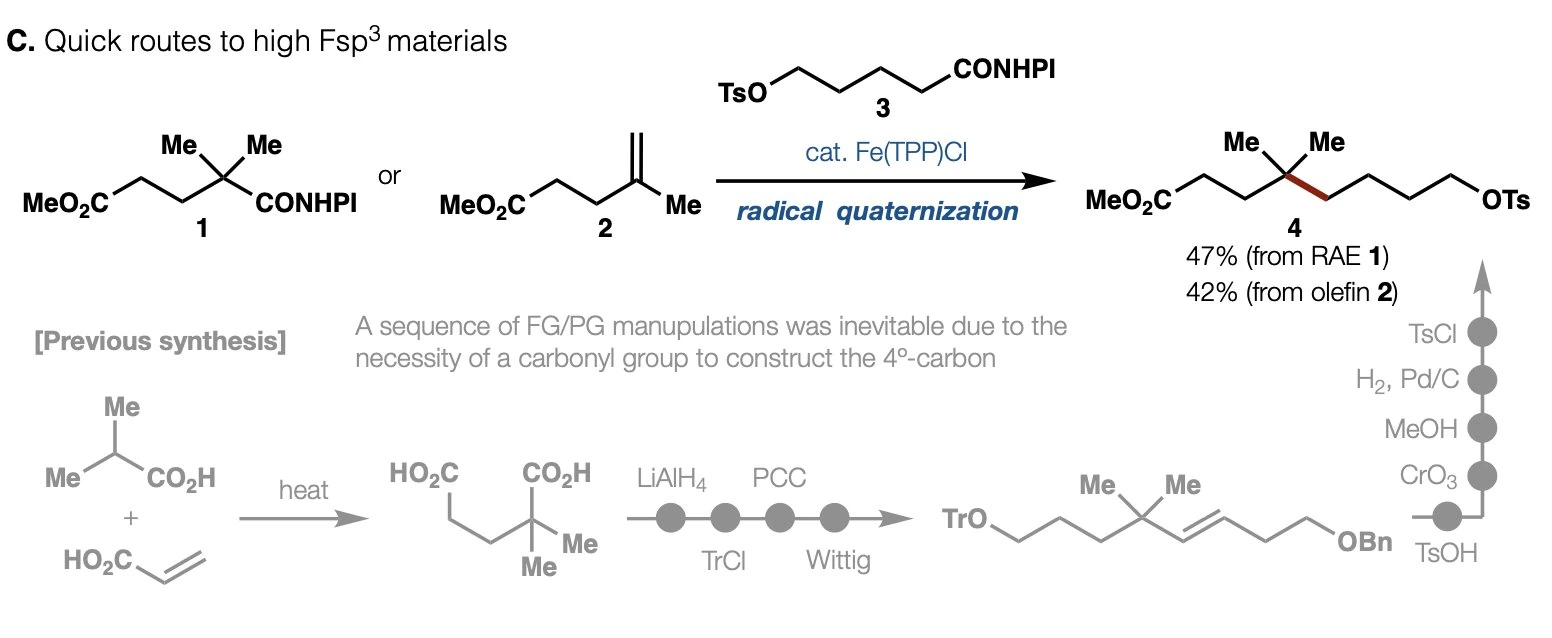
The partnership never slowed. Strain-release amination gave medicinal chemists the small, strained rings they prize. Radical cross-coupling with sulfones delivered sp3-rich fluorinated scaffolds. Electroreduction inspired by lithium-ion batteries made dissolving-metal chemistry safe. Carbon quaternization, sulfonyl hydrazides and, in 2026, stereoretentive radical alkyl–alkyl cross-coupling followed. Pfizer scientists are co-authors on 30 of the lab’s papers; Michael Collins alone is on 22.
05 Reagents for everyone

From the bench to the bottle

A reaction that only its inventors can run is a curiosity. The lab learned early that new chemistry reaches the clinic only if the reagents are in a catalog.

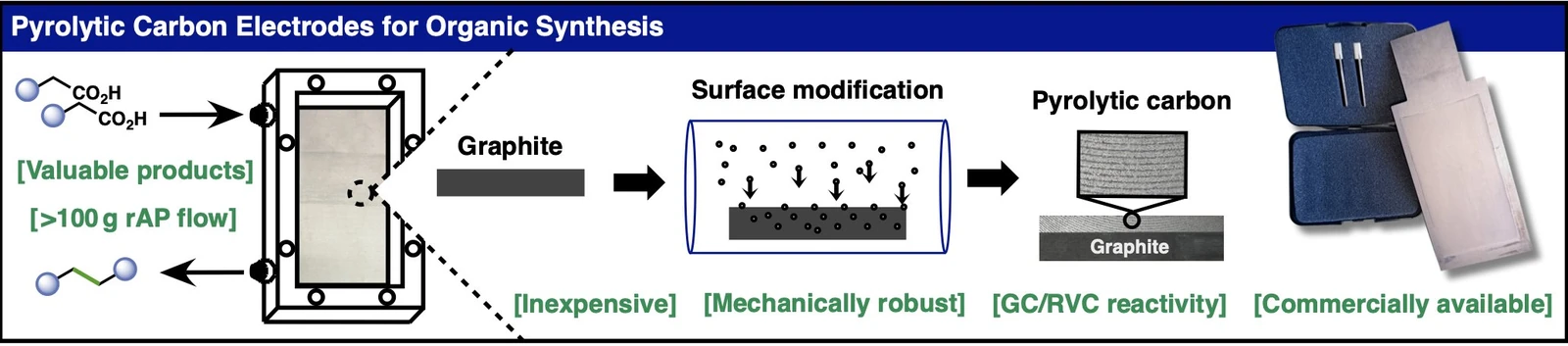
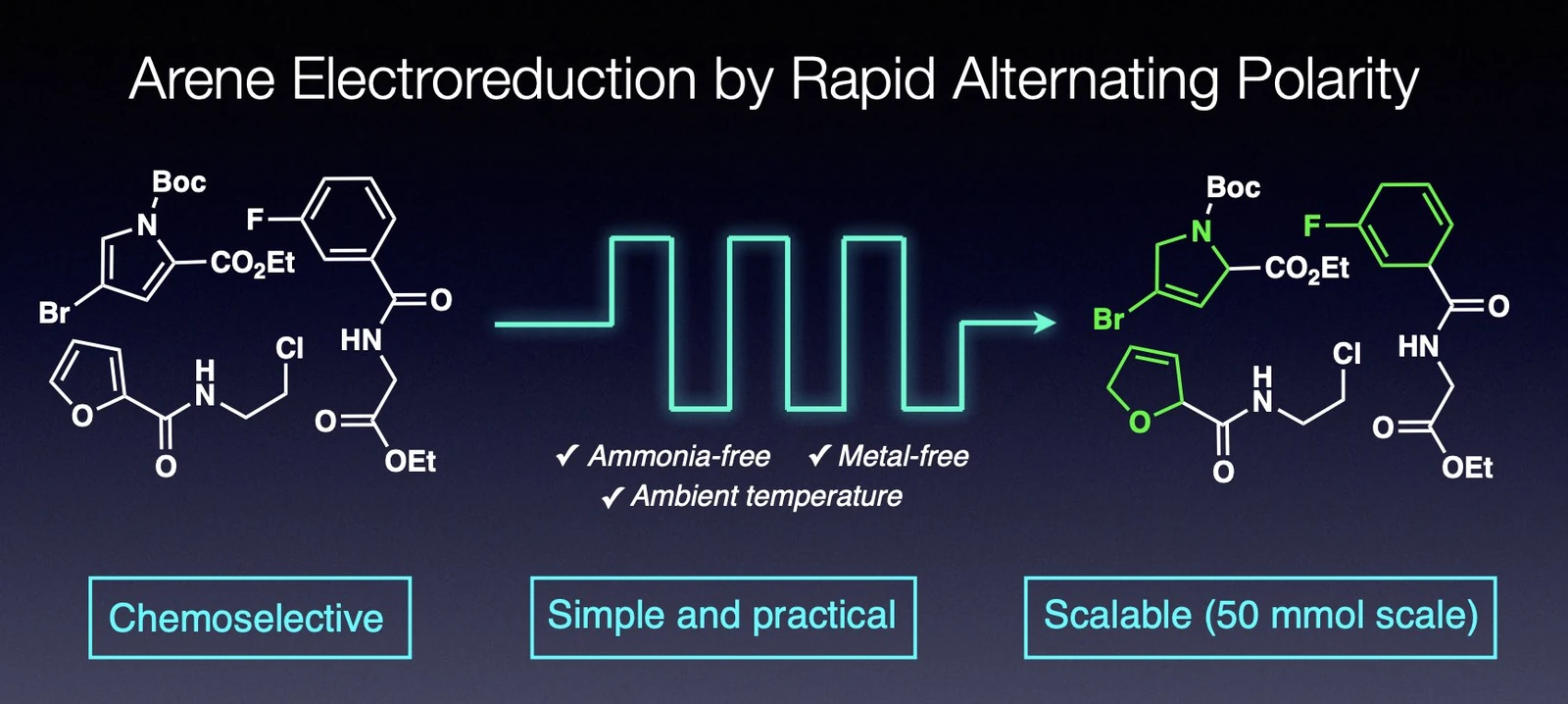
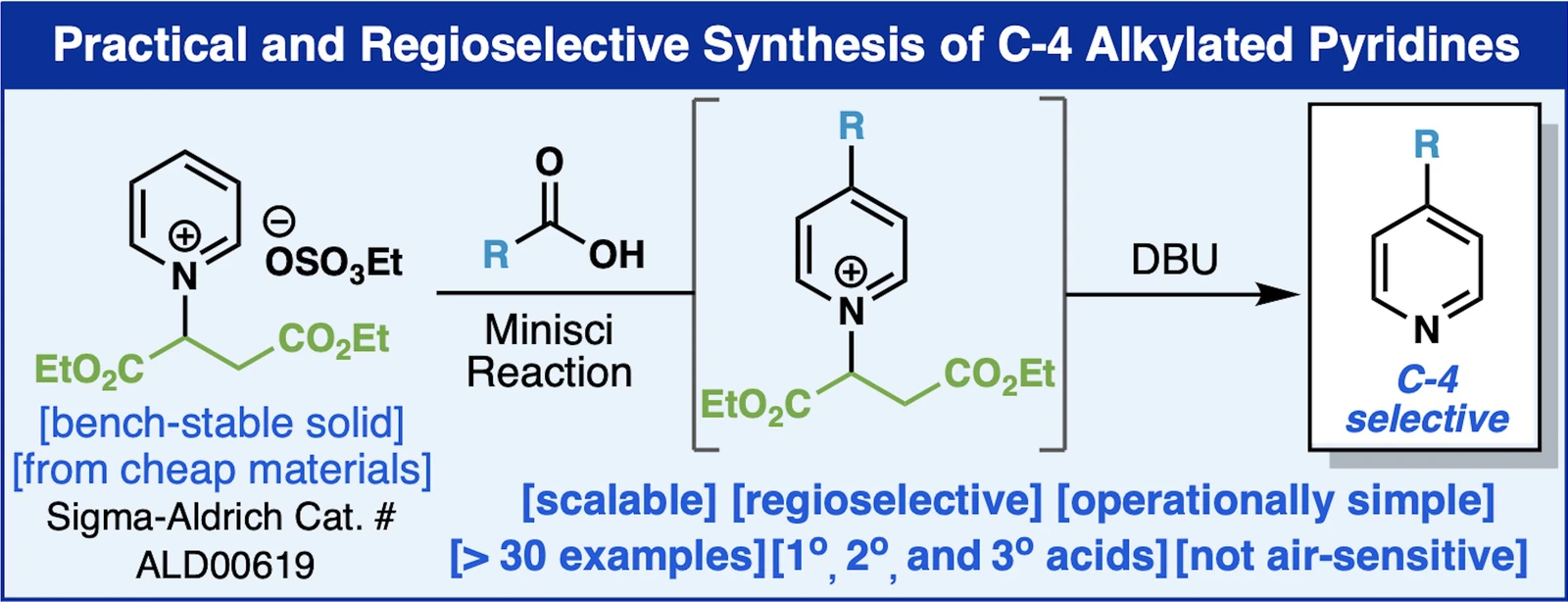
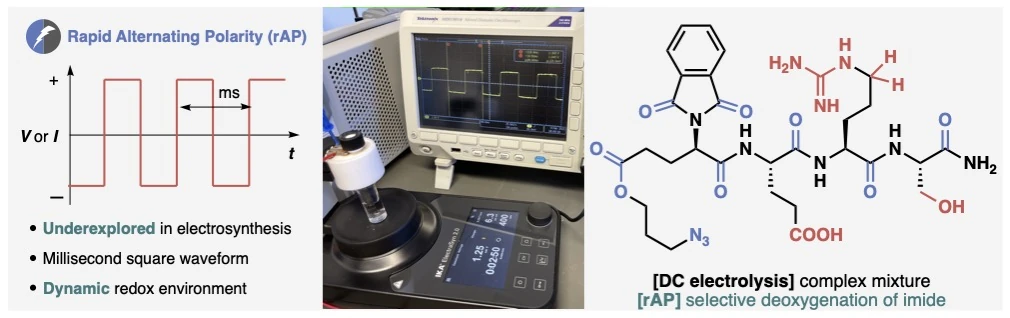
Industrial chemists, the Account observes, work under time pressure that rules out making most reagents themselves; they adopt a method when they can buy what it needs. So when DFMS and its trifluoromethyl cousin TFMS were published, they went straight to Sigma-Aldrich, and their sales passed $100,000 in under eighteen months. In 2013 Scripps and Sigma-Aldrich formalized the arrangement as a multi-investigator partnership: the lab shared unpublished work every two weeks, Sigma-Aldrich supplied raw materials and sped commercialization. By 2015 dozens of the lab’s reagents could be ordered from a catalog. The same conviction later led the lab to co-develop standardized electrochemistry hardware with IKA, whose scientists appear on the 2021 paper introducing rapid alternating polarity.

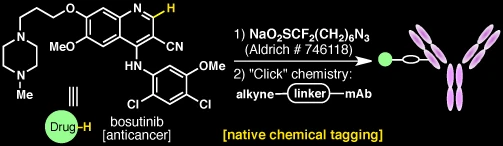
Other partners took the reagents somewhere no one expected. Morphotek, an Eisai company building antibody–drug conjugates, wanted to attach drugs that offer no obvious handle, only C–H bonds. The answer was native chemical tagging: a sulfinate reagent carrying an azide that tags such molecules directly, ready to be clicked onto an antibody. Eisai chemists have since joined the lab on a strategy for building C(sp3)-rich complexity and electrochemical C(sp3)–H fluorination.

06 How it works

The terms of a symbiosis

Symbiosis is not charity in either direction. The Account closed with a short table of what each partner owes the other, and it still reads like a contract worth signing. Hover over, or tap, either column to see how each obligation is answered.

What academia bringsWhat industry brings
  • Out-of-the-box solutions “Real-world” problems
  • Education of students Multidisciplinary expertise
  • Biweekly progress Biweekly phone conference or meeting
  • Quarterly or annual summary and future ideas Quarterly or annual assessment and future goals
  • Meeting deadlines Patience when facing challenges
  • Sharing discoveries through publications Filing patents
  • Discovering new science Applying collaborative science

Table 1, “General Expectations in a Fruitful Academia–Industry Symbiosis,” Acc. Chem. Res. 2015, 48, 712.
The rhythm matters as much as the terms: biweekly calls to keep momentum, quarterly or annual meetings to lift everyone’s eyes to the larger goal, clear deliverables and deadlines, and early agreement on intellectual property. Above all, the Account insists, “both sides must be driven by the will to discover new science.” Not every problem suits such a partnership. Many can be shaped to fit.

07 Education

The best classroom

The deepest benefit of these partnerships does not appear in any table of yields. It walks out of the lab at graduation.
A graduate student on an industrial project learns things no course can teach. Why a medicinal chemist cares more about solubility than elegance. Why a process chemist asks whether a reagent is safe at scale before asking whether it is clever. How to present unfinished results to scientists who have shipped medicines, defend a hypothesis on a biweekly call, and hear, with good grace, that the beautiful reaction fails on the compound that matters. The Account calls this “a unique opportunity for students to face challenges from the ‘real world’ at an early stage of their career,” and it names the bargain plainly: academia owes its students specialized scientific education, and industry complements it with multidisciplinary expertise no single university lab can match.

The mentors are extraordinary. Over the years our students and postdocs have learned from 259 industrial co-authors: process chemists who have scaled drugs to market, medicinal chemists who have taken candidates into the clinic, analytical, radiochemistry, biology and engineering teams who taught them to see a molecule through other eyes. Industry has also invested in trainees directly; the Account itself acknowledges a Bristol-Myers Squibb graduate fellowship that supported its first author.
And then the circle closes. Students trained on these projects go on to industry themselves, and some come back, now as the industrial co-authors. Their names appear on the lab’s papers twice: once as students, and again as partners.
08 Today

A wider circle

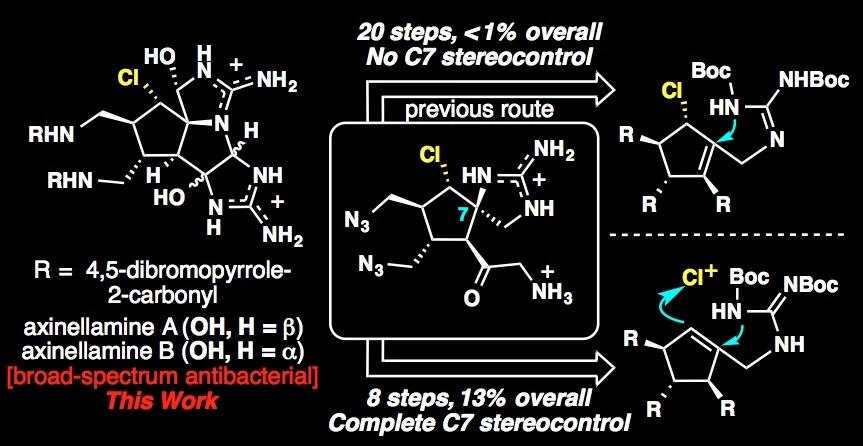
What began as one company and one alkaloid is now a network of 26 companies on three continents: global pharmaceutical leaders, biotechnology pioneers, agrochemical innovators, contract research and manufacturing organizations, building-block suppliers and technology makers.

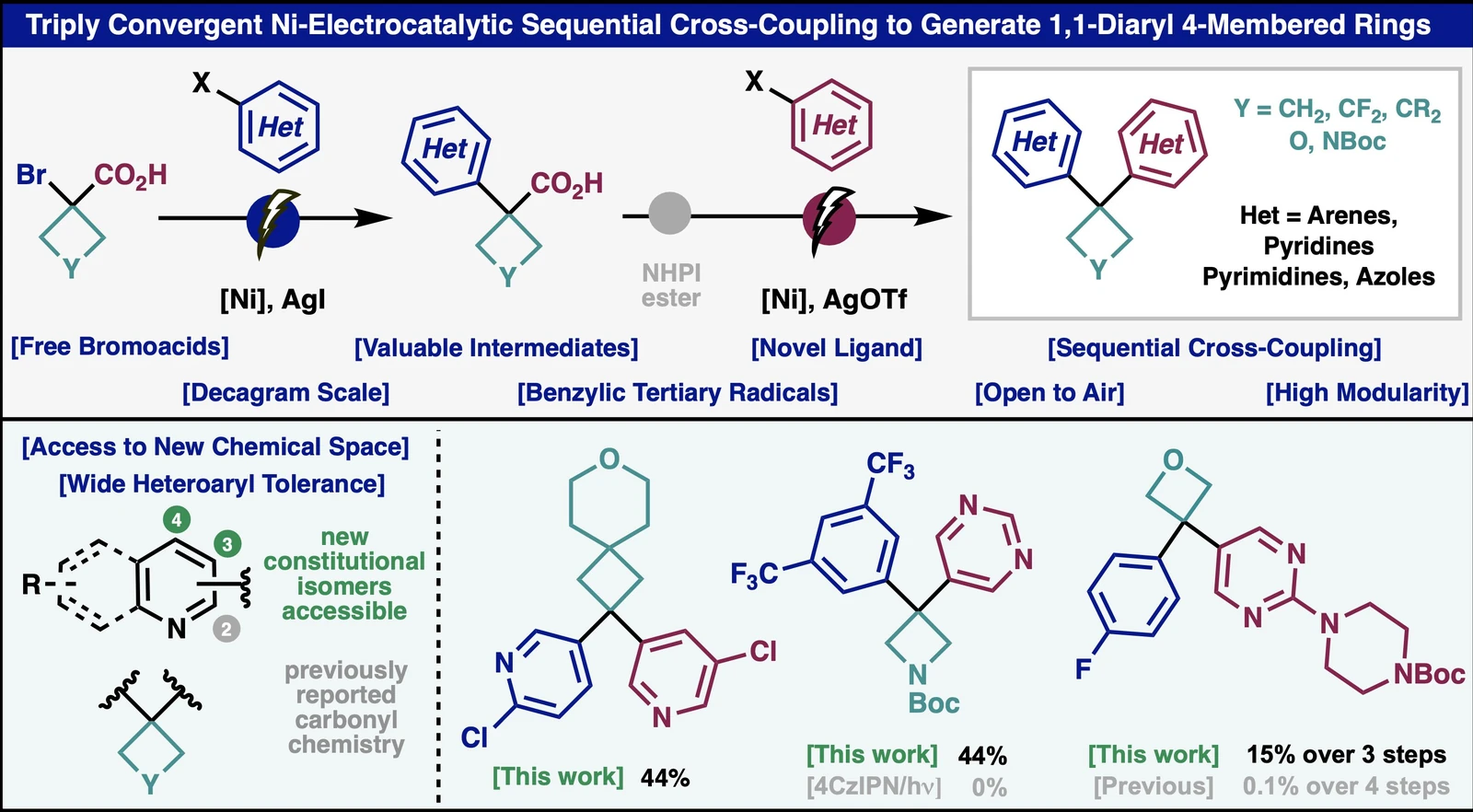
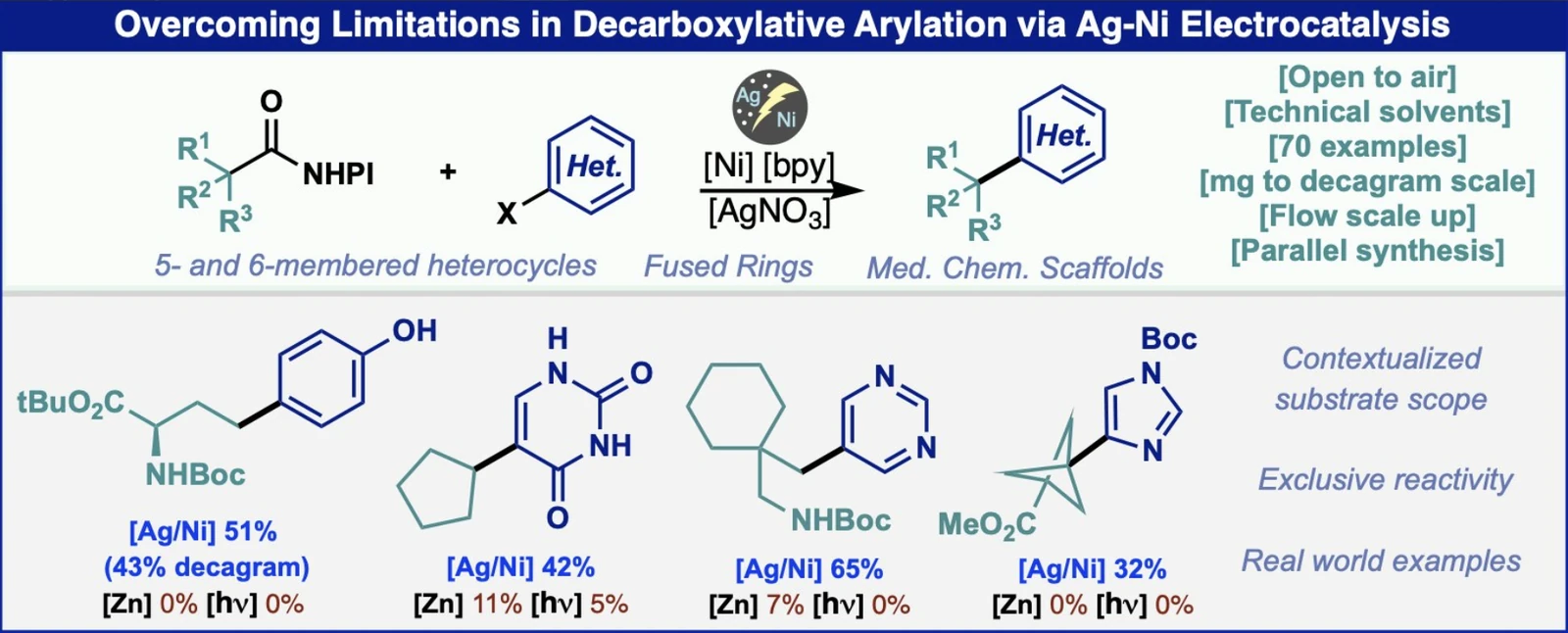
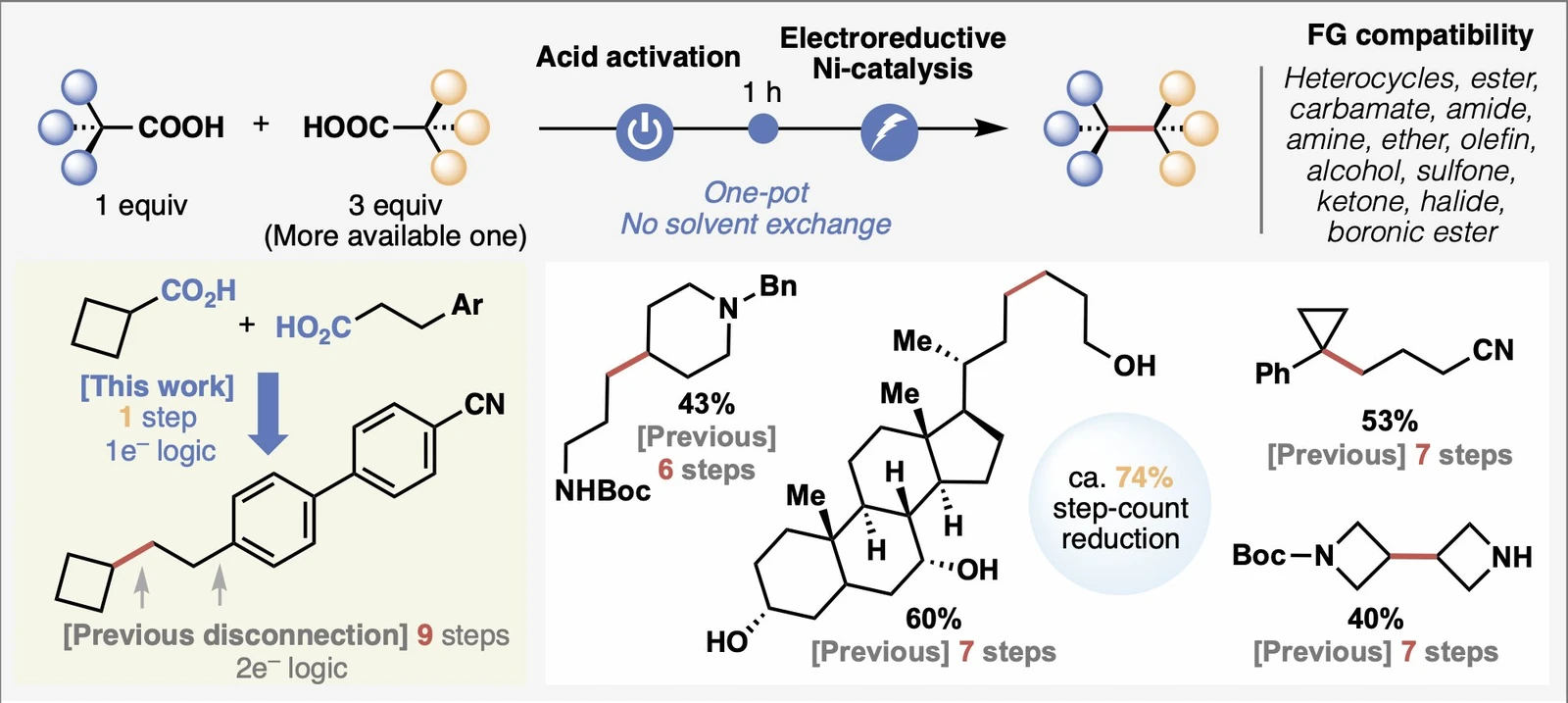
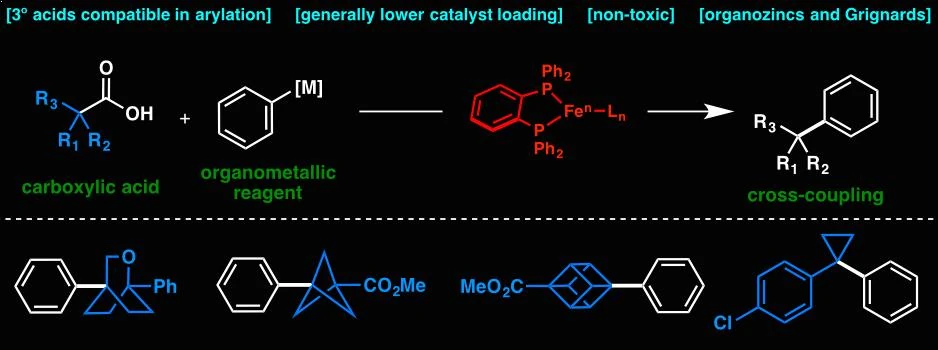
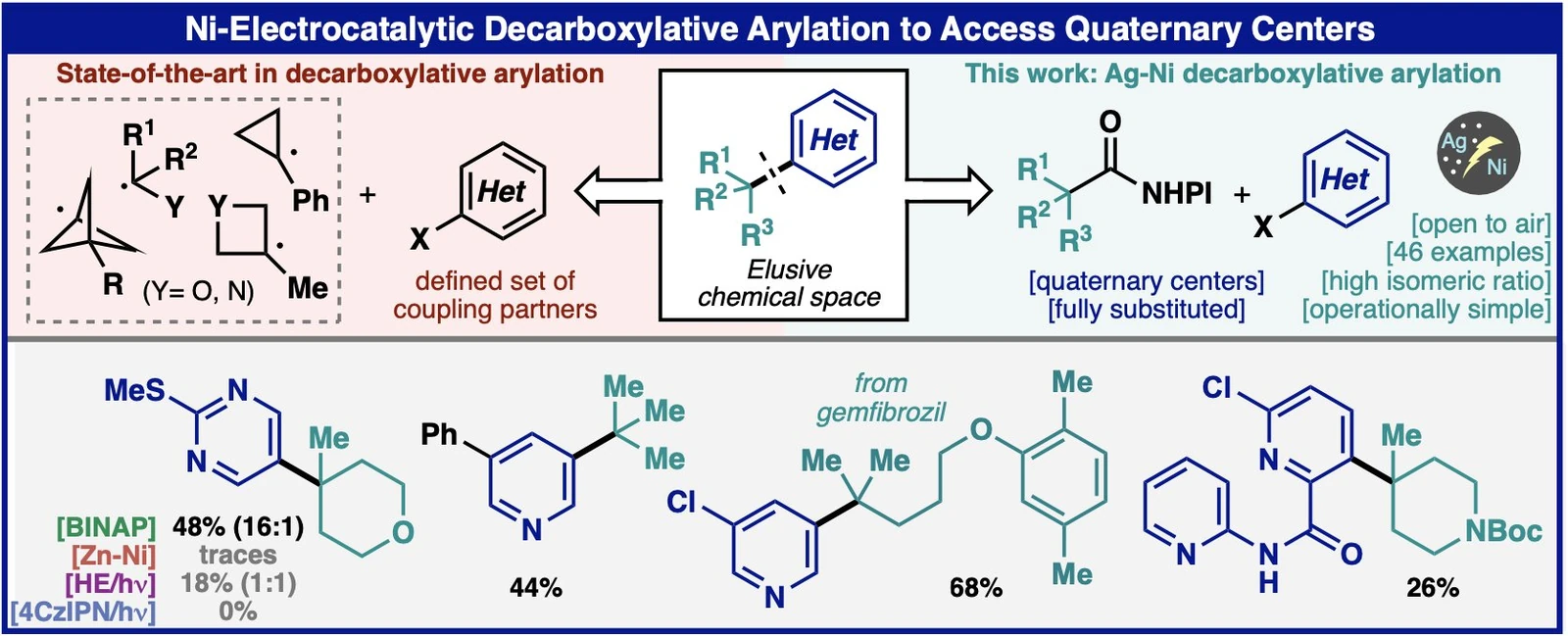
Increasingly, they sit at the same table. A 2022 paper on Ag–Ni electrocatalytic decarboxylative arylation carries co-authors from six companies. A 2023 Nature paper on electrocatalytic cross-coupling for complex molecules and a 2026 Nature Chemistry paper on triply convergent assembly of cyclobutanes, azetidines and oxetanes each carry five. Competitors in the market become colleagues in the literature, because a better reaction helps every patient. 38 of the lab’s industry papers involve more than one company.

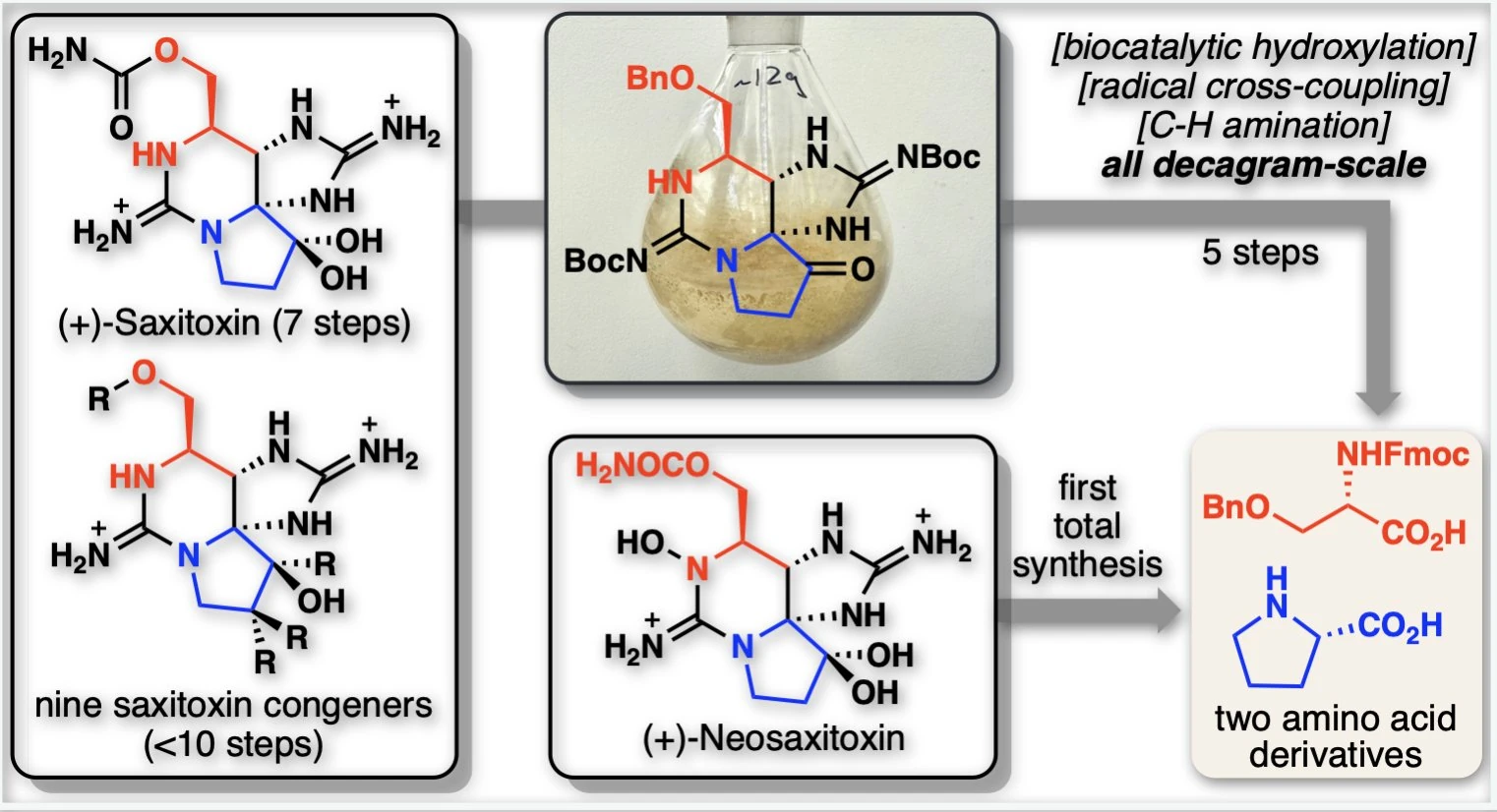
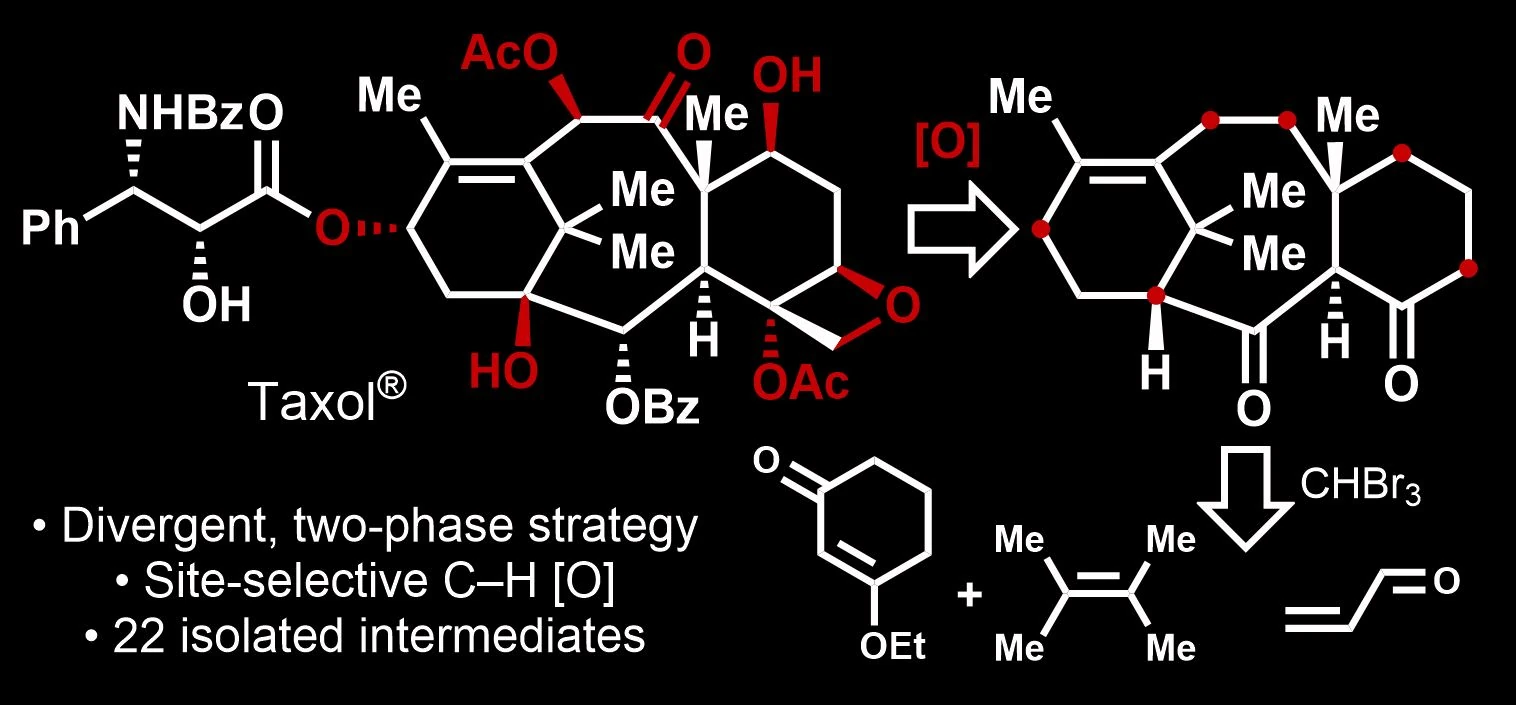
The range is breathtaking. Merck and Debut Biotechnology joined a scalable total synthesis of saxitoxin. Chemveda Life Sciences helped bring the two-phase synthesis of Taxol to life. AbbVie process chemists turned waveform-controlled electrosynthesis against the long-standing limits of the Kolbe reaction. Elsie Biotechnologies, now part of GSK, carried P(V) oligonucleotide chemistry toward medicine. Enamine, Biogen, Asymchem, Minakem, Syngenta, Vividion and many others have each left their mark. Every partner is listed below, with every paper we have written together.

Year by year

Partnership, in numbers

Blue shows papers and preprints with at least one industrial co-author; the grey column behind each is everything the lab published that year. Select a year to see its industry papers.

With industry co-authors All lab papers
Our partners

26 companies

With gratitude to every company whose scientists have shared our bench, our problems and our bylines. Select a partner to see every paper we have published together.

The record

Every industry paper

All 110 papers and preprints with industrial co-authors, newest first. Papers with several partner companies appear under each of them on the company pages.

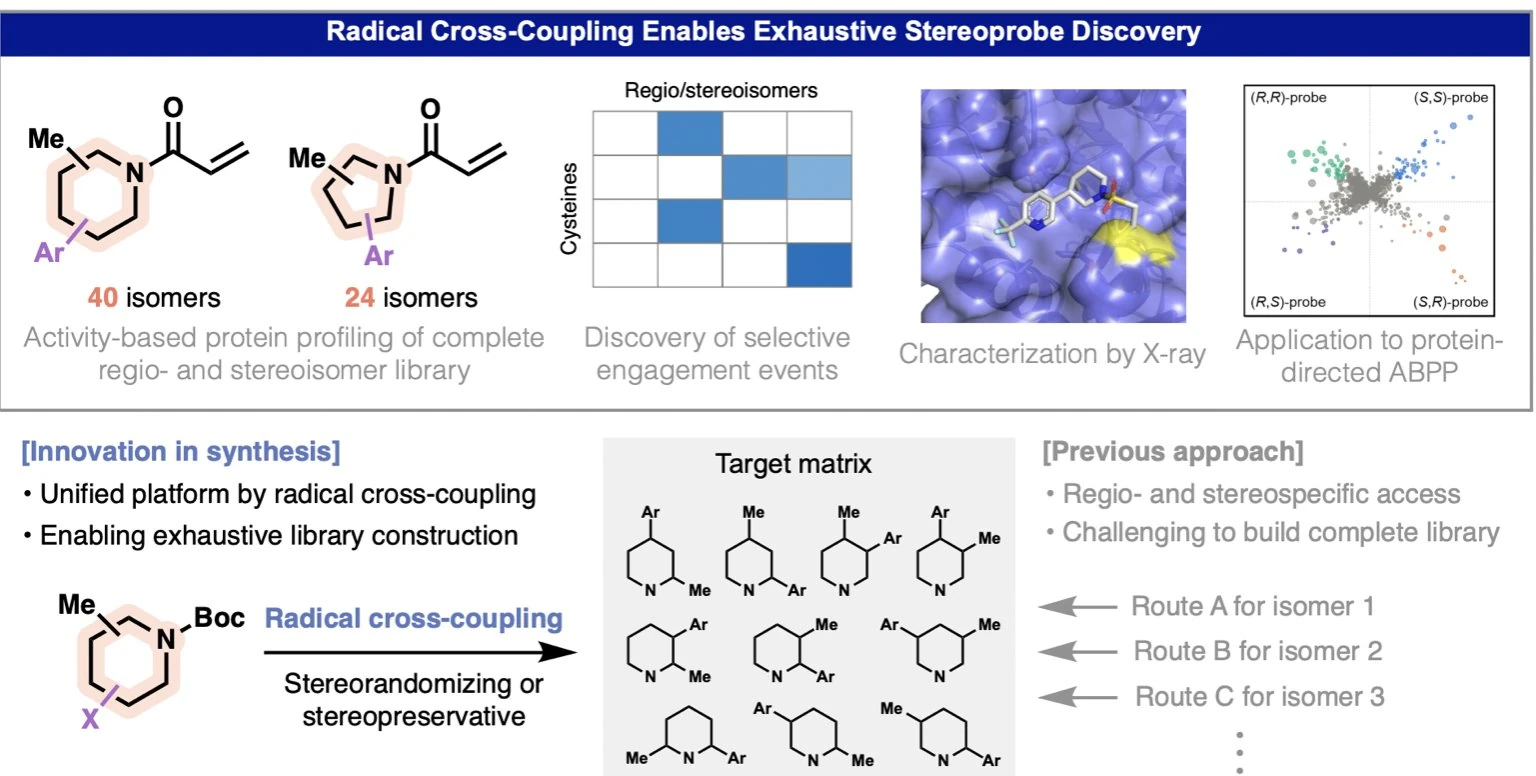
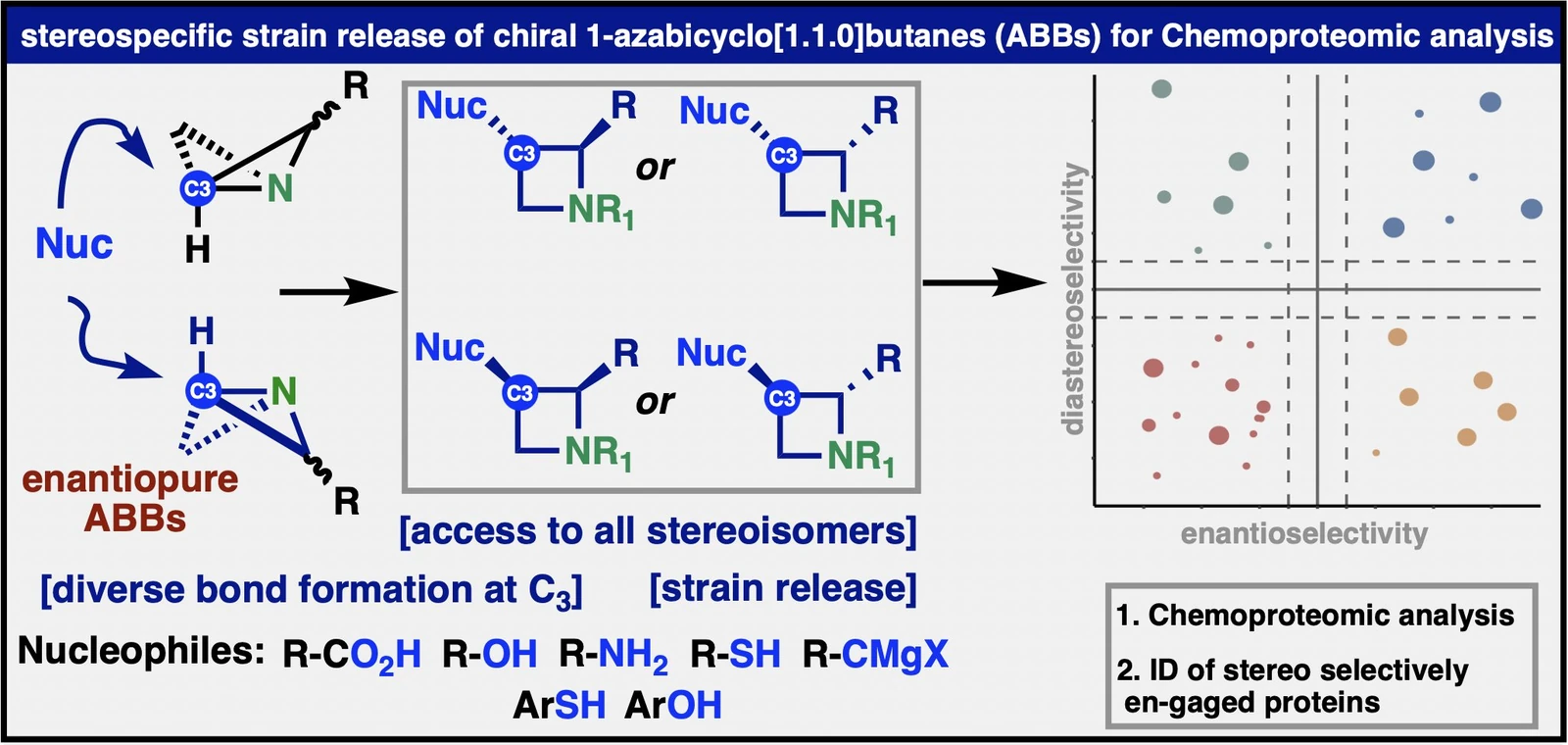
  1. Radical Cross-Coupling Delivers Complete Sets of Saturated-Heterocyclic Regio- and Stereoprobes for Chemoproteomic Discovery

    ChemRxiv 2026Preprint · doi:10.26434/chemrxiv.15010428/v1 · In our publications

    • Vividion Therapeutics Ann Shih, Annabel Q. Ansel, Benjamin D. Horning, Brian E. Nordin, Brian N. Cook, Christie L. Eissler, Christopher A. Toth, Cian Kingston, Cody L. Fullenwider, Connor Scheuerman, David S. Weinstein, Gabriel M. Simon, Jonathan Pollock, Matthew P. Patricelli, Steffen M. Bernard, Steven C Wang, Tracey Nguyen
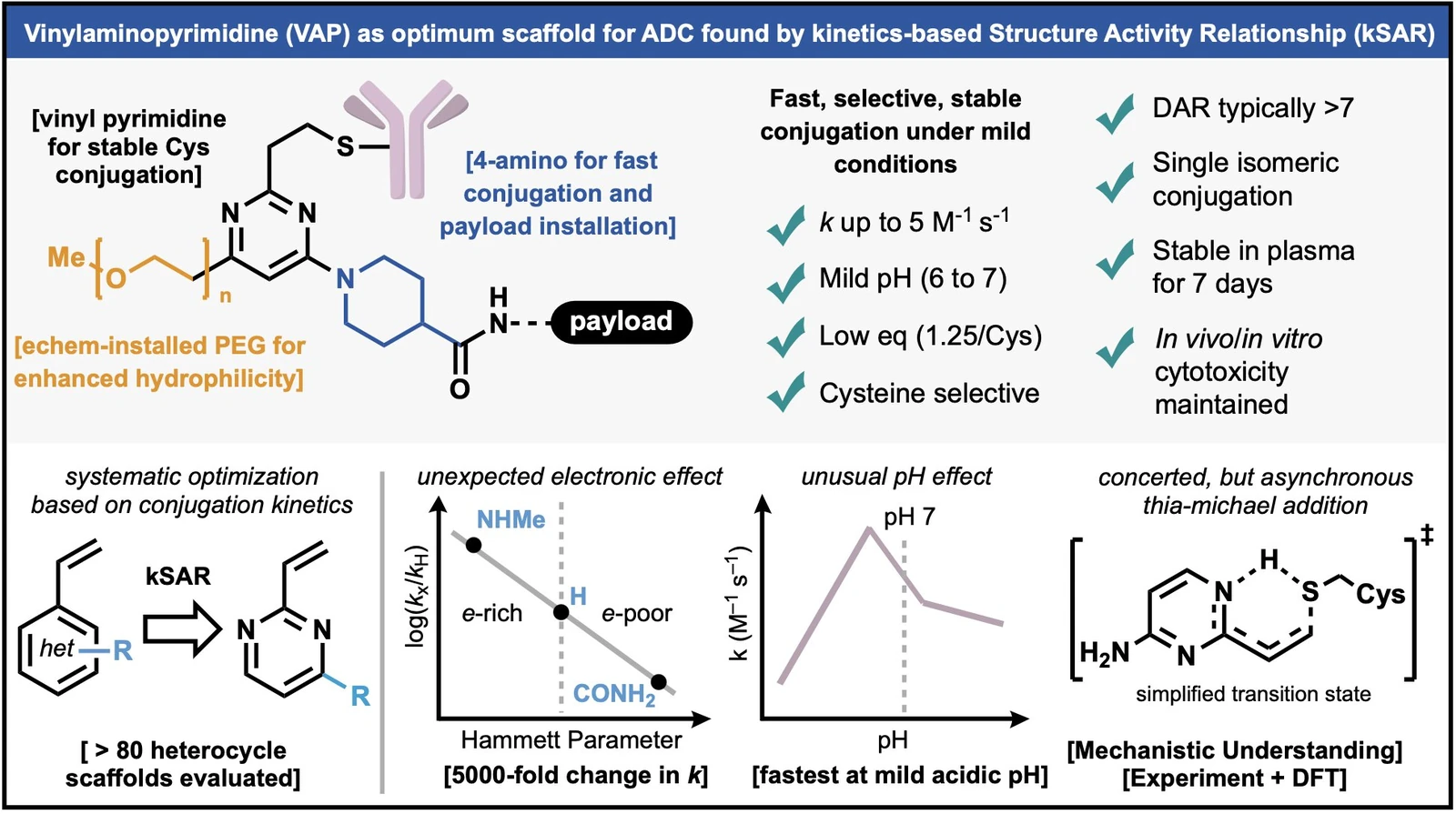
  2. A Kinetics-First Approach Reveals Optimum Vinylaminopyrimidines for Cysteine-Based Antibody Conjugation

    ChemRxiv 2026Preprint · doi:10.26434/chemrxiv.15006704/v1 · In our publications

    • Bristol Myers Squibb Ailing Li, Bin Zheng, Donggeon Nam, Drexler Dieter, Emily Lee, Eric R. Welin, Helen L. Evans, Hong Zhang, Juhi Juneja, Michael A. Schmidt, Monir Ejemel, Nicole Vincent Jordan, Paul M. Scola, Ruchita Rajendra Thakore, Sayumi Yamazoe, Stephen E. Mercer, Wade Wang, Yaxing Zhu, Younhee Cho, Zach Parsons
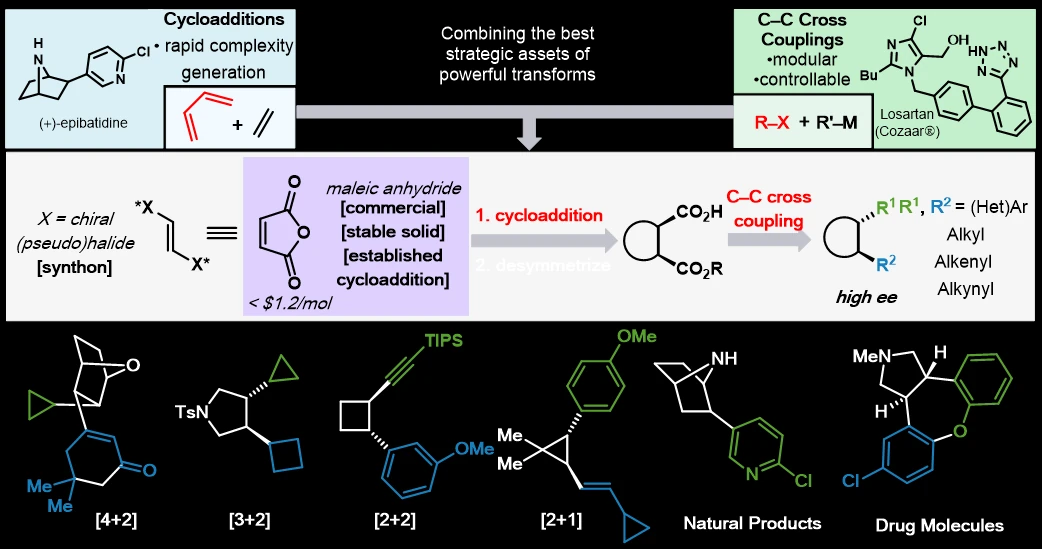
  3. Triply Convergent Ni-Electrocatalytic Assembly of 1,1-Diaryl Cyclobutanes, Azetidines and Oxetanes

    Nat. Chem. 2026 · doi:10.1038/s41557-025-01990-x · In our publications

    • Bristol Myers Squibb Martins S. Oderinde, Maximilian D. Palkowitz, Megan A. Emmanuel, Xiaofan Zheng
    • Pfizer Chet C. Tyrol, Doris Chen, Martin Bravo, Michael R. Collins, Raymond K. Twumasi
    • AbbVie Arianne C. Hunter, Kaid C. Harper
    • Enamine Pavel K. Mykhailiuk
    • Biogen Michael C. Nicastri, Philippe N. Bolduc
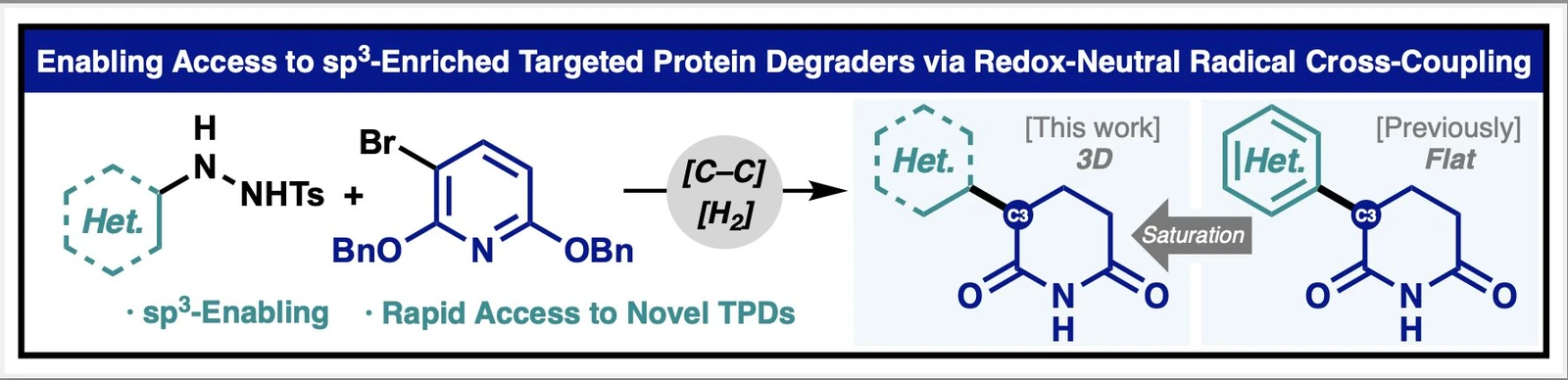
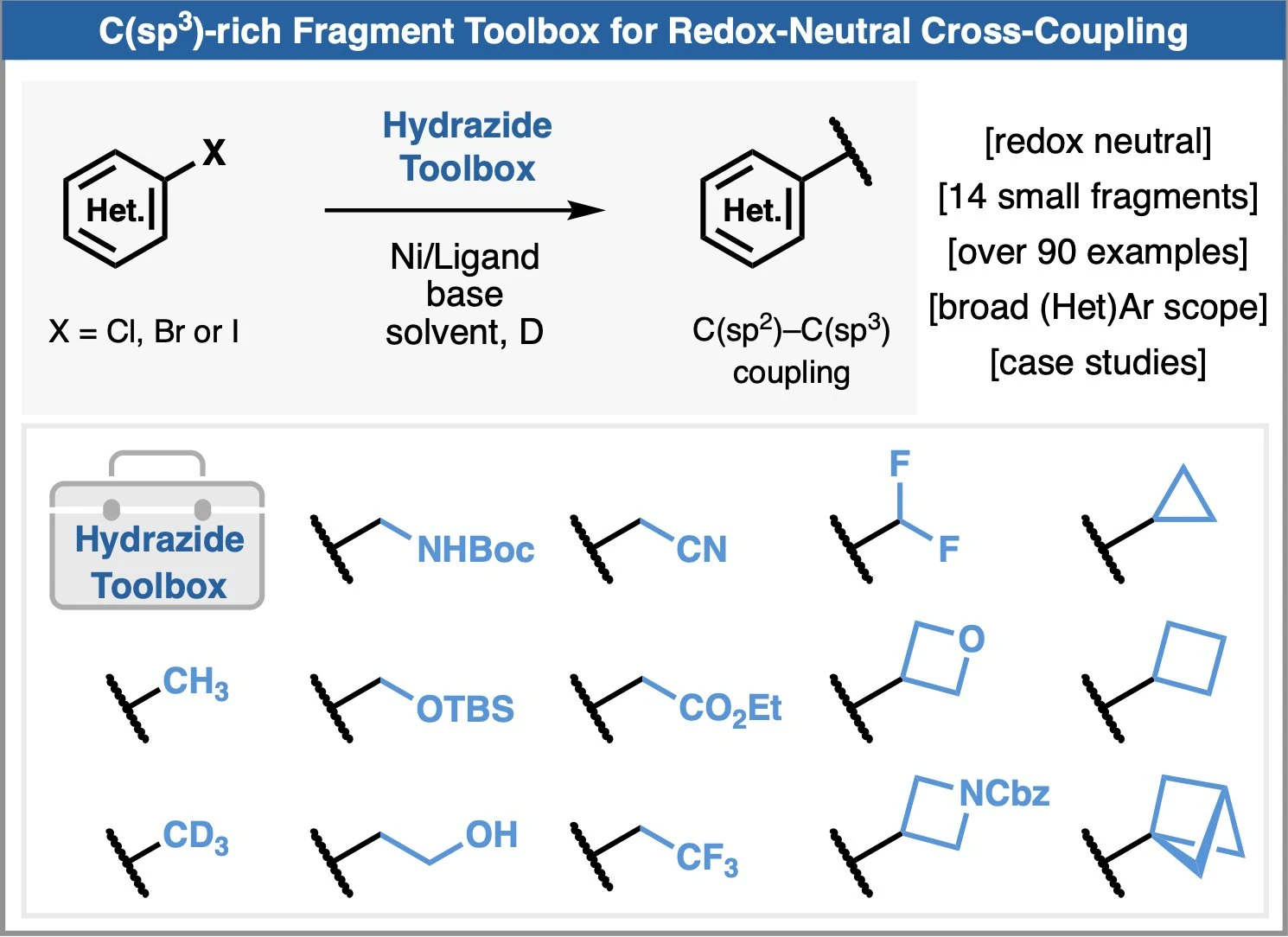
  4. Accelerating Medicinal Chemistry: A C(sp3)-Rich Fragment Toolbox for Redox-Neutral Cross-Coupling

    Angew. Chem. Int. Ed. 2025 · doi:10.1002/anie.202517207 · In our publications

    • Bristol Myers Squibb Jennifer Xiaoxin Qiao, Martins S. Oderinde, Maximilian D. Palkowitz, Megan A. Emmanuel
    • Pfizer Johnny W. Lee, Louise Bernier, Martin Bravo, Michael R. Collins, Neal W. Sach, Paul Richardson
    • Biogen Michael C. Nicastri, Philippe N. Bolduc, Shalini Dey
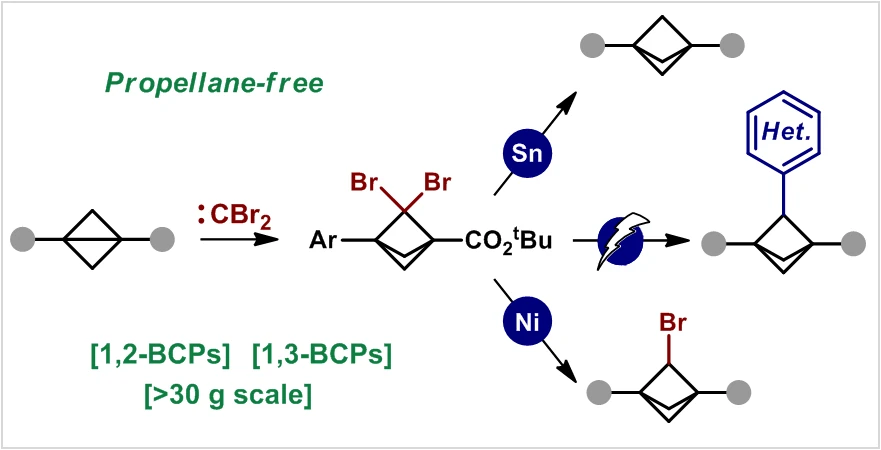
  5. Dibromocarbene Addition to Bicyclo[1.1.0]butanes: A Facile Route to Substituted Bicyclo[1.1.0]pentanes

    Proc. Natl. Acad. Sci. U.S.A. 2025 · doi:10.1073/pnas.2524130122 · In our publications

    • Enamine Andrii Slobodianyk, Pavel K. Mykhailiuk, Roman Bychek, Vadym V. Levterov, Yaroslav V. Panasiuk
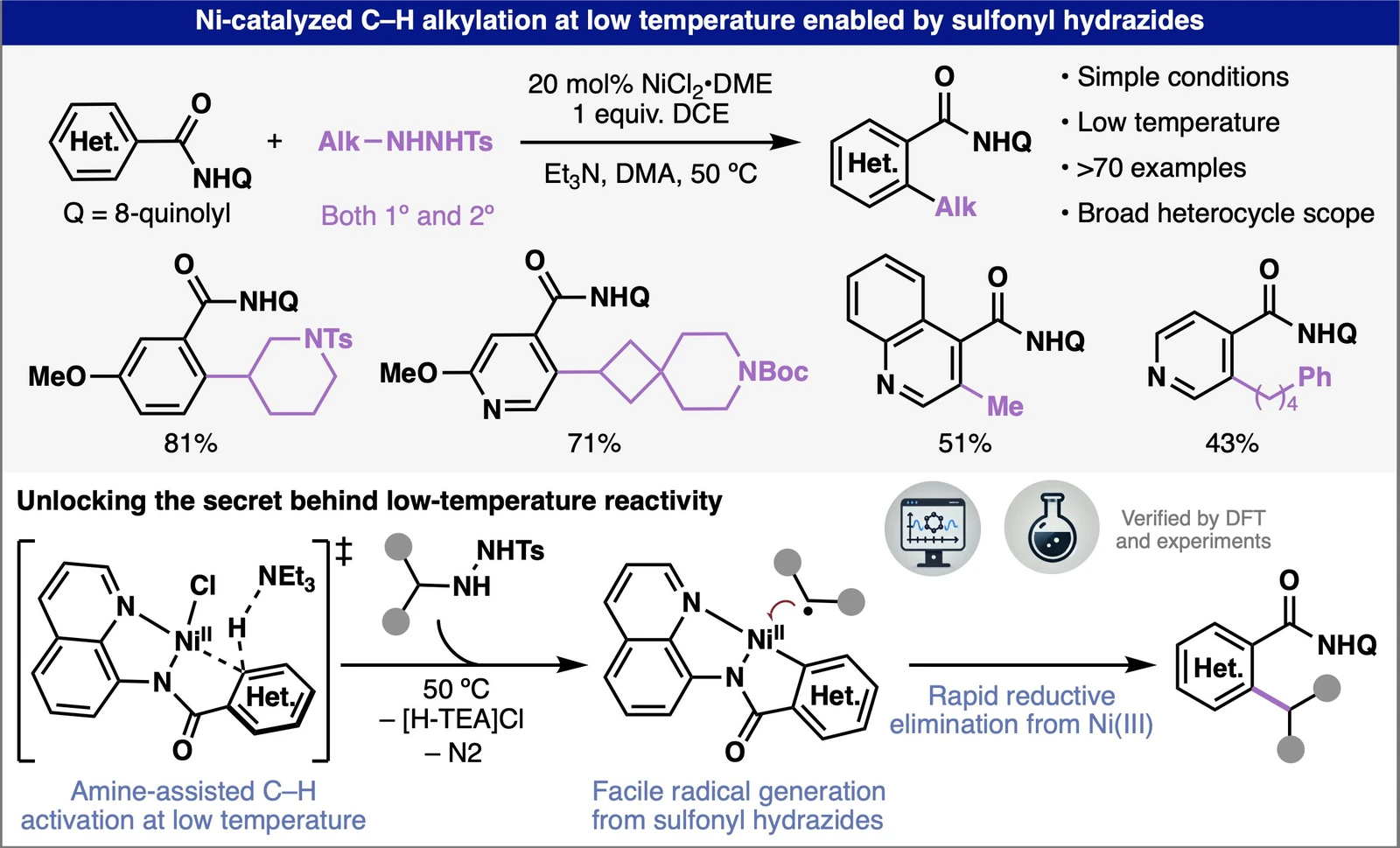
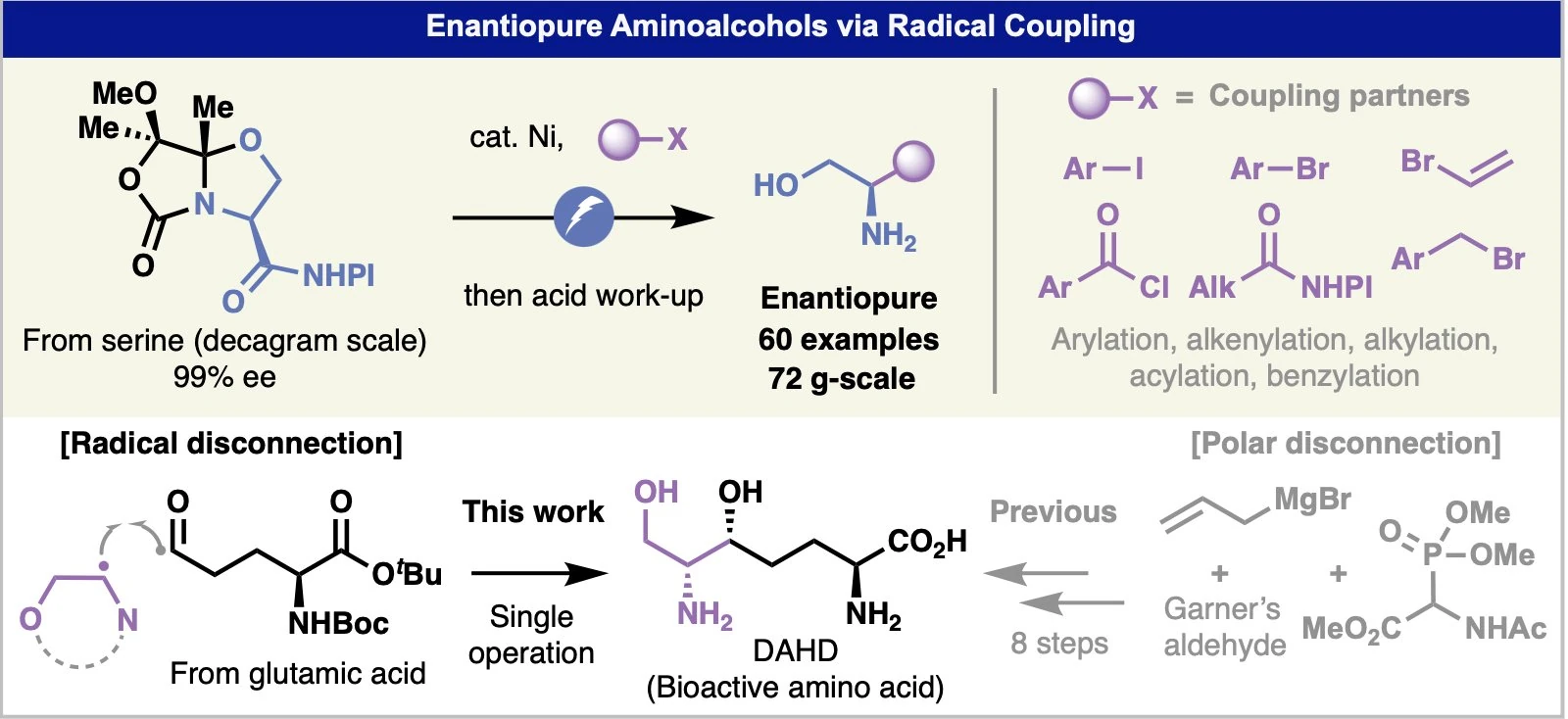
  6. Sulfonyl Hydrazides as a General Redox-Neutral Platform for Radical Cross-Coupling

    Science 2025 · doi:10.1126/science.adu6406 · In our publications

    • Bristol Myers Squibb Benjamin Vokits, David S. Peters, Martins S. Oderinde, Maximilian D. Palkowitz, Michael D. Mandler
    • Pfizer Doris Chen, Paul Richardson
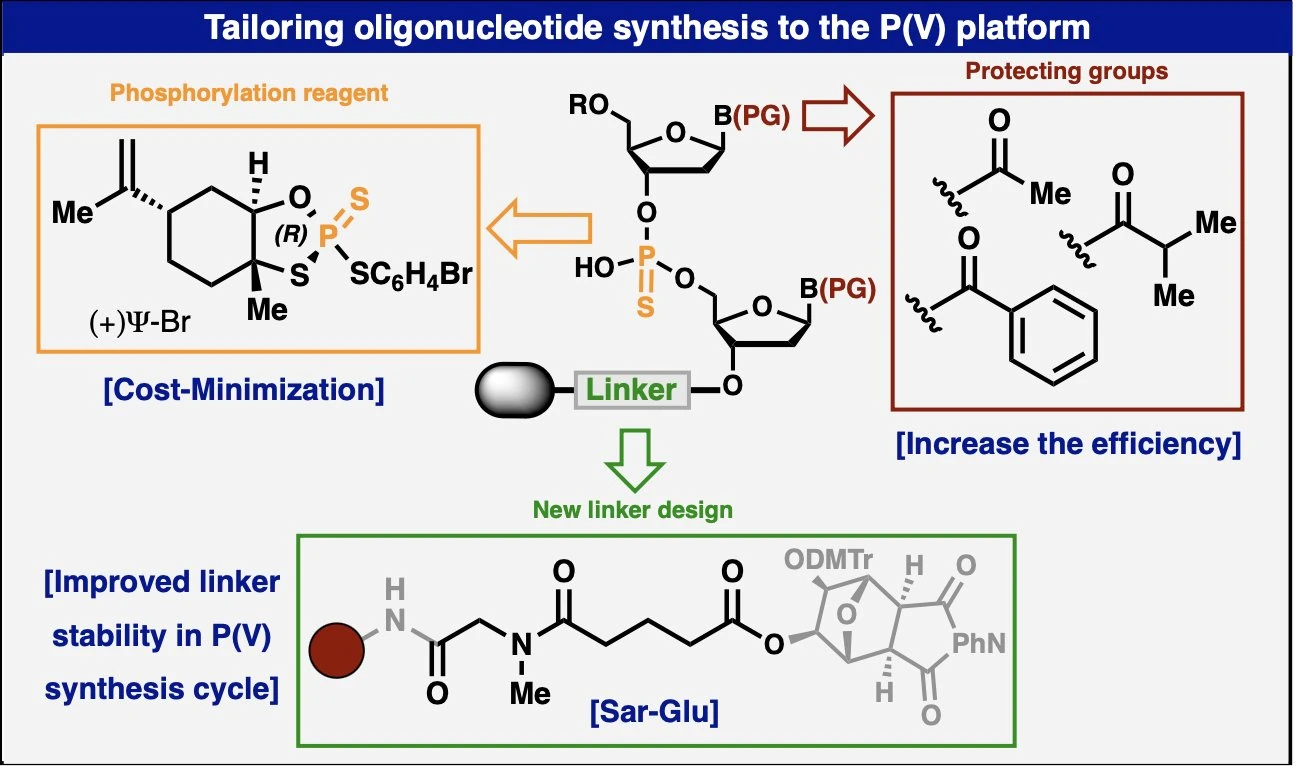
  7. An Improved P(V) Thio-Oligonucleotide Synthesis Platform

    Org. Lett. 2025 · doi:10.1021/acs.orglett.4c03980 · In our publications

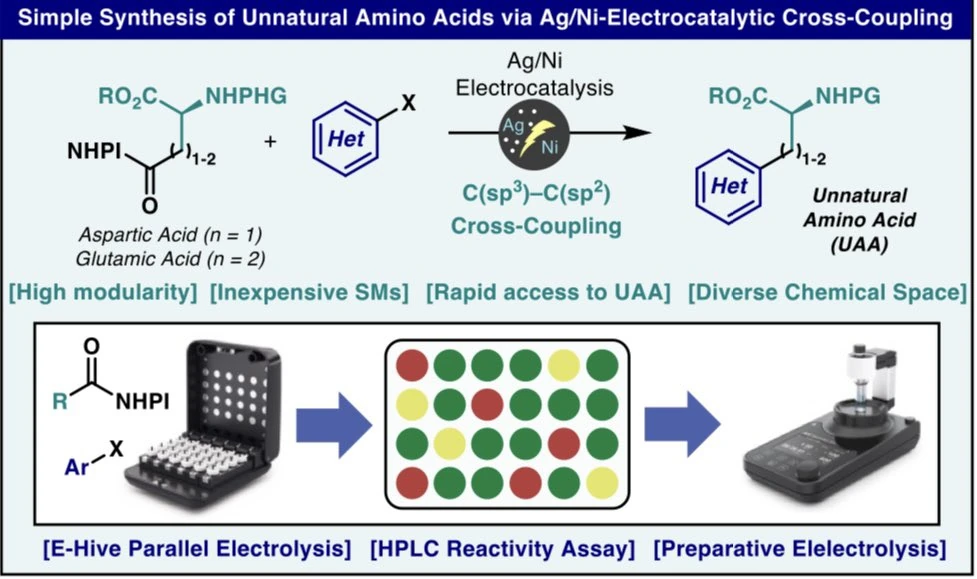
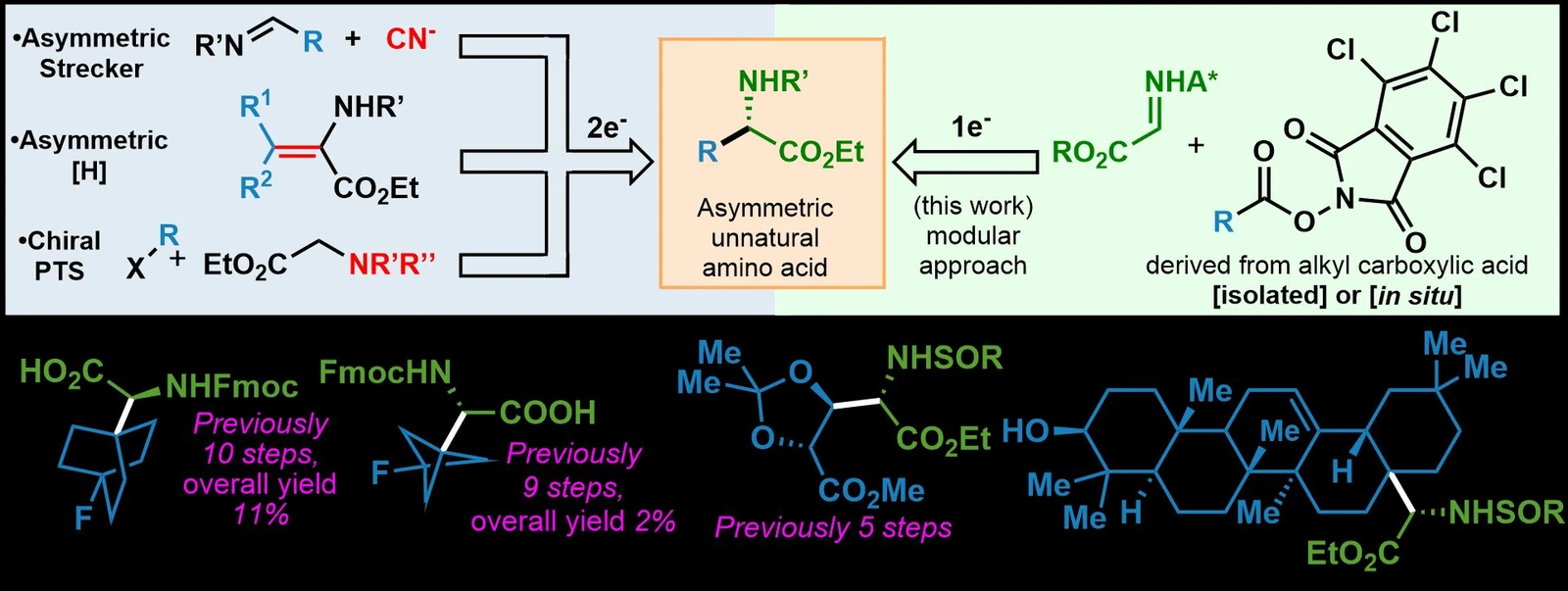
  8. Synthesis of Unnatural Amino Acids via Ni/Ag Electrocatalytic Cross-Coupling

    Org. Lett. 2024 · doi:10.1021/acs.orglett.4c00474 · In our publications

    • Biogen Michael C. Nicastri, Philippe N. Bolduc, Vanna D. Blasczak
    • Chemveda Life Sciences Bheema Rao Paraselli, Rajesh Chebolu, Ravi Kumar Puthukanoori, Shambabu Joseph Maddirala
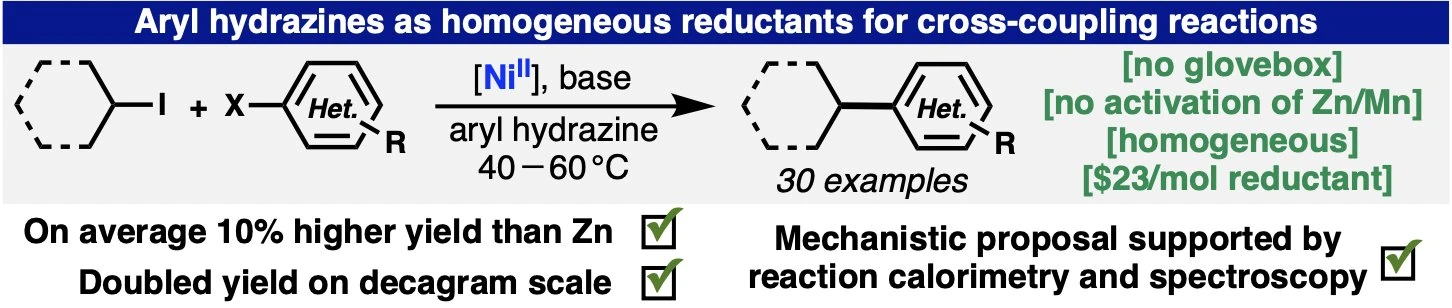
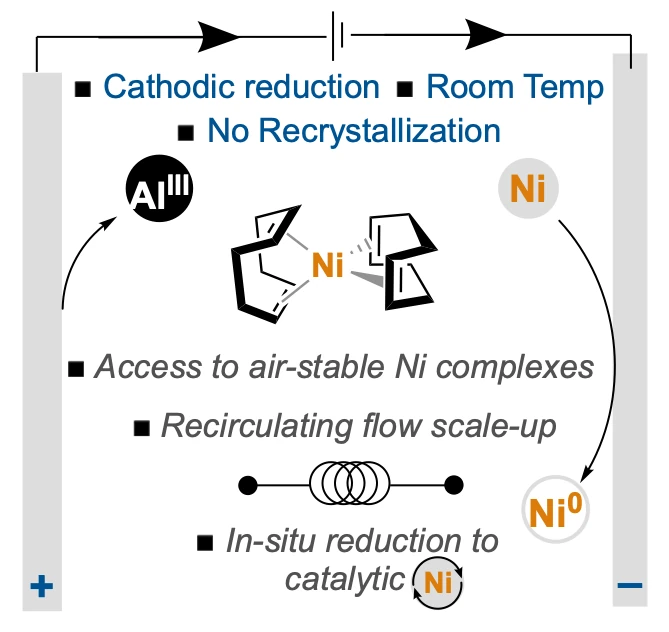
  9. Electroreductive Synthesis of Nickel(0) Complexes

    Angew. Chem. Int. Ed. 2024 · doi:10.1002/anie.202311557 · In our publications

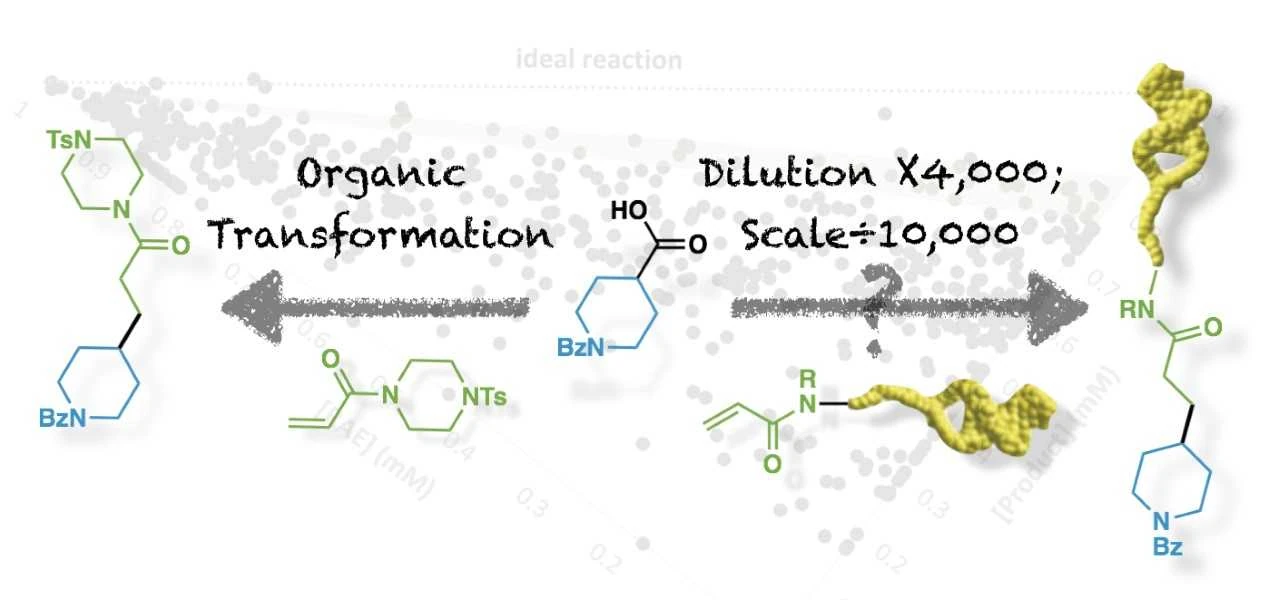
  10. Carbon Quaternization of Redox Active Esters and Olefins by Decarboxylative Coupling

    Science 2024 · doi:10.1126/science.adn5619 · In our publications

    • Pfizer Chet C. Tyrol, Michael R. Collins
    • Biogen Michael C. Nicastri, Philippe N. Bolduc
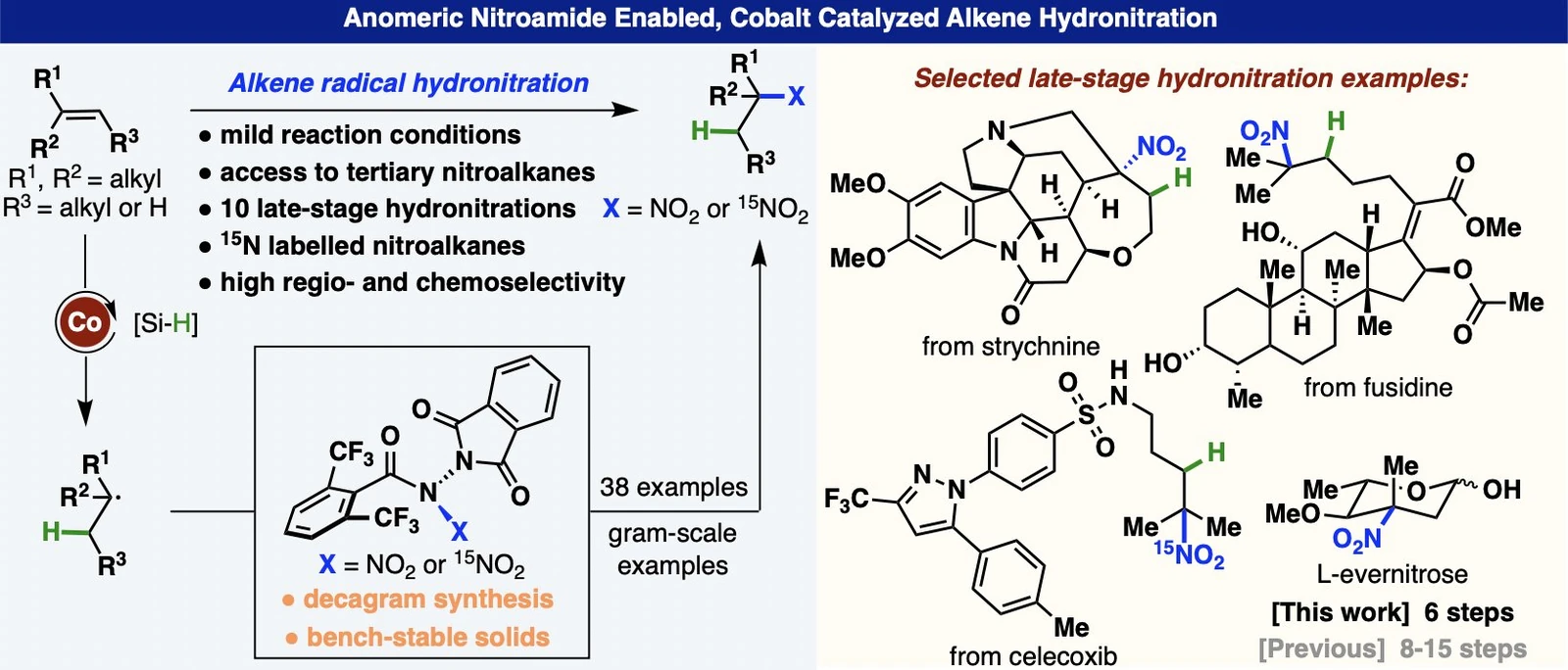
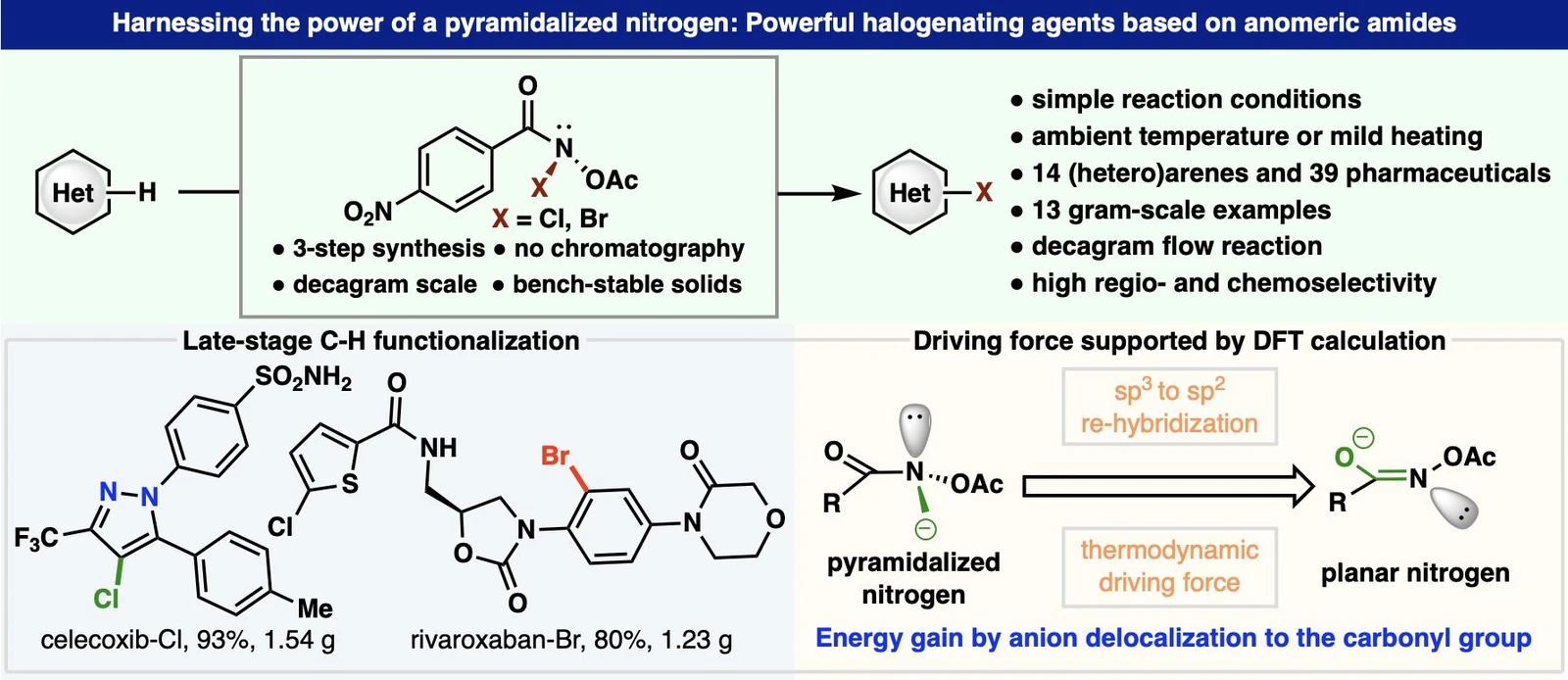
  11. Discovery of N–X Anomeric Amides as Electrophilic Halogenation Reagents

    Nat. Chem. 2024 · doi:10.1038/s41557-024-01539-4 · In our publications

    • Bristol Myers Squibb Jennifer Xiaoxin Qiao, Lauren N. Grant, Martins S. Oderinde, Maximilian D. Palkowitz, Shasha Zhang
    • Pfizer Chet C. Tyrol, Doris Chen, Erik LaChapelle, Lacey Samp, Michael R. Collins, Paul Richardson
    • AbbVie Aristidis Vasilopoulos, Kaid C. Harper
  12. Nickel-Electrocatalytic Decarboxylative Arylation to Access Quaternary Centers

    Angew. Chem. Int. Ed. 2024 · doi:10.1002/ange.202314617 · In our publications

    • Bristol Myers Squibb Daniel Ridge, Jack L. Sloane, Kevin W. Gillman, Martins S. Oderinde, Maximilian D. Palkowitz, Megan A. Emmanuel, Michael D. Mandler
    • LEO Pharma Nadia Nasser Petersen, Pablo Martín-Gago, Sebastian Clementson
    • Enamine Pavel K. Mykhailiuk
    • Biogen Michael C. Nicastri, Philippe N. Bolduc
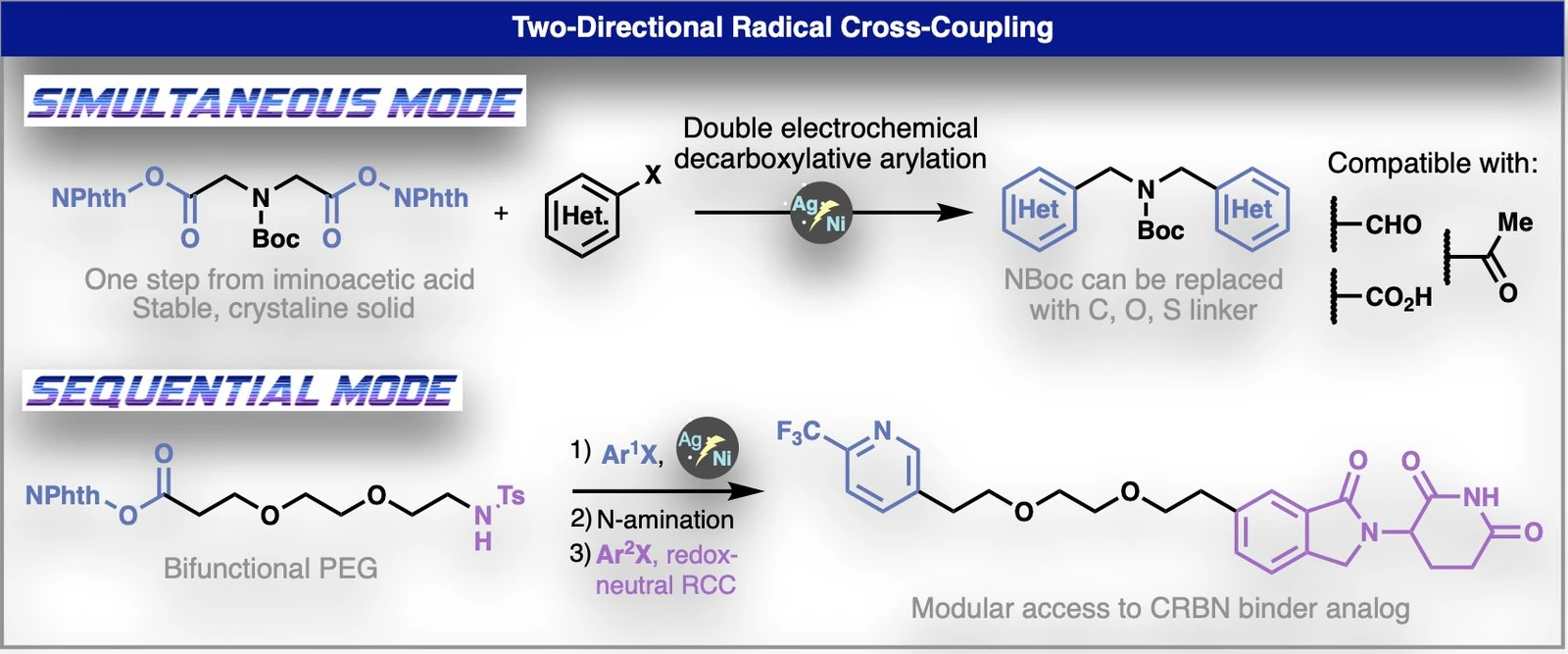
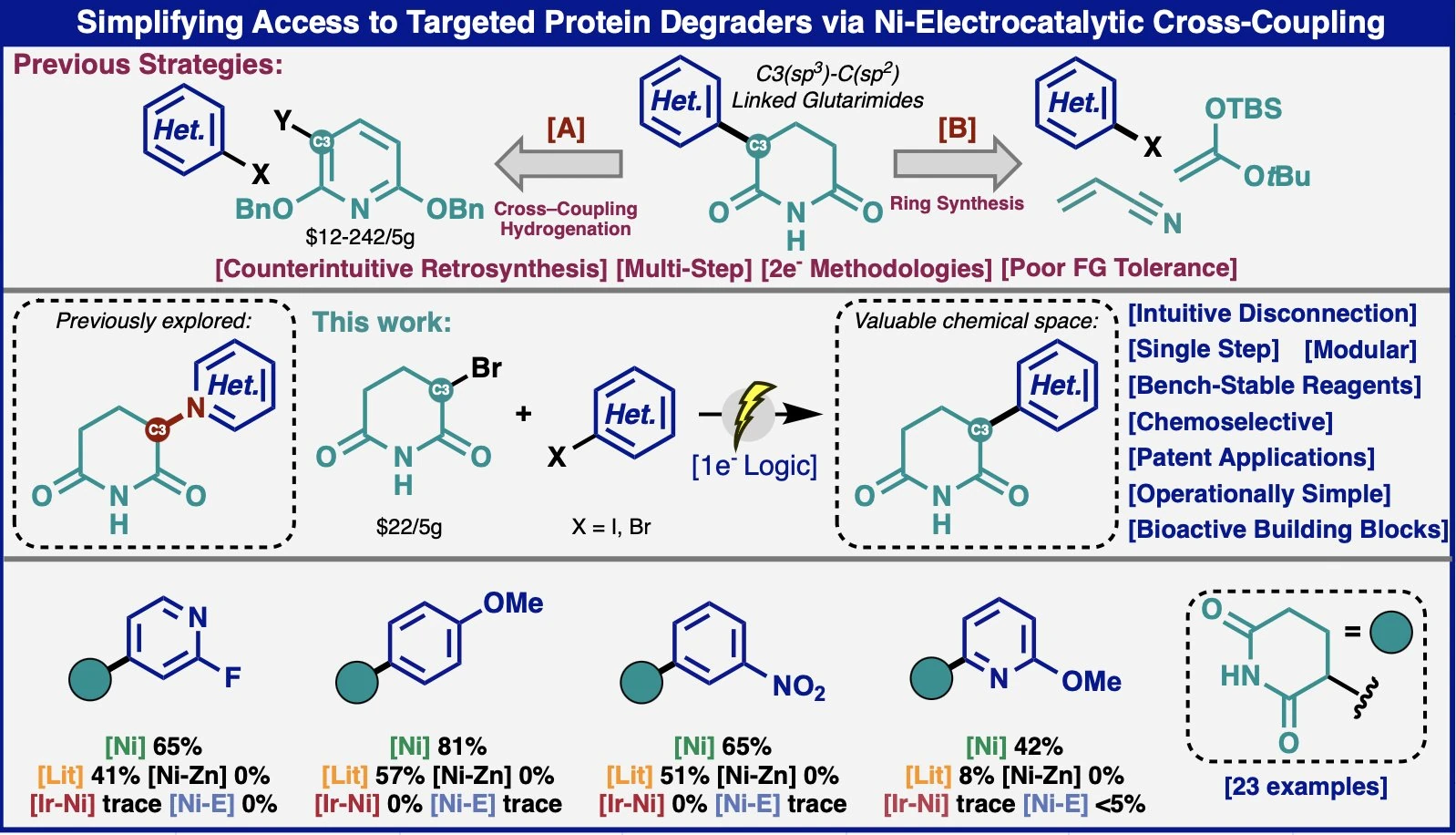
  13. Simplifying Access to Targeted Protein Degraders via Nickel Electrocatalytic Cross-Coupling

    Angew. Chem. Int. Ed. 2024 · doi:10.1002/anie.202319856 · In our publications

    • Bristol Myers Squibb Andrew P. Degnan, Chi He, David S. Peters, Martins S. Oderinde, Megan A. Emmanuel
  14. Convergent Total Synthesis of (−)-Cyclopamine

    J. Am. Chem. Soc. 2023 · doi:10.1021/jacs.3c09085 · In our publications

    • LEO Pharma Nadia Nasser Petersen, Sebastian Clementson
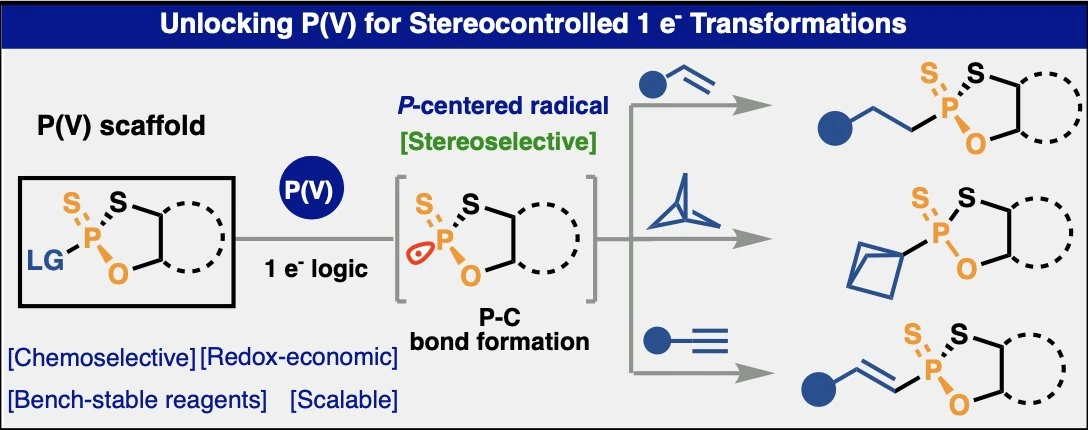
  15. Stereocontrolled Radical Thiophosphorylation

    J. Am. Chem. Soc. 2023 · doi:10.1021/jacs.3c05655 · In our publications

    • Bristol Myers Squibb Anthony N. Cauley, Bryan J. Simmons, Lauren N. Grant, Martin D. Eastgate, Martins S. Oderinde, Michael A. Schmidt
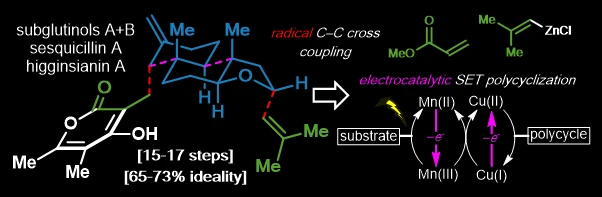
  16. Complex Molecule Synthesis by Electrocatalytic Decarboxylative Cross-Coupling

    Nature 2023 · doi:10.1038/s41586-023-06677-2 · In our publications

    • Bristol Myers Squibb Martins S. Oderinde, Maximilian D. Palkowitz, Michael D. Mandler, T. G. Murali Dhar
    • Pfizer Daniel C. Schmitt, Michael R. Collins
    • LEO Pharma Nadia Nasser Petersen, Sebastian Clementson
    • Biogen Philippe N. Bolduc, TeYu Chen
    • Lilly Daniel C. Schmitt
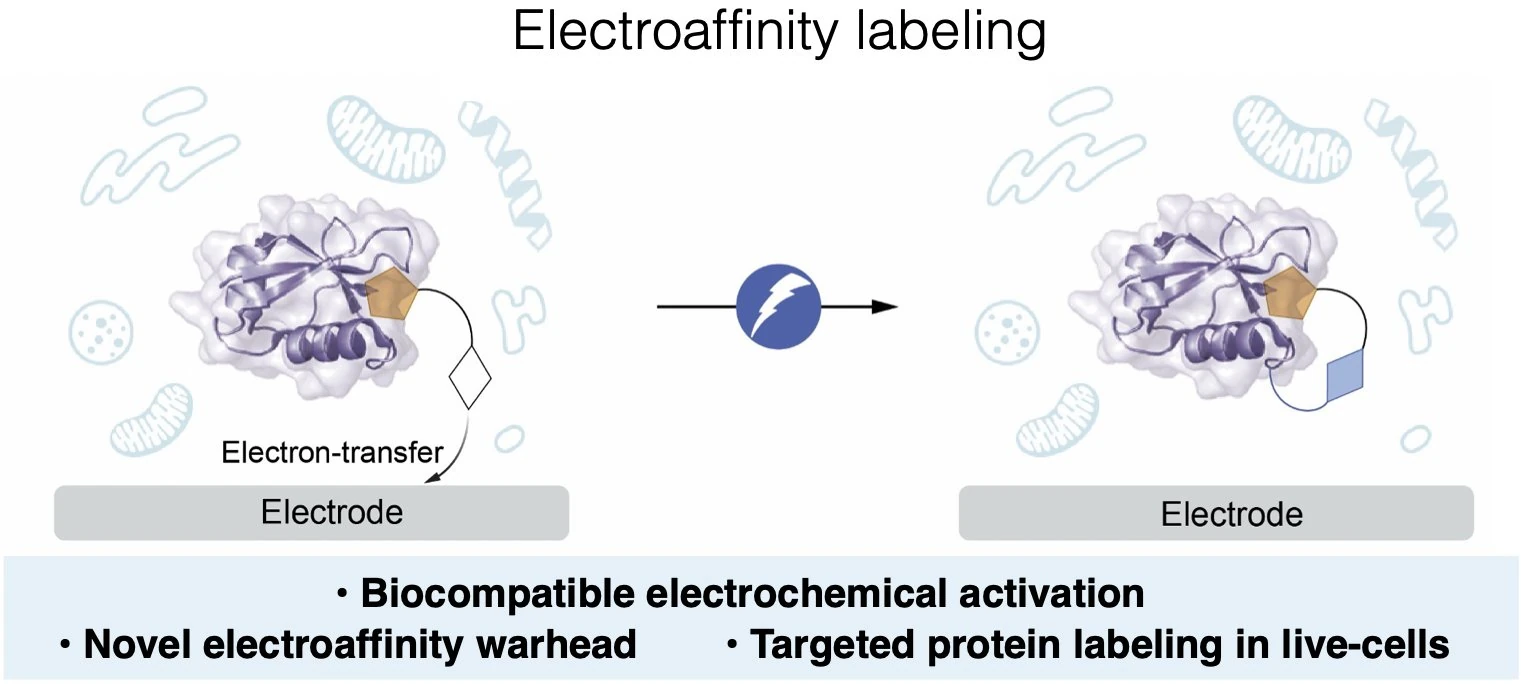
  17. An Electroaffinity Labelling Platform for Chemoproteomic-Based Target Identification

    Nat. Chem. 2023 · doi:10.1038/s41557-023-01240-y · In our publications

    • Merck & Co. Aleksandra Olow, Keun Ah Ryu, La-Tonya A. Adams, Lee R. Roberts, Olugbeminiyi Fadeyi, Rob Oslund
    • InduPro Therapeutics Olugbeminiyi Fadeyi, Rob Oslund
  18. Overcoming Limitations in Decarboxylative Arylation via Ag–Ni Electrocatalysis

    J. Am. Chem. Soc. 2022 · doi:10.1021/jacs.2c08006 · In our publications

    • Bristol Myers Squibb Benjamin Vokits, Hao Zhang, Jeremy M. Richter, Martins S. Oderinde, Michael A. Poss, Michael D. Mandler, Peter T. W. Cheng, Scott A. Shaw, T. G. Murali Dhar, Yeheng Zhu
    • Pfizer Martin Bravo, Michael R. Collins, Ryan Schioldager
    • LEO Pharma Nadia Nasser Petersen, Sebastian Clementson
    • Enamine Pavel K. Mykhailiuk
    • Biogen Philippe N. Bolduc, TeYu Chen, Vanna D. Blasczak
    • Minakem Pierre-Georges Echeverria
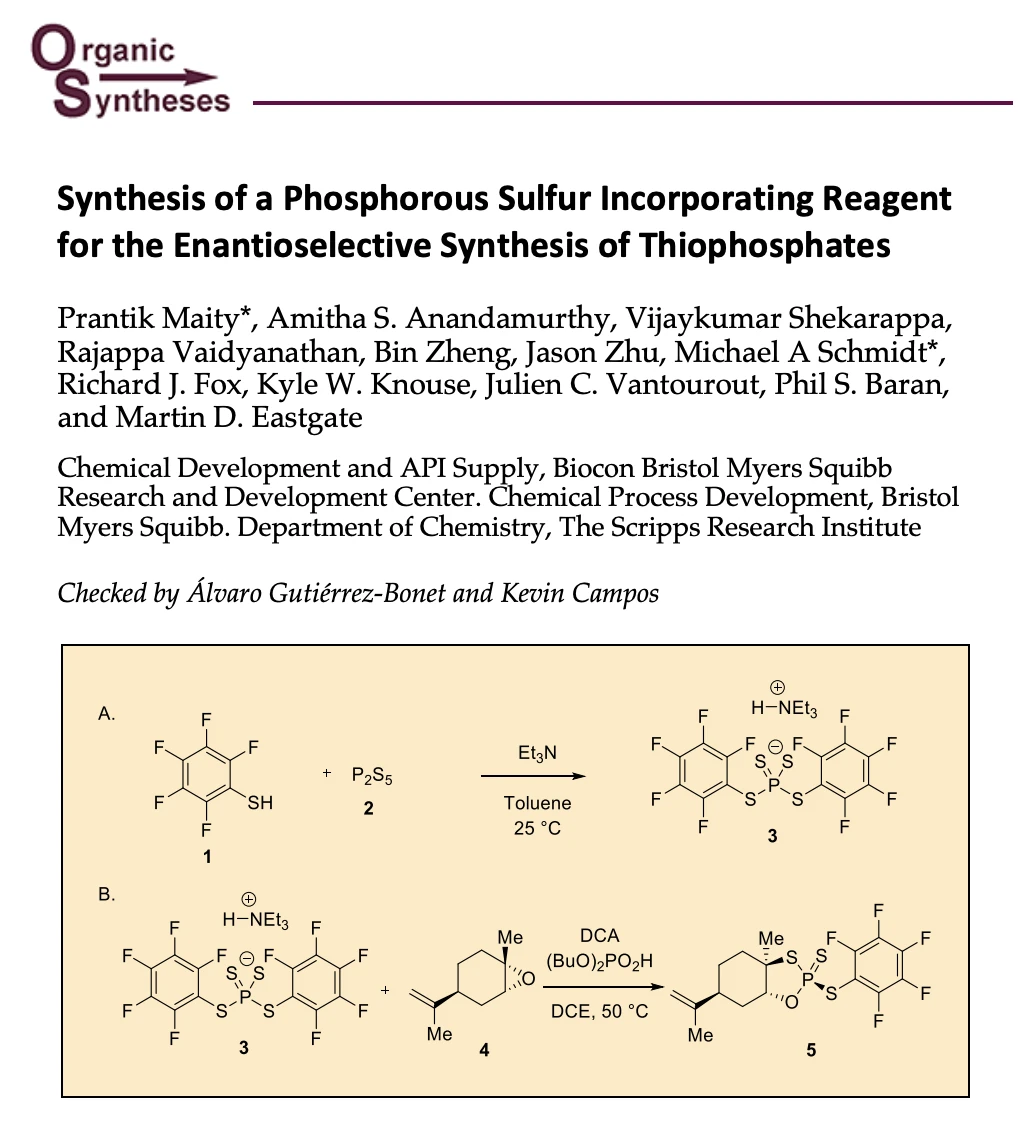
  19. Synthesis of a Phosphorous Sulfur Incorporating Reagent for the Enantioselective Synthesis of Thiophosphates

    Org. Synth. 2021 · doi:10.15227/orgsyn.098.0097 · In our publications

    • Bristol Myers Squibb Amitha S. Anandamurthy, Bin Zheng, Jason Zhu, Martin D. Eastgate, Michael A. Schmidt, Prantik Maity, Rajappa Vaidyanathan, Richard J. Fox, Vijaykumar Shekarappa
  20. A P(V) Platform for Oligonucleotide Synthesis

    Science 2021 · doi:10.1126/science.abi9727 · In our publications

    • Bristol Myers Squibb Bin Zheng, Ivar M. McDonald, Martin D. Eastgate, Michael A. Schmidt, Richard E. Olson, Shenjie Qiu, Stephen E. Mercer, Yazhong Huang
    • Elsie Biotechnologies Bin Zheng, Ivar M. McDonald, Kyle W. Knouse, Martin D. Eastgate, Michael A. Schmidt, Richard E. Olson, Shenjie Qiu, Stephen E. Mercer, Yazhong Huang
  21. Chemoselective Electrosynthesis Using Rapid Alternating Polarity

    J. Am. Chem. Soc. 2021 · doi:10.1021/jacs.1c06572 · In our publications

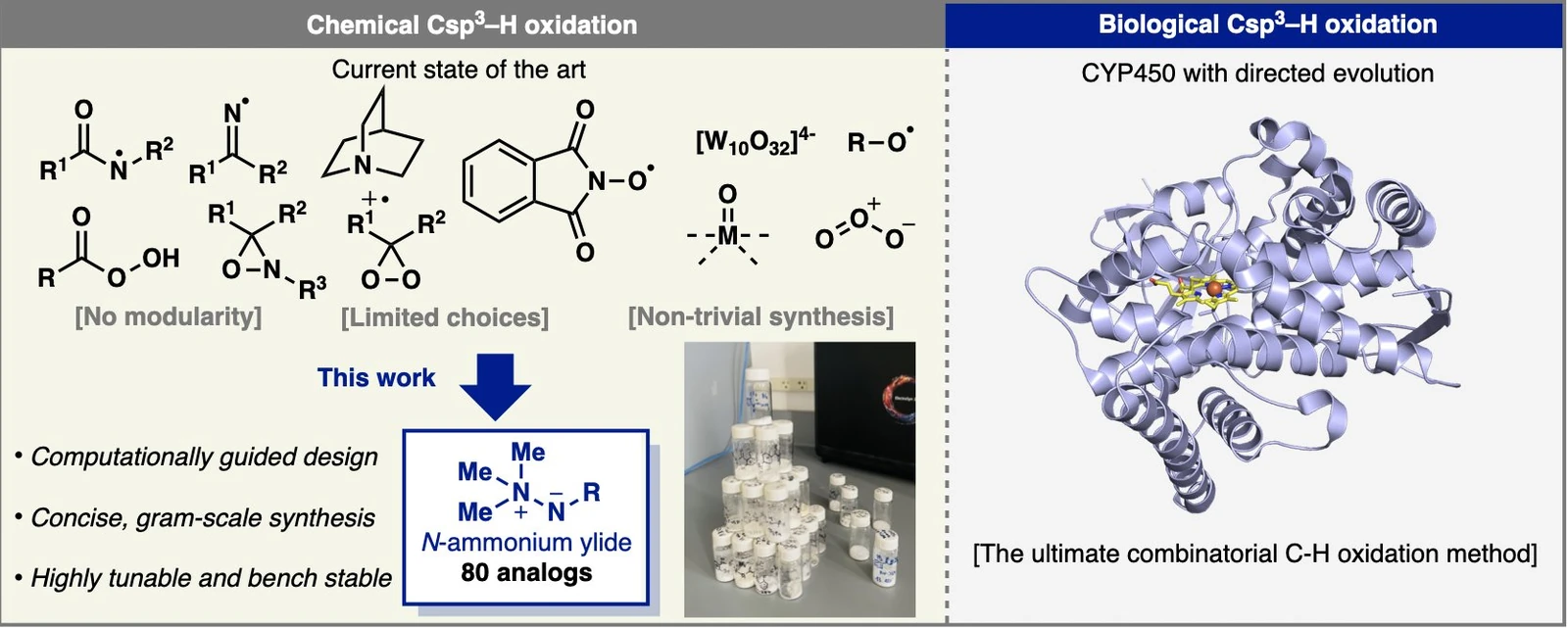
  22. N-Ammonium Ylide Mediators for Electrochemical C–H Oxidation

    J. Am. Chem. Soc. 2021 · doi:10.1021/jacs.1c03780 · In our publications

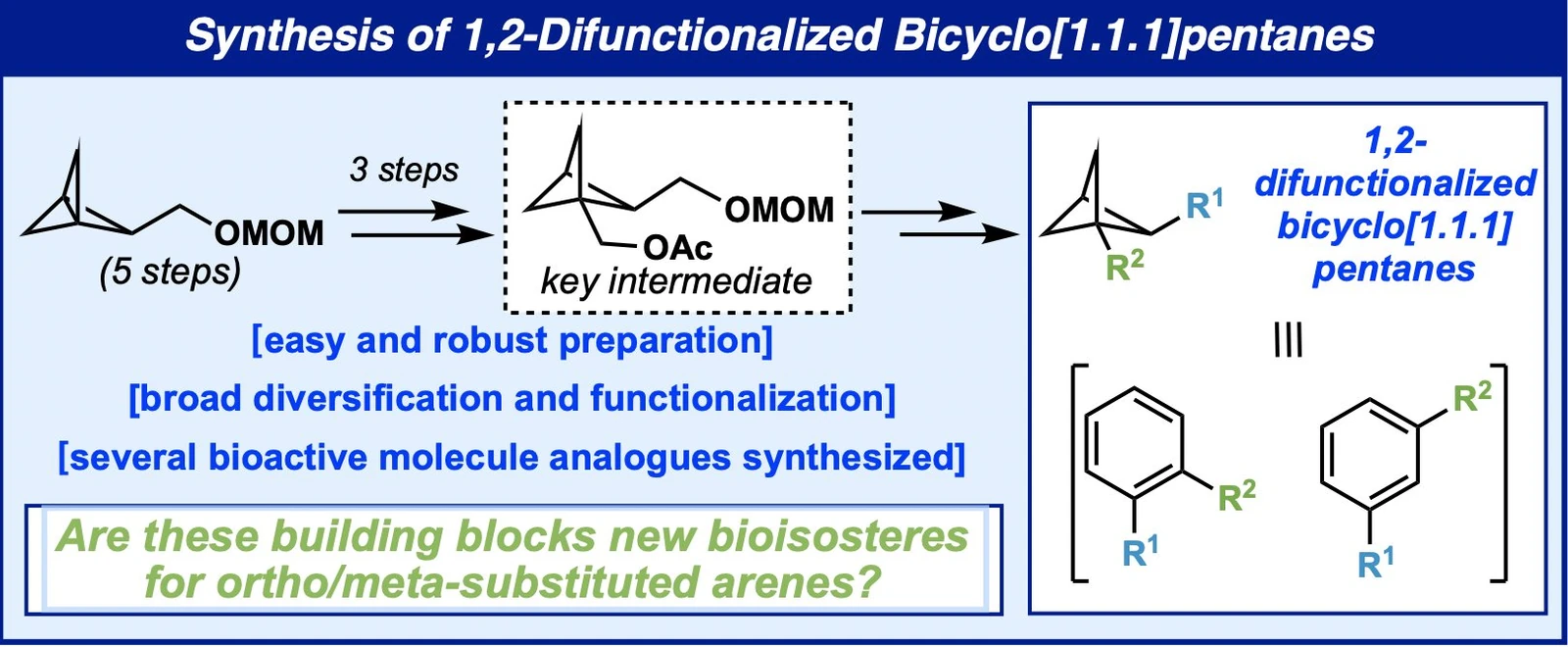
  23. 1,2-Difunctionalized Bicyclo[1.1.1]pentanes: Long–Sought-After Mimetics for Ortho/Meta-Substituted Arenes

    Proc. Natl. Acad. Sci. U.S.A. 2021 · doi:10.1073/pnas.2108881118 · In our publications

    • Pfizer Benjamin J. Burke, Gary M. Gallego, James J. Mousseau, Jeff Elleraas, Jillian E. Spangler, Matthew A. Perry, Matthew Del Bel, Michael R. Collins, Sajiv K. Nair, T. Patrick Montgomery
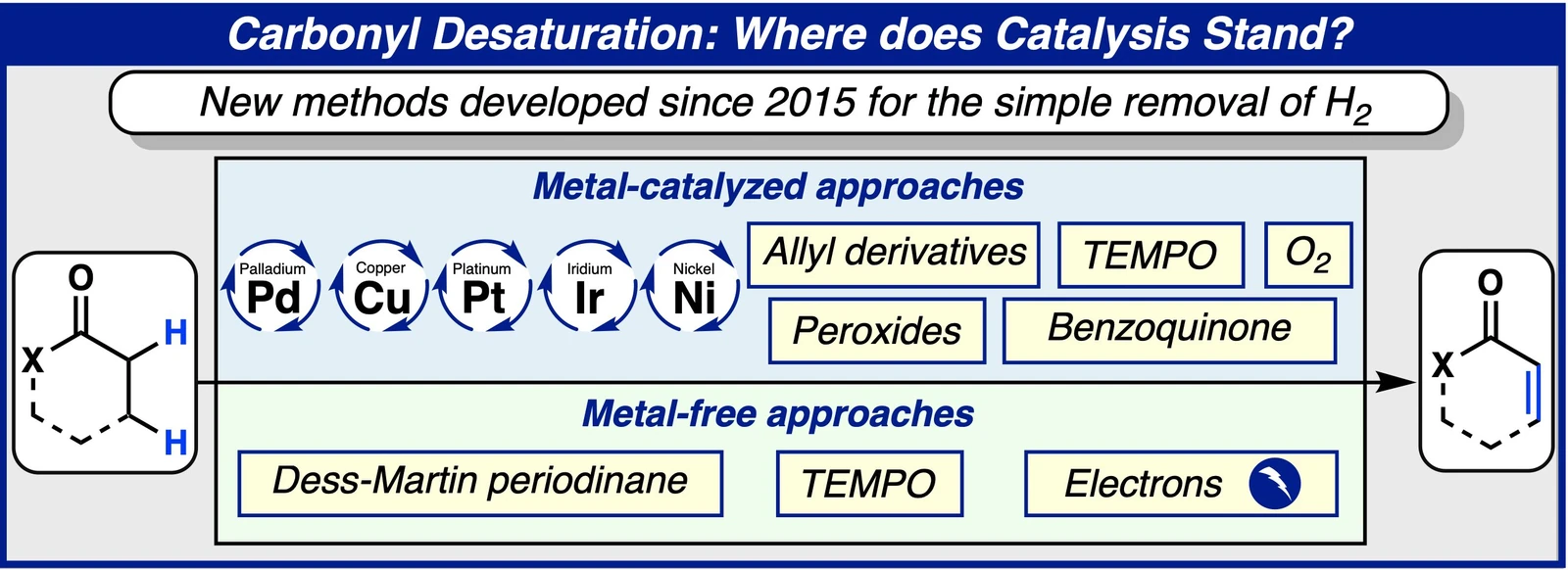
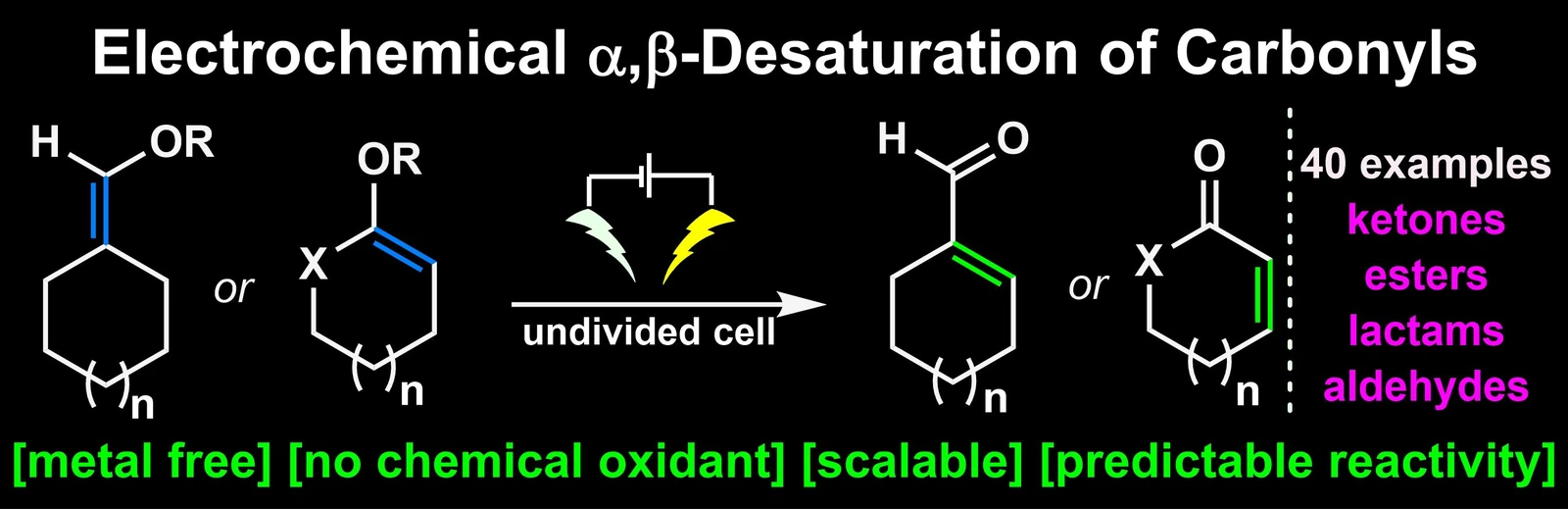
  24. Electrochemically Driven Desaturation of Carbonyl Compounds

    Nat. Chem. 2021 · doi:10.1038/s41557-021-00640-2 · In our publications

    • Asymchem Jinjun Li, Zhen Yao
    • Minakem Dominique Delbrayelle, Pierre-Georges Echeverria
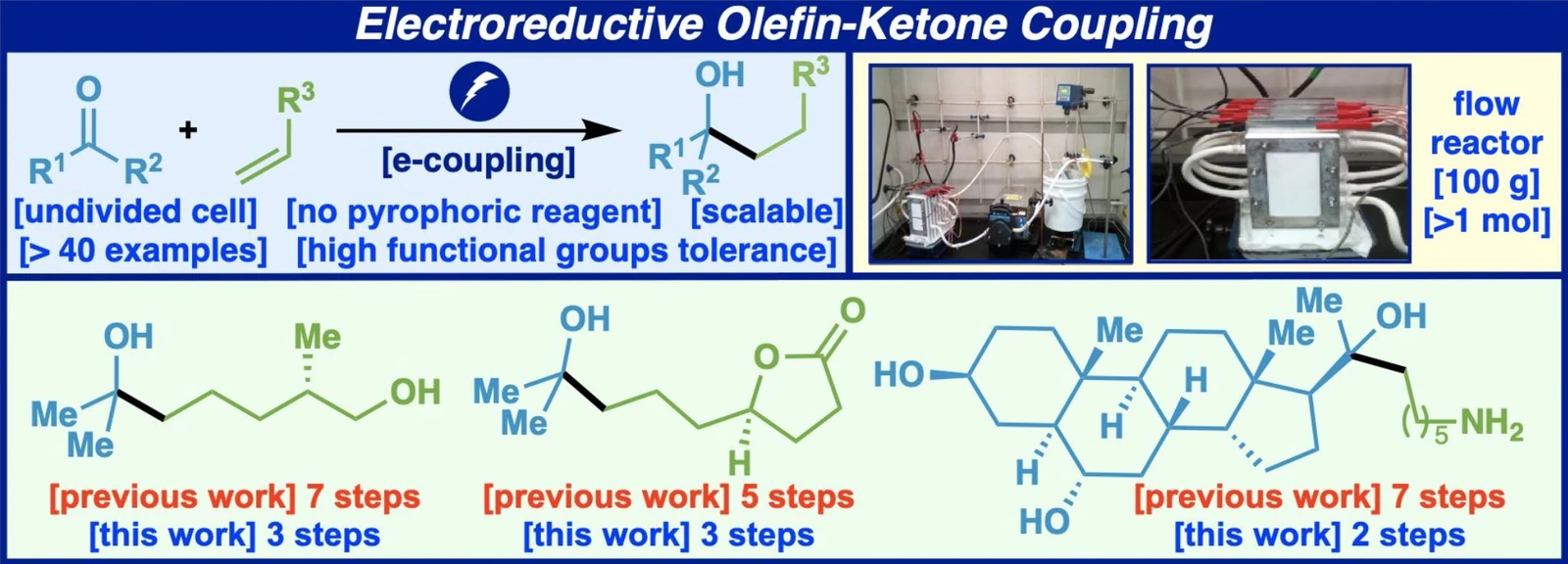
  25. Electroreductive Olefin–Ketone Coupling

    J. Am. Chem. Soc. 2020 · doi:10.1021/jacs.0c11214 · In our publications

    • Asymchem Jinjun Li, Pan Wang
    • Minakem Lucas Mele, Pierre-Georges Echeverria
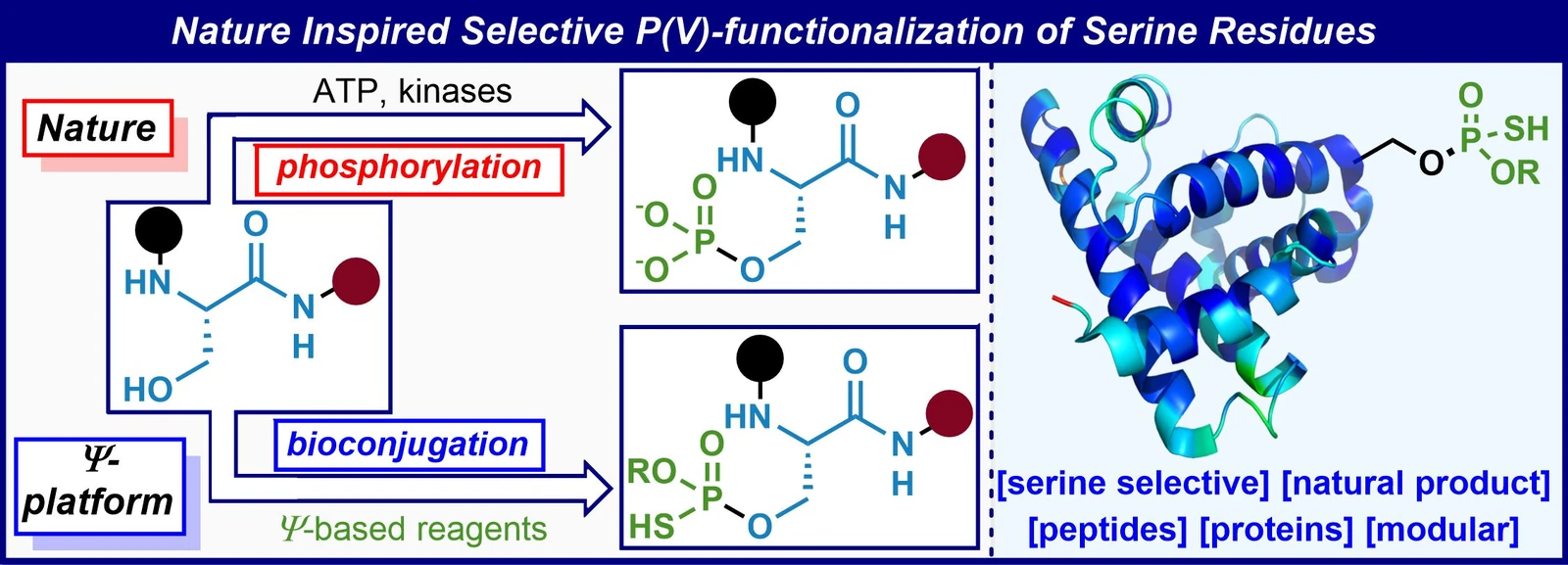
  26. Serine-Selective Bioconjugation

    J. Am. Chem. Soc. 2020 · doi:10.1021/jacs.0c05595 · In our publications

    • Bristol Myers Squibb Antonio Ramírez, Jennifer Xiaoxin Qiao, Martin D. Eastgate, Michael A. Schmidt
  27. Two-Phase Synthesis of Taxol

    J. Am. Chem. Soc. 2020 · doi:10.1021/jacs.0c03592 · In our publications

    • Chemveda Life Sciences Bheema Rao Paraselli, Gopi Krishna Gaddamanugu, Ravi Kumar Puthukanoori, Venkata Ramana Murthy Appala
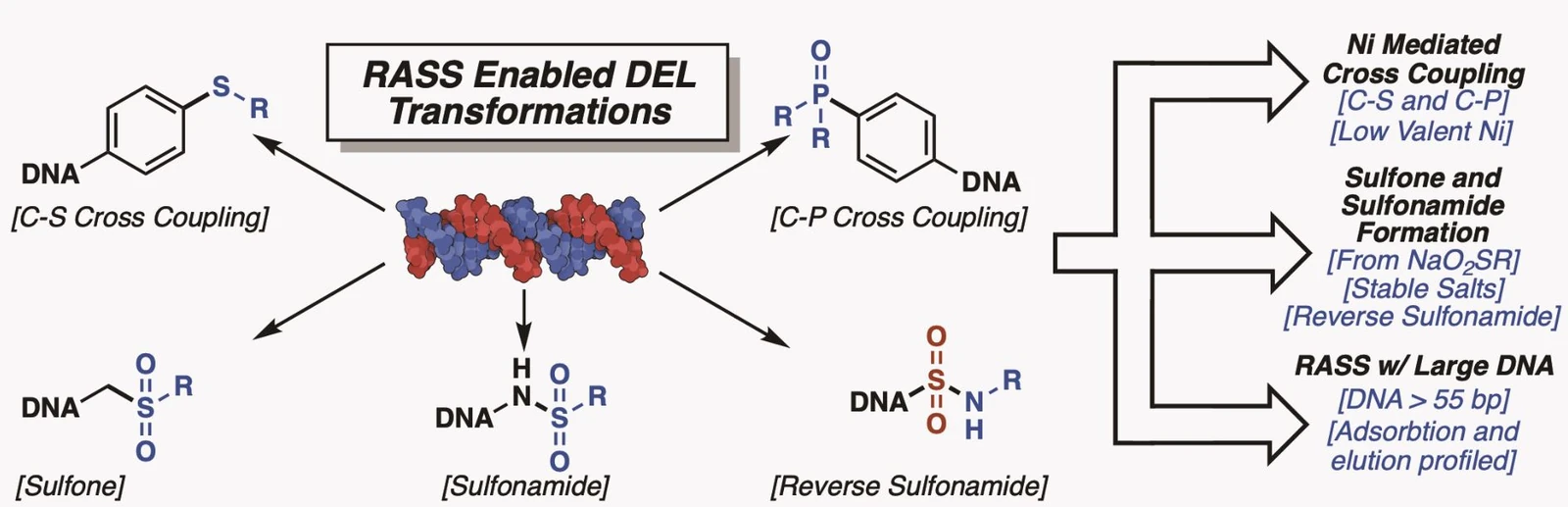
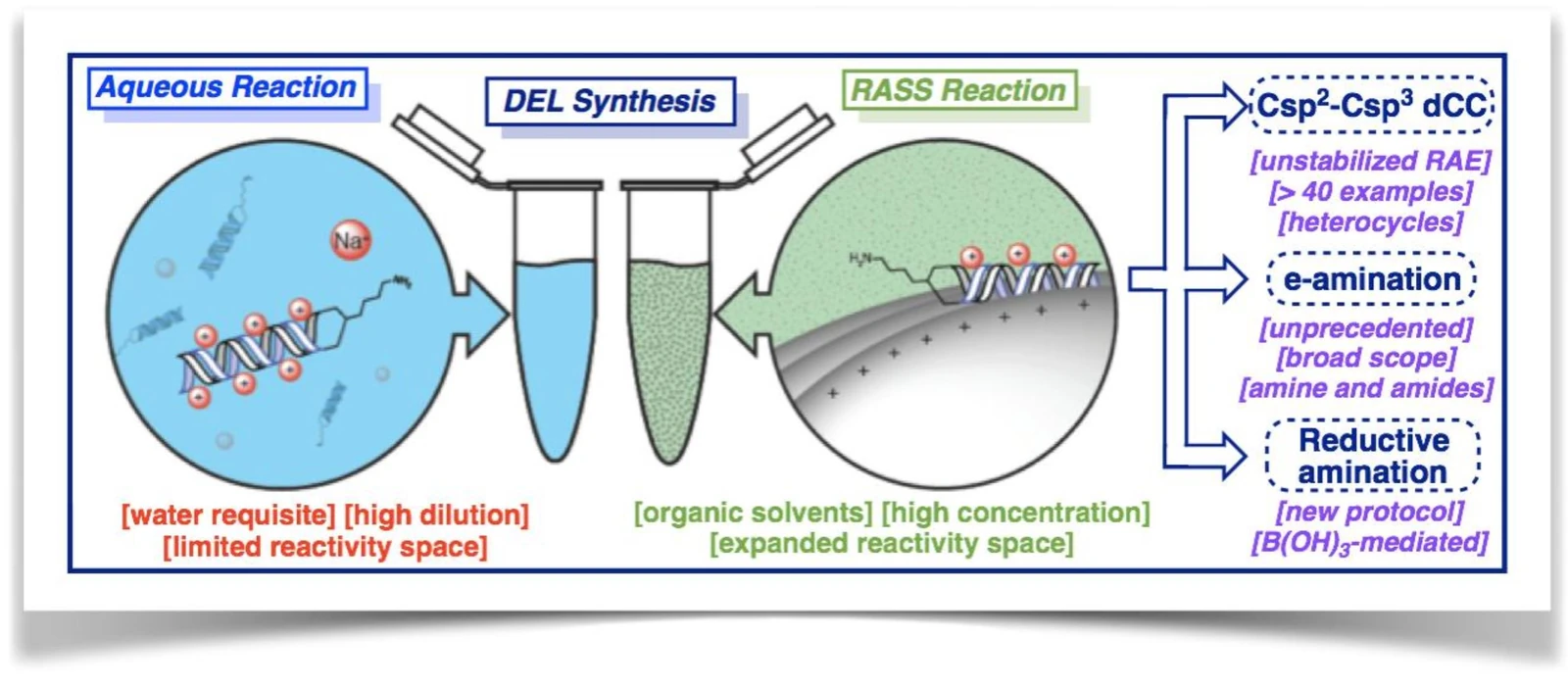
  28. RASS-Enabled S/P−C and S−N Bond Formation for DEL Synthesis

    Angew. Chem. Int. Ed. 2020 · doi:10.1002/anie.201915493 · In our publications

    • Pfizer David W. Piotrowski, Dominik K. Kölmel, Mark E. Flanagan, Paul Richardson
    • HitGen Jinqiao Wan, Mei-Hsuan Tsai, Yong Chang
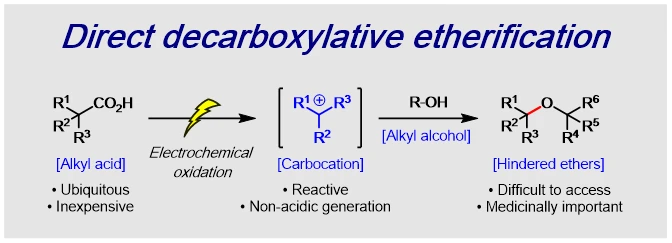
  29. Hindered Dialkyl Ether Synthesis with Electrogenerated Carbocations

    Nature 2019 · doi:10.1038/s41586-019-1539-y · In our publications

    • Bristol Myers Squibb Gregory L. Beutner
    • Pfizer Alyn Davies, Gary M. Gallego, Jeremy T. Starr, Jillian E. Spangler, Matthew Del Bel, Michael R. Collins, Shouliang Yang
    • Enamine Pavel K. Mykhailiuk
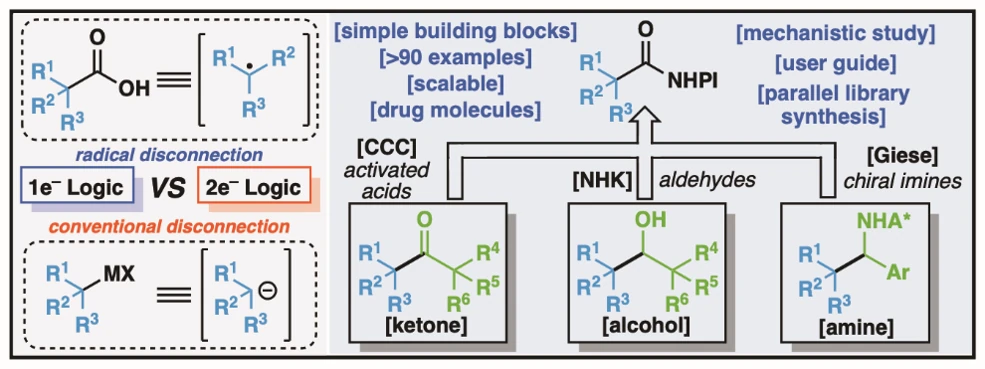
  30. A Radical Approach to Anionic Chemistry: Synthesis of Ketones, Alcohols, and Amines

    J. Am. Chem. Soc. 2019 · doi:10.1021/jacs.9b02238 · In our publications

    • Bristol Myers Squibb Robert J. Cherney
    • Pfizer Daniel C. Schmitt, Gary M. Gallego, James J. Mousseau, Matthew A. Perry, Michael R. Collins, Shouliang Yang
    • Enamine Pavel K. Mykhailiuk, Pavlo S. Lebed
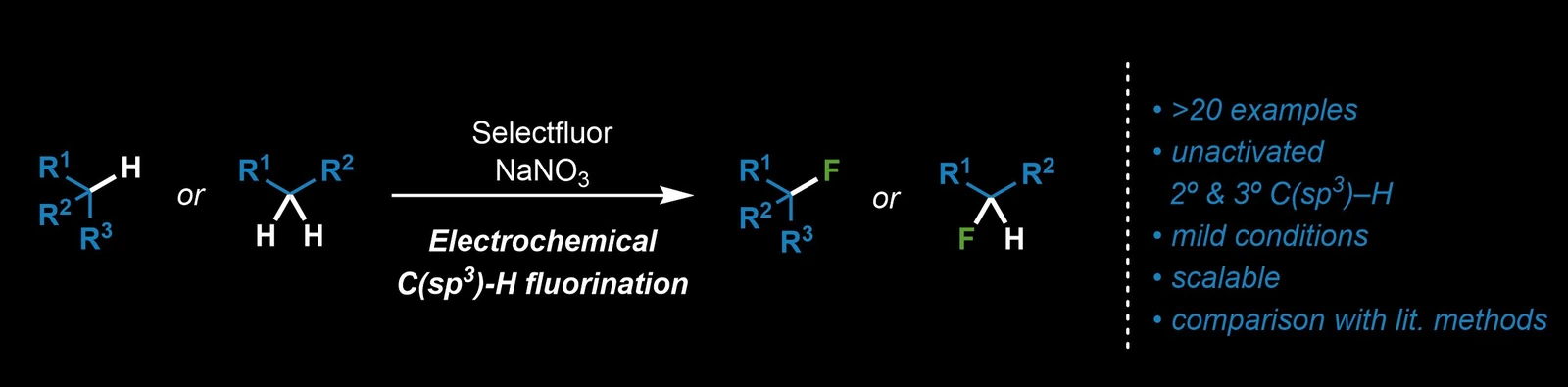
  31. Electrochemical C(sp3)–H Fluorination

    Synlett 2019 · doi:10.1055/s-0037-1611737 · In our publications

  32. Electrochemically Driven, Ni-Catalyzed Aryl Amination: Scope, Mechanism, and Applications

    J. Am. Chem. Soc. 2019 · doi:10.1021/jacs.9b01886 · In our publications

    • Pfizer Carmen N. García-Irizarry, Jeremy T. Starr, Neal W. Sach
    • Asymchem Deng-Hui Bao, Longrui Chen, Qinglong Hou, Wenhua Qiao
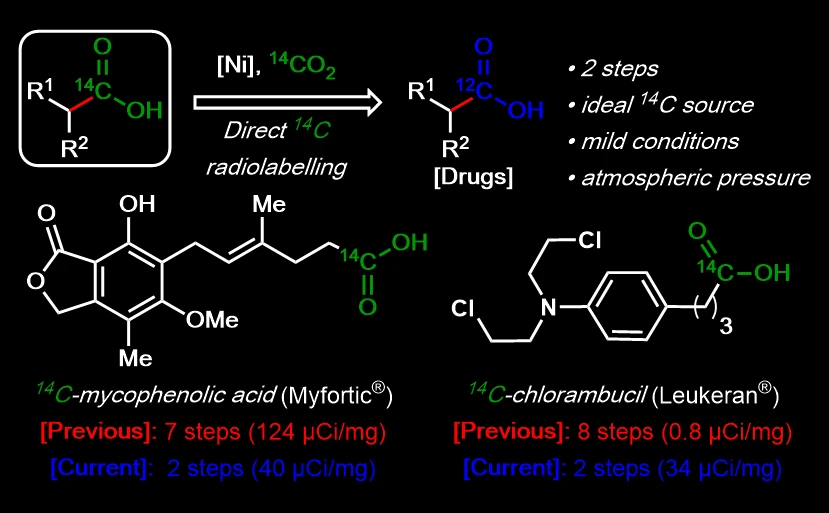
  33. Direct Carbon Isotope Exchange through Decarboxylative Carboxylation

    J. Am. Chem. Soc. 2019 · doi:10.1021/jacs.8b12035 · In our publications

  34. A General Amino Acid Synthesis Enabled by Innate Radical Cross-Coupling

    Angew. Chem. Int. Ed. 2018 · doi:10.1002/anie.201809310 · In our publications

    • Bristol Myers Squibb David R. Langley, Jennifer Xiaoxin Qiao, K. -S. Yeung, Michael A. Poss, Paul M. Scola
    • Pfizer Daniel C. Schmitt, Gary M. Gallego, James J. Mousseau, Michael R. Collins, Shouliang Yang
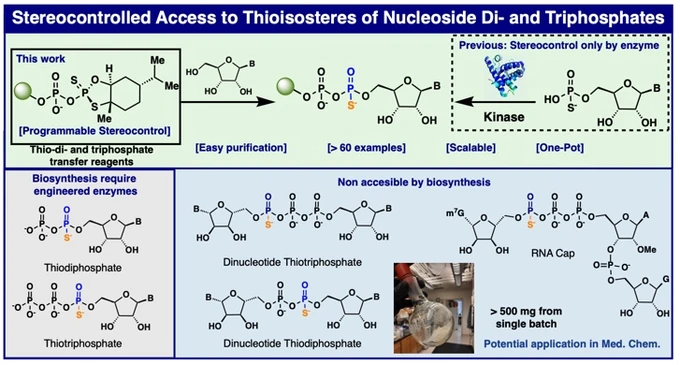
  35. Unlocking P(V): Reagents for Chiral Phosphorothioate Synthesis

    Science 2018 · doi:10.1126/science.aau3369 · In our publications

    • Bristol Myers Squibb Bin Zheng, Changxia Yuan, Chao Hang, Ivar M. McDonald, Jason Zhu, Martin D. Eastgate, Michael A. Schmidt, Peter J. Park, Qinggang Wang, Richard E. Olson, Stephen E. Mercer, Ye Zhu
  36. Kinetically Guided Radical-Based Synthesis of C(sp3)−C(sp3) Linkages on DNA

    Proc. Natl. Acad. Sci. U.S.A. 2018 · doi:10.1073/pnas.1806900115 · In our publications

    • Pfizer Anokha S. Ratnayake, Christopher J. O’Donnell, Paul Richardson, Russell G. Dushin, Stephen Brown, William P. Farrell
    • Asymchem Zhiqing Liu
  37. Divergent Synthesis of Thapsigargin Analogs

    Bioorg. Med. Chem. Lett. 2018 · doi:10.1016/j.bmcl.2018.03.065 · In our publications

  38. Modular Radical Cross-Coupling with Sulfones Enables Access to sp3-rich (Fluoro)Alkylated Scaffolds

    Science 2018 · doi:10.1126/science.aar7335 · In our publications

    • Pfizer Gary M. Gallego, James J. Mousseau, Michael R. Collins, Olugbeminiyi Fadeyi, Philippe Nuhant
    • Asymchem Deng-Hui Bao, Guanda Che, Lijie Sun, Wenhua Qiao
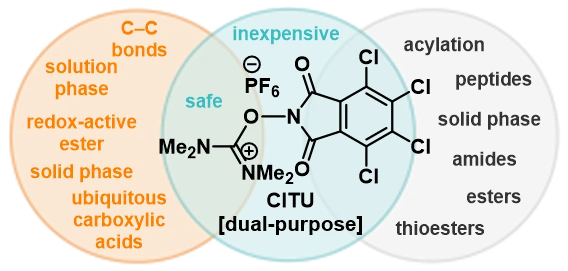
  39. CITU: A Peptide and Decarboxylative Coupling Reagent

    Org. Lett. 2017 · doi:10.1021/acs.orglett.7b03121 · In our publications

    • Bristol Myers Squibb Jason M. Stevens, Jennifer Xiaoxin Qiao, Martin P. Allen, Michael A. Poss
    • Asymchem Deng-Hui Bao, Guanda Che, Zhiqing Liu
  40. Electrochemically Enabled, Nickel-Catalyzed Amination

    Angew. Chem. Int. Ed. 2017 · doi:10.1002/anie.201707906 · In our publications

    • Pfizer Jeremy T. Starr, Jinshan Chen
    • Asymchem Deng-Hui Bao, Qinglong Hou, Zhiqing Liu
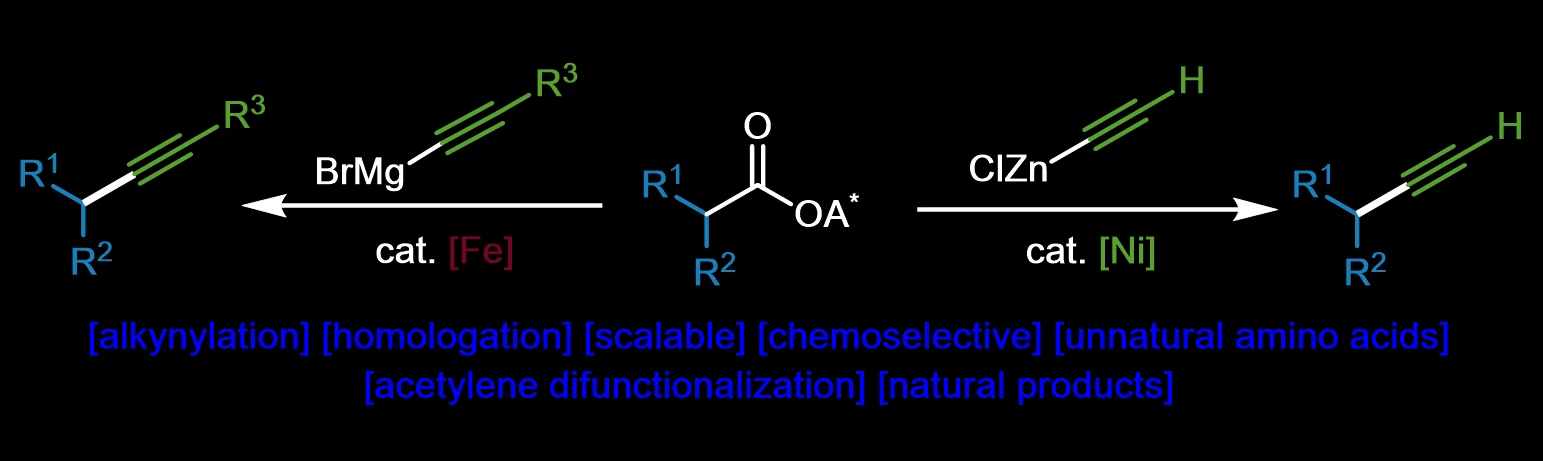
  41. Decarboxylative Alkynylation

    Angew. Chem. Int. Ed. 2017 · doi:10.1002/anie.201705107 · In our publications

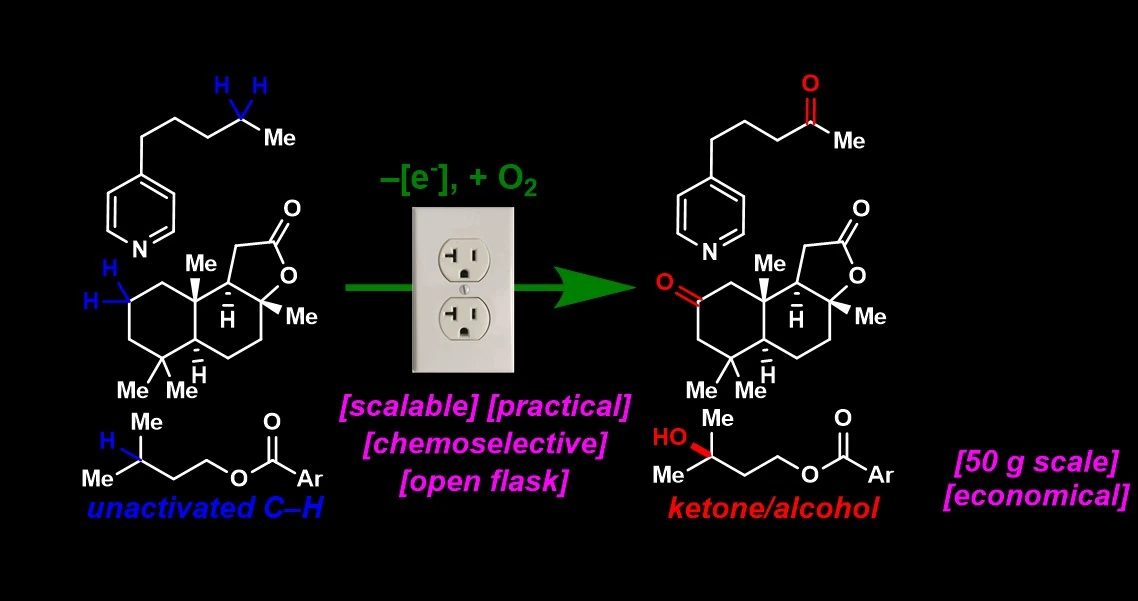
  42. Scalable, Electrochemical Oxidation of Unactivated C–H Bonds

    J. Am. Chem. Soc. 2017 · doi:10.1021/jacs.7b03539 · In our publications

    • Pfizer Jeremy T. Starr, Jinshan Chen
    • Asymchem Deng-Hui Bao, Zhiqing Liu
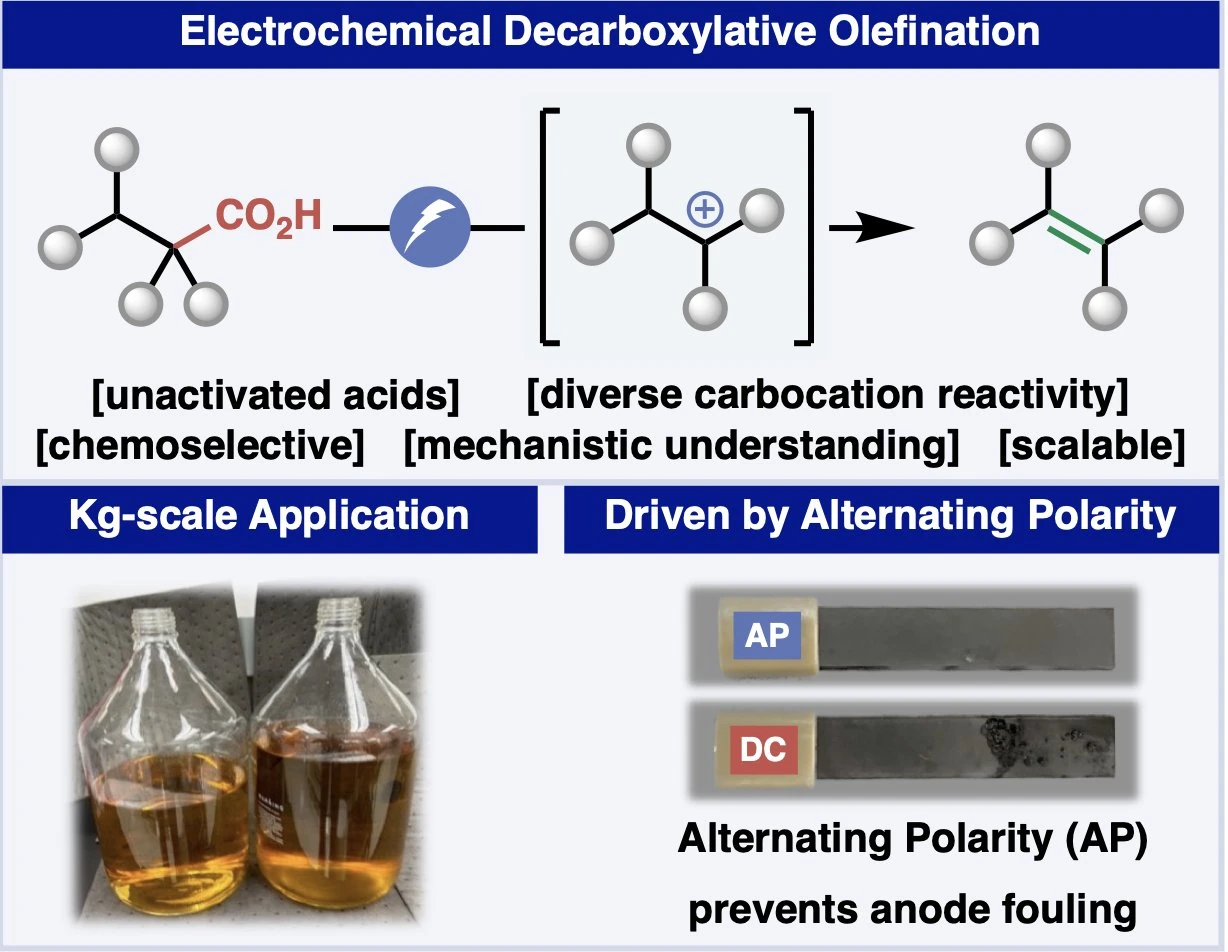
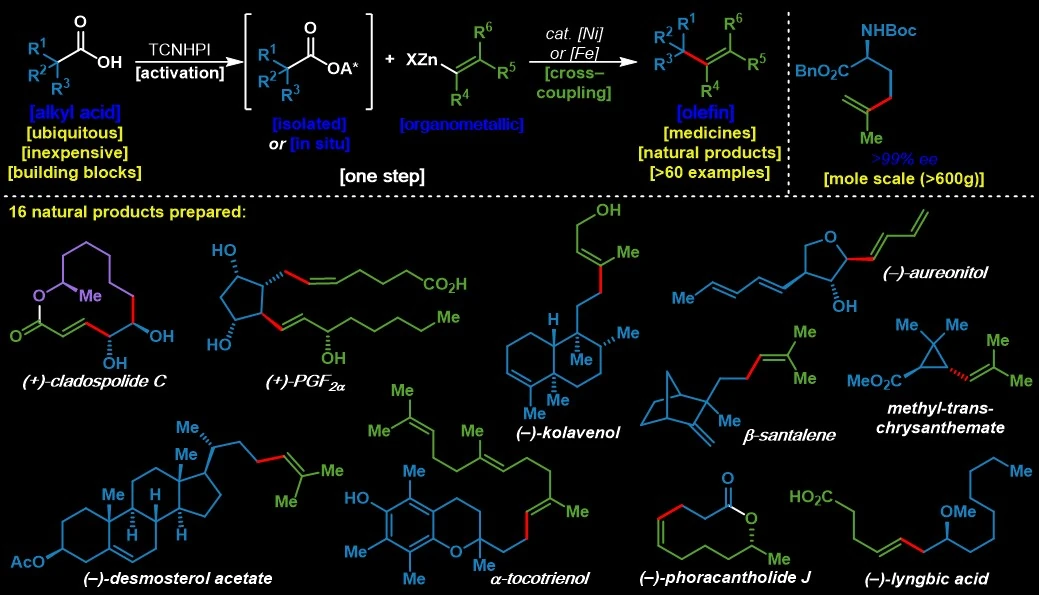
  43. Decarboxylative Alkenylation

    Nature 2017 · doi:10.1038/nature22307 · In our publications

  44. Strain-Release Heteroatom Functionalization: Development, Scope, and Stereospecificity

    J. Am. Chem. Soc. 2017 · doi:10.1021/jacs.6b13229 · In our publications

    • Pfizer Gary M. Gallego, Huichin Zhu, James Bradow, James J. Mousseau, Jason Ewanicki, Jason K. Smith, Jeff Elleraas, Jillian E. Spangler, JinJiang Zhu, Michael R. Collins, Neal W. Sach, Olugbeminiyi Fadeyi, Robert Oliver, Thomas A. Brandt, William P. Farrell
  45. Strain-Release Amination

    Science 2016 · doi:10.1126/science.aad6252 · In our publications

    • Pfizer Gary M. Gallego, Huichin Zhu, Jillian E. Spangler, JinJiang Zhu, Michael R. Collins, Neal W. Sach, Thomas A. Brandt
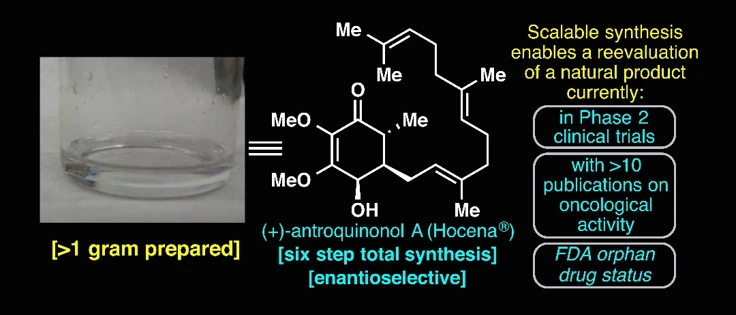
  46. Antroquinonol A: Scalable Synthesis and Preclinical Biology of a Phase 2 Drug Candidate

    ACS Cent. Sci. 2016 · doi:10.1021/acscentsci.5b00345 · In our publications

    • Bristol Myers Squibb Haiying Zhang, Joseph Fargnoli, Kathy Johnston, Mark Fereshteh, R. M. Borzilleri, T. G. Murali Dhar
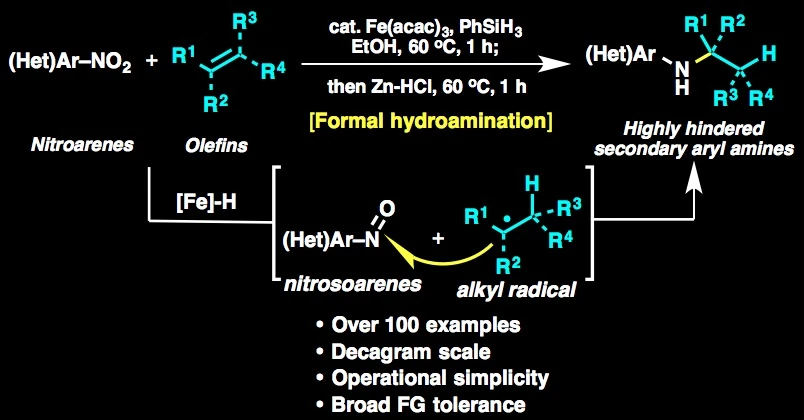
  47. Practical Olefin Hydroamination with Nitroarenes

    Science 2015 · doi:10.1126/science.aab0245 · In our publications

    • Bristol Myers Squibb Michael A. Schmidt, Michael Mertzman, Steven H. Spergel, Thomas E. La Cruz, William J. Pitts
    • Kemxtree Nitin B. Darvatkar, Swaminathan R. Natarajan
  48. Improving Physical Properties via C-H Oxidation: Chemical and Enzymatic Approaches

    Angew. Chem. Int. Ed. 2014 · doi:10.1002/anie.201407016 · In our publications

  49. C–H Methylation of Heteroarenes Inspired by Radical SAM Methyl Transferase

    J. Am. Chem. Soc. 2014 · doi:10.1021/ja5007838 · In our publications

    • Pfizer Aaron C. Burns, Martha A. Ornelas, Michael R. Collins
  50. A Simple Litmus Test for Aldehyde Oxidase Metabolism of Heteroarenes

    J. Med. Chem. 2014 · doi:10.1021/jm4017976 · In our publications

    • Pfizer Aaron C. Burns, Alfin D. N. Vaz, Deepak Dalvie, Martha A. Ornelas, Michael R. Collins
  51. Bioconjugation by Native Chemical Tagging of C–H Bonds

    J. Am. Chem. Soc. 2013 · doi:10.1021/ja407739y · In our publications

    • Eisai Earl F. Albone, Edward M. Suh, Luigi Grasso, Xin Cheng

How we count: a paper or preprint is listed when at least one co-author gives a company affiliation in the published record. Affiliations come from OpenAlex and Crossref and are checked against each paper’s author list; a handful of corrections are made by hand. A paper with co-authors from several companies is listed under each of them. The list updates itself whenever a new paper or preprint is added to our publications.

Work with us

Interested in collaborating with the Baran lab?

If your team has a problem that matters, a molecule no one can make, a reaction that will not scale, a reagent that should exist, we would love to hear about it.

Email Phil

or write to pbaran@scripps.edu