
The cheapest reagent nobody used
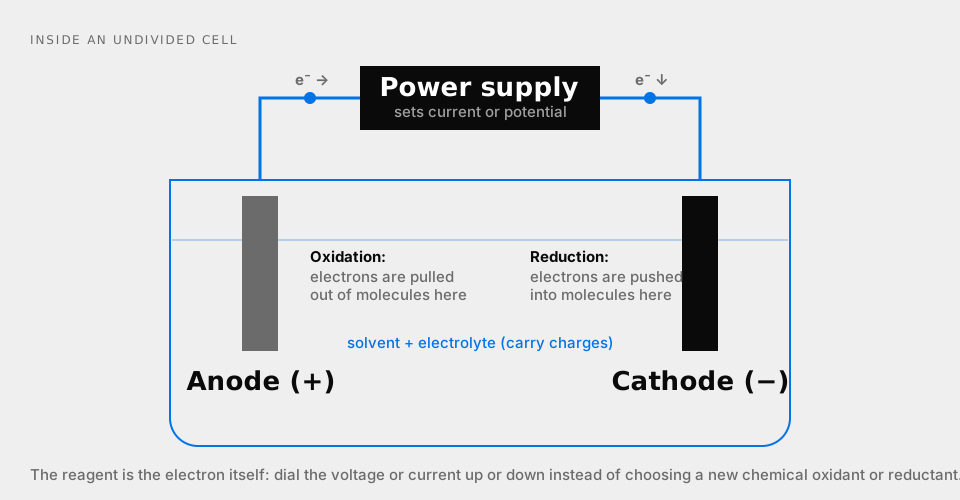
Every oxidation or reduction is, at bottom, electrons moving. An electrode moves them directly, with no chemical oxidant or reductant to buy, weigh or throw away.
“Electrochemistry represents one of the most intimate and visceral ways of interacting with molecules.”
The history is long. Volta’s pile of 1800 gave chemists the first steady current; in the 1830s Faraday used it to drive reactions and coined the words electrolysis, anode and cathode; in 1847 Kolbe joined two carboxylic acids by electrolysis, arguably the first carbon–carbon bond-forming reaction ever discovered. Industry never let go: the chloralkali process makes chlorine and sodium hydroxide from salt water, the Hall–Héroult process makes aluminium, and BASF makes the fragrance lysmeral by electrochemical oxidation on a scale of more than 10,000 tons a year.
Yet in the research laboratory, where molecules are invented at milligram-to-kilogram scale, electrochemistry was rare. The lab’s 2017 Chemical Reviews article put it bluntly: for most synthetic chemists it was “a technique employed as a ‘last resort’.” It named three reasons: no standard equipment, a steep learning curve in the underlying physical chemistry, and too few truly compelling reactions. A small band of believers kept the flame alive all the same: Kevin Moeller’s anodic cyclizations, Jun-ichi Yoshida’s “cation pools,” R. Daniel Little’s mediators and Siegfried Waldvogel’s selective couplings.
Born of “sheer desperation”
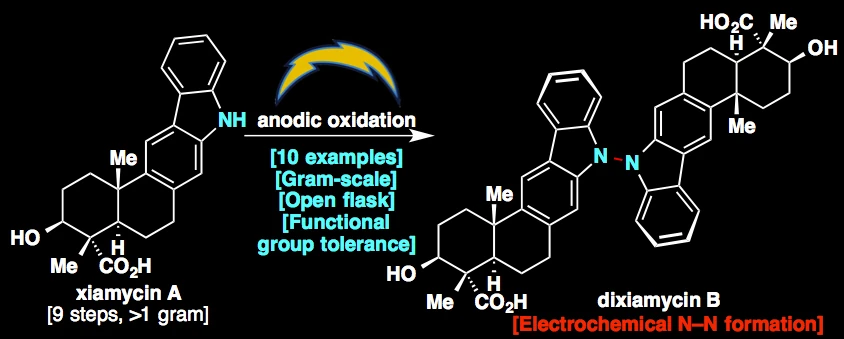
The lab came to electrochemistry sideways. In 2014 it needed to join two halves of the natural product dixiamycin B through a nitrogen–nitrogen bond. An exhaustive screen of chemical oxidants failed; a constant-potential electrolysis did it cleanly.
What began as a rescue soon became a program. Later in 2014 an electrode was used to control radical C–H functionalization of heteroarenes, and by 2017 an electrochemical oxidation had reached unactivated C–H bonds. Every success, though, came with a soldering iron attached.
“Admittedly, our own explorations in the area, beginning with the synthesis of dixiamycin, were born out of sheer desperation.”
A 2016 Outlook in ACS Central Science made the case for the method’s “innate scalability and sustainability” and named what stood in the way: “for electrochemistry to really take off in all areas of synthetic organic chemistry, more standardized and simplified instrumentation needs to be developed specifically for this community.” The 2017 Chemical Reviews survey of methods since 2000 was subtitled “On the Verge of a Renaissance.”
Calling all engineers
The lab’s diagnosis was unexpected: the chemistry wasn’t the problem. The hardware was.
Every group built its own cells. Students cut test tubes, carved electrodes and soldered wires; Phil, the 2018 essay recalls, “still vividly recalls the painstaking experience motivating students to pick up a soldering gun.” Home-made setups were hard to reproduce. When industrial collaborators could not repeat one of the lab’s reactions, the culprit turned out to be the distance between the electrodes. A 50-gram oxidation of sclareolide took nearly five days because the available equipment could not deliver more current.
In “Synthetic Organic Electrochemistry: Calling All Engineers” (2018) the lab argued that the obstacle was “a lack of engineering savvy directed in this area rather than a lack of potential interest.” Without engineers, it pointed out, NMR “would be nothing more than a fringe technique used by only a handful of physicists.” So the essay wrote down a wish list for an instrument: standardization; modularity; built-in analysis (cyclic voltammetry); the footprint of a stirring hotplate; an educational, user-friendly interface; future-proofing through upgradable software; and a price well below that of a typical potentiostat. The essay thanks IKA for “taking on this challenge.”
⚗ For chemists
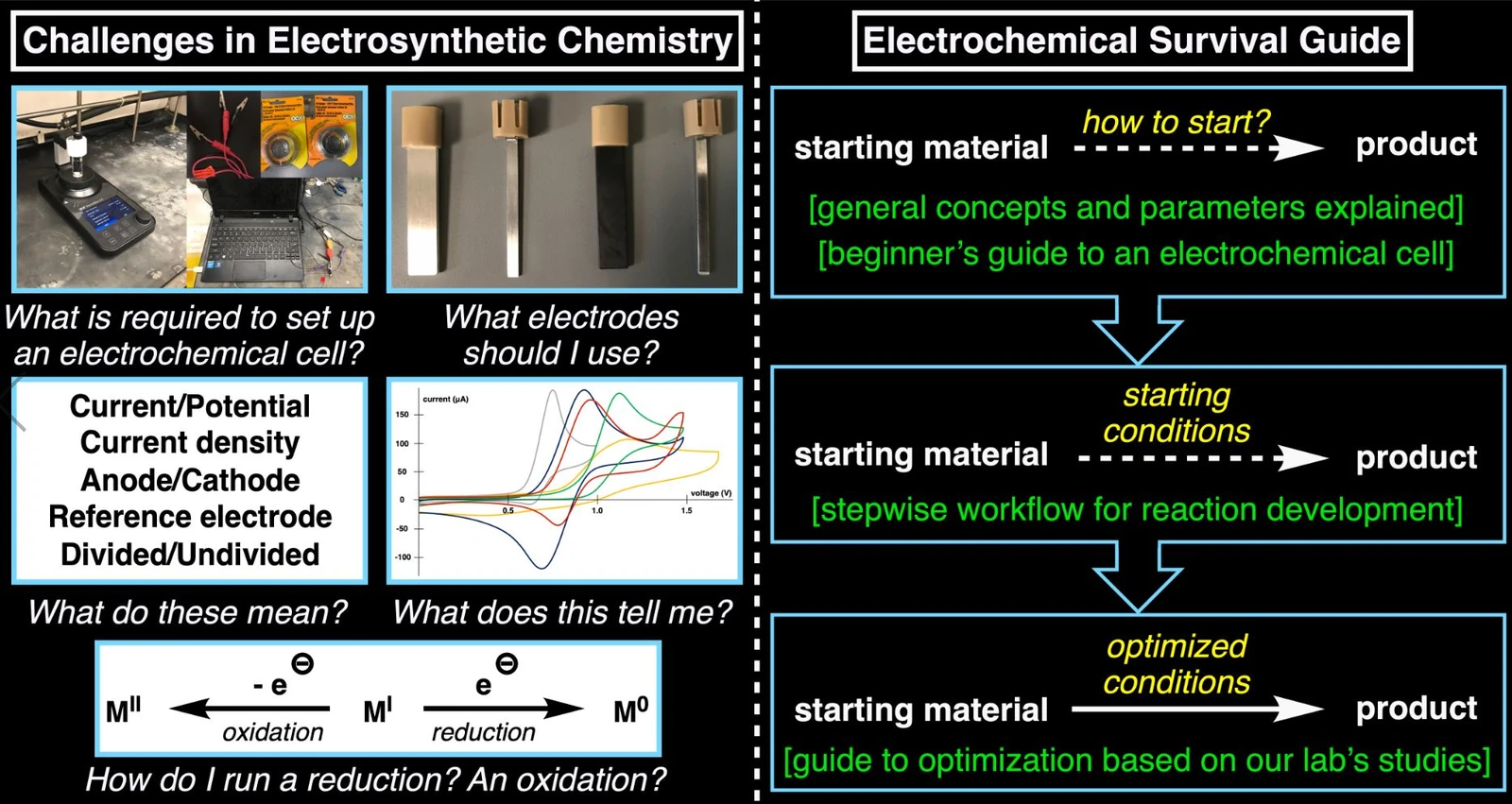
A survival guide for the “electro-curious”
The 2020 Acc. Chem. Res. Account is the practical primer: constant current versus constant potential, electrode materials, electrolytes, divided versus undivided cells. One analogy sticks: running a constant-potential experiment without a reference electrode “is akin to heating a reaction on a hot plate without a thermometer.” It also records that ElectraSyn 2.0 was launched with IKA to remove the time spent procuring parts and engineering individual setups.
From the verge to lift-off
In 2017 the lab’s review promised a field “on the verge of a renaissance.” Promises like that are easy to make and hard to check. This one can be checked, because the literature keeps score.
The count is simple. Take seven core journals of organic chemistry, Organic Letters, The Journal of Organic Chemistry, Advanced Synthesis & Catalysis, the European Journal of Organic Chemistry, Organic & Biomolecular Chemistry, Synthesis and Synlett, and ask how many of their papers each year announce in the title that electricity was used to make something. Papers that only measure the “electrochemical properties” of dyes, sensors or materials are left out. The journals themselves barely grew: 7,232 articles in 2016, 7,154 in 2025. Any rise in the curve is a change in what chemists choose to do, not a rise in how much they publish.
Synthetic electrochemistry in core organic journals, 2000–2026
2025 34.2 per 1,000 papersSynthetic-electrochemistry papers per 1,000 articles in seven core organic journals (OpenAlex)
2025 245 papersSame seven journals: titles naming electrochemistry as a synthetic tool (OpenAlex)
2025 250 papersRobustness check: same journals, no exclusions, so studies of electrochemical properties are included (OpenAlex)
2025 447 papersEvery venue OpenAlex classifies as organic chemistry: an electro- term plus a synthesis term in the title
Show the numbers
| Year | Share of papers (per 1,000) | Papers per year | Every “electro-” title | All organic-chemistry venues |
|---|---|---|---|---|
| 2000 | 4 | 16 | 24 | 68 |
| 2001 | 3 | 12 | 17 | 72 |
| 2002 | 6 | 29 | 32 | 67 |
| 2003 | 2.8 | 15 | 25 | 63 |
| 2004 | 3.1 | 17 | 21 | 73 |
| 2005 | 3.3 | 20 | 35 | 87 |
| 2006 | 3 | 18 | 31 | 91 |
| 2007 | 3.1 | 18 | 30 | 87 |
| 2008 | 3.4 | 21 | 36 | 94 |
| 2009 | 2.3 | 14 | 23 | 100 |
| 2010 | 1.3 | 8 | 16 | 89 |
| 2011 | 2.9 | 19 | 30 | 81 |
| 2012 | 1.7 | 11 | 28 | 89 |
| 2013 | 2.2 | 14 | 27 | 108 |
| 2014 | 2 | 13 | 27 | 119 |
| 2015 | 1.5 | 10 | 23 | 114 |
| 2016 | 1.7 | 12 | 18 | 128 |
| 2017 | 3.4 | 24 | 33 | 131 |
| 2018 | 5 | 36 | 50 | 173 |
| 2019 | 11 | 80 | 85 | 229 |
| 2020 | 13.6 | 89 | 97 | 241 |
| 2021 | 21.1 | 137 | 148 | 284 |
| 2022 | 23.1 | 149 | 155 | 311 |
| 2023 | 32.2 | 210 | 216 | 381 |
| 2024 | 31.4 | 220 | 224 | 404 |
| 2025 | 34.2 | 245 | 250 | 447 |
| 2026* | 37.5 | 244 | 256 | 413 |
| Total | 259.8 | 1,701 | 1,957 | 4,544 |
* 2026: partial year, counted on 15 November 2026.
For the first fourteen years of the century, about 3 papers in every 1,000 fit the description. From 2014 to 2016, the years the lab entered the field, the share sank to its lowest point, 1.7 in 1,000. Then it moved. It doubled in 2017, the year ElectraSyn 2.0 was introduced, and kept climbing almost every year after. By 2025 it had reached 34 in every 1,000, about one paper in twenty-nine, a twentyfold rise in share. In raw numbers the seven journals carried 12 such papers in 2016 and 245 in 2025, and 2026, still incomplete, has already passed 2025. Widen the lens to every organic chemistry venue in the index and the shape holds: a slow drift until 2017, then a steep climb.
A renaissance is never one laboratory’s doing, and this one has many authors. Song Lin’s electrocatalysis, Lutz Ackermann’s electro-oxidative C–H activation, the oxidative couplings of Aiwen Lei and Hai-Chao Xu, Kevin Lam’s practical guides and Shelley Minteer’s bridges to electrochemical engineering all arrived in the same years, joined by a large and fast-growing community in China. And the field as a whole was rediscovering two very old ideas, radical chemistry and redox chemistry, and learning to see single-electron steps not as a source of messy side products but as one of the most direct ways to make a bond. The push for greener chemistry helped too, though, as the lab argued in Electrosynthesis: Sustainability Is Not Enough (2020), chemists adopt a method because it does something nothing else can.
Equipment mattered as well. By 2020, Siegfried Waldvogel’s review of the field in Chemical Science credited “the first developments” in standardized equipment to “Baran et al. with ElectraSyn,” alongside Waldvogel’s own screening and flow systems, and advised newcomers that such systems “should be chosen in preference to amateurish home-made flasks with non-defined parameters which were used in the past.” Two centuries after Faraday, the electron was becoming a reagent like any other. The reactions in the chapters that follow are part of that curve.
Reactions worth plugging in for
Standard hardware solved one problem. The other was the lack of reactions compelling enough to make people use it. The lab set out to invent them, often with industrial partners.
Reductions without lithium in ammonia. The Birch reduction is a classic way to reduce aromatic rings, traditionally done with alkali metals dissolved in liquid ammonia. Borrowing ideas from lithium-ion batteries, a 2019 Science paper ran it electrochemically with a sacrificial magnesium anode and dimethylurea, avoiding lithium and liquid ammonia. The same year the anode went the other way, oxidizing carboxylic acids to carbocations that made hindered dialkyl ethers, long out of reach of classical methods (Nature 2019).
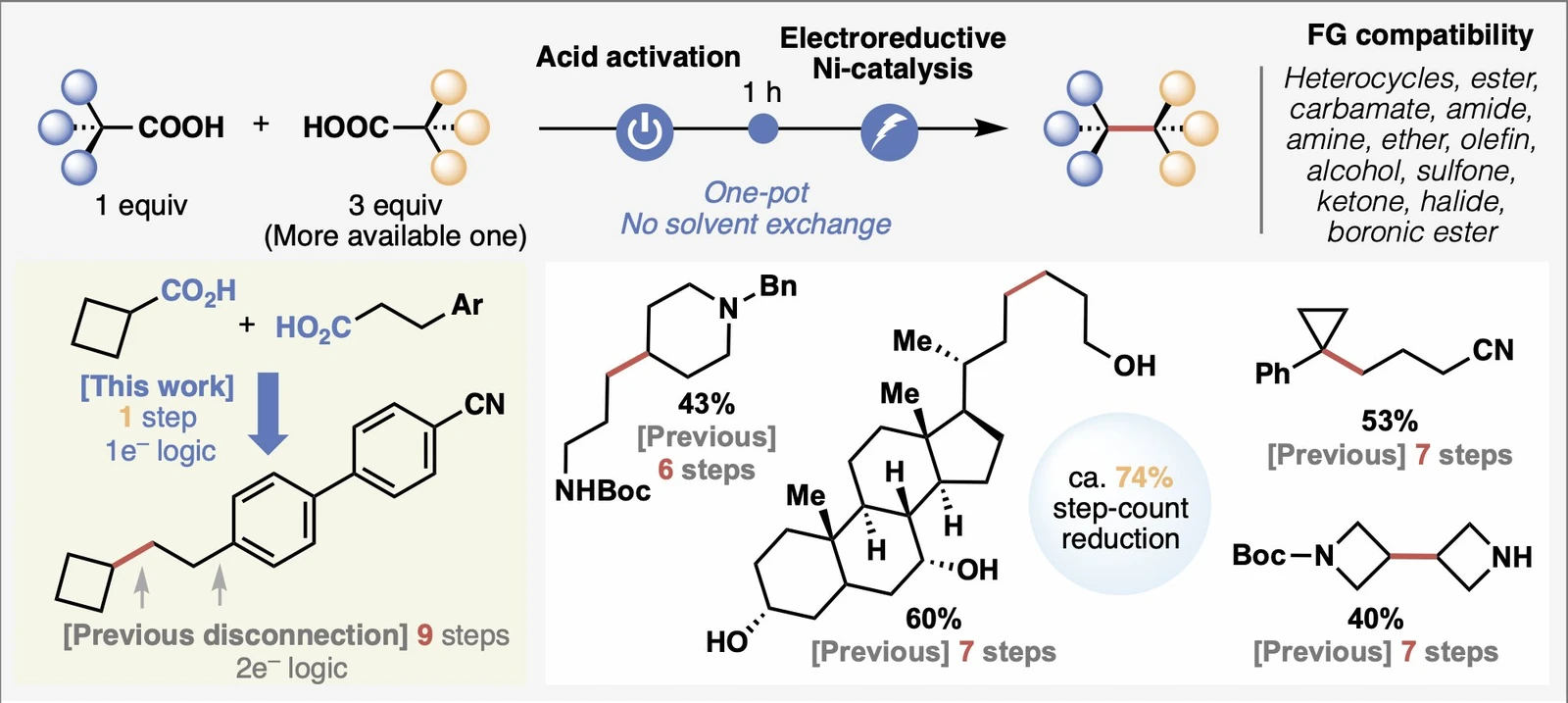
Nickel meets the electrode. Pairing electrochemistry with nickel catalysis gave aryl aminations (Angew. Chem. 2017) and, in 2022, a coupling of two different carboxylic acids to each other, a modern answer to Kolbe’s 1847 reaction called doubly decarboxylative cross-coupling (dDCC). Then came a surprise from the cathode: adding silver nitrate coats the electrode with silver nanoparticles, which made the couplings work with free acids and enabled a modular synthesis of 13 terpene natural products (Science 2022).
Flipping the switch, fast. In rapid alternating polarity (rAP), the electrodes swap roles on a millisecond timescale. The lab first used it for chemoselective reductions that neither direct current nor chemical reductants could match (JACS 2021), then to rewrite the Kolbe reaction itself (Science 2023). The next chapter takes up that story.
⚗ For chemists
Why the electrode, not a chemical reductant?
For dDCC the paper notes the reaction “cannot be mimicked using stoichiometric metal reductants or photochemical conditions.” The electrode supplies a controlled, mildly reducing flux of electrons to the nickel catalyst, which can heterocouple primary, secondary and even some tertiary redox-active esters. The Ag-nanoparticle cathode (formed in situ from AgNO₃) was key to extending the chemistry to diastereoselective couplings of α-substituted acids (Nature 2023, 14 natural products).
Flipping the switch, fast
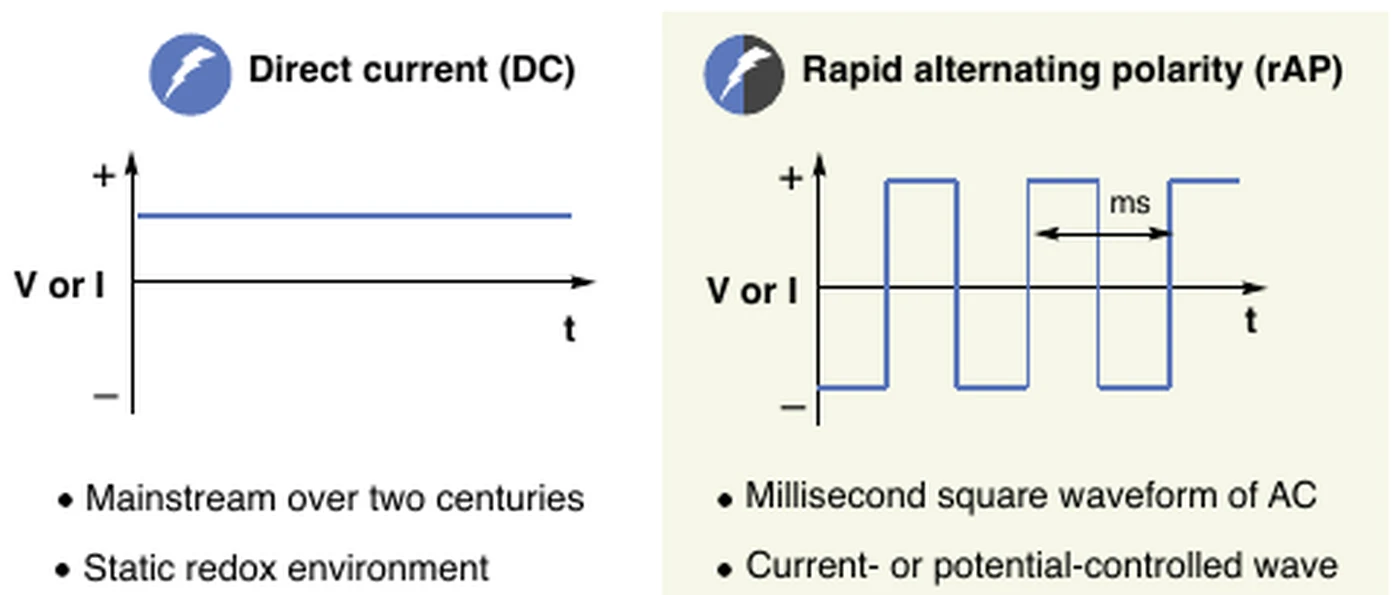
For more than two centuries, almost every useful electrochemical reaction has used direct current: electrons flow one way, and the electrodes never swap roles. A different waveform can change the reaction itself.
Electrosynthesis is typically a direct-current (DC) method. Alternating current (AC), often as a sine wave, is familiar in electroanalysis, electroplating and electrochemical CO2 reduction, and it has been tried in organic synthesis, sporadically, since the early twentieth century. As Kawamata and Baran note in their 2023 account, the historical consensus was that modulating the waveform in this way had little unique value, because the products usually resembled the DC reaction. What was missing, they argue, was unique reactivity—not merely a better yield—and instrumentation simple enough to use.
The laboratory’s answer is rapid alternating polarity, or rAP: a square waveform in which the polarity of an electrode switches on the millisecond timescale, with either the current or the potential held constant. The software that generates it was released as a free update to ElectraSyn 2.0, so no oscilloscope or signal generator is required.
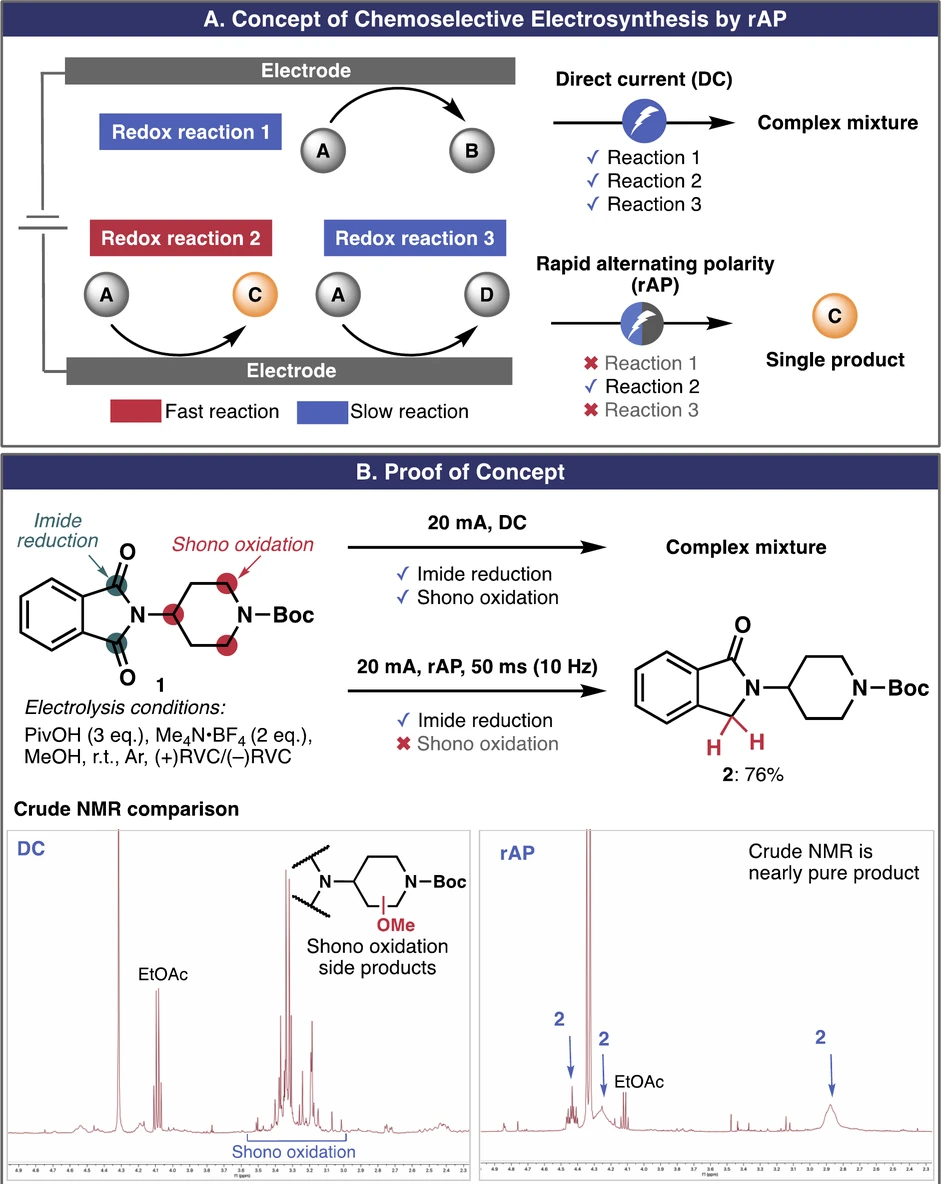
The first implementation appeared in JACS in 2021, with collaborators at IKA and Bristol Myers Squibb. The test molecule could undergo either a Shono oxidation on a piperidine or a reduction of a phthalimide. Under direct current, both happened, and the crude mixture was complex. Under rAP at 50 milliseconds (10 Hz), and otherwise identical conditions, only the imide was reduced: the product was isolated in 76% yield, and the Shono products were barely visible in the crude NMR.
The same chemoselectivity showed up in settings that neither DC electrolysis nor common chemical reductants could handle. A phthalimide could be deoxygenated without touching a neighboring alkyl aldehyde. An imide used as a PROTAC building block, carrying five carbonyl groups and a reductively labile azide, underwent selective deoxygenation of a single carbonyl. An Evans auxiliary that had previously required a nine-step sequence—three protecting-group operations and five redox steps—was reduced to the aldehyde after a simple basic work-up; DC electrolysis failed to convert the substrate, and DIBAL or LiBH4 gave the wrong selectivity or overreduction. On a tetrapeptide crowded with redox-active groups, rAP delivered the reduced product in 52% yield by NMR (14% isolated); DC again gave a complex mixture. The account is careful to note that these outcomes follow from innate single-electron-transfer reactivity, read out from reduction potentials, rather than from a new kind of chemical intuition.
The next target was (hetero)arene reduction, reported in JACS in 2022 with process chemists at AbbVie. Birch reductions have historically asked a lot of a molecule: alkali metals in liquid ammonia, or equally harsh modern variants. Methyl 2-thiophenecarboxylate is a revealing case. Conventional Birch conditions, a contemporary chemical method, and a published electrochemical protocol all led to extensive decomposition. Lithium di-tert-butylbiphenyl (LiDBB) gave the dihydrothiophene in 39% yield, but required four equivalents of an expensive, air-sensitive reductant. Direct current in a simple THF/ethanol mixture also failed. Switching only the waveform to rAP, under the same conditions, furnished the product in 83% isolated yield. The method needs no metal additives, runs in a protic solvent, and can even operate when the arene’s reduction potential lies outside the solvent window, because rAP attenuates the competing reduction of protons. The first large-scale rAP reduction, in a reactor designed at AbbVie, delivered 6.1 grams of product (84%) from 7.0 grams of the thiophene ester; the same experiment under DC returned more than 95% of the starting material.
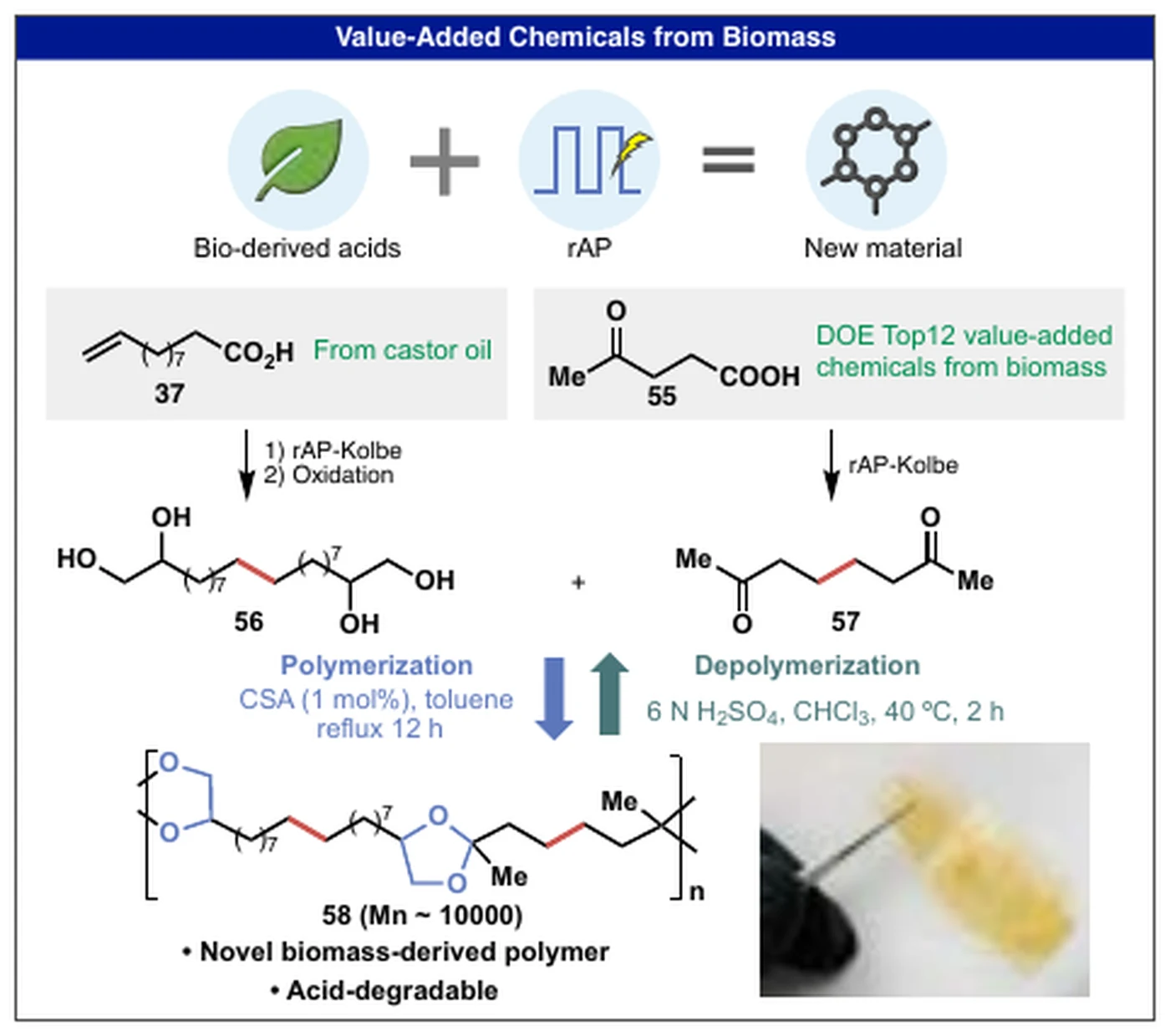
Then came an oxidative problem as old as the field. The Kolbe reaction, described by Faraday in 1834 and established by Kolbe in 1849, is possibly the first carbon–carbon bond-forming reaction in organic synthesis, but it has seen limited use because of poor chemoselectivity and a long-standing reliance on platinum electrodes. Even a dormant terminal olefin such as 10-undecenoic acid is incompatible with the canonical reaction. A 2023 Science paper, with colleagues at AbbVie, showed that switching the waveform from DC to rAP made a range of functional groups compatible and allowed the coupling to run on carbon-based electrodes. Under rAP on reticulated vitreous carbon, 10-undecenoic acid—a biomass-derived acid that is not amenable to classic Kolbe conditions—dimerized to 1,19-eicosadiene, a polymer building block, in 63% isolated yield; conventional platinum/DC conditions gave none. Amino-acid substrates, including a 25-gram example, were also viable. Preliminary mechanistic studies in the paper implicate the waveform in modulating the local pH around the electrodes, and the unusual choice of acetone as solvent.
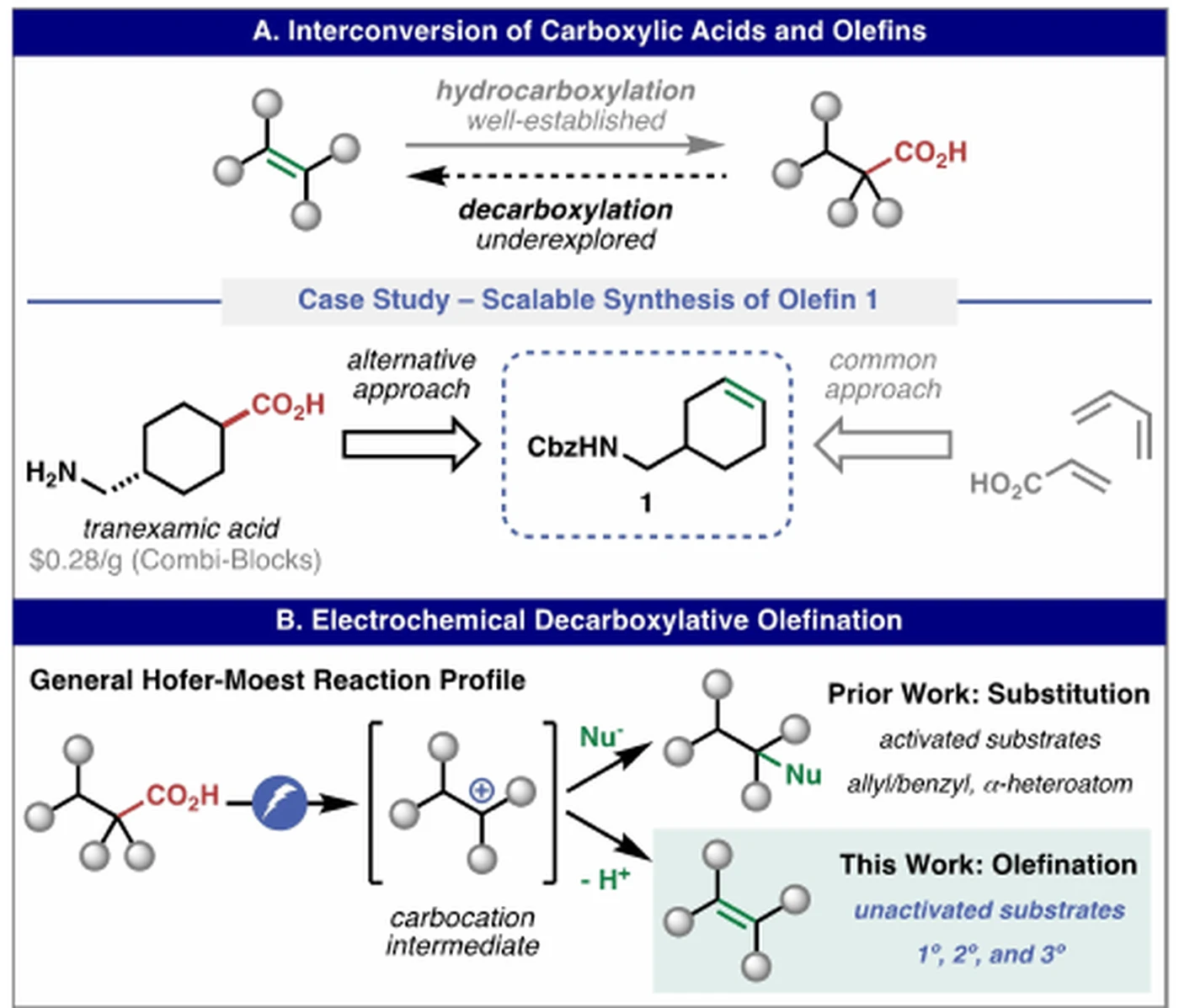
Slowing the polarity alternation, from milliseconds to seconds, opened a different reaction during the same investigation. When rAP-Kolbe conditions were applied to a secondary carboxylic acid, decarboxylative olefination—a Hofer–Moest-type process—took over. A 2023 paper in Angewandte Chemie International Edition disclosed a mild, metal-free method that works on unactivated primary, secondary and tertiary acids and scales to a kilogram. In the account, a protected secondary acid (1 kg) was converted to an unsaturated amine in 80% yield (5:1 olefin ratio) with five-second alternating polarity; the account notes that alternating polarity was necessary for high conversion. The paper frames the reaction as a convenient reverse of hydrocarboxylation, and attributes the robustness of the method to the way alternating polarity helps maintain the quality of the electrode surface and the local pH.
The 2023 account argues that the most striking feature of rAP is that it “dramatically alters reaction outcome simply by virtue of its differing waveform, a phenomenon that has yet to be appreciated in synthetic organic electrochemistry.” The area, the authors write, is still in its infancy, and what has been described is “likely just the tip of the iceberg.”
From last resort to first choice
A dozen years after dixiamycin, the 2026 Account Electrochemistry Goes Mainstream counts 64 syntheses in the lab that relied on electrochemistry.
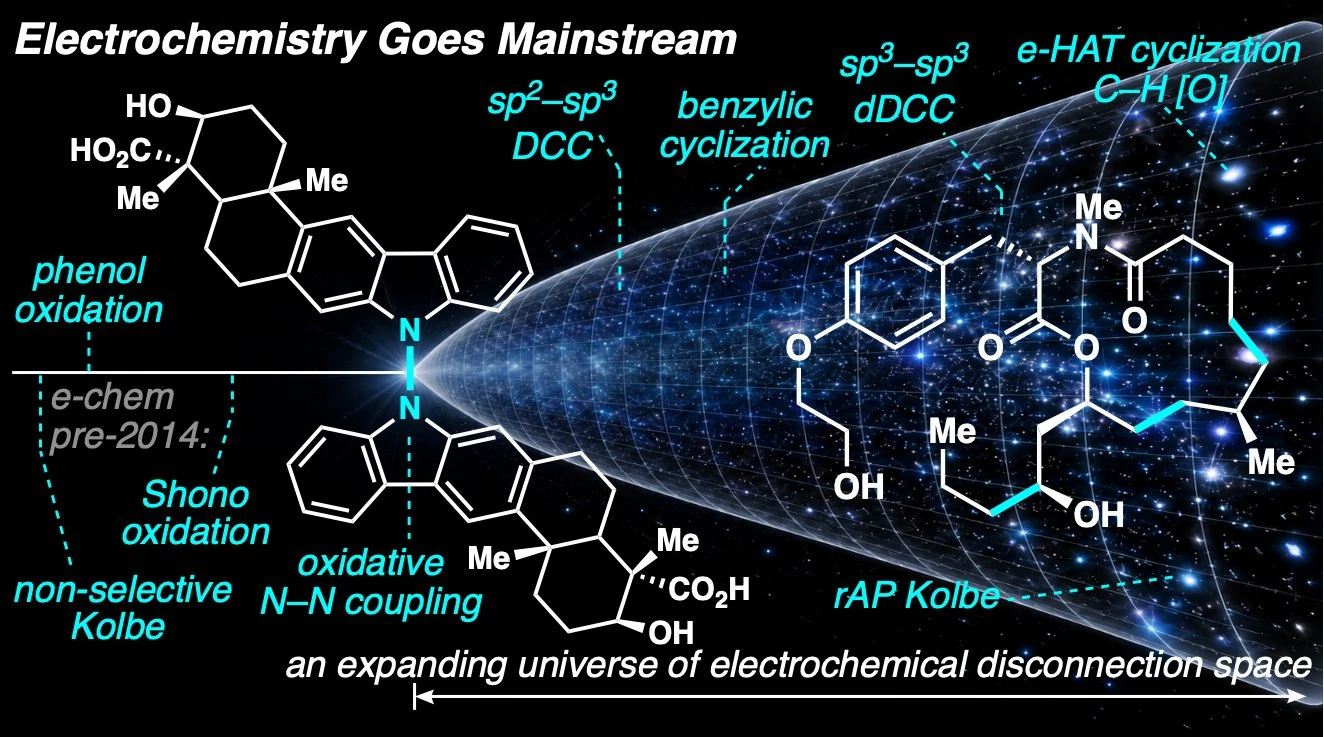
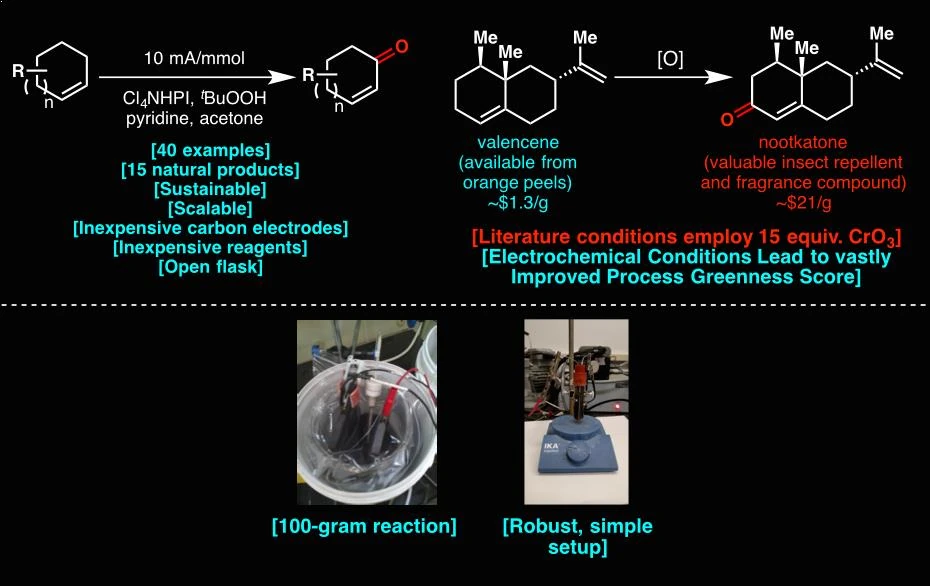
The examples span the lab’s work: decarboxylative borylation for jawsamycin; electrochemical C–H oxidation for valencene, sclareolide and mitrephorone; nickel-electrocatalytic C–N bonds for the teleocidins, run on gram scale with an IKA carousel attached to ElectraSyn 2.0; a scalable route to calcipotriol with LEO Pharma; and the macrocycle bipinnatin J. Other groups use the methods too: the Account highlights a synthesis of nonthmicin by Li and co-workers on more than a gram, using two sequential electrochemical couplings.
“While our engagement with electrochemistry began in 2014 out of necessity, it continues out of conviction that the transformations enabled by electrochemistry have the potential to reshape the toolkit of modern synthesis.”
Sustainability is not enough
The lab’s most counter-intuitive message is that being green will not win chemists over. As the 2020 Account puts it, “Time has proven that sustainability and economics are not strong enough driving forces for the adoption of electrochemical techniques within the broader community.” What wins is reactivity nobody can get any other way, which is why the lab’s work focuses on new bond-forming reactions rather than greener versions of old ones. A 2020 Joule commentary carries the same title: Electrosynthesis: Sustainability Is Not Enough.
The hardware keeps getting cheaper and tougher. A 2025 paper introduced pyrolytic carbon, “an inexpensive, robust, and versatile electrode.” And electrochemistry now runs through the lab’s other themes: radical cross-coupling, total synthesis, and even phosphorus chemistry (“Electrifying P(V),” 2025).
“…no longer a last resort—it is an obvious tool to consider employing.”
Two sides of the same redox coin
Light and electricity are often cast as rivals. A 2023 Account by Max Palkowitz, who earned his PhD in the lab, and his Bristol Myers Squibb colleagues Megan Emmanuel and Martins Oderinde, written after years of running both, suggests a better picture: two ways of doing the same job, moving electrons onto and off a nickel catalyst.
The Account (Acc. Chem. Res. 2023) names the common thread plainly. Whether a photocatalyst or an electrode does the work, the hallmark is the systematic modulation of a metal’s oxidation state, which opens catalytic cycles and elementary steps that heat alone struggles to reach, under mild conditions and with high chemoselectivity. Where the two differ is in how the electrons arrive. Photochemistry has the advantage in oxidizing native functional groups into radicals, because the photocatalyst and the nickel meet in solution and need not overcome significant diffusion. Electrochemistry excels at sequential reductions: the low-valent nickel that activates a substrate is generated right at the cathode, and the physical separation of oxidation and reduction is built into the cell.
The differences show up in the flask. In decarboxylative arylation, the photochemical route starts from the free acid, the more accessible material, but oxidizable heteroatoms and the need for stabilized radicals hold it back; the electrochemical route starts from the redox-active ester and copes better with the electron-rich heteroarenes that matter in medicinal chemistry (JACS 2022). For quaternary centres from tertiary acids, head-to-head comparisons revealed complementary scope: light gave higher yields with α-amino acids and simple benzenes, while the electrode reached more heteroarenes, albeit in lower yields, and was more general for unactivated acids (Angew. Chem. 2024). In C–O coupling, the mild anode tolerated tertiary amines that had hindered the photochemical versions (Angew. Chem. Int. Ed. 2021). As the authors put it, “while no single method fills the gap in the literature, the two together grant medicinal chemists access to otherwise elusive chemical space.”
Scale draws the clearest line. Photochemistry is easier to run small, in 24- to 384-well plates for library work and rapid structure–activity studies; electrochemistry is harder to miniaturize, because electrode surface and immersion become variables, though high-throughput electrochemical reactors are beginning to close that gap. At the other end, electrochemistry scales more readily, while light penetrates poorly in large batch reactors and precious-metal photocatalysts are costly, problems that continuous-flow manufacturing and fully organic photocatalysts are starting to address. Both share a ceiling set by nickel itself: sterically demanding alkyl radicals remain difficult whichever way the electrons are delivered.
Seen this way, photochemistry and electrochemistry are two sides of the same redox coin. One delivers electrons with photons, the other with an electrode, and the choice turns on the starting material at hand, the bond to be made and whether the need is milligrams to test a hypothesis or kilograms for a drug candidate. The Account closes with a colour-coded tactical guide to which pairings work by which method, and its red and grey squares are an invitation: they mark where the next methods are needed.
“…we encourage researchers in the field to place themselves as the end user of their technologies.”
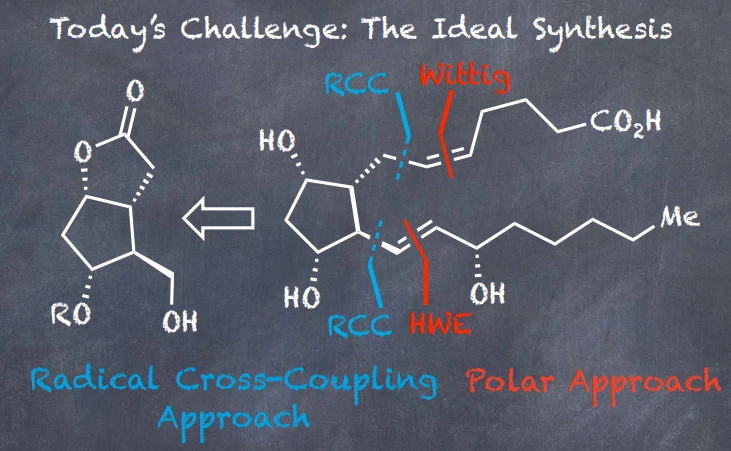 The logicThinking in radicals
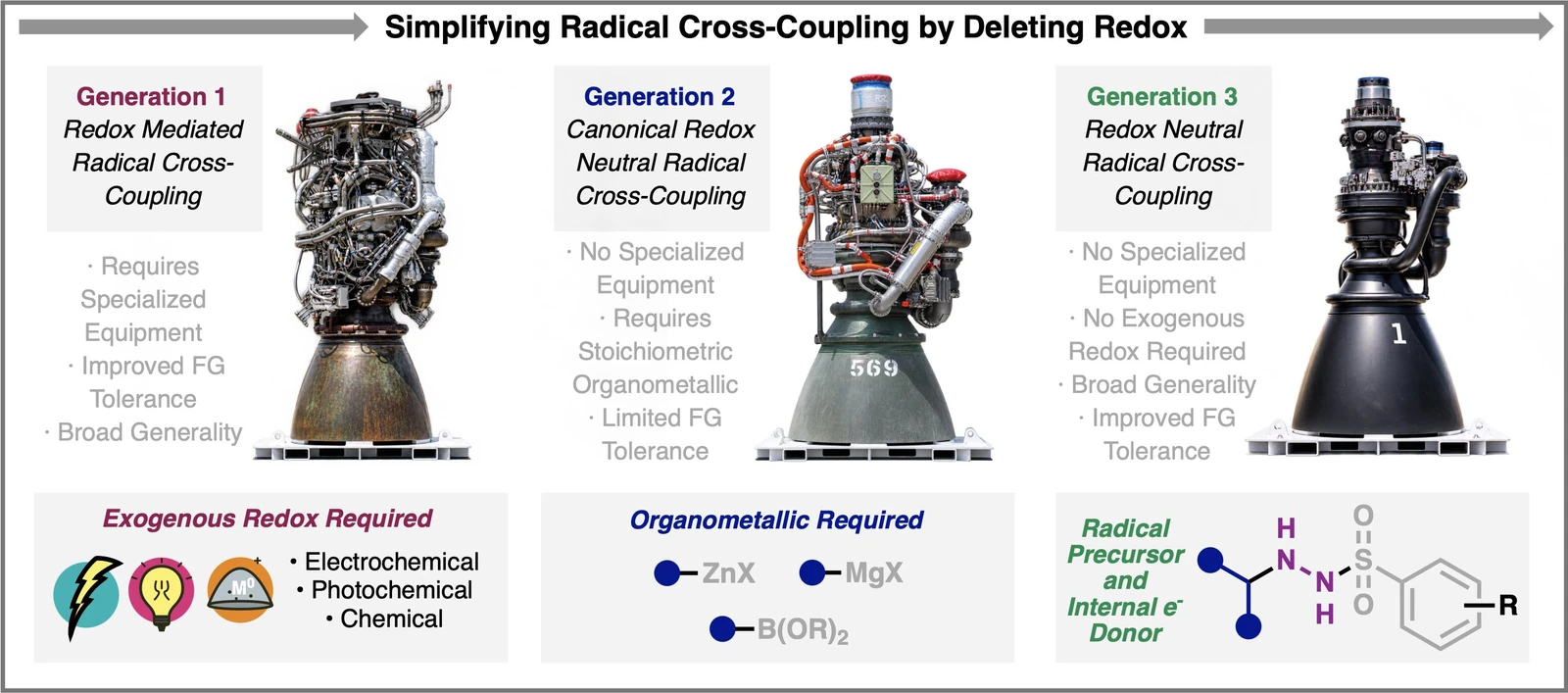 Cross-couplingDeleting redox
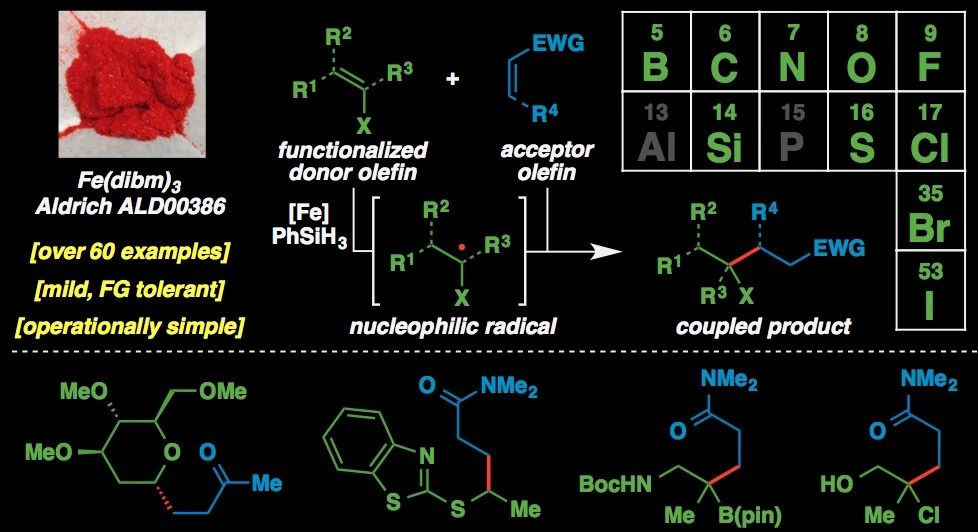 Olefins / MHATOlefins as radicals
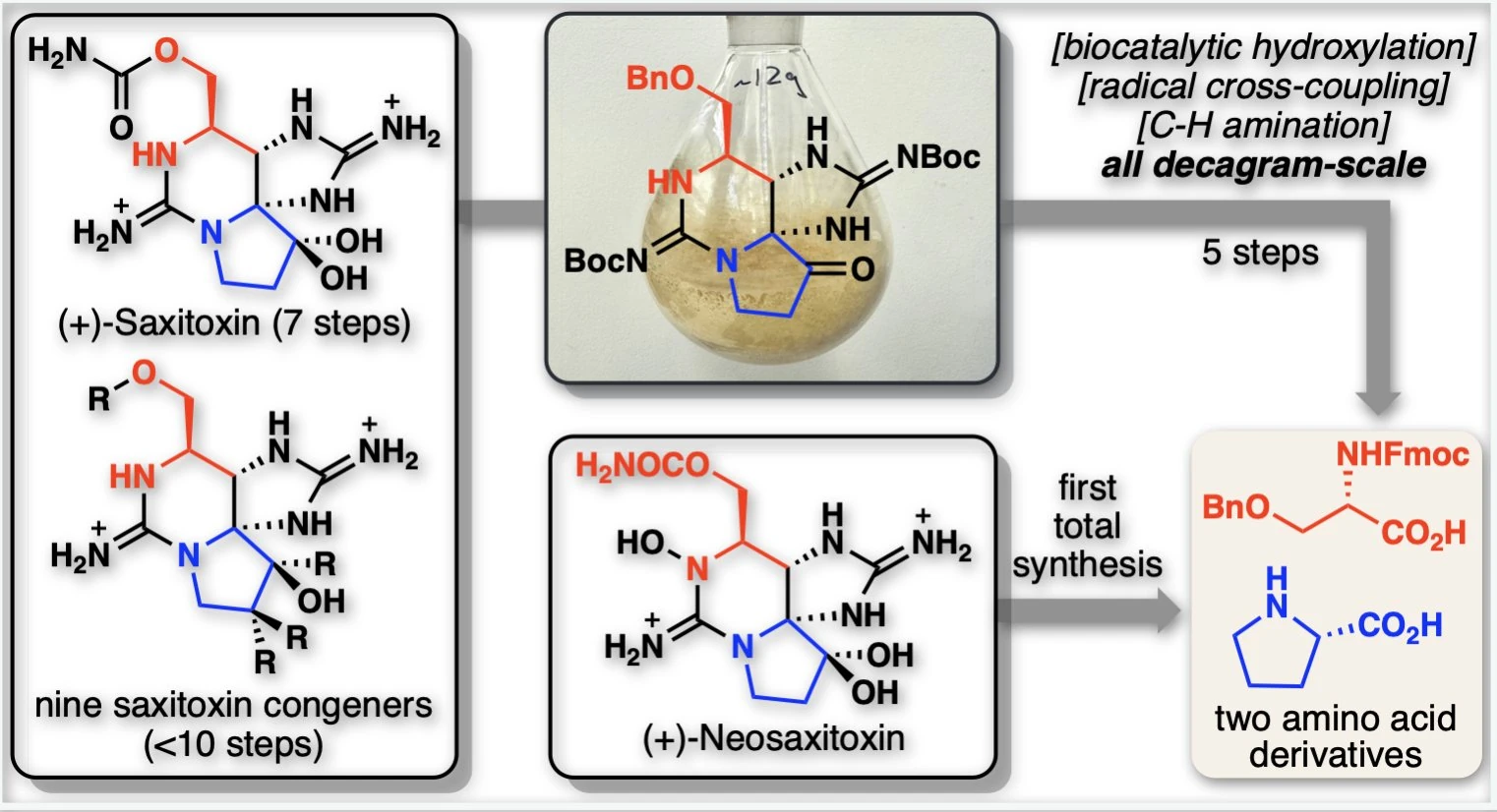 Total synthesisProving ground
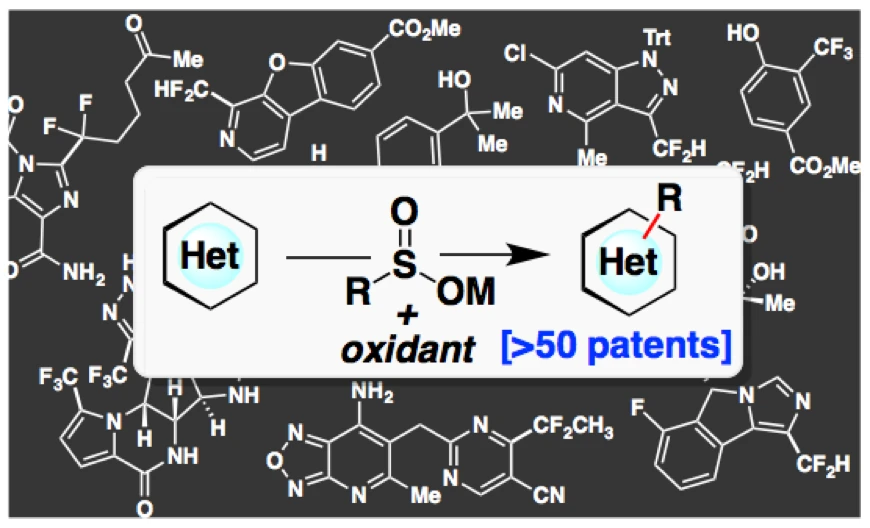 ReagentsReagents in a bottle
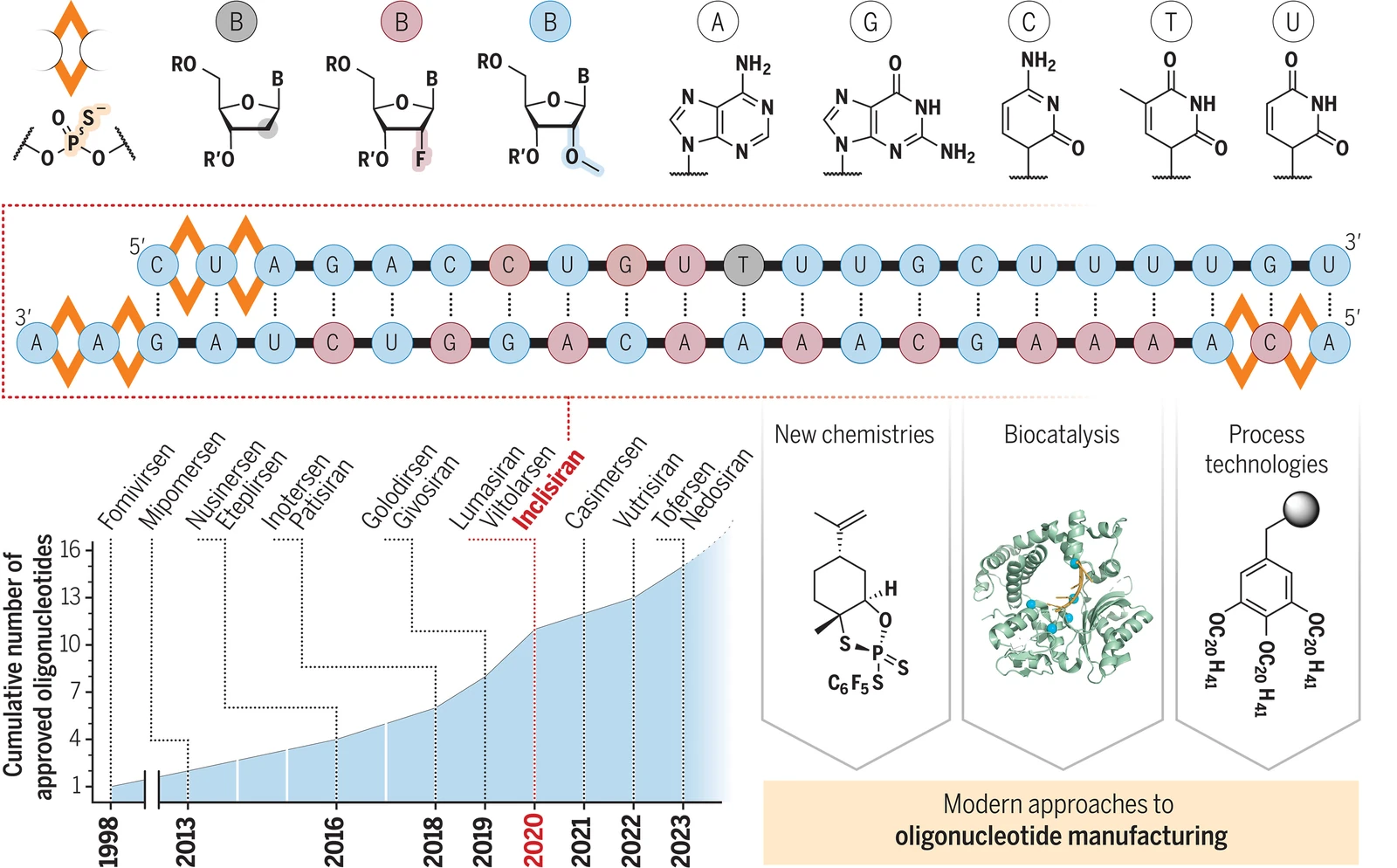 OligonucleotidesRewriting the backbone
 PeptidesRewriting the peptide
 C–H functionalizationC–H logic